বাংলা
 English
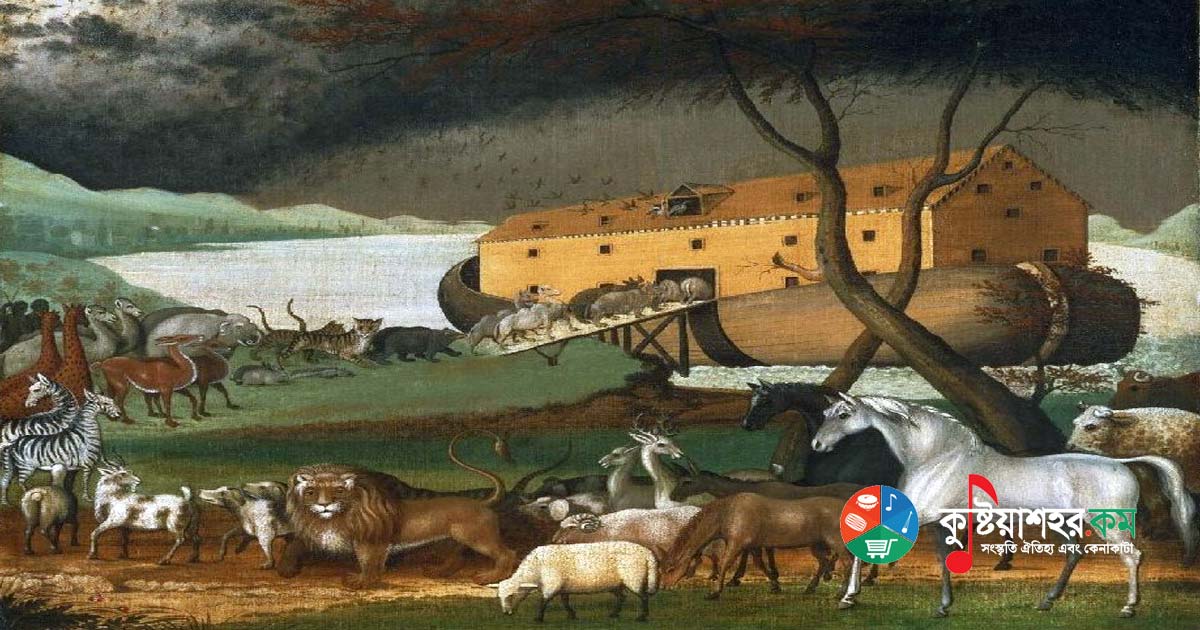
From Adam (AS) to Nuh (AS) the gap was ten centuries. Towards its end, shirk and superstition appeared among the ever-growing human race and spread. So, to reform them, Allah sent Nuh (AS) as a prophet and messenger. He was granted a long life of nine hundred and fifty years and spent his whole life in da'wah, calling the wayward people back to the path.
But his people rejected him. Consequently, in Allah's wrath they were annihilated. Thereafter several more peoples, one after another, were destroyed for disobeying Allah. In this way the stories of 6 nations destroyed in the early ages of the world are narrated at various places in the Quran, and it is through the Quran that the dwellers of the world have come to know of them — so that the Muslim ummah and the world's people may take a lesson from them. Those 6 nations are: the people of Nuh, 'Ad, Thamud, the people of Lut, Madyan and the people of Pharaoh. Of course, the Quran also mentions the people of Ibrahim in this list (At-Tawbah 9:70), although they were not destroyed all together. But the people of Lut, Ibrahim's nephew, were destroyed and annihilated together. We shall discuss here first Nuh (AS) and his people.
Introduction to Nuh (AS):
Nuh (Alaihis Salam), famed as 'Abul Bashar Thani' (ابوالبشرالثانى) or the second father of mankind, was the tenth or eighth descendant of his father Adam (Alaihis Salam). He was the world's first messenger.
Nuh (AS) had four sons: Sam, Ham, Yafith and Yam or Kan'an. The first three accepted faith. But the last one died a disbeliever, drowned in the flood. In response to Nuh's (AS) da'wah, only a handful of believers from his people responded, and they alone were saved at the time of the flood by boarding the boat. The Quran or Hadith says nothing about how many believers boarded Nuh's ark and were saved. Likewise nothing is narrated of how large the ark was, or how and in how many days it was built. Whatever is narrated on these matters in the various tafsirs is based on the Israelite fables, which have no correct basis. Imam Tirmidhi narrates from Hazrat Samurah (RA) and others, from the Messenger of Allah (SAW), in the tafsir of verse 77 of Surah As-Saffat, that after Nuh's flood only the descendants of his three sons Sam, Ham and Yafith remained. The Messenger of Allah (SAW) further said: سام أبو العرب وحام أبو الحبش و يافث أبو الروم — 'Sam is the father of the Arabs, Ham the father of Abyssinia, and Yafith the father of the Romans (Greeks)'. Ibn Abbas and Qatadah (RA) say: 'All the later human race are Nuh's descendants'.
Allah says, وَجَعَلْنَا ذُرِّيَّتَهُ هُمُ الْبَاقِيْنَ. 'We left his (Nuh's) descendants as the survivors' (As-Saffat 37:77). Consequently, people of all religious creeds, including the Jews and Christians, give Nuh (AS) the status of their father. Sam was the eldest of the three sons. He was أبو العرب, the father of the Arab race. Among his descendants were Hazrat Ibrahim, Ismail and Ishaq; and from Ismail's descendants came the best son of mankind, Hazrat Muhammad (SAW). Among Ishaq's descendants were the prophets and messengers Ya'qub, Yusuf, Musa, Dawud, Sulayman, Yunus, Ilyas and Isa, among others. The names of the prophets sent to the descendants of Ham and Yafith are not known. But among the Arabs there were four prophets: Hud, Salih, Shu'ayb and Muhammad (SAW). In the view of most Companions, Nuh (AS) was a prophet before Idris (AS). He was the world's first messenger. Ibn Abbas (RA) says: he received prophethood at the age of forty and lived sixty years after the great flood. Thus for a very long time he gave da'wah, as a prophet, to the people sunk in shirk. After the flood, the peopling of the earth began afresh through the believing men and women who had boarded the boat with him, and he guided them along the path of truth. For this reason he is called 'the second father of the human race'.
Adam (AS) lived 960 years, and Nuh (AS) received a life of 950 years (Al-Ankabut 29:14). It may be noted that the long lives of Adam and Nuh (AS) were Allah's special gift and a mark of their mu'jizah (miracle). Nuh's (AS) descendants did not have such long lives in succession. Nuh (AS) lived with his community in the city of Mushel in Iraq. Outwardly they were civilised, but they were sunk in the darkness of shirk. He was sent for their guidance.
It may be noted that Hazrat Nuh (AS) is described in 81 verses across 28 surahs of the Holy Quran.
The Social and Religious Conditions of the Time
In Adam's (AS) time there was no confrontation between faith and shirk and kufr. At that time all belonged to one ummah following tawheed (Al-Baqarah 2:213). Most of the ordinances of his shari'ah were concerned with peopling the earth and with human needs. But with the turn of time shirk crept into men. Nuh's people began to worship the dead righteous men — Wadd, Suwa', Yaghuth, Ya'uq and Nasr — hoping to attain salvation in the Hereafter through their intercession. This worship may have taken place at their graves, or through making their images. Muhammad ibn Qays says: these five men, living between Adam and Nuh (AS), were famed as righteous, deed-doing servants. After their death, Satan incited their devotee-followers, saying: if images of these righteous men are kept before you, seeing them will create greater interest in the worship of Allah. So they made their images. Then, after those men died, their successors, deceived by Satan, began to worship those very images directly as deities. They would pray for rain through the intercession of these images'. And thus began in the world the first shirk of idol worship.
Imam Bukhari (RA) narrates from Hazrat Abdullah ibn Abbas (RA). He says that these men were righteous people of the age of Hazrat Nuh (AS). After their death, Satan deceived their followers with the suggestion: make an image at each of their sitting places and name it after them. The people did so. ...
These images continued to be current among the Arabs in later times too. 'Wadd' was for Banu Kalb at Dumat al-Jandal, Suwa' for Banu Hudhayl, Yaghuth for Banu Ghutayf at a place called Juruf, Ya'uq for Banu Hamdan, and Nasr for Banu Dhi-Kala of the Himyar tribe'.
In the narration of Ibn Abi Hatim it comes: 'Wadd was the first among them and the most righteous man. When he died, the people broke into tears in devotion to him. Satan seized this opportunity and incited the people to make his image. Thus the image of Wadd was the world's very first idol, whose worship began to the exclusion of Allah'.
Therefore the world's most ancient shirk is the worship of the graves of righteous men or of their images. It is still current in almost all religious societies, and at present it has taken form in the Muslim society as the worship of places, graves, pictures and effigies, minarets and sculptures. The glory of those five images and devotion to them had been implanted in people's hearts to such a degree that they would mention their names in various important matters and when concluding agreements with one another. Moreover they were sunk in all manner of social depravity. In such a degraded state of the community, Allah sent Nuh (AS) as a messenger for their guidance (Al-A'raf 7:61).
Nuh's (AS) Da'wah to His Own People
Allah says,
إِنَّا أَرْسَلْنَا نُوحاً إِلَى قَوْمِهِ أَنْ أَنذِرْ قَوْمَكَ مِن قَبْلِ أَن يَّأْتِيَهُمْ عَذَابٌ أَلِيمٌ، قَالَ يَا قَوْمِ إِنِّي لَكُمْ نَذِيرٌ مُّبِينٌ،َ أَنِ اعْبُدُوا اللهَ وَاتَّقُوهُ وَأَطِيعُونِ، يَغْفِرْ لَكُم مِّنْ ذُنُوْبِكُمْ وَيُؤَخِّرْكُمْ إِلَى أَجَلٍ مُّسَمًى إِنَّ أَجَلَ اللهِ إِذَا جَاءَ لاَ يُؤَخَّرُ لَوْ كُنتُمْ تَعْلَمُونَ- (نوح ١-٤)-
'We sent Nuh to his people to warn them before a painful punishment came upon them'. 'Nuh said to them: O my people! I am a clear warner for you'. 'To this end, that you worship Allah, fear Him and obey me'. 'Thereby Allah will forgive your sins and grant you respite until an appointed term. But it is certain that when Allah's appointed term comes, it will not be delayed in the least — if only you knew' (Nuh 71:1-4).
Then, to turn them away from shirk back to the worship of Allah in full, reminding the servant of Allah's countless favours and innumerable blessings, he said,
أَلَمْ تَرَوْا كَيْفَ خَلَقَ اللَّهُ سَبْعَ سَمَاوَاتٍ طِبَاقا، وََجَعَلَ الْقَمَرَ فِيهِنَّ نُوراً وَّجَعَلَ الشَّمْسَ سِرَاجاً، وَاللهُ أَنبَتَكُم مِّنَ الْأَرْضِ نَبَاتاً، ثُمَّ يُعِيدُكُمْ فِيهَا وَيُخْرِجُكُمْ إِخْرَاجاً، وَالله ُجَعَلَ لَكُمُ الْأَرْضَ بِسَاطاً، لِتَسْلُكُوا مِنْهَا سُبُلاً فِجَاجاً- (نوح ١٥-٢٠)-
'Do you not observe how Allah created the seven heavens in layers'. 'Therein He has placed the moon as a light and the sun as a lamp'. 'Allah has caused you to grow from the earth'. 'Then He will return you to it and raise you forth again'. 'Allah has made the earth for you like a bed'. 'So that you may travel upon its broad ways' (Nuh 71:15-20).
Nuh (AS) kept giving da'wah to his people day and night. He gave them da'wah openly and secretly, in various ways and methods. But the result was utterly disappointing. Wearied of his da'wah, they would run away at the sight of him. Sometimes they would plug their ears with their fingers. Sometimes they would cover their faces with cloth. 'They remained obstinate and stubborn in their waywardness and displayed extreme arrogance' (Nuh 71:6-9). At one point the chiefs of the people called the people and said, وَقَالُوا لاَ تَذَرُنَّ آلِهَتَكُمْ وَلاَ تَذَرُنَّ وَدّاً وَلاَ سُوَاعاً وَّلاَ يَغُوثَ وَيَعُوقَ وَنَسْراً- (نوح ٢١-٢٣)- (Beware!) 'Never abandon the deities worshipped by your forefathers — Wadd, Suwa', Yaghuth, Ya'uq and Nasr'. (In this way) 'They led many people astray and, with their wealth and manpower, launched terrible conspiracies against Nuh' (Nuh 71:21-23).
Five Objections Against Nuh (AS)
To mislead the people, the disbelieving leaders of the people raised five objections against Nuh (AS). Namely: (1) You are a man just like us; had you been a prophet, you would have been an angel. (2) Your followers are the lowly and the lesser-minded among us. (3) No superiority of you people over the nation is seen (Hud 11:27). (4) Your da'wah is contrary to the customs of our fathers and forefathers. (5) You really aspire to leadership (Al-Muminun 23:24-25). Therefore we consider you a liar (Hud 11:27).
To inflame the people, the disbelieving leaders dubbed Nuh's da'wah a power-hungry political movement and said,
فَقَالَ الْمَلَأُ الَّذِينَ كَفَرُوْا مِنْ قَوْمِهِ مَا هَذَا إِلاَّ بَشَرٌ مِّثْلُكُمْ يُرِيدُ أَن يَّتَفَضَّلَ عَلَيْكُمْ وَلَوْ شَآءَ الله ُلَأَنزَلَ مَلَآئِكَةً مَّا سَمِعْنَا بِهَذَا فِيْ آبَائِنَا الْأَوَّلِيْنَ- (المؤمنون ٢٤-٢٥)-
'This man is but a man like you. In truth he wishes to assume leadership over you. Had Allah wished, He could have sent an angel. Moreover, we have never heard such talk from our fathers and forefathers as this man utters'. 'In fact there is madness in the man, or some jinn is with him. Therefore pay no heed to this man for a while and wait' (Al-Muminun 23:24-25). (In this way) 'They called him plainly mad and threatened (to kill) him' (Al-Qamar 54:9).
Answers to the Objections
(1) In answer to the above objections and slanders of the tribal chiefs, Nuh (AS) said,
قَالَ يَا قَوْمِ أَرَأَيْتُمْ إِنْ كُنْتُ عَلَى بَيِّنَةٍ مِّن رَّبِّيْ وَآتَانِيْ رَحْمَةً مِّنْ عِنْدِهِ فَعُمِّيَتْ عَلَيْكُمْ أَنُلْزِمُكُمُوْهَا وَأَنتُمْ لَهَا كَارِهُوْنَ- (هود ٢٨)-
'O my people! If I stand upon clear evidence from my Lord, and He has granted me mercy from His presence, but it has been blinded to you, shall I force it upon you against your wish? (Hud 11:28). By this is meant that prophethood and messengership cannot be asked for; it rests entirely with Allah's will. He sends as prophet not any angel for mankind, but a man whom He Himself appoints, with clear evidence and proof. Nuh (AS) further said to his people,
أَوَعَجِبْتُمْ أَنْ جَاءَكُمْ ذِكْرٌ مِّن رَّبِّكُمْ عَلَى رَجُلٍ مِّنكُمْ لِيُنْذِرَكُمْ وَلِتَتَّقُوا وَلَعَلَّكُمْ تُرْحَمُوْنَ- (الأعراف ٦٤)-
'Do you wonder that a message from your Sustainer has come to you through a man from among yourselves, so that he may warn you and that you may fear Allah and obtain His mercy' (Al-A'raf 7:63). Allah says: 'But they denied Nuh. So We delivered him and those with him in the ark, and drowned those who denied Our signs. Indeed they were a blind people' (Al-A'raf 7:64).
Within the Muslim ummah a group of people, by calling the final prophet Muhammad (SAW) 'the prophet of Nur (Light)', indirectly wish to make him an 'angel-prophet'. In this they merely follow the doubts of the disbelievers of past ages. Whereas Allah says,
وَلَوْ جَعَلْنَاهُ مَلَكًا لَّجَعَلْنَاهُ رَجُلاً وَلَلَبَسْنَا عَلَيْهِم مَّا يَلْبِسُوْنَ- (الأنعام ٩)-
'Had We made him (any messenger) an angel, We would have made him a man, and We would have confounded for them what they now confound' (Al-An'am 6:9).
(2) In answer to their second objection Nuh (AS) said,
وَمَا أَنَا بِطَارِدِ الَّذِينَ آمَنُوْا إِنَّهُم مُّلاَقُوْ رَبِّهِمْ وَلَـكِنِّيْ أَرَاكُمْ قَوْماً تَجْهَلُوْنَ، وَيَا قَوْمِ مَن يَّنْصُرُنِيْ مِنَ اللهِ إِنْ طَرَدتُّهُمْ أَفَلاَ تَذَكَّرُوْنَ؟- (هود ٢٩-٣٠)-
'I cannot drive away the (poor) believers. They will surely meet their Sustainer. Rather, I see you as an ignorant people'. 'O my people! If I drive away these people, who will protect me from Allah? Will you not take heed? (Hud 11:29-30; Ash-Shu'ara 26:111-115).
3) In answer to the third objection he said,
وَلاَ أَقُولُ لِلَّذِينَ تَزْدَرِي أَعْيُنُكُمْ لَن يُؤْتِيَهُمُ الله ُخَيْراً اللّهُ أَعْلَمُ بِمَا فِي أَنفُسِهِمْ إِنِّي إِذاً لَّمِنَ الظَّالِمِينَ- (هود ٣١)-
'I shall not say of those whom your eyes disdain that Allah will grant them no good. Allah knows best what is within their hearts. Were I to say so, I would be of the wrongdoers' (Hud 11:31).
Therefore worldly pre-eminence is no real pre-eminence at all. The high status of the Hereafter is the true status.
(4) In answer to the fourth objection he gave a prophet-like answer, saying, قَالَ يَا قَوْمِ لَيْسَ بِيْ ضَلاَلَةٌ وَلَكِنِّيْ رَسُوْلٌ مِّن رَّبِّ الْعَالَمِيْنَ، أُبَلِّغُكُمْ رِسَالاَتِ رَبِّيْ وَأَنْصَحُ لَكُمْ وَأَعْلَمُ مِنَ اللهِ مَا لاَ تَعْلَمُونَ (الأعراف ٦١-٦٢) — 'O my people! There is no waywardness in me; rather I am a messenger sent from the Sustainer of the worlds'. 'I deliver to you my Lord's messages and give you sincere counsel. For I know from Allah what you do not know' (Al-A'raf 7:61-62).
Therefore my duty and obligation is to observe the messengership given by Allah, that is, the revealed ordinances, and to deliver them to the people — not to observe ancestral custom. In fact, the plea of the fathers' and forefathers' religion was advanced against everyone from Nuh (AS) to the final prophet Muhammad (SAW). And for that reason almost all the prophets had to suffer extreme persecution at the hands of their own peoples.
(5) Then, in answer to their fifth objection that Nuh (AS) was giving da'wah to the people in the hope of gaining leadership, he said plainly that,
وَيَا قَوْمِ لاَ أَسْئَلُكُمْ عَلَيْهِ مَالاً إِنْ أَجْرِيَ إِلاَّ عَلَى رَبِّ الْعَالَمِيْنَ- (الشعراء ١٠٩)-
'For this da'wah I ask of you no wealth or recompense. My reward rests only with the Sustainer of the worlds (Allah)' (Ash-Shu'ara 26:109; Yunus 10:72; Hud 11:29).
In truth all the prophets said this. When the leaders of his people came to the final prophet Muhammad (SAW) with the offer of abandoning the da'wah of tawheed in exchange for leadership or wealth, he rejected it, saying: 'If you were to place the sun in my right hand and the moon in my left, even then I would not abandon the truth with which I have come' (Ar-Rahiq, p. 97).
In truth, since worldly gain through shirk is easily available, age after age a class of false religionists who worship the world have busied themselves with idols, graves and mazars. People take them to be Allah's saints (awliya), whereas they are in truth Satan's friends. It is of these that Ibrahim (AS) said,
رَبِّ إِنَّهُنَّ أَضْلَلْنَ كَثِيرًا مِّنَ النَّاسِ فَمَنْ تَبِعَنِيْ فَإِنَّهُ مِنِّيْ وَمَنْ عَصَانِيْ فَإِنَّكَ غَفُوْرٌ رَّحِيْمٌ- (إبراهيم ٣٦)-
'O Lord! These images have led many people astray. Now those who follow me are of my party alone. And as for those who disobey me (You are everything in their regard,) surely You are Forgiving, Merciful' (Ibrahim 14:36). Without doubt only those who are true followers of the final prophet Muhammad (SAW) will attain salvation in the Hereafter. Since 'Allah has made Paradise forbidden to the upholders of shirk' (Al-Ma'idah 5:72), those who gain the world through shirk and the idolaters, though they acknowledge Allah with their lips, will be the everlasting inmates of Jahannam. Therefore, O mankind! Beware of shirk!!
The Outcome of Nuh's (AS) Da'wah
Even the land and the mountains were becoming insufficient for their dwelling. Allah's eternal policy is that He grants the disobedient nation temporary respite (Al-Baqarah 2:15). Nuh's people, having reached the pinnacle of numbers and wealth, had lost all sense of direction. They rejected Nuh's (AS) da'wah with disdain. Nuh (AS) gave them da'wah day and night; sometimes secretly, sometimes openly — that is, adopting every means he strove to turn his own people to the path of the deen (Nuh 71:5-9). Abdullah ibn Abbas (RA) says: in this long da'wah career he neither ever ceased his effort nor ever despaired. Facing all manner of persecution from the community, he remained patient. The leaders of the people said,
قَالُوْا لَئِن لَّمْ تَنْتَهِ يَا نُوْحُ لَتَكُوْنَنَّ مِنَ الْمَرْجُوْمِيْنَ- (الشعراء ١١٦)-
'O Nuh! If you do not desist, you will surely be stoned to death' (Ash-Shu'ara 26:116). Even then, ever hopeful, he kept calling everyone to the faith. And he kept praying for them, saying, رَبِّ اغْفِرْ لِقَوْمِيْ إَنَّهُمْ لاَ يَعْلَمُوْنَ — 'O my Sustainer! Forgive my people, for they do not know' (Tafsir Qurtubi, Surah Nuh).
Meanwhile the indifference, contempt, disdain and arrogance of his community kept growing. Muhammad ibn Ishaq says, ولم يلق نبى من قومه من الأذى مثل نوح إلا نبى قُتل — 'No prophet suffered at his people's hands persecution like Nuh's, except a prophet who was slain' (Ibn Kathir, Surah Al-A'raf 59-62). It may be said that their arrogance and tyranny reached the extreme limit and their sins were complete in every way. Consequently, at one point Nuh (AS) called his people and said,
يَا قَوْمِ إِنْ كَانَ كَبُرَ عَلَيْكُم مَّقَامِيْ وَتَذْكِيْرِيْ بِآيَاتِ اللّهِ فَعَلَى اللّهِ تَوَكَّلْتُ فَأَجْمِعُوْا أَمْرَكُمْ وَشُرَكَاءَكُمْ ثُمَّ لاَ يَكُنْ أَمْرُكُمْ عَلَيْكُمْ غُمَّةً ثُمَّ اقْضُواْ إِلَيَّ وَلاَ تُنْظِرُوْنِ، فَإِنْ تَوَلَّيْتُمْ فَمَا سَأَلْتُكُم مِّنْ أَجْرٍ إِنْ أَجْرِيَ إِلاَّ عَلَى اللهِ وَأُمِرْتُ أَنْ أَكُوْنَ مِنَ الْمُسْلِمِيْنَ، فََكَذَّبُوْهُ فَنَجَّيْنَاهُ وَمَن مَّعَهُ فِي الْفُلْكِ وَجَعَلْنَاهُمْ خَلاَئِفَ وَأَغْرَقْنَا الَّذِيْنَ كَذَّبُوْا بِآيَاتِنَا فَانْظُرْ كَيْفَ كَانَ عَاقِبَةُ الْمُنْذَرِيْنَ- (يونس ٧١-٧٣)-
'O my people! If my standing among you and my admonishing you with Allah's signs seems burdensome to you, then I have placed my trust in Allah. Now gather your strength together and muster your partners, so that there remains no hesitation among you. Then pronounce your verdict concerning me and grant me no respite'. 'Even then, if you turn away, know that I ask of you no recompense. My recompense rests only with Allah, and I have been commanded to be of those who submit'. 'But even then they denied him...' (Yunus 10:71-73). Needless to say, this was the challenge Nuh (AS) threw down to the wicked leaders of the people, which it was not at all possible for them to meet.
At this time Allah Pak sent down revelation and said,
أَنَّهُ لَن يُّؤْمِنَ مِنْ قَوْمِكَ إِلاَّ مَنْ قَدْ آمَنَ فَلاَ تَبْتَئِسْ بِمَا كَانُوْا يَفْعَلُوْنَ- (هود ٣٦)-
'None of your people will believe except those who have already believed. So do not be distressed by what they do' (Hud 11:36). Thus, when through Allah's revelation he came to know that none of them would believe any more, and that they would remain obstinate upon kufr, shirk and waywardness, he prayed in despair,
قَالَ رَبِّ انصُرْنِي بِمَا كَذَّبُوْنِ (Al-Muminun 26) — 'O my Sustainer! Help me, for they have declared me a liar' (Al-Muminun 23:26). فَافْتَحْ بَيْنِيْ وَبَيْنَهُمْ فَتْحًا وَنَجِّنِيْ وَمَن مَّعِيَ مِنَ الْمُؤْمِنِيْنَ (Ash-Shu'ara 118) — 'So decide between me and them with a decisive judgement, and deliver me and the believers with me (from their hands)' (Ash-Shu'ara 26:118). Calling upon his Lord he said, فَدَعَا رَبَّهُ أَنِّيْ مَغْلُوْبٌ فَانْتَصِرْ (Al-Qamar 10) — 'I have been overcome; so come to my aid' (Al-Qamar 54:10). He then finally cursed them, saying, وَقَالَ نُوْحٌ رَّبِّ لاَ تَذَرْ عَلَى الْأَرْضِ مِنَ الْكَافِرِيْنَ دَيَّارًا، إِنَّكَ إِنْ تَذَرْهُمْ يُضِلُّوا عِبَادَكَ وَلاَ يَلِدُوْا إِلاَّ فَاجِرًا كَفَّارًا (Nuh 26-27) — 'O Lord! Leave not upon the earth a single household of the disbelievers'. 'If You spare them, they will lead Your servants astray, and they will beget none but wicked disbelievers' (Nuh 71:26-27).
Needless to say, Allah accepted Nuh's (AS) prayer at once. As a result they were destroyed and annihilated, and only a handful of believing men and women were saved. All the people of the present world are their descendants. Allah says, ذُرِّيَّةَ مَنْ حَمَلْنَا مَعَ نُوحٍ إِنَّهُ كَانَ عَبْداً شَكُوْراً — 'You are the descendants of those whom We carried with Nuh. Indeed he was a grateful servant' (Al-Isra 17:3; As-Saffat 37:77).
The Quranic Account of Nuh's Flood and the Divine Wrath
On this 12 verses were revealed in succession in Surah Hud. For instance, before the final wrath came Allah said to Nuh (AS),
وَاصْنَعِ الْفُلْكَ بِأَعْيُنِنَا وَوَحْيِنَا وَلاَ تُخَاطِبْنِيْ فِي الَّذِيْنَ ظَلَمُوْا إِنَّهُم مُّغْرَقُوْنَ، وَيَصْنَعُ الْفُلْكَ وَكُلَّمَا مَرَّ عَلَيْهِ مَلأٌ مِّن قَوْمِهِ سَخِرُواْ مِنْهُ قَالَ إِن تَسْخَرُوْا مِنَّا فَإِنَّا نَسْخَرُ مِنكُمْ كَمَا تَسْخَرُونَ، فَسَوْفَ تَعْلَمُونَ مَن يَّأْتِيهِ عَذَابٌ يُخْزِيْهِ وَيَحِلُّ عَلَيْهِ عَذَابٌ مُّقِيمٌ، حَتَّى إِذَا جَاءَ أَمْرُنَا وَفَارَ التَّنُّورُ قُلْنَا احْمِلْ فِيهَا مِن كُلٍّ زَوْجَيْنِ اثْنَيْنِ وَأَهْلَكَ إِلاَّ مَن سَبَقَ عَلَيْهِ الْقَوْلُ وَمَنْ آمَنَ وَمَا آمَنَ مَعَهُ إِلاَّ قَلِيلٌ، وَقَالَ ارْكَبُوْا فِيهَا بِسْمِ اللهِ مَجْرِيهَا وَمُرْسَاهَا إِنَّ رَبِّي لَغَفُورٌ رَّحِيمٌ، وَهِيَ تَجْرِي بِهِمْ فِيْ مَوْجٍ كَالْجِبَالِ وَنَادَى نُوحٌ ابْنَهُ وَكَانَ فِي مَعْزِلٍ يَا بُنَيَّ ارْكَب مَّعَنَا وَلاَ تَكُن مَّعَ الْكَافِرِينَ، قَالَ سَآوِي إِلَى جَبَلٍ يَعْصِمُنِي مِنَ الْمَاء قَالَ لاَ عَاصِمَ الْيَوْمَ مِنْ أَمْرِ اللهِ إِلاَّ مَن رَّحِمَ وَحَالَ بَيْنَهُمَا الْمَوْجُ فَكَانَ مِنَ الْمُغْرَقِينَ، وَقِيلَ يَا أَرْضُ ابْلَعِي مَاءَكِ وَيَا سَمَاء أَقْلِعِي وَغِيْضَ الْمَاء وَقُضِيَ الأَمْرُ وَاسْتَوَتْ عَلَى الْجُودِيِّ وَقِيلَ بُعْداً لِّلْقَوْمِ الظَّالِمِينَ، وَنَادَى نُوحٌ رَّبَّهُ فَقَالَ رَبِّ إِنَّ ابُنِي مِنْ أَهْلِي وَإِنَّ وَعْدَكَ الْحَقُّ وَأَنتَ أَحْكَمُ الْحَاكِمِينَ، قَالَ يَا نُوْحُ إِنَّهُ لَيْسَ مِنْ أَهْلِكَ إِنَّهُ عَمَلٌ غَيْرُ صَالِحٍ فَلاَ تَسْأَلْنِ مَا لَيْسَ لَكَ بِهِ عِلْمٌ إِنِّي أَعِظُكَ أَن تَكُونَ مِنَ الْجَاهِلِينَ، قَالَ رَبِّ إِنِّي أَعُوذُ بِكَ أَنْ أَسْأَلَكَ مَا لَيْسَ لِي بِهِ عِلْمٌ وَإِلاَّ تَغْفِرْ لِي وَتَرْحَمْنِي أَكُن مِّنَ الْخَاسِرِينَ، قِيلَ يَا نُوحُ اهْبِطْ بِسَلاَمٍ مِّنَّا وَبَركَاتٍ عَلَيْكَ وَعَلَى أُمَمٍ مِّمَّن مَّعَكَ وَأُمَمٌ سَنُمَتِّعُهُمْ ثُمَّ يَمَسُّهُمْ مِّنَّا عَذَابٌ أَلِيمٌ- (هود ٣٧-٤٨)-
'Build the boat before Our eyes, according to Our instruction, and speak to Me no more concerning the wrongdoers. They will surely be drowned' (Hud 11:37). Allah says: 'Then Nuh began to build the boat. Whenever the leaders of his people passed by him, they mocked him. Nuh said to them: If you mock us, then know that we mock you just as you mock us' (38). 'You will soon know upon whom comes a disgraceful punishment and upon whom descends an everlasting wrath' (39). Allah says: 'At last, when Our command came and the oven overflowed (that is, water gushed up from the cooking stove), We said: Board into it two of every kind in pairs, and your family, except those against whom the word has already gone forth, and the believers. But few only had believed with him' (40). 'Nuh said to them: Board it. In Allah's name be its sailing and its anchoring. Surely my Lord is Most Forgiving, Most Merciful' (41). 'Then the boat carried them along amid waves like mountains. At that moment Nuh called out to his son (Yam), who was standing apart: O my son! Board with us and be not with the disbelievers' (42). 'He said: I shall soon take refuge on a mountain which will save me from the water'. Nuh said: 'Today there is none to save from Allah's command except he on whom He has mercy. At that moment a great wave came between father and son, screening them, and he was drowned' (43). Then came the command: O earth! Swallow your water (that is, O flood-water, subside). O sky! Desist (that is, stop your ceaseless rain). Then the water abated and the wrath was spent. The boat came to rest upon the mountain of Judi, and it was proclaimed: Away with the wrongdoing people' (44). 'At that time Nuh called upon his Lord and said: O my Sustainer! My son is of my family, and Your promise is surely true, and You are the most just of judges (45). Allah said: O Nuh! He is certainly not of your family. He is certainly of unrighteous conduct. Do not ask Me of that of which you have no knowledge. I admonish you lest you become of the ignorant' (46). 'Nuh said: O my Sustainer! I seek refuge with You from asking You that of which I have no knowledge. If You do not forgive me and have mercy on me, I shall be of the losers' (47). 'It was said: O Nuh! Now disembark (from the boat) with peace from Us and blessings upon you and upon the nations with you, and upon the nations whom We shall allow to enjoy for a while, then a painful punishment from Us will touch them' (Hud 11:37-48).
In the extreme terror and anxiety of the Makkan life, Surah Hud was revealed, consoling the Messenger of Allah (SAW) and his companions through brief narrations of the stories of the past prophets and messengers — Nuh, Hud, Salih, Ibrahim, Lut, Shu'ayb and Musa — and their peoples. For instance, after narrating first the story of Nuh (AS), Allah says, تِلْكَ مِنْ أَنبَاءِ الْغَيْبِ نُوْحِيْهَا إِلَيْكَ مَا كُنْتَ تَعْلَمُهَا أَنْتَ وَلاَ قَوْمُكَ مِنْ قَبْلِ هَـذَا فَاصْبِرْ إِنَّ الْعَاقِبَةَ لِلْمُتَّقِيْنَ (Hud 49) — 'These are the tidings of the Unseen which We reveal to you. Neither you nor your people knew them before this. Therefore be patient. Surely the good end is only for the God-fearing' (Hud 11:49). In truth it is through the Quran that the world's people first learned the news of all these destroyed nations of the past ages.
The Passengers of the Boat
As soon as the signs of the tempest appeared, Nuh (AS) was commanded, قُلْنَا احْمِلْ فِيْهَا مِنْ كُلٍّ زَوْجَيْنِ اثْنَيْنِ — 'Board into it a pair from every species, in pairs' (Hud 11:40; Al-Muminun 23:27). By this are meant only those creatures that are born of the union of male and female and are most necessary in man's daily life — such as cattle and goats, horses and asses, and ducks and fowl and the like.
Next Nuh (AS) was instructed to board the believing men and women along with his family. Their number was exceedingly small (Hud 40). But the correct number is not stated in the Quran or Hadith. However, it is narrated from Abdullah ibn Abbas (RA) that they numbered forty men and women, eighty in all. The place in the city of Mushel in Iraq where they settled after the flood became known as 'Shamanun' or Eighty.[17] Those delivered from the flood were called the 'Sumar' (سومر) people. The boat anchored at the mountain of 'Judi' (جودى) (Hud 11:44). This mountain is known by that name to this day. It is situated near the 'Ibn Umar' island at the Armenian border, north of the city of Mushel in Iraq, Nuh's (AS) original home. In truth it is the name of a particular part of a mountain range. Another part of it is the 'Ararat' mountain. Ancient history records that fragments of that ark are preserved with many people at various places in Iraq. These are deemed blessed and are used for cures in various ailments.
It may be noted that Nuh's son, being of the party of the disbelievers, was destroyed in the great flood. But nothing is said here about Nuh's wife. This makes clear that she had already died (Ibn Kathir, Hud 11:40). She secretly harboured kufr and supported the disbelievers. Allah Himself has narrated that Nuh's wife and Lut's wife were unfaithful in the matter of believing in their respective husbands' prophethood. Despite being prophets' wives, they became inmates of Jahannam because of their kufr (At-Tahrim 66:10). Presumably Nuh's wife was not alive at the time of the great flood. For that reason, in the narration of the wrath only the son Yam is mentioned, not his mother.
Lessons from the Biography of Nuh (AS)
- The five objections raised against the truth of the first messenger Nuh (AS) were raised likewise against the truth of the last and greatest messenger, Muhammad (SAW). It is natural that, against the true deeni successors of the final prophet — the God-fearing scholars who reform society — the same accusations, save that of prophethood, will be raised age after age.
- Just as Nuh (AS), despite suffering indescribable persecution at his nation's hands for so long, did not despair of their guidance, so too the truly society-minded scholars and leaders should not despair.
- Just as Nuh's wife and son, despite being members of a prophet's family, failed to attain salvation because they had no faith, so too this can happen in this age. It is not permissible to pray to Allah for the forgiveness of a disbelieving or idolatrous child or other close relative.
- It is the wealth of faith that is the greatest wealth. Before Allah the believer's status is the highest, even though he may be a destitute man in worldly life.
- To please the faithless leaders and rich men of a faithless society, the believing poor must not be pushed aside.
- The shirk of idol worship, created on the notion of attaining salvation in the Hereafter through the intercession of dead righteous men, is the most ancient shirk in world history. It was because of this shirk that Nuh's people were destroyed in Allah's wrath. Therefore it is a duty to make tawbah from shirk of every kind. At the same time it is necessary for the scholars and the leaders of society and state to step forward to protect the nation from this great sin.
- It is because of the waywardness of the leaders of society that Allah's wrath descends upon a land. Therefore it is their duty to be warned first of all.
- Along with praying to Allah for deliverance from peril, one must strive in practice as best one can. Thus Nuh (AS) first prayed to Allah, and then, by Allah's command, built the boat to escape the wrath.
- Allah Pak has, age after age, initiated various arts through His revelation by means of various prophets — through Adam (AS) He introduced agriculture and the wheel, and through Nuh (AS) He initiated the shipbuilding craft.
- Despite their worldly splendour, the wrongdoers are censured and condemned in every age; on the contrary, the believers, despite being persecuted, are honoured and praised in every age.
- Man cannot himself determine wherein man's true welfare lies; he must always depend on Allah's mercy. Therefore the guidance of 'Allah's revelation', that is, of the Holy Quran and the authentic Hadith, is the true guidance and the final standard of truth.
- The da'wah of all past prophets was one and the same, and it was the da'wah to unadulterated tawheed. Establishing tawheed in the whole of man's life is, in the true sense, iqamat-e-deen.
- Allah takes vengeance on behalf of His righteous servants against their enemies and delivers the righteous servants. Thus Allah took vengeance upon Nuh's enemies and delivered Nuh and his believing companions.
- The first slander against the believers in world history was that they were the faithless and lesser-minded people of society (هم أرَاذَلُنَا بَادِىَ الرأى — Hud 27). In this age too there is no exception.
- The prophets and messengers and their society-reforming followers do not abandon society despite receiving its abuse; but when they curse, Allah's wrath descends.
Source and acknowledgement: Dr. Muhammad Asadullah Al-Galib