বাংলা
 English
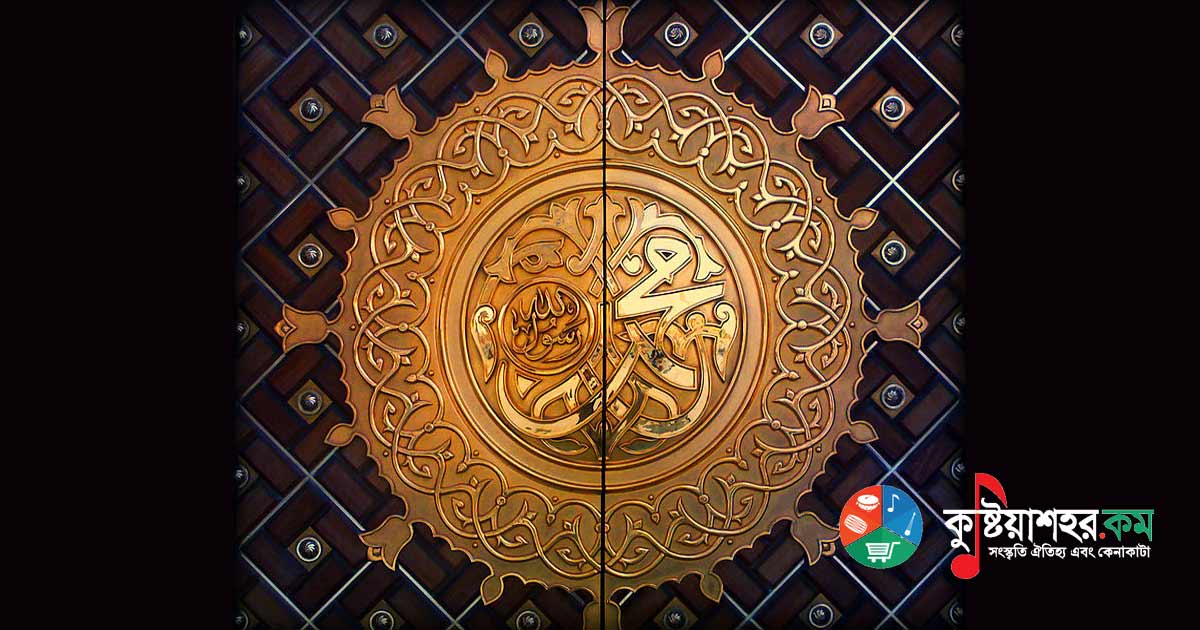
Eid-e-Miladunnabi (مَوْلِدُ النَبِيِّ) is the combined form of three Arabic words. It is made up of the three words Eid, Milad and Nabi. In the lexical sense Eid means joy, Milad birth, and Nabi messenger. In the technical sense, the joy at the great prophet's (SAW) advent in the world is called Eid-e-Miladunnabi.
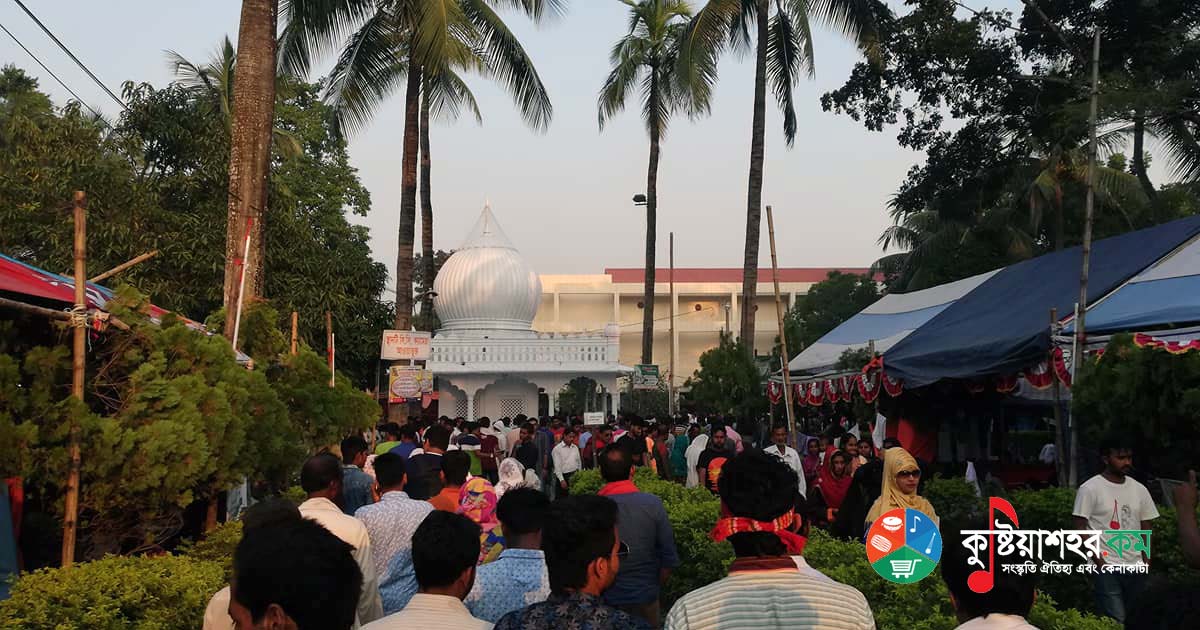
There are differences of opinion among the Muslims over observing Eid-e-Miladunnabi. However, the Sunni Muslims observe this day with proper religious solemnity. There is a public holiday on this day in Bangladesh. Eid-e-Miladunnabi is observed across the country, including Dhaka. Bangladesh's biggest Miladunnabi event takes place in Chattogram. There a gathering of several hundred thousand people assembles. It is organised by the Bangladesh Anjumane Rahmania Ahmadia Sunnia Trust.
The holy Eid-e-Miladunnabi is a most important day for the Muslim ummah. The day of the coming and passing of the ideal of all mankind, the final and greatest prophet Hazrat Muhammad (SAW), is of boundless significance. Having traversed the long course of a full year, the great day stands before us today. The day is named from the three words Eid, Milad and Nabi. All three words are taken from the Arabic language. The word Eid means joy or happiness, Milad means birthday, and the word Nabi is one of Islam's most familiar terms, used also in the Bengali language in the sense of prophet. So Eid-e-Miladunnabi comes to mean the festival of the prophet's birthday, or the joy at the prophet's birthday.
The Significance of Eid-e-Miladunnabi
1,446 years ago from today, when world mankind was in dire distress, when every field of life and of the world was sunk in utter darkness, at precisely that moment the great prophet Hazrat Muhammad (SAW) appeared as the saviour. The very nation whom social disorder, political despotism and economic bankruptcy — in a word, total degradation — had made famous by the worst appellation in history, 'barbarian', the great prophet (SAW) turned, with the flavour of his ideal, into the world's greatest ideal nation. Of whom the great Allah has commanded in the holy Quran — and who were the first to migrate and who were foremost among the Ansars, and who followed them sincerely — Allah was pleased with those people and they were pleased with Allah. Allah has prepared for them such a Paradise beneath which rivers flow; they will dwell therein forever, and that is the great success. (Surah At-Tawbah: 100) In truth the barbarian Arabs, following the path of ideal degradation, had lost the qualities of humanity and forfeited even the minimum qualification of human identity. Those same barbarian men, when again they came into contact with Hazrat Muhammad (SAW) and raised their character to an ideal standard, within a brief span of time earned the recognition of the world's finest men. This unimaginable and desired change in human life and society became possible only through the practice of Hazrat Muhammad's (SAW) supreme ideal.
The great Allah has commanded: O People of the Book! My messenger has come to you! He discloses to you many things of the Book that you concealed, and forgives many things. There has indeed come to you a luminous light and a resplendent Book. By it Allah shows the path of peace to those who seek His pleasure, and by His command brings them out of darkness into the light and guides them to the straight path. (Surah Al-Ma'idah: 15-16) When Eid-e-Miladunnabi comes, discussions, assemblies, seminars, symposiums and the like based on the great prophet's (SAW) life-model are held with great importance throughout the entire Muslim world. Therefore, with a mind wholly free from doubt, it must be said in a loud voice: although the prophet's birthday is fifteen hundred years old, Eid-e-Miladunnabi is of boundless significance.
The Importance of Eid-e-Miladunnabi
Today our life has become utterly restless. The blaze of unrest burns at every level of society. Human children, the tender ones, today are deprived of their rights in family, society and educational institutions in the very process of their nurture. The youth, the mainstay of human civilisation, are today at a loss. The elders, the source of the stream of society, are stalled in utter despair. In family and society, in educational institutions and workplaces, on the high road and at home, in mosque, temple, church and pagoda — nowhere is there any comfort of life, no security. Deception and trickery, vindictiveness and cruelty have become part of human character. Bribery and corruption have become social custom. Oppression and land-grabbing are considered marks of high lineage. Falsehood has seized the place of truth. In the name of social service the helpless sections are being exploited. In the name of religion the destruction of life and property is being proclaimed meritorious.
Against the background of our present life, the importance of Eid-e-Miladunnabi is immense. It will not do to confine the discussion of the great prophet's biography to words. No result will be obtained by displaying the magic of love for the prophet in street processions and slogans. The prophet's ideal must be portrayed flawlessly in the reality of running life. Only then will all the incongruities of life and society be removed and peace and order return. Character flaws healed, the children of Adam, bearers of human qualities, will return to this society along the path of ideal ascent. Life will fill with the honeyed stream of peace. As the great Allah has commanded: Say (O Prophet): If you love Allah, then follow me; then Allah will love you and forgive your host of sins. Allah is Most Forgiving, Most Merciful. (Surah Al-Imran: 31)
Eid-e-Miladunnabi Is of Mercy and Blessedness
Bearing the message of the total welfare and salvation of world mankind's worldly and otherworldly life, on 12 Rabiul Awwal, Monday, at dawn in 570 AD, the beloved prophet, the last prophet, Rahmatullil Alamin, the herald of peace, the guide of mankind's liberation, Hazrat Muhammad Mostafa Sallallahu Alaihi wa Sallam, came into the great universe. From the beginning of creation Allah Ta'ala has been flowing all His mercy and grace in both worlds through this prophet's intercession.
The day of the great prophet's (SAW) advent, the holy 12 Rabiul Awwal, is without doubt a day of mercy and blessedness for the world. And on the day of that prophet's advent, the tens of millions of devout Muslims of the world, with great decorum and reverence, recall the beloved prophet's moment of coming through various Naat-e Rasul, Jashn-e-Julus, Milad mahfil and the like — that is, through deep discussions upon the incomparable ideal and teaching of Shan-e Risalat — and celebrate joy and happiness in gratitude. The process and activities of delivering to all the people of the world the true guidance of the deen-e Muhammadi is the holy Eid-e-Miladunnabi (SAW). The principal means of escaping the present perilous condition of the Muslim ummah and of restoring Islam's lost glory is loving the beloved prophet and following his sunnah.
The History of Eid-e-Miladunnabi
The history of the holy Miladunnabi is most ancient. Miladunnabi was initiated by Allah Rabbul Alamin Himself! On 'the Day of Azal' — 'at the union of the world's beginning' — Allah organised this Milad taking all the prophets. Summoning the great assembly of the prophets, Allah Himself was the organiser of the Miladunnabi mahfil. In that assembly one hundred and twenty-four thousand, or according to another account two hundred and twenty-four thousand, prophets (AS) were present. The purpose of that assembly was to set forth before the other prophets the birth, shan and status of Hazrat Muhammad Mostafa (SAW) and to obtain from them the pledge of believing in him and of helping and supporting him.
In verses 81-82 of Surah Al-e Imran of the Quran Majeed there is mention of that Miladunnabi mahfil. That was the first Milad mahfil in the prophet's honour, and the initiator of the Milad mahfil was Allah Ta'ala Himself. So the Milad mahfil is Allah's sunnah or way. Presumably, all the prophets, standing in Allah's court, heard the Milad and stood in qiyam. For there is no scope for sitting in Allah's court. The environment was one of decorum. The reciter of the Milad was Allah Himself, and those who stood in qiyam were the noble prophets.
As the month of the blessed coming of Nabiye Do Jahan, the holy Rabiul Awwal shines with the glory of exalted shan and status-dignity. Doubtless, as the month bound up with the memory of the beloved prophet's advent and passing, this month is historically memorable for the present Muslim millat. We devout Muslims of Bangladesh have for many years, on the occasion of the holy '12 Rabiul Awwal', the day of the Merciful Prophet's blessed beladat (advent), been observing Miladunnabi, Jashn-e-Julus and the like with great joy, which in the eyes of the shari'ah is bida'at-e hasana and mustahab. For the ummat-e Muhammadi, offering due respect, darud and salam to Hujur (SAW) through these events is a most excellent worship.
To understand the significance and virtue of Eid-e-Miladunnabi, we must first know the true identity of that Merciful Prophet for whom this Eid-e-Miladunnabi is, believe in all his qualities unconditionally, and, acquiring the knowledge of what Allah's command concerning the prophet is, worship accordingly. The great Rabbul Alamin, exalting the prophet's shan, says: O Beloved! Proclaim, 'O mankind, if you love Allah, then follow me (and) Allah will love you and forgive your sins...' When the Companions asked to know the tafsir of this verse, the prophet said: 'None of you can be a believer until I become dearer to him than his own life' — (Zurqani alal Mawahib, Vol. 3, p. 313). And this 'dearer' means deep love. The strong surge of love is prem (ardent love), just as the force of a wave is called a storm-tide. The opinion of most scholars is that the measure of this deep love is obedience to the beloved, that is, of the lover, and following his footsteps. For the lover is the obedient follower of the beloved. Therefore that group which follows the sunnat and is obedient to the shari'ah is the lover of Hujur Pak and the true believer. This is what is meant by this verse.
Since Allah has declared love for the Rasul as the measure of love for Himself, Rasul-love is the precondition of attaining Allah! One who has no love for the Rasul within cannot be a believer. Mere outward observance of the sunnat is not Rasul-love. Along with the outward sunnah there must be sincere and inward connection, and as a result of this inward connection only the beloved dwells in the lover's sight.
Allah Pak has granted the servant countless 'niyamat and rahmat' (blessings and mercies). Among them the best and greatest 'niyamat and rahmat' is our beloved prophet's blessed advent in this mortal world! And in expressing gratitude for receiving this niyamat and rahmat lies the way of worldly peace and otherworldly salvation.
On this day, through the observance of memorial assemblies, discussion meetings, seminars, Quran khani, dua mahfil, Milad mahfil and the like, there lie manifold benefits and welfare in setting forth the history, importance and significance of that memorable day. By participating in these events, the Muslim society on the one hand will become capable, in understanding the significance of the religious day and its true teaching, in duly following, applying and implementing this ideal, of building an ideal peaceful society; on the other hand, through the observance of these programmes it will gain the opportunity of knowing and preserving the true history of historically notable events. In this way the continuity of history will remain alive to the coming generations. And if we do not recall these memorable historical days with religious enthusiasm and with grateful hearts, then one day they will gradually sink into the fathomless abyss of oblivion, and the unborn future descendants will one day suddenly forget them.
Is celebrating joy at gaining Allah's niyamat and rahmat and expressing joy in a shari'at-compliant way not obedience to the Creator's command? On the contrary, opposing it is another name for kufr. Rabbul Alamin commands: "Qul bifadlillahi wa birahmatihi — fabizalika falyafrahu, huwa khairum mimmma yajmaun" (10:58), that is, say: 'Because of Allah's grace and His mercy, they should express joy. That is better than all the wealth they amass.' Most tafsir writers have understood by the 'fadl and rahmat' narrated in the verse the holy person of the prophet Karim (SAW). Since the beloved prophet's blessed advent is Allah's special mercy upon the dwellers of the world, in following his footsteps the bewildered mankind found the path of light; the misled children of Adam, sunk in the fathomless abyss of error, through his intercession attained the status of Ashraful Makhluqat, that is, the best of creation. To the persecuted, crushed, maligned human groups he called along the path of the eternally welfare-bringing ideal and established them on the high seat of honour and dignity. Therefore what a great mercy his advent is for the ummah, and what the greatest blessing — goes without saying.
Therefore in celebrating the holy Eid-e-Miladunnabi, and in expressing gratitude by recalling that great Rabb's blessing, the beloved prophet, lies the path and provision of salvation in this world and the Akhirat.