বাংলা
 English
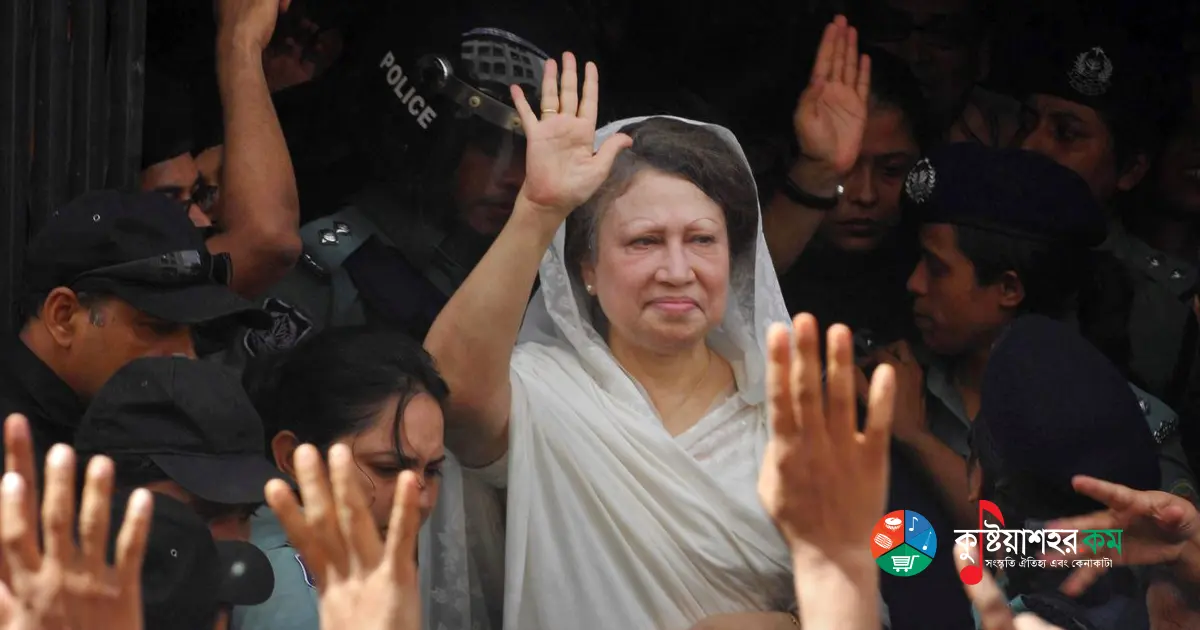
Begum Khaleda Zia was born on 15 August 1945 in Jalpaiguri (now in West Bengal, India). She was born into a business family. In her student life she was generally quiet and family-oriented. In 1960 she was bound in marriage with Ziaur Rahman. Her husband later became a military leader and President of Bangladesh.
Entry into Politics and Party Leadership
In 1981, after her husband's death, Khaleda Zia became active in politics. The Bangladesh Nationalist Party (BNP) then encouraged her to take its leadership.
- In 1984 she became the chairperson of the BNP.
- She played an important role in the mass movement against the military ruler Hussain Muhammad Ershad.
- During this time she gained political strength and popular support.
Prime Ministership
In 1991, winning the general election, Khaleda Zia became Bangladesh's first woman Prime Minister. Important policies and steps during her tenure were:
- Constitutional reform: determining the balance of power between President and Prime Minister.
- Education and health: free opportunities especially in girls' education, and the spread of education.
- Economic initiatives: encouragement of foreign investment, infrastructure development.
- She served as Prime Minister three times: 1991–1996, 1996 (briefly), and 2001–2006.
Political Rivalry and Criticism
In Khaleda Zia's political life, the long rivalry with Sheikh Hasina was extremely noteworthy.
- This conflict divided Bangladesh's political landscape into two camps.
- Critics say that during her rule there were irregularities in opposition participation and in the electoral process.
- Followers claim that this criticism was politically motivated.
Legal Issues
In 2018 she was imprisoned for a long time in a corruption case.
- The deterioration of her health became more pronounced during this period.
- Followers of the political party described these accusations as politically motivated.
Death and Funeral
- Death: 30 December 2025, while undergoing treatment in Dhaka, aged 80 years.
- Janaza and funeral: 31 December 2025; the general public, along with government and political leaders, were present.
- Mourning: a three-day official mourning was declared. The turnout was vast and is considered one of the largest public gatherings in history.
Political Impact and Analysis
- Khaleda Zia's death marks the beginning of a major change in Bangladesh's politics.
- Its impact will be deeply felt in the coming election and in party activities.
- An assessment of her political life is dual:
- On one hand, as an experience of democracy and an example of women's leadership.
- On the other hand, criticised for political clashes and pressure on the opposition party.
Begum Khaleda Zia is an extremely important political figure in the modern history of Bangladesh.
- She was the country's first woman Prime Minister, the leader of a long political struggle, and the chairperson of the BNP.
- Despite political controversy and criticism, popular support and influence have given her a permanent place in the country's political map.
- Her death will be considered the end of an important chapter in Bangladesh's political history and the beginning of a new era.