বাংলা
 English
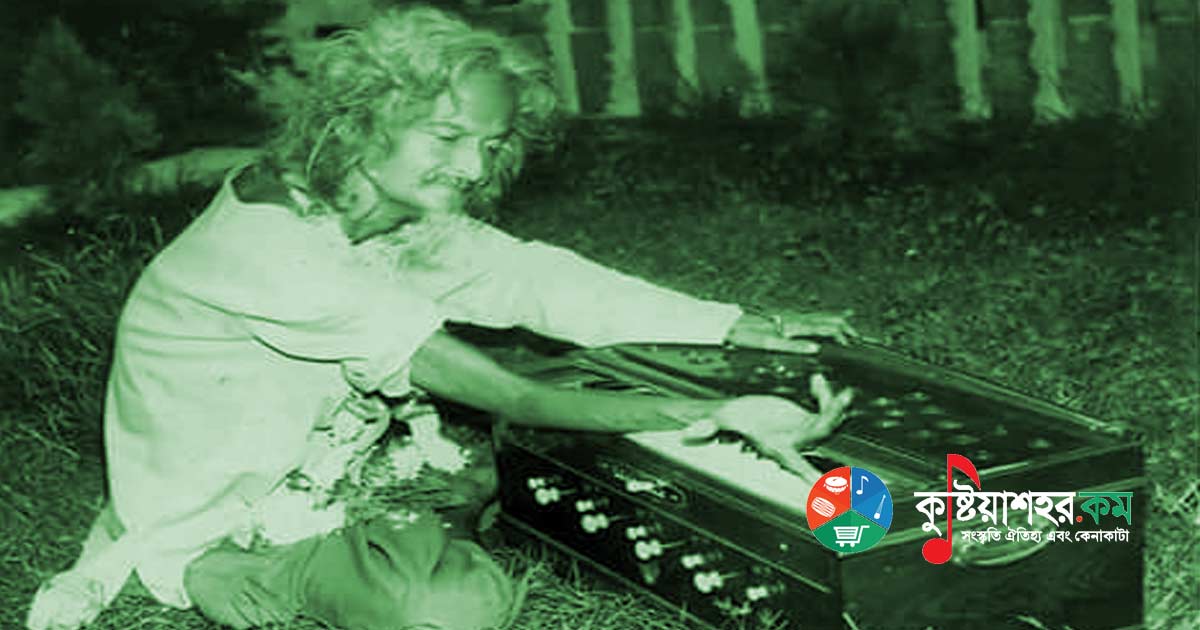
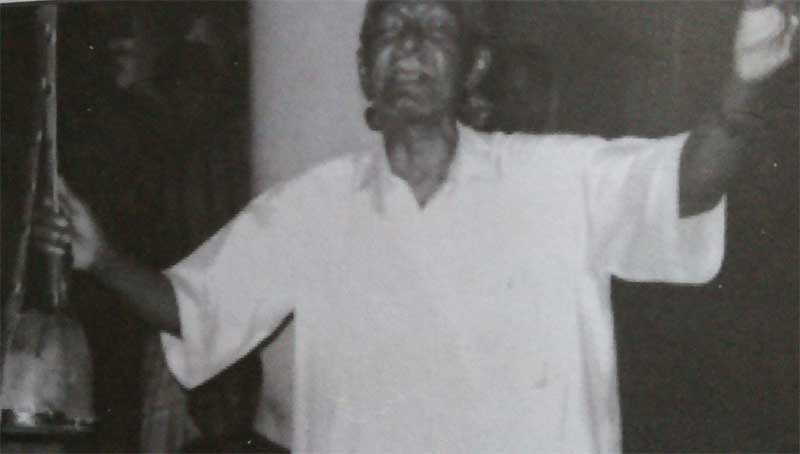
Bhaba Pagla (1897–1984), whose real name was 'Bhabendra Mohan Saha'. His birth was around 1897 AD. His father's name was 'Gajendra Kumar Saha'. Bhaba Pagla was one of three brothers and one sister. He looked somewhat thin and slight in build, with a radiant dark complexion, curly hair on his head and a tuft of beard on his chin.
In the signature line of his songs he refers to himself as Bhaba or Bhaben. In the Manikganj region he is known by the name Bhaba Pagla. Long ago his songs had attracted the attention of Muhammad Mansur Uddin and Professor Upendranath Bhattacharya. Professor Upendranath Bhattacharya printed two of his songs in 'Banglar Baul O Baul Gane' (The Bauls of Bengal and Baul Songs). Muhammad Mansur Uddin wrote about Bhaba Pagla in the seventh part of 'Haramoni': Bhaba Pagla was a renowned composer of Baul songs.
He was a resident of Amta village under Saturia thana (presently an upazila). After independence (that is, in the period after 1947 and up to 1971) he left Bangladesh and went to India. His songs became known and are still being sung in various places of Bangladesh and India, including Manikganj district. He himself composed and set to music mainly Shyama songs, devotional songs, songs of guru-tattva (the doctrine of the guru), songs of deha-tattva (the doctrine of the body) and songs of srishti-tattva (the doctrine of creation).
He went to India in 1947 and lived at Kalna in Burdwan. Bhaba Pagla passed away in 1984 AD.
Bhaba's book learning did not cross the threshold of class eight. But the immortality he gained in his understanding of life did not particularly require the knowledge gained from book learning. From childhood, in the company of his family, devotion was Bhaba's companion. It was Bhaba's habit to compose songs spontaneously, mouth to mouth, in the rustic tongue. The words of a song and its tune met like two dear companions. In the stream of song they played about in their own individuality. In the deepest field of the heart they built the refuge of the indwelling One. Not only in the music world of Bengal, but even on the scale of the world, Bhaba Pagla is a unique example.
Information says the number of Bhaba Pagla's songs was eighty-six thousand. That number of eighty-six thousand is perhaps exaggerated. Research says the number of Bhaba's songs is actually ten thousand. Even that number is vast. Why is the father of such a vast number of folk songs almost forgotten? The simple answer is Bhaba's aversion to publicity. Because of this aversion to publicity, many events of his life have been caught in the net of controversy.
One section of the Bauls claims him as their own. Although, in the view of most, despite the devotional sentiment, Bhaba Pagla did not allow the influence of the Baul doctrine to become manifest in his songs. For Bhaba, a non-believer in caste and creed, the purity of the heart was the main subject of his songs. That is why, without weariness, he was able to write “Remove the dirt of the mind.” Somewhere, in the appeal of this song, one recalls Rabindranath's words. One recalls how Kabiguru said it in almost the same vein: “When the world steals away the mind… the soul does not awake.”
The songs of this side of the Ganges and the other side of the Padma have tied the consciousness of the two Bengals with the same garland. One glows with Lalon while the other cools into Rabindranath. In Bhaba's songs, too, sorrow and pique merge; one comes to know one's own soul.
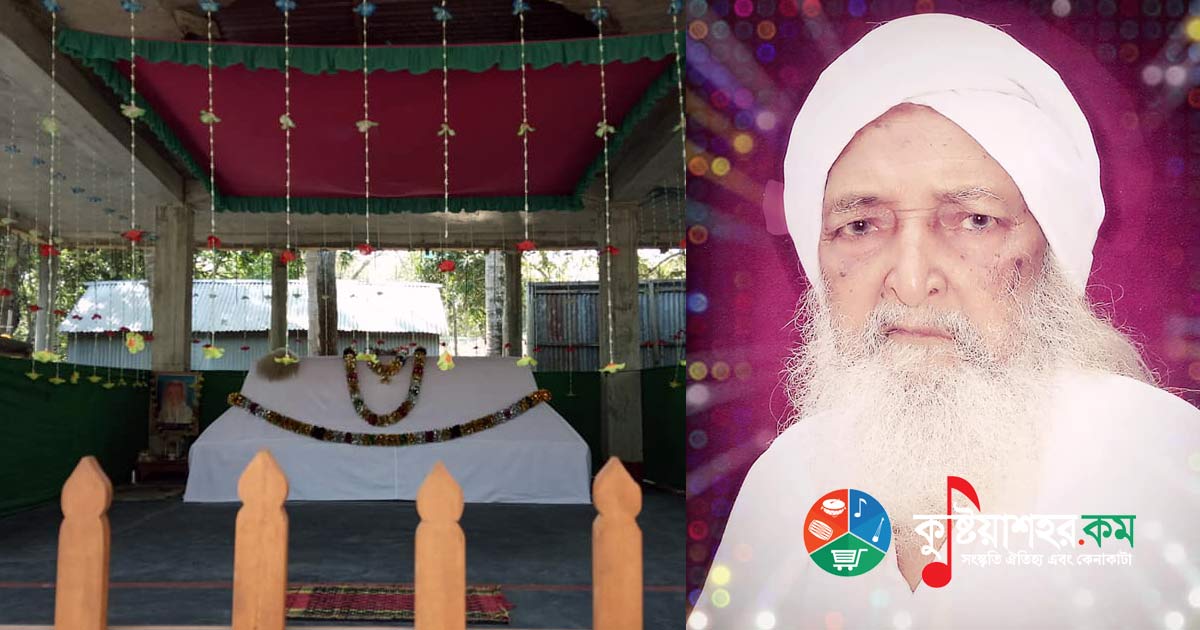
By a turn of events, Bhaba Pagla once cured an incurably ill man named Nandalal Das. In the time after this event, many began worshipping Bhaba as God. Bhaba's Harbola temple was established. In 1984 Bhaba Pagla breathed his last. But as long as Bengali folk music exists, again and again it must be said: