বাংলা
 English
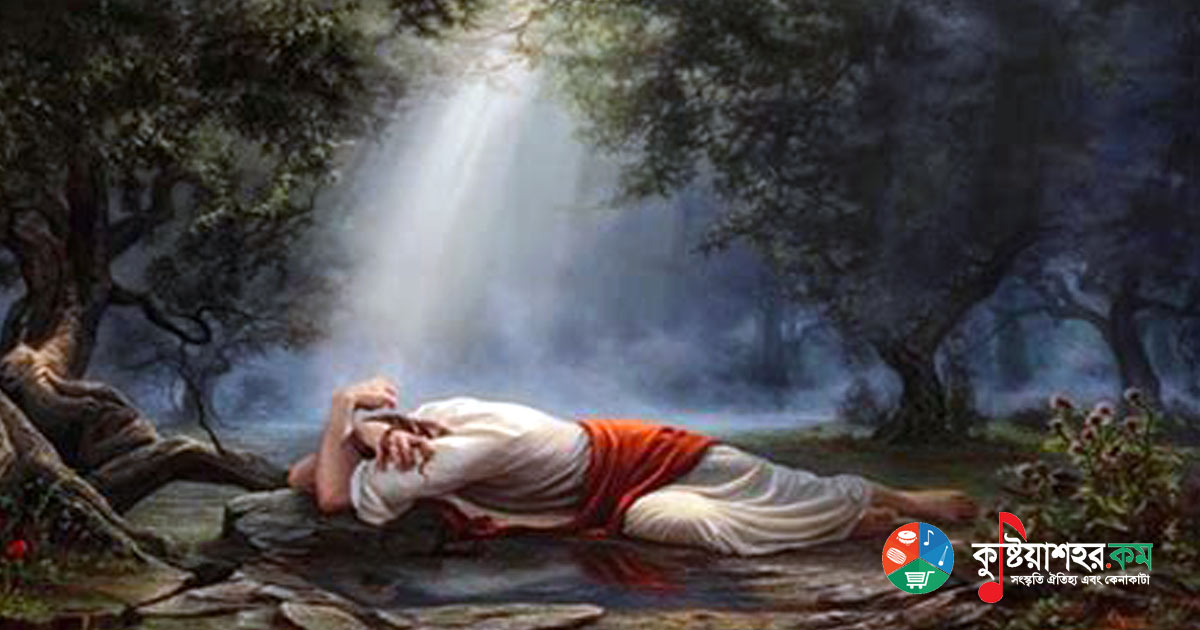
Adam's Place of Descent
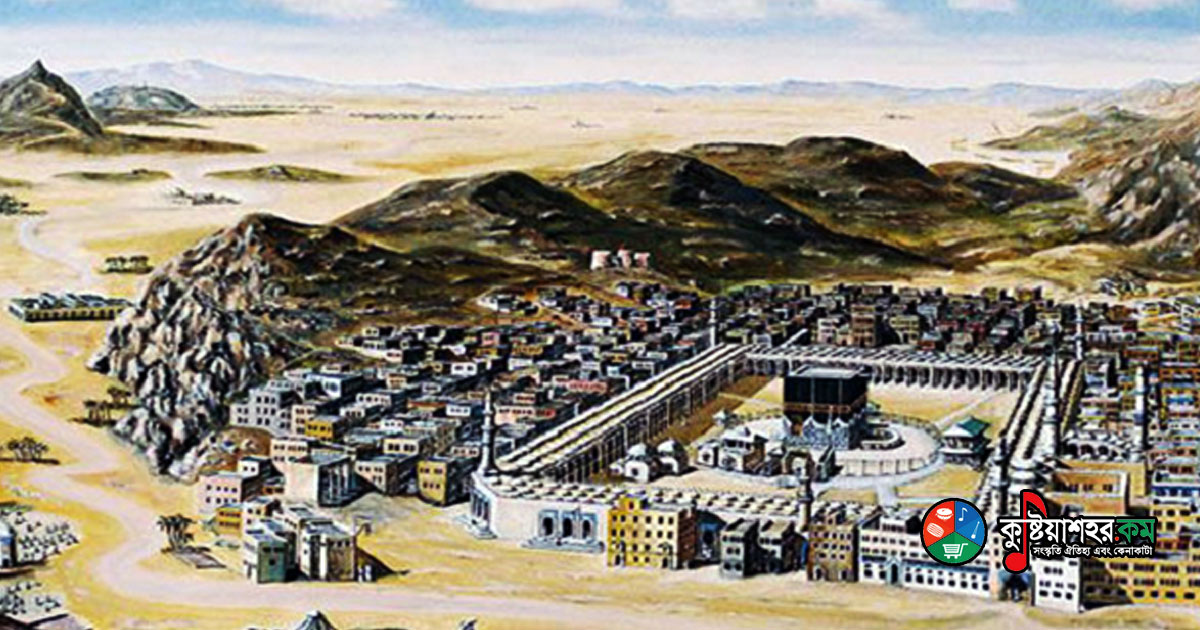
There are differences of opinion as to where Adam and Hawwa were placed in the world after being brought down from the Paradise located in the heaven. It is said that Adam was placed in Sarandib (Sri Lanka) and Hawwa in Jeddah (Saudi Arabia), Iblis in Basra (Iraq), and the snake — the alleged vehicle of Iblis's entry into Paradise — in Isfahan (Iran). Some have said Adam was brought down on the hill of Safa in Makkah and Hawwa on the hill of Marwa. There are other accounts too. But since the Quran and authentic Hadith say nothing explicit on this, many consider it best for us to remain silent on the matter.
The Account of the Covenant of Alast
Muslim ibn Yasar (RA) says that when some people asked Hazrat Umar Faruq (RA) about the meaning of verse 172 of Surah Al-A'raf, he said: I heard the Messenger of Allah (SAW) say, when he was asked about this matter, 'Allah Ta'ala created Adam (AS). Then He passed His right hand over his back, and out of his loins came all the righteous people who were to be born. Allah said: I have created these for Paradise, and in the world they will do the works of Paradise. Then He passed His hand over his back again, drew out from it a group of children and said: I have created these for Jahannam, and in the world they will do the works of Jahannam. Hearing this, a Companion asked: O Messenger of Allah! Then what is the purpose of doing deeds? The Messenger of Allah (SAW) said: When Allah creates someone for Paradise, He makes him do the works of Paradise; even his death occurs in the midst of such works, and then Allah admits him to Paradise. On the contrary, when He creates someone for Jahannam, He makes him do the works of Jahannam; even his death occurs in the midst of such works, and then Allah admits him to Jahannam. It is narrated from Abu Darda (RA) that the Messenger of Allah (SAW) said: The people of the right hand were like beautiful, glistening tiny ants, and the tiny people of the left hand were like black coals'.
It may be noted that the Quran says, 'from the backs of Bani Adam' (Al-A'raf 172), while the Hadith says, 'from the back of Adam'. In essence there is no contradiction between the two. Since Adam is the root and first father of Bani Adam, saying 'his back' and saying 'the backs of Bani Adam' amount to the same thing. Moreover, drawing out countless Bani Adam from every pore of Adam's body and presenting them was nothing strange for Allah.
Since man does not know his destiny, he must ever keep working along that very path in the hope of attaining Paradise. If, despite his best effort, he fails, he must understand that this was what was written in his taqdir (destiny). The servant has been given free authority to do both good and evil. And it is because of this freedom to exercise his willpower that Bani Adam has been honoured with the status of Allah's finest creation. And for this very reason he must bear the consequences of his good and bad deeds.
Here, by Adam's loins are meant the loins of Adam and his future children. Here 'descendants' does not refer to their disembodied souls, but to those tiny forms combining soul and body, endowed with knowledge and consciousness, from whom the promise and pledge were consciously taken on that day. And this is most easy for Allah. Today's science is conducting experiments on the entire solar system within a minuscule molecule. Through film, a colossal object is shown within the volume of a tiny dot. So if Allah Ta'ala, at that covenant ceremony, gave all the children of Adam knowledge and intelligence and gave them existence in minuscule bodies as molecules and dots, there is nothing to wonder at. Moreover, without knowledge, and without the matter coming within their perception and understanding, such an undertaking and declaration of the covenant would have had no significance.
A question may arise: it is natural for man to forget this promise and pledge taken at the beginning of creation; so what is the outcome of taking such a pledge? The answer is that just as the influence of the blood and mentality of the first parents, Adam and Hawwa, is seen equally age after age, country after country, among people of every language and colour, so too the influence of the affirmation of tawheed and the pledge taken that day exists more or less in all human beings. Man's very existence points man to his Creator, and in times of peril his heart yearns to take refuge with Him.
That is why we see that Pharaoh, the most cruel ruler in world history and a rebel against Allah, cried out declaring his faith in Allah as he was drowning (Yunus 10:90-91). The disbelievers and idolaters of Makkah and Madinah, though they bore enmity towards the final prophet, never denied Allah. Even Stalin, the arch-atheist of the modern world, was heard to cry out 'Oh my God' in the moments before he breathed his last. Indeed, that affirmation taken at the very beginning of creation has sown the seed of belief in Allah's existence in the heart of every human being. What is needed is for it to flourish — whether through some polytheistic and deviant method, or through the correct tawheedi method shown by the prophets.
The Hadith says this very thing, as follows: مَامِنْ مَوْلُوْدٍ إلاَّ يُوْلَدُ عَلَى الْفِطْرَةِ فَأَبْوَاهُ يُهَوِّدَانِهِ اَوْ يُنَصِّرَانِهِ أَوْ يُمَجِّسَانِهِ... — 'Every human child is born upon the fitrah; then his parents make him a Jew, a Christian or a Magian (fire-worshipper)'.[21] Here 'fitrah' means the natural religion, Islam. That is, a human child is not born with any polytheistic or infidel consciousness. Rather, it is born with the consciousness and capability of knowing Allah and of obedience and submission to Him. As a result, it embraces most readily and eagerly the teaching of tawheed given by the prophets. For no one can become a Muslim by birth-consciousness alone — not until he consciously and willingly accepts the deen sent through the prophet.
In another narration of Sahih Muslim it comes: وَإِنِّىْ خَلَقْتُ عِبَادِيْ حُنَفَاءَ كُلَّهُمْ وَأَنَّهُمْ أَتَتْهُمْ الشَّيَاطِيْنُ فَاجْتَالَتْهُمْ عَنْ دِيْنِهِمْ... — 'Allah says: I created My servants all as hanif, that is, devoted to Allah. Then Satan came after them and drew them away from their religion.'[23] Allah says, فِطْرَةَ اللَّهِ الَّتِيْ فَطَرَ النَّاسَ عَلَيْهَا لاَ تَبْدِيْلَ لِخَلْقِ اللَّهِ — 'The fitrah of Allah upon which He has created mankind. There is no change in Allah's creation' (Rum 30:30).
In short, every human child is born upon the natural religion of Islam, and is created with the feeling and capability of knowing its Creator and of following Him. Although many later go astray because of parents and environment, or through Satan's whisperings. Therefore, in disbeliever, believer and idolater alike exists the consciousness and capability of knowing Allah and of worshipping and obeying Him. No one can alter this inborn consciousness and feeling. That is to say, attempting to alter that consciousness through mis-education, bad company and the reading of Satanic literature, or through the sting of lewd blue films, amounts to rebellion against Allah's creation. Therefore, upholding that inborn consciousness is the duty of the individual, the society and the state.
Expressing this, Allah says, وَمَا خَلَقْتُ الْجِنَّ وَالْإِنْسَ إِلاَّ لِيَعْبُدُوْنِ — 'I created the jinn and mankind for no other purpose than My worship' (Adh-Dhariyat 51:56). That is, I have placed within their nature the inclination and capability of worship and servitude towards Me. If this is put to proper use, no act of disobedience will be committed by the servant, and no discord will arise in the world either. Consider how, the moment a Muslim child is born, the adhan is sounded in its ears.[24] The child neither understands the meaning of the adhan, nor, even when grown up, does he remember it. Yet through that adhan the seeds of tawheed, risalat and worship are planted in his heart, whose influence he feels all his life. Even if he becomes negligent of deeds, his heart never consents to being excluded from the fold of 'Islam'. In his subconscious, the sense of allegiance to Allah and the Rasul remains unimpaired. Especially in despair and peril, he yearns for his Lord's help and nearness.
Even without understanding the meaning, the recitation of the Quran and the sound of the adhan attract the human mind and leave a lasting impression upon the heart in a way that has no parallel. For this reason the disbelieving Arab leaders would not let people listen to the Quran, though they themselves would secretly listen to it in the darkness of night and call it sorcery. The greatest Arab poets surrendered to the miraculous nature of the Quran; indeed, one of the foremost Arab poets, Labid ibn Rabi'ah, gave up the practice of poetry after hearing the Quran. At the beginning of the last century, Kamal Pasha, after overthrowing the Osmani Khilafah in Turkey, established secularism and, banning the Arabic adhan in the mosques, issued the order that the adhan be given in the Turkish language. But this only deepened the people's heart-felt devotion to the Arabic adhan. Consequently, when a popular uprising broke out, he was compelled to rescind that order.
Modern science has also proved that sound exerts a profound influence on the human mind. So it is only natural that the sound of the Allah-sent adhan will exert a far-reaching, lifelong, lasting influence upon the tender mind of a new-born child. Therefore the covenant of 'Ahd-e-Alast' taken at the beginning of creation — the promise and pledge of worship and obedience to Allah — exerts a lifelong, lasting influence upon the human mind, of which the servant needs to be reminded again and again, and to oppose which amounts to self-deception.
The Purpose of the Covenant of Alast
Allah says,
أَنْ تَقُولُوْا يَوْمَ الْقِيَامَةِ إِنَّا كُنَّا عَنْ هَذَا غَافِلِينَ، أَوْ تَقُولُوْا إِنَّمَا أَشْرَكَ آبَاؤُنَا مِنْ قَبْلُ وَكُنَّا ذُرِّيَّةً مِّن بَعْدِهِمْ أَفَتُهْلِكُنَا بِمَا فَعَلَ الْمُبْطِلُونَ، وَكَذَلِكَ نُفَصِّلُ الآيَاتِ وَلَعَلَّهُمْ يَرْجِعُونَ- (الأعراف ١٧٢ -١٧٤)
'(I took your covenant before populating the earth) so that on the Day of Resurrection you cannot say that you were unaware of this matter of tawheed and worship'. 'Or you cannot say that the practice of shirk was introduced before us by our fathers and forefathers, and that we are their later descendants. Will You then destroy us for what those who followed falsehood did?' Allah says, 'In fact, in this way We set forth in full detail the matters of ancient times, so that they (that is, the disbelievers) may return to My path' (Al-A'raf 172-174).
In the light of the above account it is understood that there were two kinds of promise. One: the primordial covenant (الميثاق الأزلى) made in ancient times; and two: the worldly covenant (والميثاق الإنزالي الحالي) of obeying the revealed ordinances, which was incumbent upon the ummahs of every prophet.
The Taking of Other Covenants
1) The pledge of the prophets and messengers: After taking the pledge from all the children of Adam in general through the Covenant of Alast, Allah took a special pledge from the prophets and messengers: that they would duly deliver to their respective ummahs the messages of the messengership due from Allah's side, and would not be deterred in this by any fear or intimidation, slander or vilification.
(2) The pledge of the ummahs: Similarly, a pledge was taken from the ummahs of the various prophets as well, that they would obey their respective prophets and messengers and would not disobey them under any circumstances.
Thus, in explanation of verse 172 of Surah Al-A'raf (translated: 'When your Lord drew out from the backs of Bani Adam their descendants'), the Companion Ubayy ibn Ka'b (RA) said: Then Allah gathered them and divided them into men and women. Then He gave them the form of the future and the ability to speak. Then they spoke. Then Allah took from them the promise and pledge and, making them witnesses over themselves, asked: Am I not your Sustainer? They said: Yes. Allah said: I make the seven heavens and the seven earths witnesses over your words, and I make your father Adam a witness over you, so that on the Day of Resurrection you cannot say that you did not know of this pledge.
Know that there is no deity but Me and no Sustainer but Me. And you must not associate anyone with Me. Very soon I shall send My messengers to you. They will remind you of this promise and pledge made with Me. And I shall send down My books to you. Then they said: We bear witness that You are surely our Lord and deity. Apart from You we have no Sustainer, and apart from You we have no deity. Thus they gave their affirmation. Then Adam was raised above them. He looked towards them. He saw among them the rich and the poor, the beautiful and the plain, all of them. Then he said: O Lord! Why did You not make Your servants equal? Allah said: I wish that through this gratitude be expressed to Me.
He saw the prophets among them like lamps. From them a special covenant of discharging the responsibility of risalat and prophethood was taken separately, of which Allah says, 'When We took the covenant from the prophets, and from you, and from Nuh, Ibrahim, Musa and Isa son of Maryam' (Al-Ahzab 33:7). Among those souls was the soul of Isa, which was sent to Maryam. It is narrated from Ubayy that 'that soul entered through Maryam's mouth'.
(4) The pledge for the final prophet: After this, a special pledge was taken from all the prophets to accept the superiority and status of the final prophet Muhammad (SAW), to follow him, and to help him if they should live in his era. As Allah says,
وَإِذْ أَخَذَ اللّهُ مِيْثَاقَ النَّبِيِّيْنَ لَمَا آتَيْتُكُم مِّنْ كِتَابٍ وَّحِكْمَةٍ ثُمَّ جَاءَكُمْ رَسُولٌ مُّصَدِّقٌ لِّمَا مَعَكُمْ لَتُؤْمِنُنَّ بِهِ وَلَتَنْصُرُنَّهُ قَالَ أَأَقْرَرْتُمْ وَأَخَذْتُمْ عَلَى ذَلِكُمْ إِصْرِيْ قَالُوْا أَقْرَرْنَا قَالَ فَاشْهَدُوْا وَأَنَا مَعَكُم مِّنَ الشَّاهِدِيْنَ- (آل عمران ٨١)-
'And when Allah took the covenant from the prophets: whatever I have given you of the Book and wisdom, and then a messenger comes to you confirming what is with you (the Tawrat and the Injil), then you shall believe in that messenger (the final prophet) and help him. He said: Do you affirm, and do you accept My covenant upon this condition? They (the prophets) said: We affirm. He (Allah) said: Then bear witness, and I too am a witness with you' (Al-e-Imran 3:81).
Elsewhere Allah says, وَإِذْ قَالَ عِيسَى ابْنُ مَرْيَمَ يَا بَنِي إِسْرَائِيلَ إِنِّي رَسُولُ اللَّهِ إِلَيْكُم مُّصَدِّقاً لِّمَا بَيْنَ يَدَيَّ مِنَ التَّوْرَاةِ وَمُبَشِّراً بِرَسُولٍ يَأْتِي مِن بَعْدِي اسْمُهُ أَحْمَدُ... — 'Call to mind when Isa, son of Maryam, said: O Children of Israel! I am a messenger of Allah sent to you, confirming the Tawrat before me, and I bear glad tidings of a messenger who will come after me, whose name will be Ahmad'... (As-Saff 61:6).
From these two verses it is understood that just as each past prophet confirmed the prophet before him, so all the prophets announced to their respective ummahs the news of the coming of the final prophet Muhammad (Sallallahu Alaihi wa Sallam), and bequeathed faith in him, obedience to him and all-round help to him. This makes clear that the final prophet was the prophet of the whole world, and that all the past shari'ahs attained their completion within the shari'ah he brought.
(5) The pledge of the Jewish scholars: Besides the above covenant, a special pledge was taken from the Jewish and Christian scholars, that they would not conceal the truth. As Allah says,
وَإِذْ أَخَذَ اللّهُ مِيْثَاقَ الَّذِيْنَ أُوتُوْا الْكِتَابَ لَتُبَيِّنُنَّهُ لِلنَّاسِ وَلاَ تَكْتُمُونَهُ فَنَبَذُوْهُ وَرَاءَ ظُهُورِهِمْ وَاشْتَرَوْا بِهِ ثَمَناً قَلِيْلاً فَبِئْسَ مَا يَشْتَرُوْنَ- (آل عمران ١٨٧)-
'And when Allah took the pledge from the People of the Book (the scholars) that they would set it forth to the people and not conceal it, they cast it behind their backs and sold it for a trifling price. How wretched is what they sell' (Al-e-Imran 3:187).
(6) The pledge of the common Bani Israel: Then a pledge was taken also from the common people of Bani Israel. As Allah says,
وَإِذْ أَخَذْنَا مِيثَاقَ بَنِيْ إِسْرَائِيْلَ لاَ تَعْبُدُونَ إِلاَّ اللَّهَ وَبِالْوَالِدَيْنِ إِحْسَانًا وَذِي الْقُرْبَى وَالْيَتَامَى وَالْمَسَاكِيْنِ وَقُولُوْا لِلنَّاسِ حُسْنًا وَأَقِيْمُوا الصَّلاَةَ وَآتُوا الزَّكَاةَ ثُمَّ تَوَلَّيْتُمْ إِلاَّ قَلِيلاً مِنْكُمْ وَأَنْتُمْ مُعْرِضُوْنَ- (البقرة ٨٣)-
'When We took the pledge from Bani Israel to this effect: that you would worship none but Allah, and would show kindness to parents, relatives and the orphans and the needy, and would speak fair words to people, establish salat and pay zakat. But, except for a few of you, you all turned away, and you disregarded it' (Al-Baqarah 2:83).
Needless to say, most of the prophets came from Bani Israel. Yet it was Bani Israel who killed most of the prophets, denied them, altered and distorted their revealed books, destroyed the character of their prophets, besmirched their names, and finally, although they recognised the final prophet Muhammad (SAW) (Al-Baqarah 2:146; Al-An'am 6:20), pretended not to know him and committed the ultimate treachery against him. Of course, many among them (قِسِّيْسِيْنَ وَرُهْبَانًا — priests and monks) were blessed with faith and fulfilled the covenant made with Allah.[26] Such were the renowned Companions Abdullah ibn Salam, Adi ibn Hatim and other leaders. Moreover, the Christian king of Abyssinia, Najjashi, was himself a believer in the final prophet. Furthermore, he sent to Madinah a leading Christian religious delegation of 62 from Abyssinia and 8 from Syria — 70 in all. Listening to Surah Yasin from the mouth of the Rasul, they shed streams of tears. Then all of them accepted Islam'. On their return, Najjashi announced his own acceptance of Islam and, writing a letter, sent another delegation to Madinah under the leadership of his own son. But, by ill fortune, when their ship sank they all died on the way.
Adam's Status and Superiority
Allah created Adam and Bani Adam as the 'Ashraful Makhluqat' — the best of creation. Of this Allah says,
وَلَقَدْ كَرَّمْنَا بَنِيْ آدَمَ وَحَمَلْنَاهُمْ فِي الْبَرِّ وَالْبَحْرِ وَرَزَقْنَاهُم مِّنَ الطَّيِّبَاتِ وَفَضَّلْنَاهُمْ عَلَى كَثِيرٍ مِّمَّنْ خَلَقْنَا تَفْضِيْلاً- (الإسراء ٧٠)-
'We have honoured Bani Adam with high honour; We have carried them on land and sea; We have given them provision of the pure things; and We have preferred them above many of those We created with marked preference' (Al-Isra 17:70).
Here, first, by using the word كَرَّمْنَا, it is said that man has been given exclusive honours in certain matters that have been given to no other creation — such as knowledge and intellect, the power of thought, the sense of distinguishing good from evil and justice from injustice, and the ability to exercise an independent willpower, and so on. Then, by using the word فَضَّلْنَا, it is said that man has been given superiority over others — as in his ever more refined manner of living, his methods of building houses, his eating, his more refined taste in dress and attire, and his law-abiding and social way of life — matters that mark him out from the other creatures and are rich in variety. In them change, expansion, evolution and development are constantly at work. Whereas the weaver-bird's construction of its nest, or the manner in which tigers and jackals dwell in the forests, has remained unchanged for hundreds of thousands of years. No change has come to it in the past, and there is no likelihood of any change in the future.
By water, land and air, man travels and trades in ever more advanced transport. He partakes of the finest foods of the earth, eats delicious food through refined methods of cooking and drinks the finest beverages — which is not at all possible for any other creature.
Among the finest aspects of human dignity is that he has been given the power of speech, which has been given to no other creation. He has been given the diversity of languages and colours; he has been given the ability to write, and the capability of refined literary knowledge, of ornate and embellished sentence construction and of composing poetry — which has been given to no other creation.
Another aspect of human dignity is that all the manifest and hidden creations of the world have been made subservient to man (Luqman 31:20), as if the principal aim of all of Allah's creation is man — as if everything is for man. The rays of the sun, the light of the moon, the twinkling light of the planets and stars, the gentle flow of the wind, the life-giving power of water, the fertile power of the soil, the burning power of fire, the manifold beneficence of electricity, the fields full of green granaries, the trees laden with fruits, the garden's riot of flowers of many colours, the ponds, rivers and seas full of many kinds of fish and an assemblage of pearls and gems, the stores of gold, silver and mineral resources and the mines of oil and gas beneath the ground, the stalls and forests full of the dwelling places of animals and birds — for whom are all these? The answer in a word: all these are only for man. Allah says, هُوَ الَّذِي خَلَقَ لَكُم مَّا فِي الأَرْضِ جَمِيعاً — 'He is the One who has created for you all that is in the earth' (Al-Baqarah 2:29).
The question is: if everything is for man, then for whom is man? The answer to that too is one and the same: 'We are for Allah, and it is to Him that we shall return' (Al-Baqarah 2:156). 'We have come for His worship, for His servitude in all spheres (Adh-Dhariyat 51:56), and for conducting His vicegerency in the world' (Al-Baqarah 2:30). Everything that exists in the worlds is engaged in the worship of Allah. Everything operates for an appointed time (Luqman 31:29) under a set law (Fatir 35:43). All are obedient to Allah and bowed in prostration to Him, and engaged only in His glorification. This precise law of governing the world is the 'deen', and total obedience and submission to this deen is called 'Islam'. For this reason it has been said, إِنَّ الدِّينَ عِندَ اللّهِ الإِسْلاَمُ — 'With Allah the deen is only Islam' (Al-e-Imran 3:19).
Islam has two aspects: the natural and the human. The first pervades the whole world of nature, in which everything is governed directly by Allah through natural law — a law with no deviation and no exception (save Allah's special command) (Yusuf 12:40; Al-Ahzab 33:62; Al-Isra 17:77).
The second — that is, the practical principles of conducting human life — Allah has sent age after age through the prophets and messengers. This is called the Islamic shari'ah. It began through Adam (Alaihis Salam) and ended, attaining completion, through the final prophet Muhammad (Sallallahu Alaihi wa Sallam) (Al-Ma'idah 5:3). It may be noted that although in the lexical sense the deen of all past prophets may be called Islam, in the technical sense only the final and complete deen sent through the final prophet is called 'Islam'. Allah says,
فَأَقِمْ وَجْهَكَ لِلدِّيْنِ حَنِيفًا فِطْرَةَ اللهِ الَّتِي فَطَرَ النَّاسَ عَلَيْهَا لاَ تَبْدِيلَ لِخَلْقِ اللهِ ذَلِكَ الدِّينُ الْقَيِّمُ وَلَكِنَّ أَكْثَرَ النَّاسِ لاَ يَعْلَمُونَ- (الروم ٣٠)-
'Turn your face to the deen as a hanif. This is the fitrah of Allah upon which He has created mankind. There is no change in Allah's creation. This is the straight religion, but most people do not know it' (Rum 30:30).
In the above verse Allah Ta'ala directs man's attention to the unalterable deen: it is that deen which is established naturally throughout the worlds. That deen is reflected in man's physical being and the flow of his life. Because of obedience to that deen, from the father's finest sperm a foetus is created in the mother's womb. Then, at the appointed time, it arrives in the world in the beautiful form of a human child. Then, passing through childhood, adolescence, youth and maturity, he reaches old age, and at some point he dies. There is no change in this law of the body's birth and death. In this, all created beings, man included, willingly or unwillingly are obedient and submitted 'Muslims' to Allah's unalterable ordinance (Al-e-Imran 3:83; Ar-Ra'd 13:15). This is the natural aspect of 'Islam', which every human being is bound to accept. Man's body is therefore subject to natural law; but in respect of knowledge he is free. He may apply his knowledge freely.
The union of man's superior outward form with his spiritual aspect is an extraordinary thing. Yet in the other creations of the worlds there is no difference between the outer and the inner. The sun and the moon are all light; the beast is wholly filled with bestiality. But there is no correspondence between man's outer aspect and his inner one; rather, the latter is more complex and inscrutable. Within man's bodily form it is a separate world — one that cannot be seen, only perceived. Just as man is a biological being endowed with six enemies, so he is a being of conscience, moral and spiritual. The means of the world's medicine and comfort for the human body are more or less nearly equal everywhere, but the treatment of his mental world and the feelings of joy and sorrow are not equal for all. In the mental world, becoming Satan's minion, he often destroys his own outer bodily world. Essentially, it is the ideas and beliefs nurtured in the mental world that are reflected in man's world of action. Therefore the Merciful Allah has, age after age, sent the divine guidances through the prophets to direct the entire life of His beloved creation, man, along the right path. Like the natural deen, this deen too is unalterable and of eternal welfare. And that is Islam's outward human aspect. For the conduct of that human aspect, the deen sent through the prophets has been placed within man's free authority to accept and observe (Al-Kahf 18:29; Ad-Dahr 76:4).
By following this deen or shari'ah in full, man will find peace in the world and be blessed with Paradise in the Hereafter; and by defying it he will suffer unrest in the world and be scorched in the fire of Jahannam in the Hereafter (Al-Baqarah 2:38-39; At-Taghabun 64:9-10).
Needless to say, it is this free willpower that is the fundamental reason for man being 'the best of creation'. In it lies his test, and in it lie his Paradise or Hell. The greatest aspect of man's superiority is to establish Allah's vicegerency in this world. For he has been sent into the world precisely as 'Allah's khalifah'.[28] To populate this world beautifully according to Allah's wish, and to discharge the responsibility of representing Allah by conducting the whole of life according to the revealed ordinances — that is his principal task. He will discharge this responsibility of the khilafah in his individual life as well as in social and state life. Everywhere he will prove himself an obedient servant of Allah's ordinance. None of the heavens and the earth, the hills and mountains dared to accept this heavy responsibility. Man accepted it willingly (Al-Ahzab 33:72). But coming into the world, man, dazzled by its glitter, has become enamoured and has forgotten the duty of conducting Allah's vicegerency. Some show laziness in it, some deny it. Nevertheless, until the brink of the Resurrection there will always be a group of people who will go on discharging this responsibility.[29] Allah says, وَمِمَّنْ خَلَقْنَا أُمَّةٌ يَهْدُونَ بِالْحَقِّ وَبِهِ يَعْدِلُونَ — 'Among those whom We created there is a group who show the true path and do justice thereby' (Al-A'raf 7:181). Then He says, سَنَفْرُغُ لَكُمْ أَيُّهَا الثَّقَلَاَنِ — 'O jinn and mankind! Very soon We shall turn Our attention to you' (Ar-Rahman 55:31). That is, at a particular moment this current of taking your test in the world will suddenly cease, and you will be resurrected and gathered in the plain of Hashr. On that day none of you will be spared from My exacting judgement.
Allah created the jinn earlier from fire. They too were endowed with free authority. But they disobeyed. Many deny the jinn because they cannot see them with the physical eye. Yet there are many things man cannot see with the outward sight, whose existence cannot on that account be denied — such as electricity, the flow of wind, and the taste and smell of objects. The prophet of man is the prophet of the jinn too. Among them are believers, disbelievers and transgressors alike. The jinn understand the language of the people of the areas in which they dwell. In the tenth year of prophethood, returning from Taif, the jinn heard Surah Ar-Rahman in the Rasul's voice in the valley of 'Nakhla', and each time Allah said فَبِأَىِّ آلاَءِ رَبِّكُمَا, they answered in reply: La beshaiyyin min ni'amika Rabbana nukayyazibu falakal hamd.[30] They hear, understand and comprehend the words of man. Allah's Book is for jinn and mankind alike. Therefore their ultimate end and man's are the same.
In truth, Adam and Bani Adam are Allah's most beloved and finest creation. Until the time of death he must remain in this world's examination hall as an alert and active examinee. His Resurrection begins right after death; there will be no more opportunity for good or bad deeds. Therefore it is the duty of the wise man to depart the world upholding the status of Allah's finest creation, by conducting a life of welfare in accordance with the revealed ordinances sent by Allah.
It must be remembered that 'We are all for Allah, and we shall all return to Him' (Al-Baqarah 2:156). 'Our salat, our qurbani, our life and our death are all solely for the Lord of the worlds, Allah' (Al-An'am 6:162). May the Merciful Allah grant us Bani Adam, who were cast out of Paradise, that tawfeeq to return to Paradise — Ameen!!
Adam (AS) in Worldly Management
Hafiz Shamsuddin Zahabi (RA) says in the book At-Tibb an-Nabawi (الطب النبوى) that all the various arts necessary for man's worldly life began through revelation at the hands of one prophet or another, and were improved and refined age after age. Most of the revelations sent down first upon Adam (AS) concerned populating the land, agriculture and industry. The wheel-driven cart for travel and transport was first invented by Adam (AS). With the turn of ages, carts of various models are now in use. But the basis of all carts is the wheel. It may be said that civilisation has advanced on the basis of the wheel. Therefore whoever first introduced it is the great inventor. And he was our first father, the first man and first prophet, Hazrat Adam (Alaihis Salam) — which he had received through revelation.[31] In Adam's age the world's first agricultural product was the fig ('teen'). This has been proved by testing a whole dried fossil of a fig of that age recently obtained from the land of Palestine. In the Holy Quran Allah has sworn by the fig. May Allah shower peace upon our first father — Ameen!
The Story of Adam's Two Sons
Allah says, وَاتْلُ عَلَيْهِمْ نَبَأَ ابْنَيْ آدَمَ بِالْحَقِّ. 'Recite to them (the People of the Book) the true story of Adam's two sons. When the two of them offered a sacrifice, the sacrifice of one was accepted, but the sacrifice of the other was not. Then one said: I will surely kill you. In reply the other said: Allah accepts only from the God-fearing' (Al-Ma'idah 27). 'If you stretch your hand towards me to kill me, I shall not stretch my hand towards you to kill you. I fear Allah, the Lord of the worlds' (28). 'I think that as a result you will be an inmate of Jahannam, bearing the sin of my murder and the burden of your other sins. And that is the recompense of the wrongdoers' (29). 'Then his mind incited him to slay his brother, and he slew him. Thus he became of the losers' (30). 'Then Allah sent a raven, which scratched the ground to show him how he might bury his brother's corpse. He said: Alas! Was I not even able to be like this raven, so that I might bury my brother's corpse? Then he became repentant' (Al-Ma'idah 5:27-31).
Besides this Quranic account, whatever has been narrated on 'mauquf' authority through Abdullah ibn Amr and Abdullah ibn Abbas (RA) with 'jayyid' (excellent) chains, and which Hafiz Ibn Kathir has cited in his tafsir and history as the 'mashhur' (well-known) view of several earlier and later scholars, according to it the names of Adam's two sons were Qabil and Habil (قابيل وهابيل), and Qabil was Adam's first child and the eldest of all, while Habil was the younger.
The Cause of the Murder
What the Quran says on this is that the two brothers offered sacrifices in Allah's name. But Allah accepted one brother's sacrifice and not the other's. Enraged by this, one killed the other, whose sacrifice had been accepted.
It may be noted that in that age the sign of a sacrifice being accepted was that a fire would come down from the sky and take the sacrifice away with it. A sacrifice that the fire did not take was deemed rejected. Qabil practised farming. Out of miserliness he offered some inferior kinds of grain, wheat and the like for sacrifice. Habil reared livestock. Out of love for Allah he sacrificed his finest ram. Then fire came down from the sky and took away Habil's sacrifice. But Qabil's sacrifice lay where it was. Qabil was enraged and said to Habil, لَأقْتُلَنَّكَ — 'I will surely kill you'. Habil then admonished him, saying in gracious words, إِنَّمَا يَتَقَبَّلُ اللهُ مِنَ الْمُتَّقِينَ، لَئِن بَسَطْتَ إِلَيَّ يَدَكَ لِتَقْتُلَنِي مَا أَنَا بِبَاسِطٍ يَدِيَ إِلَيْكَ لَأَقْتُلَكَ إِنِّي أَخَافُ اللهَ رَبَّ الْعَالَمِينَ — 'Surely Allah accepts sacrifice from the God-fearing servants. If you now raise your hand to kill me, I shall not raise my hand to kill you in reply. For I fear Allah, the Sustainer of all the worlds' (Al-Ma'idah 5:27-28).
Ibn Abbas (RA) says that the very ram Habil sacrificed was later sent from Paradise by Ibrahim (AS) as a substitute for the sacrifice of Ismail.
Among the People of the Book there has long been a tradition that the site of the murder was a cave in the 'Qasiyun' (قاسيون) mountain in northern Damascus, which is known to this day as the 'Cave of Blood' (مغارة الدم). Though there is no certain basis for it.
Qurtubi says that Qabil killed Habil purely out of envy. He did not wish that his younger brother Habil should be praised in society as a better man than himself (Tafsir Qurtubi). Ibn Kathir says: after recounting the disgraceful history of Bani Israel's disobedience to Musa and their punishment of forty years' captivity in the wilderness of Tih, in the 7 verses from Al-Ma'idah 20 to 26, the Jews of Madinah are then told of the tragic end of the mutual envy of Adam's two sons, so that they might not disobey the final prophet Muhammad (SAW) purely out of envy and might not deny the Quran' (Tafsir Ibn Kathir). For although they recognised the final prophet, they refused to accept him purely out of this envy — that he was born not of the line of Israel but of the line of Ismail. This tribal envy has made the Jews the eternal enemies of the Muslims. In the same way, purely out of envy Qabil murdered his own younger brother Habil, and the world's first murder took place. Not only the Jews and Christians; age after age the condition of all who are hostile to Islam has been nearly the same. The way the circle of evil forces in today's world vilifies Islam and the prophet of Islam everywhere is merely the modern form of falsehood's eternal envy of truth.
It may be noted that the 'athar' narrated in the books of tafsir such as those of Ibn Jarir, Qurtubi and Ibn Kathir — that Qabil killed Habil to marry by force his own beautiful twin sister in defiance of Adam's shari'ah, and to remove for good Habil, who claimed that marriage, deeming him a thorn in his path — all of them are 'mursal', da'if and mawdu'. Ibn Kathir says: these are mere Israelite fables, copied later from Ka'b al-Ahbar, a former Jewish scholar who became a Muslim.
Ayyub Sakhtiyani says: the first person among the ummah of Muhammad to act upon this verse was the third khalifah, Hazrat Usman ibn Affan (Ibn Kathir). He, despite having power — and even at the cost of his own life — did not permit the people of Madinah to take up arms to suppress the rebels. In connection with the Rasul's (SAW) instruction, 'The person who sits during a fitnah is better than the one who stands', Hazrat Sa'd ibn Abi Waqqas (RA) said: O Messenger of Allah! If someone enters my house to kill me and stretches his hand towards me, what shall I do? The Messenger of Allah (SAW) said, كُنْ كَخَيْرِ ابْنَىْ آدَمَ — 'Be like the better of Adam's two sons' (that is, accept death like Habil). Then the Rasul (SAW) recited for them to hear verse 28 of Al-Ma'idah'.
Ibn Kathir says that these 'athar' claim that the sacrifice of Adam's two sons was not for any particular reason and that no matter concerning a woman was involved in it. The plain meaning of the Quran supports that claim, as narrated in verse 27 of Al-Ma'idah. Therefore, from the matters before and after, it becomes clear that the cause of the fratricide was purely this envy: Habil's sacrifice was accepted, but Qabil's was not (Tafsir Ibn Kathir). Although Habil had no hand in it. This envy and rancour against goodness is ingrained in the nature of wicked people, existing in every age of the world. As a result, good people may suffer temporarily, but in the final reckoning they are the gainers. On the contrary, wicked people may gain temporarily, but in the final reckoning they are the losers. Although Qabil, by wrongfully killing the innocent Habil, appeased his rancour and felt temporary satisfaction, in the final reckoning he fell into everlasting loss. Pointing to this very thing Allah says, فَأَصْبَحَ مِنَ الْخَاسِرِيْنَ — 'Then he became of the losers' (Al-Ma'idah 5:30).
The Messenger of Allah (SAW) says, لاَ تُقْتَلُ نَفْسٌ ظُلْمًا إلاَّ كَانَ عَلَى ابْنِ آدَمَ الأوَّلِ كِفْلٌ مِنْ دَمِهَا لِأَنَّهُ أَوَّلُ مَنْ سَنَّ الْقَتْلَ، رواه البخاريُّ — 'When any person is wrongfully killed, a share of the sin of killing him is added to the record of Adam's first son. For he was the first to institute murder'.[36] He further says: 'The person upon whom his brother has dishonour, or any other kind of wrong, should rid himself of it from that person today, before that day arrives when he will have neither dinar nor dirham (gold and silver coins) with him (that is, before death). If he has any good deed, a like amount of virtue will be taken from it in proportion to his wrong. And if he has no virtue, then the sins of the wronged will be loaded upon the wrongdoer'.
The Quran narrates this very import: وَلَيَحْمِلُنَّ اَتْقَاَلَهُمْ وَأَثْقَاَلاً مَّعَ أَثْقَالِهِمْ وَلَيُسْئَلُنَّ يَوْمَ الْقِيَامَةِ عَمَّا كَانُوْا يَفْتَرُوْنَ — 'And they shall indeed bear their own burdens, and burdens along with their own burdens; and they shall indeed be questioned on the Day of Resurrection about what they used to fabricate' (Al-Ankabut 29:13).
Points to Learn
- The story of Qabil and Habil contains the proof of man's being prompted by the urge of his innate instinct and of his being endowed with an independent willpower.
- It contains the proof that the wrongful killing of a human being is the most heinous sin, and that apart from repentance Allah accepts no good deed of a killer.
- God-fearing persons do not return wrong for wrong; rather they place their trust in Allah and seek redress from Him alone.
- As a result of wrongdoing, the wrongdoer at some point becomes repentant, is scorched by remorse in the world, and becomes fuel for Jahannam in the Hereafter.
- Virtuous persons regard the sorrows of the world as Allah's test and endure them with patience.
- If the wronged bears with patience, his sins press upon the wrongdoer's shoulders, and the wrongdoer alone must suffer the punishment for the sins of both.
- When a person dies, burying him is the eternal ordinance given by Allah. This ordinance exists in the Islamic shari'ah (Abasa 80:21). Therefore burning a dead person to ashes is a clear violation of that everlasting divine sunnah.
- Since this chain of wrongful killing began through Qabil, the burden of the sins of all the murderers who will wrongfully kill people until the Resurrection will be loaded upon Qabil's record. Therefore, O initiators of wrongdoing, beware!
Death and Age
The Messenger of Allah (SAW) says: 'The best of your days is the day of Jumu'ah. On this day Adam was created, on this day he died, and on this day the Resurrection will take place...'[38] Adam (AS) was given a thousand years of age. In the realm of souls, captivated by Dawud's (AS) beauty, he gave him 40 years from his own life. As a result he lived the remaining 960 years.
Lessons from the Biography of Adam (AS)
- He was fashioned directly by Allah's own two hands and created from clay. He received life as a knowledgeable and complete human being.
- He was the first father of the human race and the first prophet.
- He was sent as the successor of the jinn race and as the responsible khalifah for governing the world.
- He was given the names of all created things of the world, that is, the knowledge of them and the ability to use them.
- The superiority of the human race over all manifest and hidden creations, including jinn and angels, was proven. All are subservient to them and engaged in their service.
- Adam was created in Paradise, which was then in created form in the heaven outside the earth, as it is now.
- In Paradise, his wife Hawwa was created from Adam's rib bone as his mate. For that reason the female kind ever follows the male kind, and the two are drawn to one another.
- Adam and Hawwa were brought down from the heavenly Paradise into the world, and in the valley of Na'man near Makkah, the navel of the earth — that is, in the plain of Arafat — from all human beings born until the Resurrection, tiny-bodied forms were created and from them was taken the 'Ahd-e-Alast', that is, the affirmation and pledge of servitude to Allah.
- Man is the only knowledgeable creature of the earth. He has been given the willpower and freedom to do both good and evil.
- Adam possessed both the qualities of humanity and of the sinlessness of prophethood. At Satan's instigation he momentarily forgot Allah's prohibition, ate the fruit of the forbidden tree, became repentant and made tawbah. After his tawbah was accepted he received prophethood. Therefore he was without doubt sinless. In the same way, when Adam's descendants sin and make tawbah, Allah forgives it.
- Behind Iblis's refusal to prostrate to Adam and the event of his being cursed in consequence, man has been taught not to be arrogant.
- Combining the biological and the spiritual aspects, man is an extraordinary being, not comparable with any other creation.
- The believing servants will return to Paradise after the judgement on the Day of Resurrection.
- All the knowledge of worldly management was given to Adam, and through him began the first populating of land and wheel-driven transport on the earth.
- Everything was created for the service of man, and man was created for Allah's servitude.
Source and acknowledgement: Dr. Muhammad Asadullah Al-Galib