বাংলা
 English
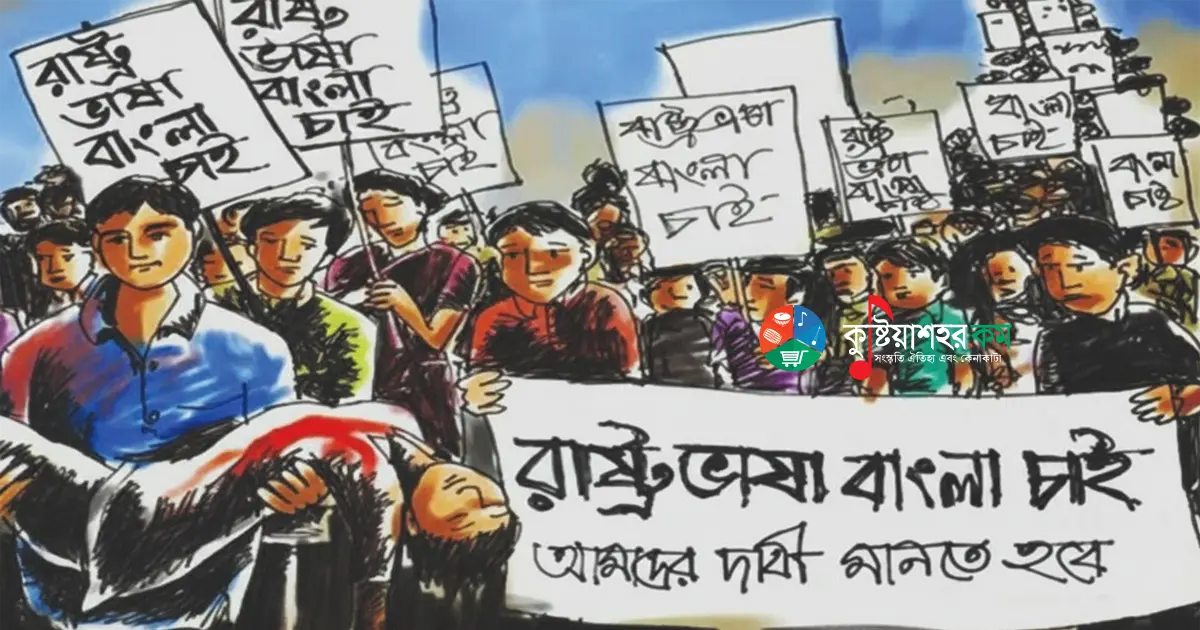
Mother tongue — it is not merely a medium of communication, it is the soul of a nation, its memory and the identity of its existence. And the day when the blood from young hearts spilled on the highway to uphold the dignity of that soul was 21 February 1952. This day is a unique and glorious chapter not only in the history of Bangladesh but in the history of the whole world’s struggle for language.
In 1947 India was partitioned and the state of Pakistan was born. Geographically separated, this state had two parts — East Pakistan and West Pakistan. In terms of population East Pakistan had the majority of the people, whose mother tongue was Bengali. Yet Urdu was imposed as the state language — a language wholly unfamiliar to the great majority of East Pakistan's people.
In 1948 Pakistan's Governor General Mohammad Ali Jinnah declared —
Urdu and only Urdu shall be the state language of Pakistan.
This declaration set a fire deep in the Bengali heart. Protest, meetings and rallies began. The students of Dhaka University took to the streets on the question of the right to their language. Gradually the movement crossed the bounds of the students and reached the hearts of ordinary people.
February 1952. The government imposed Section 144 — assemblies and processions were banned. But the Bengali youths were not afraid. On the morning of 21 February the Dhaka University area was tense and sombre. The students decided — breaking Section 144 they would take to the streets.
"We want Bengali as the state language" — with this demand the university campus rang out. The police first charged with batons and fired tear gas. But even that did not stop the movement. At one stage the police fired indiscriminately on the unarmed students.
They fell on the street —
- Salam
- Barkat
- Rafiq
- Jabbar
- Shafiur
Their blood stained the streets of Dhaka city. That blood seemed to cry out —
A language cannot be taken away, a language cannot be suppressed.
The deaths of these martyrs shook the entire nation. Grief took the form of resistance, and resistance took the form of national consciousness. Bengali could no longer be suppressed. Finally, in 1956 Bengali was recognized as one of the state languages of Pakistan.
But the significance of 21 February does not end here. It was this Language Movement that gave birth among the Bengalis to a sense of identity, awareness of rights and the dream of independence. Along the path of this movement came the mass uprising of 1969, and finally the great Liberation War of 1971.
This history of giving one's life for one's language is rare in the world. In recognition of that, in 1999 UNESCO declared 21 February "International Mother Language Day". Today the whole world knows — people gave their lives for the Bengali language, poured out the fresh blood of their hearts.
Every year at the first hours of Ekushey we pay our tribute with flowers at the Shaheed Minar. But the question is —
Are we truly honouring their sacrifice?
Are we giving our mother tongue its due respect?
21 February is not merely our day of mourning — it is a day of pride, a day of protest, a day of identity. It teaches us — rights are not charity, they must be won through struggle.
As long as the Bengali language lives, the blood of Salam, Barkat, Rafiq, Jabbar and Shafiur will show us the way.
And that bloody day of Ekushey will remind us — the struggle to protect the mother tongue immortalizes a nation.