বাংলা
 English
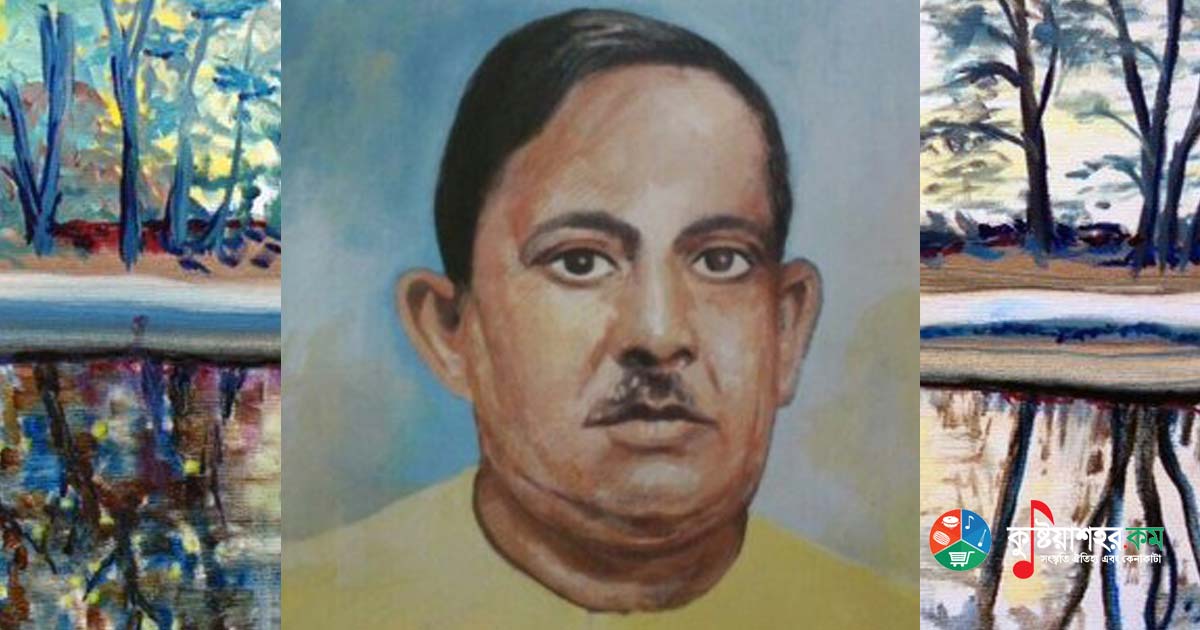
Prabodh Chandra Bagchi (18 November 1898 – 19 January 1956), or P.C. Bagchi — born the eldest son of Sri Harinath Bagchi and Srimati Tarangini Devi of Srikol union village in Magura district. He was the third vice-chancellor of Visva-Bharati University.
He lost his mother in childhood itself. He studied at the school in Srikol of Magura district. Bagchi was a bright student and a favourite of his teachers and headmasters, who expected great things of him. In 1914 he sat for the matriculation examination. He graduated with honours in Sanskrit from Krishnagar Government College in 1918. He stood first in his college and received the prestigious Mohini Mohan Roy prize. Although he showed promise in mathematics, out of a desire to study ancient Indian history he took up Sanskrit, India's classical language. He joined the University of Calcutta for postgraduate studies in ancient history and culture and obtained a first-class MA in 1920. He won a gold medal in the department of religion and stood first in the university overall.
After his postgraduation from the University of Calcutta, when Sir Asutosh Mukherjee summoned him saying 'join from tomorrow', he immediately joined the university as a lecturer. The period from 1921 was highly significant for the fulfilment of Prabodh Chandra Bagchi's dream of becoming a true orientalist. He realized the necessity of reconstructing ancient history and the multifaceted cultural history of India more scientifically in the larger Asiatic perspective. Carrying this lofty dream in mind, he began learning Chinese and Japanese from Professor Kimura and Professor Masuda and German from Professor Taraporewala of Calcutta University. Sir Asutosh Mukherjee, the vice-chancellor, appointed Prabodh Chandra to learn Chinese and Tibetan from Sylvain Levi, professor of Sanskrit and Indian civilization at the Sorbonne University of Paris, who was then at Santiniketan at the invitation of Rabindranath Tagore. It was also from Sylvain Levi and the great poet Rabindranath that Prabodh Chandra adopted a new method of research on Indian cultural history, which renewed his efforts to learn various foreign languages to gain access to the original source materials. Instead of fragmented special studies, he realized that ancient Indian history and culture should be viewed in their entirety so that many obscure areas could be brought to light.
In 1922 the young Prabodh reached the first milestone of his career when he went to Nepal with Sylvain Levi and Madame Levi. His laborious work of exploring the Tibetan and Chinese manuscripts of original manuscripts and old Sanskrit texts, which had been lost at their source but were preserved in translation in Nepal's Royal Darbar Library, resulted in his invaluable discoveries in the field of Indological research. Among his finds, the palm-leaf manuscripts of the Kaula-Jnana-Nirnaya and the Sammoha Tantra deserve special mention, as they shed light on mysticism, the influence of the Shakta cult on later Buddhism and the rise of new religious beliefs. In 1922, Prabodh touched another milestone when he received the Rasbihari Ghosh travelling fellowship for a year. He travelled to Indo-China, Cambodia, Cochin-China and Japan. He had the opportunity to work with Sylvain Levi, Louis Finot, founder of the Ecole de Pali in Phnom Penh, George Groslier, who founded a famous museum in Phnom Penh — the National Museum of Cambodia — Henri Marchal, head of the Ecole Francaise d'Extreme-Orient at Hanoi, and Henri Parmentier, interpreter of Khmer art and culture. Prabodh Chandra was enriched by exploratory surveys of the archaeological ruins of Angkor Wat. He stayed in Hanoi and had the good fortune to take part in a Chinese class conducted by Professor Oroshian. He toured Japan and benefited greatly from staying at the monastery of Kwazen. Between 1923 and 1926 Prabodh Chandra was in France on a government scholarship for higher studies. He worked:-
- on Sanskrit Buddhist literature with Sylvain Levi
- on the ancient ruins of Indian civilization in Central Asia with Paul Pelliot
- on the Buddhist literature of China with Henri Maspero
- on ancient Pali texts with Jules Bloch
- on the Avestan Gathas with Antoine Meillet
The University of Paris awarded him the degree of Docteur es Lettres (State Doctorate), the highest degree.
Prabodh Chandra Bagchi served in the department of ancient history and culture of the University of Calcutta between 1926 and 1944. Through innumerable writings based on his own research he contributed extensively to the advancement of research studies in the humanities.
In 1929 and 1930 he was again sent to Nepal to carry on research from Chinese and Tibetan manuscripts relating to Tantric Buddhism (Vajrayana), the Buddhist Siddhacharyas and the Charyagiti (Charyapada) and Dohakosa (the Dohakosa of Tilopa and Saraha). In 1931, he formed an informal study circle at the University of Calcutta with Professor Suniti Kumar Chatterji and Sukumar Sen for various discussions on historical linguistics, which was known as the science of comparative philology. Later, in 1938, this Philological Society merged with the Indian Linguistic Society, of which Dr Sukumar Sen became secretary and Dr Bagchi treasurer.
Prabodh Chandra's residence at Ballygunge Place in Calcutta became a hub of cultural and intellectual activity. The gatherings of prominent litterateurs of the organization Parichay, such as Hirendra Kumar Sanyal, Vishnu Dey and Sudhin Datta, were held at Prabodh's residence. Sarojini Naidu joined these gatherings, and Pramath Nath Chowdhury was a frequent visitor and a great admirer of Prabodh Chandra Bagchi.
He presided over a number of conferences such as the Howrah Teachers' Conference and the Divya Smriti Conference at Rangpur in 1937 and at Guwahati in Assam, the Greater Bengal Literary Conference (Brihatta Banga Sahitya Sammelan) held at Rangoon in Burma in 1939, and the Indian History Congress at Aligarh. In 1946, the All India Oriental Conference (the section on Pali and Buddhism) at Nagpur.
Prabodh Chandra, who had by then established himself as a stalwart in Sinology, joined Visva-Bharati University at Santiniketan in 1945 as director of research studies on a special grant from the Chinese government. He was still on deputation from the University of Calcutta. Meanwhile, the Government of India created a chair professorship at Peking University to further Sino-Indian understanding and cultural relations, and Prabodh Chandra was chosen for this prestigious post for two years. He accomplished his new duties successfully, and his house at 41/M Legation Street in Peking became a hub of Sino-Indian cultural activity. An international conference (23-24 November 2008) was held in Beijing to celebrate the 110th birth anniversaries of Professor Prabodh Chandra Bagchi and Tan Yunshan in remembrance of their scholarly contributions to Sino-Indian studies. This international conference was inaugurated by the then ambassador to China, Smt Nirupama Rao. A book was also published on the collection of Prabodh Chandra's essays (India and China: Interactions through Buddhism and Diplomacy).
On returning from China he resumed his work at Visva-Bharati and took charge of Vidya Bhavana of the department of higher studies. In recognition of his valuable contributions to Oriental studies, he received an honorary diploma from the Ecole Francaise d'Extreme-Orient.
Between 1949 and 1951, P.C. Bagchi delivered a series of lectures as Hemchandra Bose Mallik Professor at Jadavpur of the University of Calcutta. These highly illuminating lectures were:-
- the nomadic movements in the early days of Central Asia
- the history of relations between Tocharistan and Eastern Iran
- the history of the early states in the oases of Chinese Turkistan
- the use of Indian scripts and languages in Central Asia
These lectures were compiled in a book entitled 'India and Central Asia' and published in 1955 by the National Council of Education, Jadavpur. The celebrated orientalist Professor B.N. Mukherjee, who appraised this book, said in the centenary volume that Bagchi's scholarship was profound...
He (Bagchi) is the first qualified Indian scholar to have explored the past of Central Asia. He will always adorn the forefront of Indo-Central Asian scholarship.
In 1952 he was sent to China as the first representative of the Indian cultural delegation from independent India, led by Smt Vijaya Lakshmi Pandit.
Visva-Bharati and His Untimely Death
Bagchi had been associated with Visva-Bharati University since 1945 and took charge of Vidya Bhavana of the department of higher studies. He was appointed vice-chancellor of Visva-Bharati University in April 1954. In recognition of the scholar Bagchi's contributions, he became the first full vice-chancellor from outside the Tagore family. It was a short-lived tenure, as he died of a heart attack on 19 January 1956.
Despite his brief tenure, he proved himself an able administrator. In keeping with the ideals of Visva-Bharati's founder, the great poet Rabindranath Tagore, Visva-Bharati's all-round growth became his chief sustenance. He extended the fields of activity in all departments and introduced a three-year degree course at the undergraduate level along with other related changes in the curriculum.
To make Visva-Bharati a centre for the study of Oriental humanities he reorganized the department of Indology and created high professorships in the Indo-Tibetan and Japanese departments. Despite the institution's financial constraints, the encouragement he gave to research was highly commendable. He personally guided research students and arranged for their publications. He personally edited journals such as Sino-Indian Studies, the Visva-Bharati Annals and Sahitya Prakashika.
He introduced many new technical subjects such as applied mechanics and metal work into the curriculum of the nucleus of Sriniketan's educational programme. Prabodh Chandra's quotation:
Through constant association with Sriniketan I have now come to the firm conclusion that without Sriniketan, Santiniketan is incomplete. If Sriniketan is kept apart from Santiniketan then we cannot live according to Gurudev's ideals.
Bagchi continued his higher academic work during his tenure as vice-chancellor. In 1954, P.C. Bagchi delivered several scholarly lectures at the University of Calcutta on the obscure fields of India and South-East Asia in memory of Adhar Chandra Mukherjee. In the same year the Government of India invited P.C. Bagchi to lead a cultural delegation to China, which he declined as he was busy with Visva-Bharati's administrative work.
Even while shouldering administrative responsibilities as vice-chancellor and with failing health, Bagchi carried on his research work late into the night. After his sudden death much unfinished work was found on his study table. Of these, only She-Kia-Fang-Che was published posthumously by Visva-Bharati University in 1959. This work, translated for the first time from ancient Chinese into English by P.C. Bagchi, was written by a disciple named Tao-Syuan. The famous Chinese monk and pilgrim Xuanzang (Hiuen-Tsang) lived between AD 596 and 667. The value of this book as a major source of our knowledge of ancient geography, the prevailing Buddhism and Xuanzang's travel accounts is immense. Quotation from Professor B.N. Mukherjee:-
Though published without any critical introduction or notes, evidently because of the translator's sudden and unexpected death at the time of preparing the publication, the translation may be included among Professor Bagchi's greatest contributions to Central Asian studies. - Centenary Volume, India and Asia.
Prabodhchandra's sudden death was a great shock to Visva-Bharati and the educational community. Visva-Bharati wrote in its message:
Dr Bagchi's earthly pilgrimage has ended. His name and fame now belong to history. Though it is an irreparable loss, we shall feel proud to remember that he was ours... a man of letters, he will surely live longer than his years.
The Ministry of Education of the Government of India resolved:
This meeting... the Ministry of Education of the Government of India records its deep sense of loss at the premature and sudden death of Doctor P.C. Bagchi, Vice-Chancellor, Visva-Bharati, Santiniketan. Dr Bagchi's death is a loss not only to Visva-Bharati, with which he was associated for many years, but to learning throughout the country. The nation has lost in him an eminent scholar, an Indologist, a Sinologist and a worker who strove steadfastly for the ideals of Satyam, Shivam and Sundaram, which has been the mantra of the University from its very inception.
What stood out in his scholarship was his research and, indeed, his whole outlook on life.
Personal Life
In 1921 he married Panna Rani Devi, daughter of Rai Saheb Taraknath Maitra of Pabna and Hemangini Devi. She shared every aspect of his scholarly life and ran the family, and was a pillar of support while he lost himself in his long foreign travels, journeys of exploratory fieldwork or in his remarkable library of rare and invaluable books. For hours, or when he was busy typing his observations, the staccato of the writer's Remington typewriter was a familiar sound to the family. He was known for his hospitality and gentle nature and was very popular with his colleagues, students and friends. They had a son (Pratip) and five daughters (Chitra, Krishna, Gopa, Ratna and Indrani). He had five grandsons (Dipak Sinha, Ashok Sinha, Debdatta Mukutmoni, Dipankar Mukutmoni and Siladitya Sinha) and two granddaughters (Sujata (Bulu) Sanyal and Sudeshna Sinha).
Prabodh Chandra Bagchi was a sensitive man, evident from his love of animals and birds, music, aesthetics and a refined way of life. His compassion for the needy had no limit. Every month he contributed a significant amount from his own salary as scholarships for needy yet deserving students.
The Patriotic Bagchi
While in Paris the young Bagchi also made his mark as an effective organizer; he was one of the founders of the 'Association des Etudiantes Hindous de France' (the organization of Indian students in France). Ever sympathetic, he was loved by all Indian students and whenever needed he was ready to extend his helping hand. The eminent scientist Satyendra Nath Bose personally benefited from a letter of introduction to Madame Marie Curie to Professor Sylvain Levi at Bagchi's request. Satyendra Nath Bose has given an illuminating account. In a chapter of his collection of Bengali essays, a young Bagchi played an important role in 'exemplary honesty'.
Under Prabodh Chandra's direction this organization gave shelter to Indian freedom fighters branded anti-government by the British authorities. The Association was engaged in revolutionary activities, with branches in various cities of Europe and its headquarters at 17 Rue de Sommerard in Paris.
Even early in his life, during his postgraduate studies, he was actively associated with the Anushilan Samiti, an organization started to spearhead nationalist activities. It was founded in Dhaka by Barrister P. Mitra, on whom Vivekananda had an indomitable influence. Later the organization was shifted to Calcutta.
His Works:-
In English, French and Bengali he published a profusion of books. He contributed to academic and other journals. His best-known work, which is still acclaimed as a classic, is India and China, (ISBN 81-215-1197-6, ISBN 978-81-215-1197-1), first published in 1944.
The edition was published in 1950. This book was revised by Haraprasad Ray and published in a fifth edition in 2008.
His other principal works were:
- Le canon bouddhique en Chine. Les traducteurs et les traductions. Geuthner, Paris 1927-1938 (2 volumes)
- Deux lexiques sanskrit-chinois. Fan Yu Tsa Ming (《梵語雜名》) de Li Yen (禮言) et Fan Yu Ts'ien Tsen Wen (《梵語千字文》) de Yi-Tsing (義淨). 2 volumes. P. Geuthner, Paris 1929-1937. Studies in the Tantras. Calcutta. Calcutta University, 1939
For further details see the bibliography below:
Books in French
- Le Canon Bouddhique en Chine les traducteurs et les traductions, Tome 1, pp. lii, 436 ; Tome II pp. vi 437-742, 1927 : Paris, Librarie Orientaliste Paul Geuthner 1938, Sino-Indica Publications de L'universite de Calcutta
- Deux Lexiques Sanskrit Chinois Fan Yu Tsa Ming De Li Yen et Fan Yu Ts'ien Tsen Wen De Yi-Tsing : Tome I, pp. iv, 336 : Tome II, pp. viii, 337-590, 1929, Paris, Librarie Orientaliste Paul Geuthner 1937, Sino-Indica Publications de L'universite de Calcutta
Books in English
- Pre-Aryan and Pre-Dravidian In India 1929, Calcutta University 1968, Reprinted by Calcutta University
- Kaula-Jyana-Nirnaya and some Minor Texts of the School of Matsyendranath Calcutta Sanskrit Series, 1934, pp. viii, 92-148, Metropolitan Printing and Publishing House: Calcutta
- Studies In The Tantras Part-I, 1939 : Calcutta University
- India and China: a thousand years of cultural relations. Published in Greater India Society, Bulletin 2, Calcutta in 1927 First Edition 1944, China Press, Calcutta Second Edition 1950, Hind Kitab, Bombay
- India and Central Asia: 1955, National Council of Education, Jadavpur, Calcutta
- Caryagiti Kosa : P. C. Bagchi & Shanti Bhiksu Sastri 1956, Visva Bharati
- She-Kia-Fang-Che 1959, Visva Bharati
- Indological Studies-A collected works of Dr. P. C. Bagchi, vol. I, 1982, Visva Bharati
- The Second City of the Empire. Editor
Books in Bengali - Visva Bharati Press
- Buddhist Religion and Literature
- India and Indo-China
- India and China
- India and Central Asia