বাংলা
 English
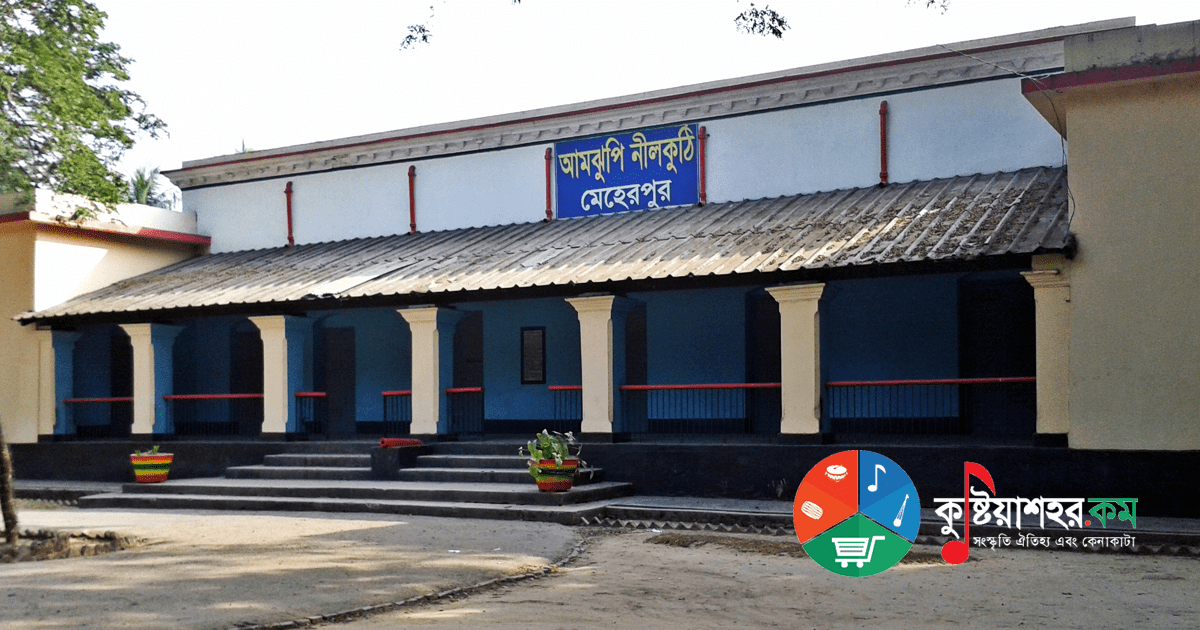
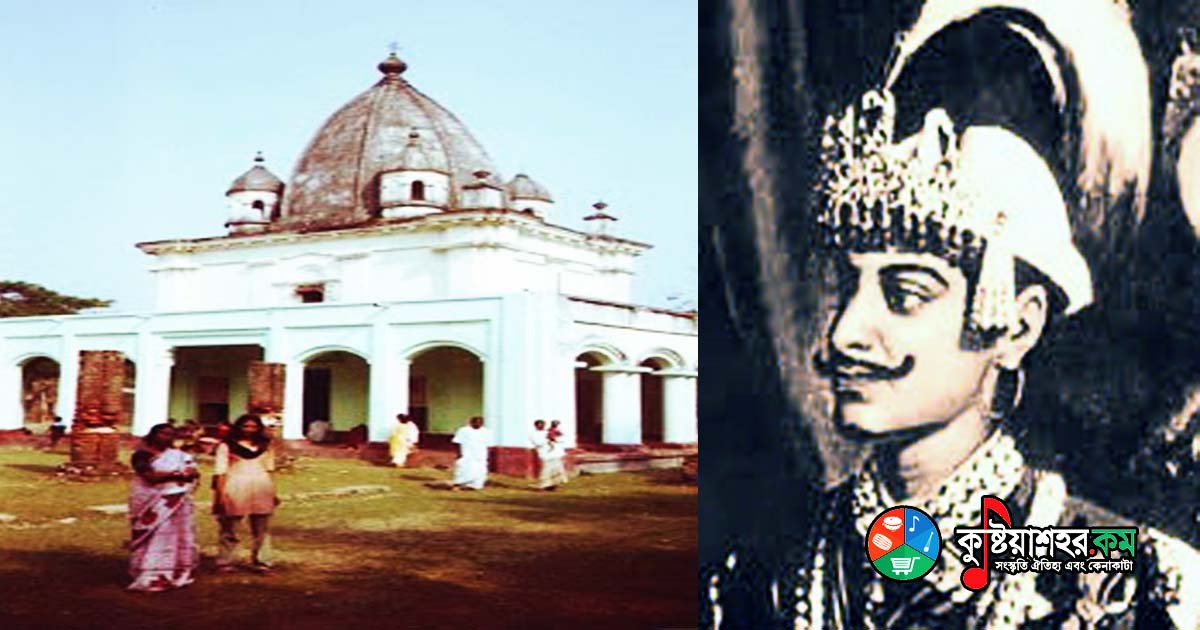
Amjhupi Nilkuthi is an indigo house situated in Meherpur, Bangladesh. During British rule, the English built houses in different places of this country for managing indigo farming, which came to be known as nilkuthi.
The nilkuthi is situated on the bank of the Kazla river, at a place adjacent to the Dhaka-Meherpur road, about six kilometers east of Meherpur district town.
History is the continuous motion picture of a nation's life and the memorial of its truth. 'Dead history' is presented to man with awe in hopelessness and despair. History therefore takes upon itself the responsibility of revealing it, weaving glory and blame and the load of reproach together on one thread. Traversing the road of this history, man thus moves from age to age in his eternal going and coming, in an unceasing current of life. On just such a dusty road of history stands Amjhupi, brushing the edge of border-town Meherpur. The victory chariot of Mughal general Man Singh once rolled along this road; on this road the dust of Bhaskar Pandit's war-drums whirled up as he beat the black fists of battle; here also lies the memory of Nawab Alivardi Khan, the ruler of Bengal-Bihar-Odisha. The indigo design of the defeat at Plassey was also woven here - in this Amjhupi. It is heard that the last meeting of Robert Clive with Mir Jafar and the conspirators was held here, and as a result not only did Nawab Siraj-ud-Daula meet the ruin of his fate, the Bengali lost his independence. During the English conquest, Amjhupi Nilkuthi rose in the indigo-red blood of Bengal's oppressed people. Standing with the memory of the tyranny-persecution-exploitation of the kuthial Keni-Simpson-Fergusson and their associates, stands the kuthi of Amjhupi. In consequence of the unstoppable movement of the oppressed indigo farmers, one day indigo farming disappeared from the heart of Bengal. Changing hands, Amjhupi Nilkuthi became the kachari of the Modinipur zamindari company. After the partition of the country, together with the abolition of the zamindari, that chapter too came to an end. Along the course of evolution another history is born: on 13 May 1987, the Khulna Division Development Board's 'Amjhupi session'. Throughout this journey, forgetting the memory of the plunder-torture-oppression of the past, Amjhupi is a history that travels on the path of man's taste, labor and progress. This fortunate Amjhupi receives recognition as a tourist center. At a cost of eighteen lakh two thousand taka (Tk 1,802,000), excavation and landscaping were carried out in an effort to reawaken the 'Amjhupi' memorial named after the famous kuthibari of Amjhupi in the adjoining area.
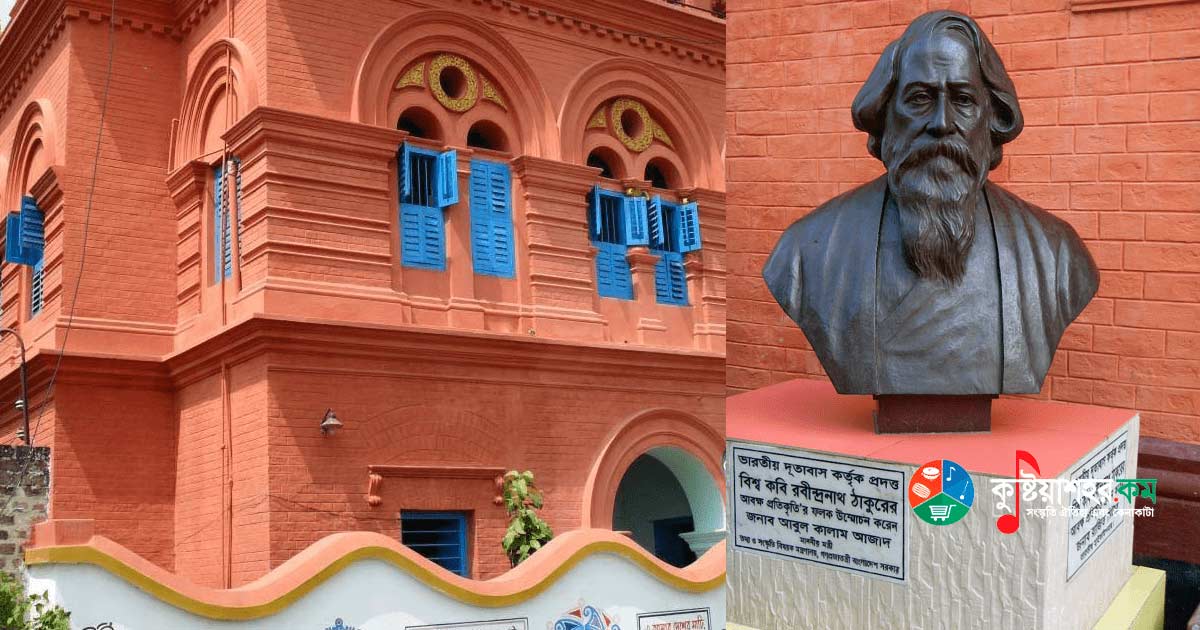
Built with a blending of indigenous architecture with European architecture, especially British architecture, rises Amjhupi Nilkuthi. To enter the building there are two paths, front and back. The main entrance path and the front part of the building face the Kazla river. From the front part of the kuthi a masonry-built stair ghat runs straight into the middle of the Kazla river toward the south. It is known that the boats of the indigo traders anchored right here. Beside the main building here are remains of boundary walls or ghats. It is known that these walls were decorated and used for exchanging letters.
Accommodation: In Meherpur district town there are accommodation arrangements at the Circuit House, Poura Hall, Fin Tower residential hotel, Mita residential hotel and Kamal residential hotel.
How to go: The distance from Meherpur district town by road is 7 km. By bus or local transport tempo/Laxman/Karimon, Amjhupi Nilkuthi can be reached in 25 minutes.