বাংলা
 English
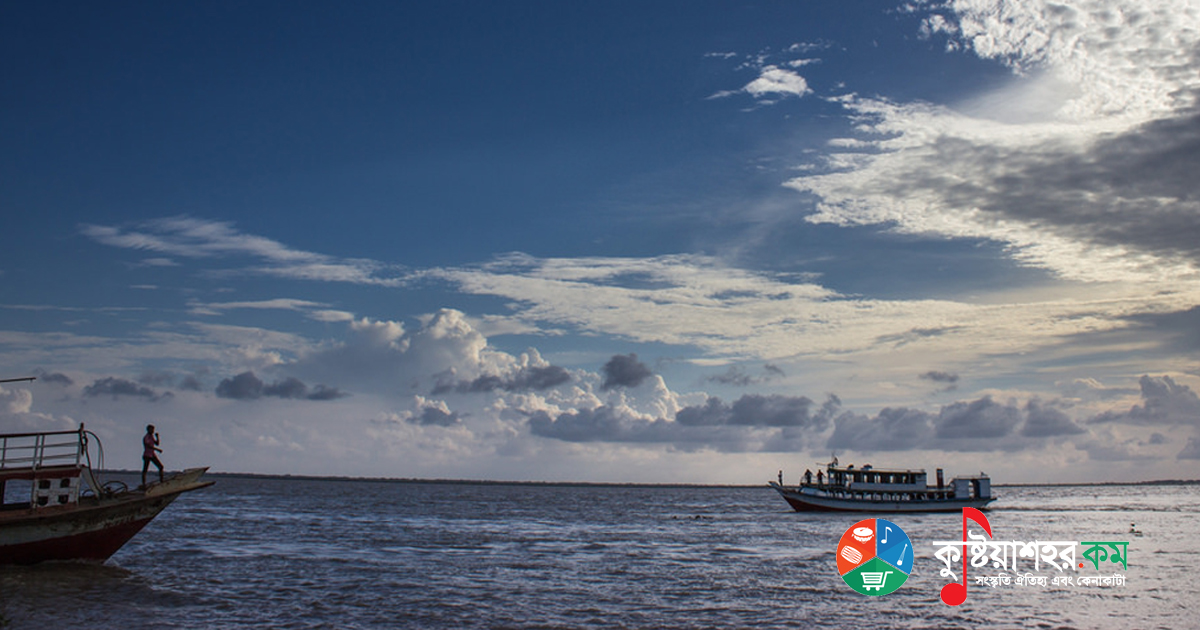
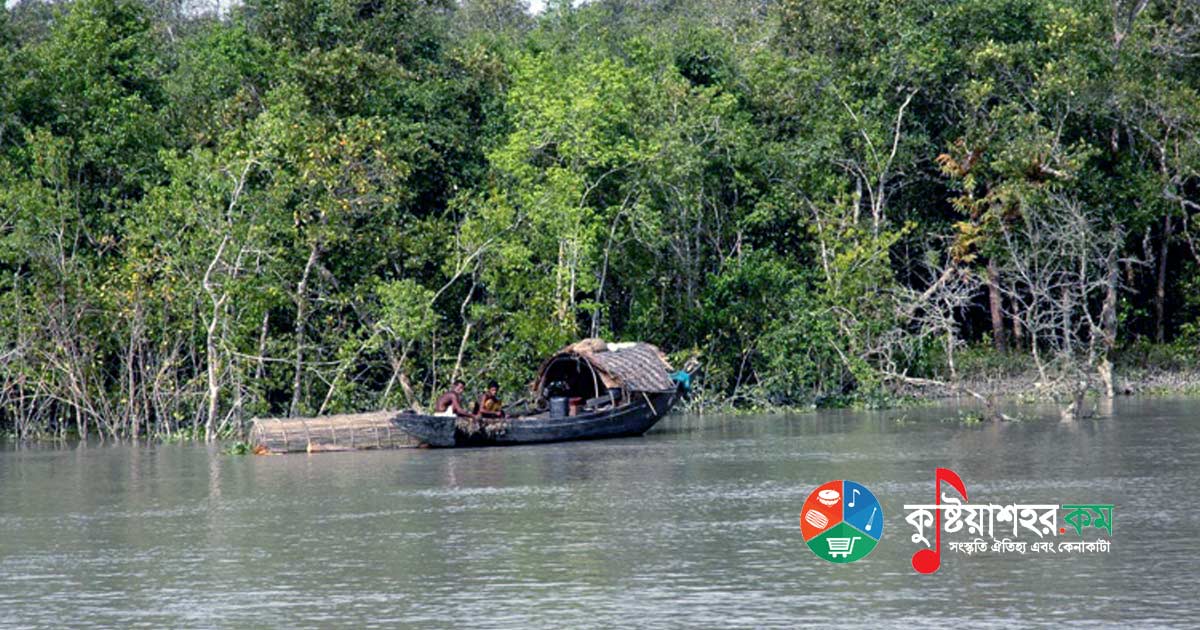
The Padma is a major river of Bangladesh. It is the main distributary of the Ganges, which rises in the Himalayas, and is the second longest river in Bangladesh. Rajshahi, an important city of Bangladesh, stands on the Padma's northern bank. The maximum depth of the Padma is 1,571 feet (479 metres) and its average depth is 968 feet (295 metres). Within Bangladesh the river is 121 kilometres long, with an average width of 10 kilometres, and its course is meandering. The identification number assigned to the Padma River by the Bangladesh Water Development Board, or "Paubo," is River No. 32 of the North-Central Region.
Because the exploits of Raja Rajballabh were destroyed at the mercy of the Padma's erosion, another name for the Padma is Kirtinasha (the destroyer of glory).
Region: Rajshahi Division. Districts: Nawabganj, Rajshahi, Pabna, Kushtia, Faridpur, Rajbari, Chandpur.
The main distributary of the Ganges, born of the Gangotri glacier in the Himalayas, enters Bangladesh at Shibganj upazila of Chapai Nawabganj district (Manakosa and Durlabhpur unions), and from there the river takes the name Padma. The other branch of the Ganges, called the Bhagirathi, flows through India towards the Hooghly. At Goalanda, 2,200 kilometres from its point of origin, it joins the Jamuna River, and the combined stream, still under the name Padma, flows further east until it joins the Meghna River in Chandpur district. Finally, the combined flow of the Padma–Meghna takes the name Meghna and merges with the Bay of Bengal in the south.
The Padma is the second longest river in Bangladesh, with a length of 366 kilometres.
The Padma's principal tributaries are the Mahananda and the Punarbhaba. The Mahananda tributary lies in Chapai Nawabganj district, while the Punarbhaba flows through Bangladesh and West Bengal in India. Among the Padma's various distributaries the Gorai, Arial Khan, Kumar, Mathabhanga, Bhairab and others are prominent. Its further offshoot rivers include the Madhumati, Pashur, Kopotakkho and others. These rivers spread across the districts of Kushtia, Rajbari, Jashore, Jhenaidah, Narail, Magura, Bagerhat, Gopalgonj, Faridpur, Madaripur, Shariatpur, Barishal, Patuakhali and more.
Of the towns standing on the banks of the Padma, Rajshahi city is the largest. Covering an area of 96.68 square kilometres, it is the third largest city in Bangladesh and one of the principal cities of North Bengal. In Rajshahi, the Padma embankment is beautifully adorned with flowering plants. Rajshahi Collegiate School, one of the oldest schools in the subcontinent, stands close to the Padma's bank. It is known that after its establishment in 1828, the school fell victim to the Padma's erosion three times. The Padma Food Garden, the A. H. M. Qamaruzzaman Central Park and Zoo, the Boro Kuthi amusement park, the Muktomancha (open stage) and the T-embankment are the main tourist areas of Rajshahi developed along the Padma's bank.
In addition, various kinds of tourist centres are growing up around the Padma River in Pabna, Kushtia and Rajbari districts as well.
Manik Bandopadhyay's famous novel Padma Nadir Majhi (The Boatman of the Padma) was written around the lives of the people living on this river's banks. The Padma's natural and scenic beauty influenced the poet Kazi Nazrul Islam in many ways; the river's lost heritage and beauty are reflected in some of his famous songs.