বাংলা
 English
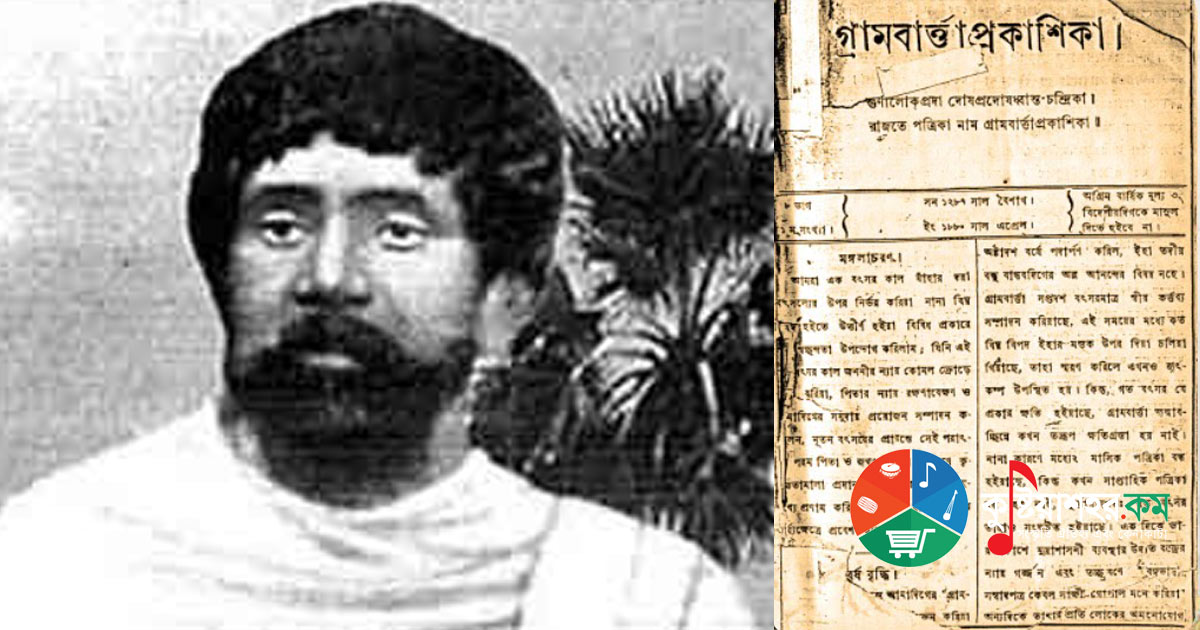
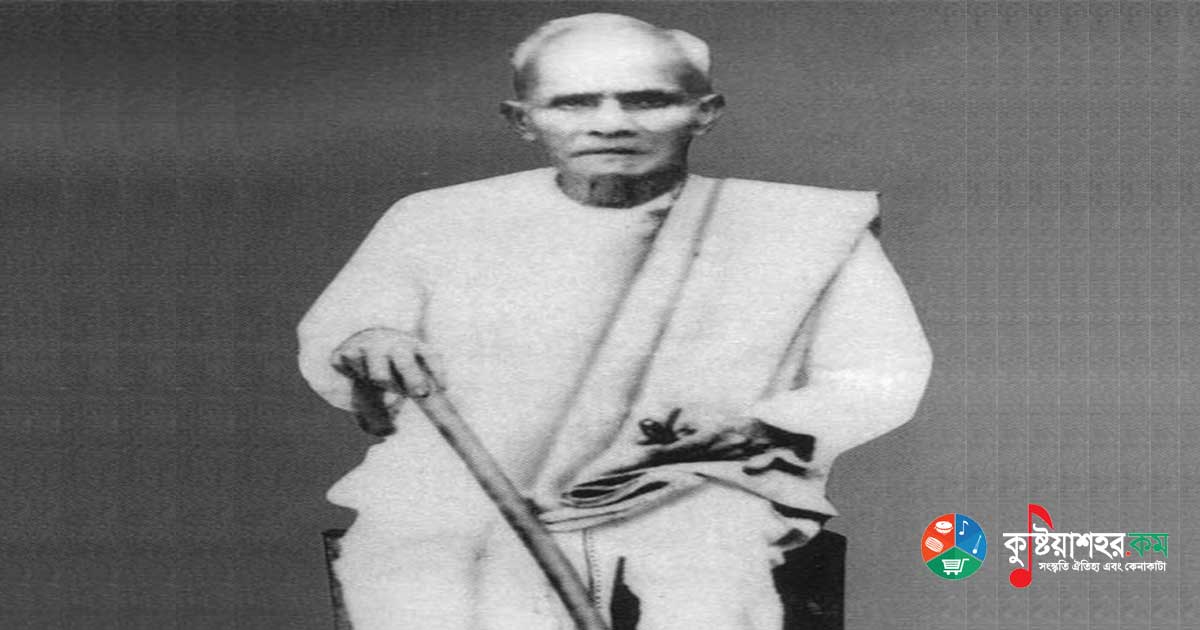
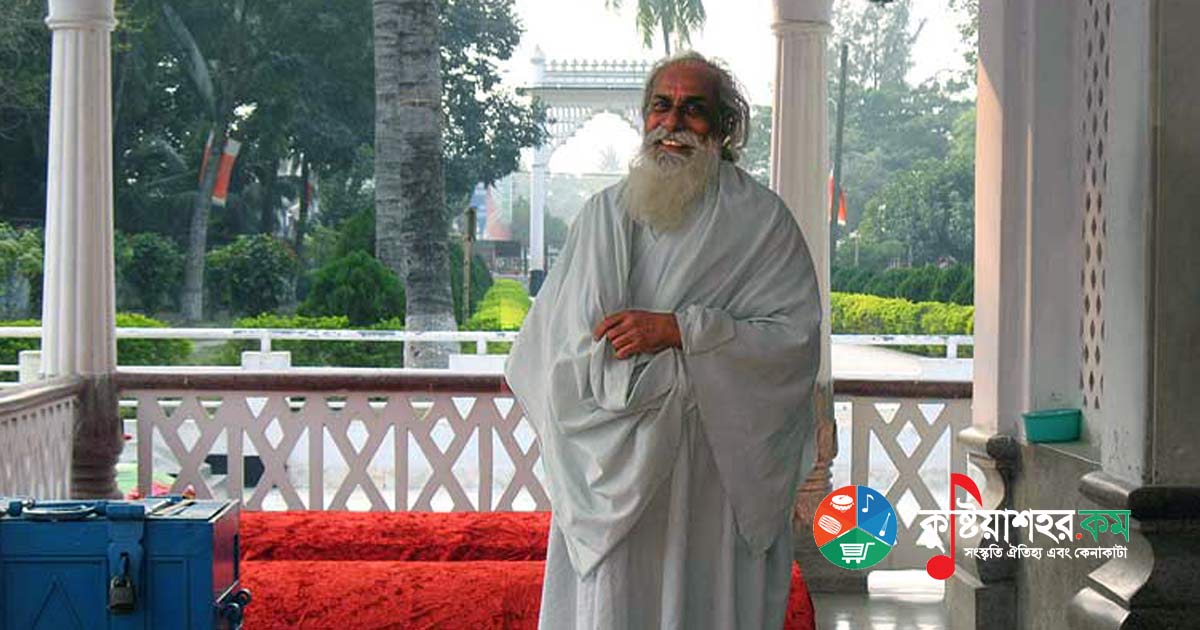
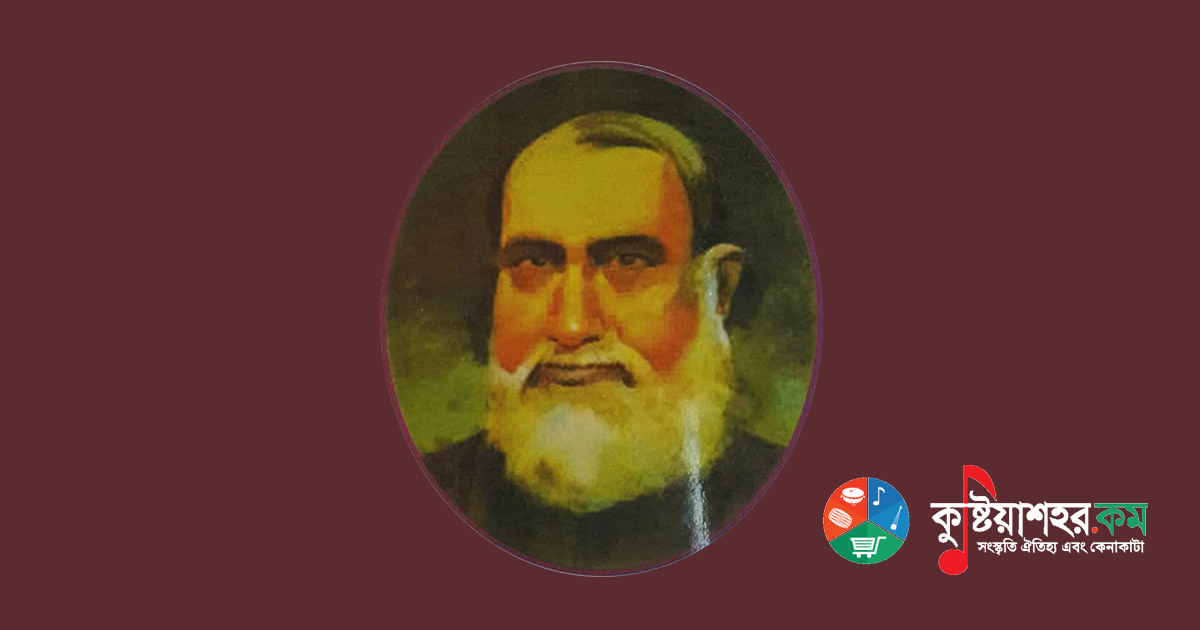
Kangal Harinath — father of Bangladesh's first newspaper and a legendary figure of rural journalism — published 'Grambarta', the first newspaper of Bangladesh. In the ongoing world of newspapers and journalism his ideals may today read like a fairy tale; yet his honesty, skill and devotion should be the model of a truly fearless journalist. That is what his outlook on life shows us.
Kangal Harinath Majumdar was an immortal sage of the nineteenth century — a journalist, writer, social worker and one of the leading figures of the awakening of women. In his day he waged his battle against the English indigo planters, zamindars, police and exploiting classes through his handwritten newspaper 'Grambarta Prakashika'. Against oppression and tyranny he was an uncompromising warrior of the pen. Writing against religious fanaticism, superstition and evil social customs, he pioneered fearless journalism when, in 1857, from a secluded village of the ancient settlement of Kumarkhali in Kushtia, he hand-wrote and first published the monthly Grambarta Prakashika.
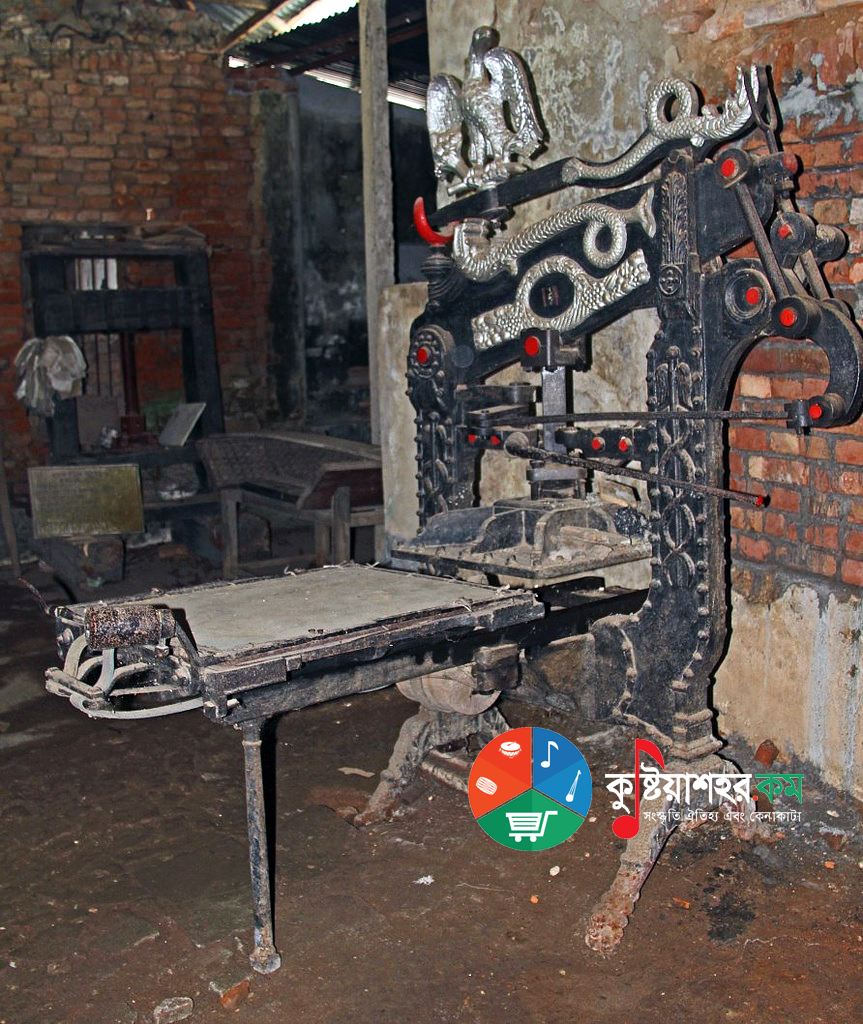
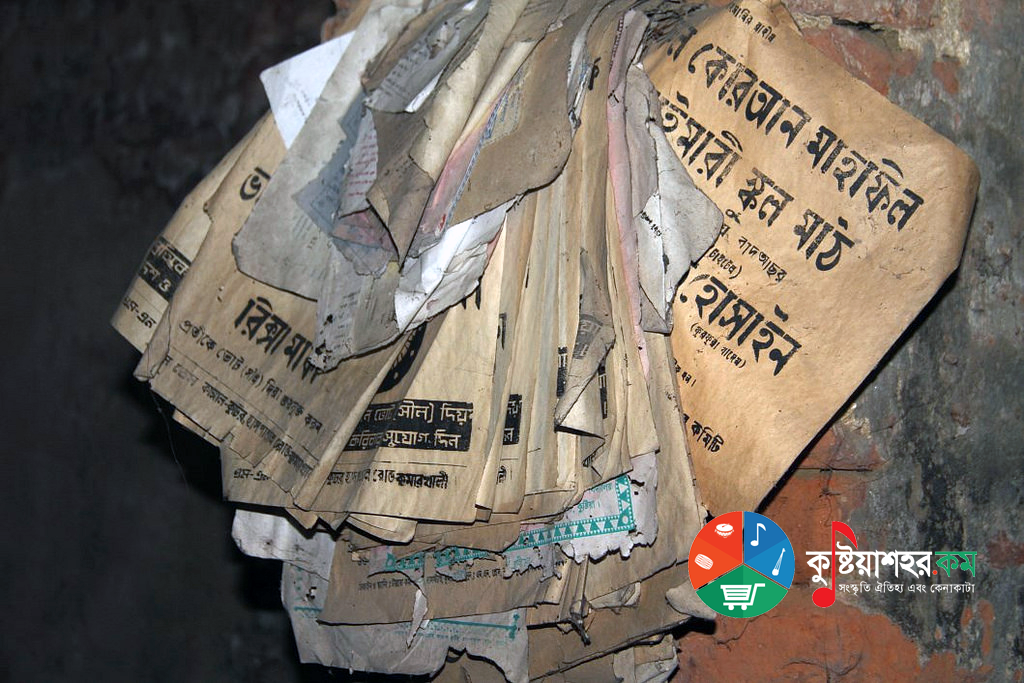
Disregarding thousands of obstacles and setbacks, he published this paper for almost a decade. From a monthly the paper became a fortnightly, and later, in 1863, it appeared regularly as a weekly from Kolkata's 'Girishchandra Bidyaratna' Press, stirring reactions on all sides. In 1873 Harinath Majumdar, with the financial support of Mathuranath Maitreya, father of his friend Akshay Kumar Maitreya, set up the MN Press at Kumarkhali and kept the publication of 'Grambarta Prakashika' going. This celebrated sage was born in the town of Kumarkhali in Kushtia on 5 Srabon of the Bangla year 1240 (1833 AD), in present-day Kushtia district (then Nadiya under Pabna district). His father was Haladhar Majumdar and his mother Kamlini Devi. He was the only child of his parents; he lost his mother and father in early childhood, and thereafter Kangal Harinath grew up amid poverty.
During his sixty-three years he was engaged in journalism, spiritual practice and a wide range of social movements and activities. This immortal sage and accomplished writer breathed his last at his own home on 5 Baishakh of Bangla 1303 (1896, 16 April). At his death he left behind three sons, one daughter and his wife Sornomoyee. The memory of Kangal Harinath — the sole refuge of rural journalism and of the joys and sorrows of poor peasants and ordinary people — is today fading away; yet he was a man of struggle, devoted to an unusual passion and calling.
Kangal Harinath himself travelled the villages collecting news and placed a forceful newspaper in readers' hands. In 1872 this brave soldier of the pen protested through his newspaper against the black laws on behalf of the suffering people. Though he lived in a village, this nineteenth-century intellectual raised his voice in 1863 against the indigo planter sahibs — the Thakur zamindars of Jorasanko at Shilaidaha — writing articles on behalf of the peasants that shook the establishment. For this the Thakur zamindar sent hired goons to kill Harinath; but the Baul sage Lalon Fakir himself, with his followers, stood up to the zamindar's lathials to protect Kangal. It was his connection with Lalon Fakir that saved him.
Alongside raising his voice against oppression, tyranny and persecution, Harinath built a circle of writers around 'Grambarta Prakashika'. Through this paper such writers as the historian Akshay Kumar Maitreya, the accomplished litterateur Rai Bahadur Jolodhor Sen, Dinendra Kumar Roy, Mir Mosharraf Hossain and Shibchandra Bidyarnab left their literary creations. Besides, by setting up a literary adda a hundred and fifty years ago he kindled an island of knowledge that stands as a unique example. Mir Mosharraf Hossain, Akshay Kumar Maitreya and the Baul emperor Lalon Fakir were regulars at that adda at the time. Regarding the roles of the Bengali poet Ishwar Gupta and Kangal Harinath, it is said that Ishwar Gupta, despite his place in the larger enlightened society of the capital Kolkata, held a conservative outlook at the juncture of the ancient and modern eras; whereas Kangal Harinath, living in a small town like Kumarkhali in Kushtia, displayed a far more modern, liberal, fearless and rational outlook. Yet, for want of proper recognition and publicity, he came to be known as the composer of Baul songs under the bhanita 'Kangal'. In truth he was not a Baul sage; he was a man of spiritual pursuit with a generous heart — which is why some even took him for a follower of the Brahmo faith.
Grambarta Prakashika was the very model of a fearless-journalism paper. Mr. Humphreys, the then District Magistrate of Pabna, once wrote to Kangal Harinath Majumdar in a letter: 'Editor, I am not exactly afraid of you, but because of your pen I have been compelled to give up many misdeeds.' Behind that remark lay a story: a poor widow's cow was exceptionally attractive. The then District Magistrate took a fancy to the animal and later had it seized on his orders. Journalist Kangal Harinath came to know of the incident afterwards. He published a news item in Grambarta Prakashika under the headline 'The Cow-Thieving Magistrate'. Seeing the report, the magistrate was greatly enraged and rushed off to Harinath's press. At the time Harinath was deep in meditation at the Kali temple in the forest then famous as 'Jhorepul' in Batikamara village, north-east of Kumarkhali town. The magistrate galloped there on horseback, whip in hand. Seeing Kangal Harinath lost in meditation, he stood there a while and called out to him several times. It is said that, getting no response, he lashed out with the whip — yet not once did the whip touch Kangal's back. Bewildered, the magistrate turned back, and it is also said he later apologised for his rude behaviour. To this day the episode moves many followers of the sanatan school of thought.
Losing his parents in childhood, Kangal Harinath could manage only a little schooling amid extreme poverty. Though born into a well-to-do family, he took up the struggle for a living while still in his teens. At the start of his working life he took a job at a cloth shop in the Kumarkhali bazar for a wage of two paisa: during the day he arranged tobacco for customers and folded cloth, and in the evening he kept the shop's ledgers. After that he spent some days keeping accounts at a moneylender's seat, then worked as an apprentice at the nilkuthi of Kumarkhali — the head office of fifty-one indigo concerns — and later took up teaching. Unable to endure the many oppressions and wrongs, he could hold no job for more than a few days. He then began sending in, as a local correspondent of Ishwar Chandra Gupta's 'Sangbad Prabhakar', accounts of the oppression by the English zamindars.
In 1851 Harinath published his first novel, 'Bijoy Bosonto'. On 13 January 1854 he set up a Bangla school at Kumarkhali. Here he taught without pay and conducted classes following the methods of English education. As the school's fame spread far and wide, the number of students kept growing, and the school received a government grant. As head teacher Kangal Harinath's salary was fixed at twenty taka; but in order to raise the salaries of the junior teachers he himself drew only fifteen taka. Later, in 1860, he set up a girls' school at his own home in Kumarkhali for the education of girls. At a time when conservative Hindu society was against women's advancement and female education — and even Ishwar Gupta, the guru of Harinath's literature and journalism, was opposed to it — Harinath devoted himself, at Kumarkhali, to women's education in the countryside. That very school stands today as the renowned girls' school of Kumarkhali.
Under Lalon's influence Kangal Harinath composed countless Baul songs, and as a composer of Baul songs he was quite accomplished. Once, on hearing one of his Baul songs, Lalon Fakir remarked that it was short on salt. Many people of the time were seen shedding tears of emotion at Kangal's songs. About this Sukumar Sen said that before Rabindranath it was Kangal Harinath who created the Baul song. Many of his Baul songs still echo in the voices of Baul artistes across the villages. Though not a Baul himself, he composed Baul songs; and it was chiefly Lalon Sai's immense influence that helped Kangal compose them. Lalon Sai visited the Kangal cottage at Kumarkhali many times.
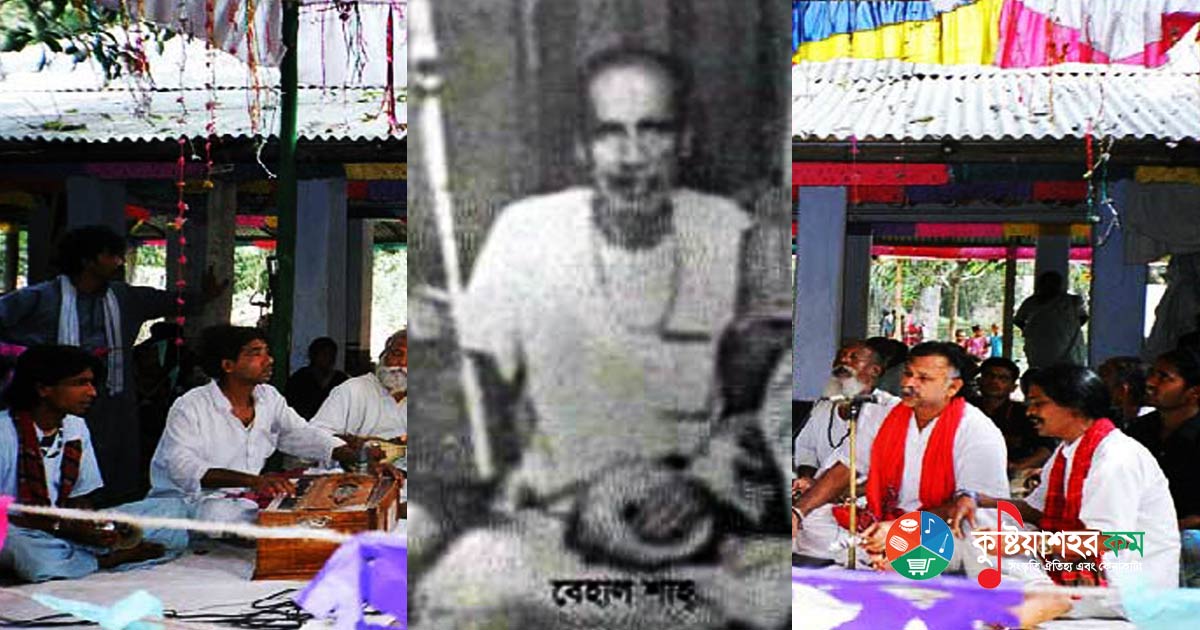
Kangal, too, visited Lalon Shah's akhra at Cheuriya village. Distinguished researcher Dr Abul Ahsan Chowdhury published documents and other evidence of this, discussing it in detail in the books 'Kangal Harinather Jibonimala' and 'Lalon Saiyer Shondhane'. In his Jibonimala he noted that Harinath had created a 'gharana' of Baul song. Kangal Harinath's Baul songs number nearly a thousand; many who heard his songs called him Harinath Bedonto. In Bangla year 1287 he formed a troupe of Fikirchand Fakir's Baul songs. To hear the troupe's songs and to sing himself, Lalon Fakir would come to the Kangal cottage, and this greatly spread the Fikirchand troupe; people of all classes and professions came to listen to these Baul songs.
Kangal Harinath and the Baul emperor Lalon Fakir were trailblazers of human compassion, generosity and non-communalism. Kangal Harinath is particularly celebrated as a true and devoted journalist; it is rarely seen in any age that a man so very poor served the people and pursued literature so fearlessly by publishing a newspaper as he did. His closeness to Lalon Fakir is specially reflected in his spiritual practice and in his composition of Baul songs. On one side the sea of Rabindranath, on the other the triangle formed by Kangal Harinath, Lalon Fakir and Mir Mosharraf — their literary pursuits and exchanges formed a special current.
Kangal Harinath was devoted to literary pursuits inspired by pure art, while also managing to leave behind a good number of successors. Their works, and Kangal's own, still hold a special place in Bengali literature. One thing that may be noted as still undiscovered about his creation and practice is whether he was a Brahmo; it is only known that his association with it was deep. Some say Harinath was a Brahmo in his early life and turned to Hinduism in his later years; the intimacy between Kangal and the Brahmo preacher Bijoykrishna Goswami is reflected even in his writings. But though clear proof is lacking, in his last life he immersed himself in religious consciousness and the tenets of sadhana. The formal education of this tantric sage was very limited; indifferent to learning from a guru, Kangal Harinath took his education from nature.
His boyhood passed in unbridled exuberance. Later, when an English school opened at Kumarkhali he enrolled, but want of money brought it to an end soon after. He was, however, remarkably adept at Bangla reading, and his relatives were attentive to teaching him; yet in the end that too was not possible. Every period of his life was a significant time; engaged in struggle, this sage lived through each moment of life. His newspaper Grambarta Prakashika became the symbol of the hopes and aspirations of rural people, winning the fullest support of peasants, tenants, raiyats, labourers and the middle class, while Kangal Harinath remained the only refuge of helpless people. He was also a pioneer of the growth of indigenous industry and commerce. Crossing many impassable roads of a life full of struggle, this great personality passed away on 5 Baishakh of Bangla 1303 (1896, 16 April) at his own home in Kundupara village of Kumarkhali town, leaving behind three sons, one daughter and his wife Sornomoyee at the age of sixty-three. In nineteenth-century Kushtia there was no second man of such accomplishment as Kangal. The light of knowledge that Kangal Harinath once kindled at Kumarkhali went out after his death.
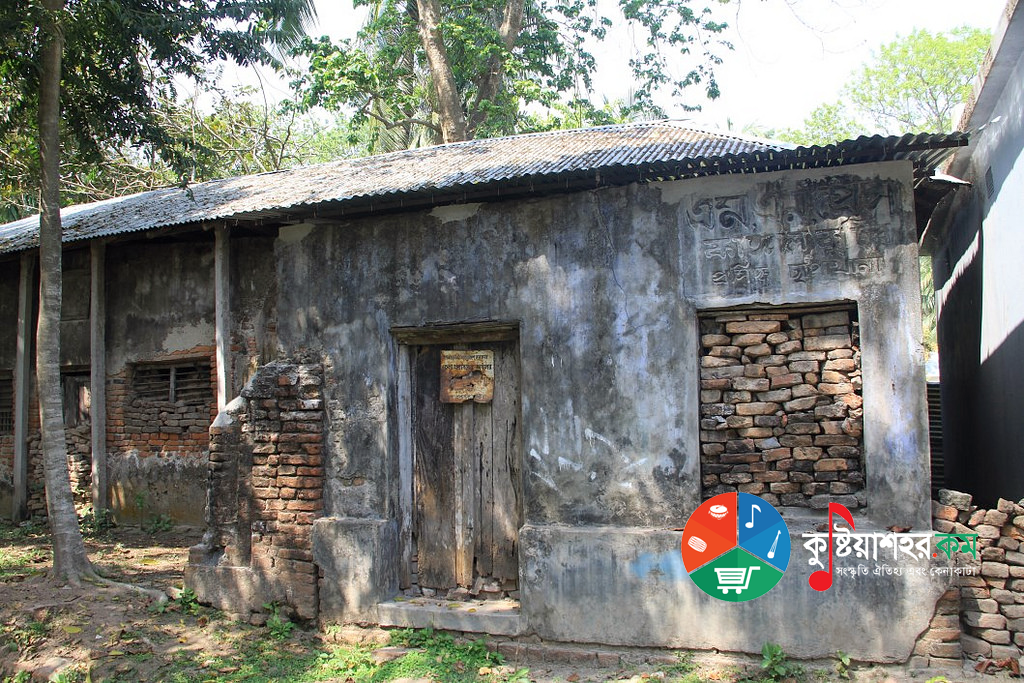

Source: Nur Alam Dulal.