বাংলা
 English
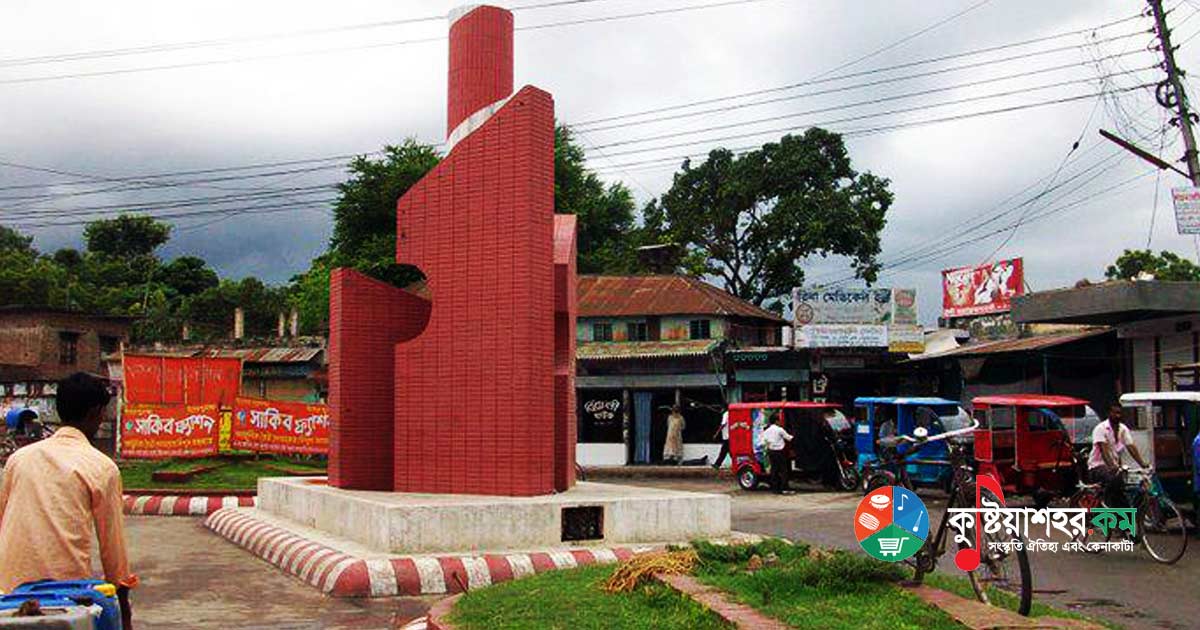
Rajbari town is known primarily as a railway town. Thanks to being a railway town, some 15 to 20 thousand Biharis lived here. Their home was in the town's New Colony, Athash Colony, Station Colony and Locoshed Colony areas. During the Pakistan era they held enormous sway; the entire railway was in their grip.
From 6 December 1971 onward, the non-Bengali Biharis, collaborators of the Pakistanis in Rajbari, became wildly reckless. They kept the whole town under their occupation. On 9 December, in the town's Laxmikol area, the freedom fighters clashed head-on with the Biharis. Hit by the Biharis' gunfire, freedom fighters Rafiq, Shafiq and Sadik were martyred that day.
On 13 December the Biharis killed the guard of the town's Binodpur electricity supply. On 16 December, although the Pakistani forces surrendered across almost the whole country, Rajbari town was still in the hands of the non-Bengali Biharis. They declared that even if the whole country became Bangladesh, Rajbari would remain Pakistan.
At this time, various groups of the liberation forces from all parts of the district began organising in Rajbari for the battle. By then the freedom fighters had surrounded the area on all sides under the command of Shahidunnabi Alam, Ilias Mia, Siraj Ahmed, Abul Hasem Bakaul, Kamrul Hasan Lali and Rafiqul Islam. Joining them in battle with their teams were Zillul Hakim, Abdul Motin, Nasirul Haque Sabu, Abdul Malek, Sacchu and Abdur Rab from Pansha of the district.
The Biharis took up positions on the north side of the town's railway line. From the railway locoshed to the Dry Ice Factory they built barricades with railway freight wagons.
After the Pak forces entered Rajbari, the Biharis, in collusion with them, kept up indiscriminate arson and genocide.
On Wednesday, 21 April 1971, in the first phase the Pakistani forces were obstructed in their attack on Goalanda Ghat of Rajbari. That day, in face-to-face battle with the Pak forces, freedom fighter Fakir Mohiuddin was martyred. That morning the Pakistanis killed 25 children, youths and elderly people in Baliadanga village.
Under the leadership of Major Chimare of the Beluch Regiment from Aricha, the Pak forces pounced on Goalanda of Rajbari with a 'war flotilla'. Equipped with three steamers (fully armed), two gunboats (warships of the navy), a Gomti ferry (non-Bengali para-military), three launches, two helicopters and a tank regiment, they launched a surprise attack at dawn, around 4 o'clock in the morning amid heavy rain, on the sleeping people of Goalanda.
Md. Abdus Samad Molla, commander of the Goalanda upazila freedom fighters' unit, said that, so that the Pak forces could not enter Rajbari town with their armoured vehicles, the liberation forces united to blow up the Ahalladipur bridge on the Rajbari-Faridpur road with bombs. At that point they engaged in face-to-face battle with the Pak forces.
At one stage of the battle, freedom fighter Abdul Aziz Khushi was martyred. He is Rajbari's first martyred freedom fighter.
Even after the country became independent through the surrender of the Pakistani forces on 16 December, following nine long months of war, Rajbari still remained blocked in the hands of the Biharis, collaborators of the Pakistani invading forces.
From 14 to 18 December, fierce fighting raged in Rajbari between the liberation forces and the Biharis. Finally, on the afternoon of 18 December, Rajbari was freed of the enemy, and the national flag of independent Bangladesh was hoisted.
Freedom fighter Ahmed Nizam Montu said that, at the call of the Father of the Nation Bangabandhu, he and his seven brothers took part in the Liberation War in 1971. They received training in India.
Former freedom fighter commander Abul Hossain said that Rajbari was essentially a railway-dominated area. Some 15 to 20 thousand Biharis lived here. Together with the Pak forces, they would seize young men from the villages, bring them to the locoshed, kill them and throw them into wells. Considering their torture, oppression and all their misdeeds, the Biharis understood that their injustice was beyond forgiveness. So instead of surrendering, they kept fighting.
Although Bangladesh was freed of the enemy on 16 December, the fighting was still going on in Rajbari. Later, on 18 December, Rajbari was freed.