বাংলা
 English

The Bajra Shahi Mosque is a mosque built in the 18th century, located in Bajra union under Sonaimuri upazila of Noakhali district. It is one of the "most notable historical structures" around Maizdi. Since 29 November 1998 the Department of Archaeology of Bangladesh has been working to preserve the heritage of the Bajra Shahi Mosque and to conserve this rare monument.
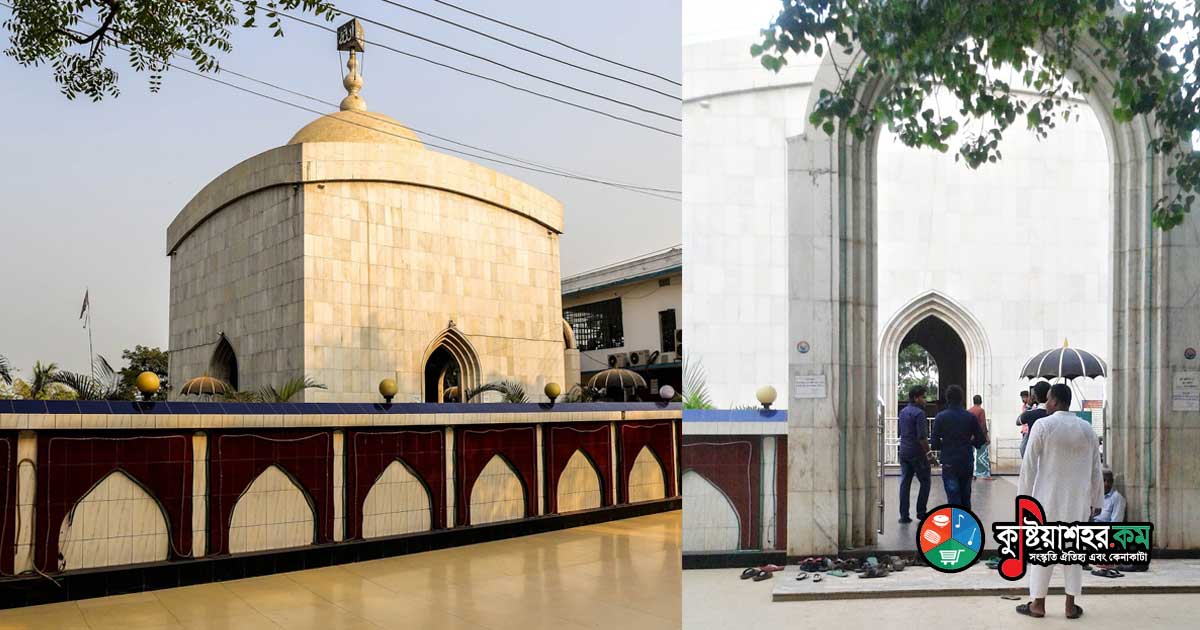
The mosque is located 20 kilometres (12 miles) north of Noakhali, in a village called Bajra. The mosque is surrounded by a wall, and the path of entry into the mosque is on the east. The mosque is built on a raised foundation on the western side of a dighi (tank).
The mosque was built by Aman Ullah in 1741-42 AD, during the reign of the Mughal Emperor Muhammad Shah. Between 1911 and about 1928 the Bajra zamindars Khan Bahadur Ali Ahmad and Khan Bahadur Mujir Uddin Ahmad extensively repaired the mosque and adorned it with ceramic mosaics.
The mosque is at present preserved in good condition, and it is on the list of protected sites of the Department of Archaeology.
The mosque is rectangular (16 m x 7.32 m), elongated north-south. At the four outer corners there are octagonal towers. The mosque has 3 doors on the east and 1 each on the north and south - 5 doors in all. The doors project outward and have slender minarets on both sides of each door. Along the three eastern doors, in the qibla wall, there are three mihrabs. The central mihrab is comparatively larger than the other two.
The mosque's interior has two chambers, divided into three parts by multi-cusped transverse arches. On the roof are three onion-shaped domes, which are octagonal. Their summits are adorned with lotus and kalasha finials.