বাংলা
 English

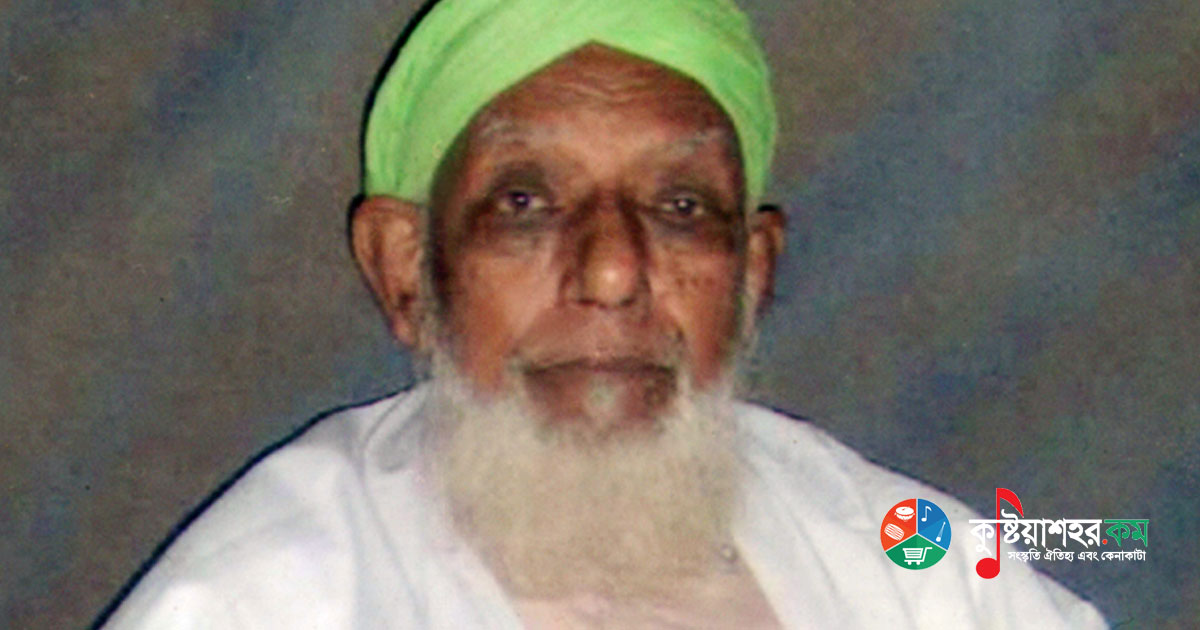
Syed Ahmad Ullah Maizbhanderi, (English: Syed Ahmad Ullah Maizbhanderi) or Syed Ahmad Ullah (15 January 1826 – 23 January 1906) was a Sufi saint and the founder of the Maizbhanderi tariqa. He is widely known as Ahmad Ullah Maizbhanderi. In the publications brought out by his followers in Bengali, Arabic, Urdu, English and various other languages, his name appears as Gausul Azam Hazrat Maulana Syed Ahmad Ullah Maizbhanderi Kebla Kaba Kaddasallahu Sirrahul Aziz /(R.). He is also known by such epithets as Gausul Azam, Hazrat Kebla, Boro Maulana, Khatemul Olad and Shai-e-Lillah.
Birth
Ahmad Ullah was born in 1826 on 14 January (the 1st of Magh, 1233 of the Bengali era) in the then remote village of Maizbhandar, 40 kilometres north of Chittagong city. His father's name was Syed Motiullah Maizbhanderi and his mother's name was Syeda Khairunnesa. His family name was Syed Ahmad Ullah.
Lineage
Ahmad Ullah's ancestor Syed Hamid Uddin held the posts of imam and kazi in the city of Gaur. Because of an epidemic in Gaur, he moved in 1575 to Kanchan Nagar in Patiya thana of Chittagong and settled there; a village named Hamid Gaon is there named after him. One of his sons, Syed Abdul Kader, came and settled in Azimnagar village of Fatikchhari thana to serve as imam. His son was Syed Ataullah; his son was Syed Tayyibullah; and Tayyibullah's middle son, Syed Motiullah, came and settled in the village of Maizbhandar.
Education
After finishing his studies at the village maktab, Ahmad Ullah enrolled at Calcutta Alia Madrasa in 1260 Hijri in pursuit of higher education. He passed the examinations in 1268 Hijri with outstanding distinction. Completing the highest level of education available at the time, he engaged in religious preaching with considerable renown, serving as an invited guest or speaker at various religious gatherings.
Career
After completing his education, in 1269 Hijri he joined as a judicial kazi in the Jashore region of British-ruled undivided India, and at the same time began studying for the munsif examination. Later, in 1270 Hijri, he resigned from the post of kazi and joined the Munshi Bu Ali Madrasa in Calcutta as head teacher (principal mudarris). In due course he also secured first place in the munsif examination.
Ahmad Ullah Maizbhanderi was deeply versed in hadith, tafsir, fiqh, mantiq, hikmat, balaghat, usul, akaid, philosophy, farayez and all other subjects. He was particularly proficient in Arabic, Urdu, Bengali and Persian. In that era his fame as a preacher and orator spread far and wide. Within a short time he devoted himself to the spiritual life, and from then on he spent the rest of his life as a Sufi saint.
Attainment of Wilayat
Through taking bay'ah with Syed Abu Shama Muhammad Saleh Al Qaderi Lahori, a descendant of Hazrat Baro Pir Syed Abdul Kader Jilani and a holder of khilafat in that order, Ahmad Ullah attained wilayat, and from Syed Delwar Ali Pakbaj he received the powers of the united qutbiyat. He passed his days teaching the faith and his nights in worship and devotional practices. It is said that through such rigorous spiritual discipline he attained the highest wilayat of the spiritual world.
Khalifas
It is recorded that during his lifetime Ahmad Ullah Maizbhanderi appointed many Sufi representatives, or khalifas, to spread the initiation of his Sufi tariqa widely among the people. The names of 204 of these khalifas have previously been published in several print and electronic media.
Family Life
In 1276 Hijri, at the age of 32, Ahmad Ullah Maizbhanderi was bound in marriage with Syeda Alfunnesa Bibi, daughter of Munshi Syed Afaz Uddin Ahmad, a resident of Azimnagar. But barely six months after the wedding his wife died. In the same year he married Syeda Lutfunnesa Bibi. In 1278 Hijri his first daughter, Syeda Badiunnesa Bibi, was born; but the girl died at the age of four. Afterwards another son was born to him and passed away within a short time. Then, in 1282 Hijri, his second son Syed Fayzul Huq (R.) was born, and in 1289 Hijri his second daughter Syeda Anwarunnesa was born. His second son also passed away before his father.
The Usule Saba'a, or Sevenfold Method, of the Maizbhanderi Tariqa
To check the evil inclinations of the human self (nafse insani) and awaken the good inclinations of the human spirit (ruhe insani), Ahmad Ullah introduced the sevenfold method as an uninterrupted and easily practicable means. The sevenfold method is practised at two levels.
Fana-e Salasa, or the level of the three annihilations of the self:
- Fana Anil Khalq: striving to become self-reliant rather than dependent on others.
- Fana Anil Hawa: refraining from pointless activities and idle talk.
- Fana Anil Erada: merging one's own will and desire into God's will and thereby attaining taslim (submission) and raza (contentment).
Maute Arba, or the four deaths of the appetites:
- Maute Abyaz, or the white death: attained through fasting and abstinence, in this death brightness and light appear in the human mind.
- Maute Aswad, or the black death: the black death is the attainment of the mindset of correcting oneself through self-criticism, without being annoyed or angered by criticism.
- Maute Ahmar, or the red death: it is gained through liberation from lust and greed.
- Maute Akhzar, or the green death: the green death is attained by becoming accustomed to living a life without ostentation.
Note
Gausul Azam means the greatest saviour. Many Muslims hold that only Allah is the greatest saviour, and they strongly protest calling anyone else Gaus. Calling any human being Gausul Azam is in fact a controversial matter among Muslim groups.
How to Get There from Kushtia:
Chittagong can be reached directly from Kushtia by bus. One can also travel by train from Kushtia to Dhaka and from Dhaka to Chittagong. From Chittagong city, take a Nazirhat or Khagrachhari bus, get off at Jhinkar, and reach the Darbar Sharif by CNG.