বাংলা
 English
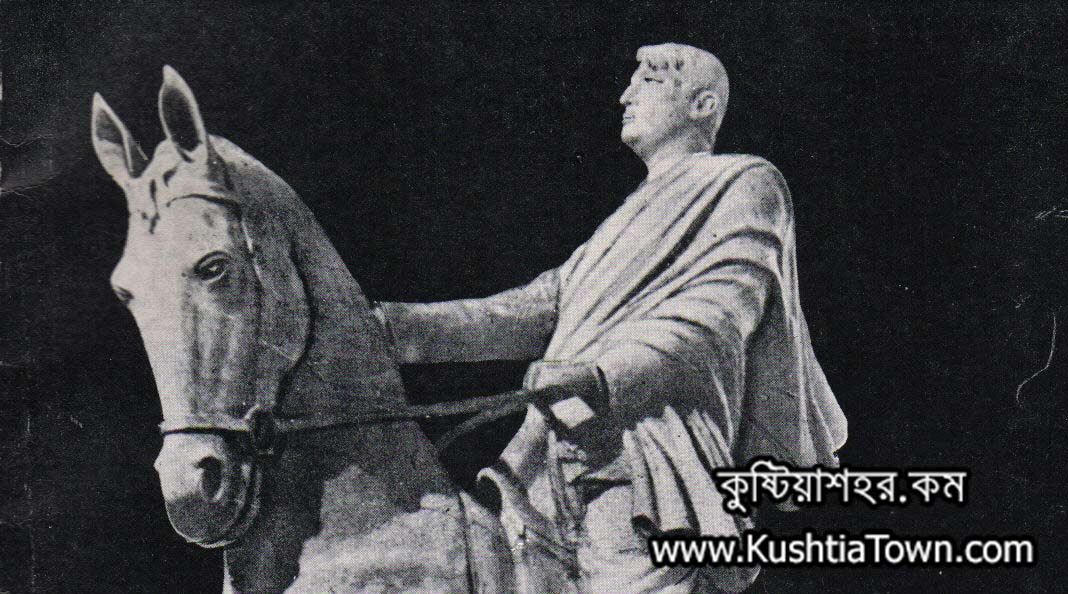
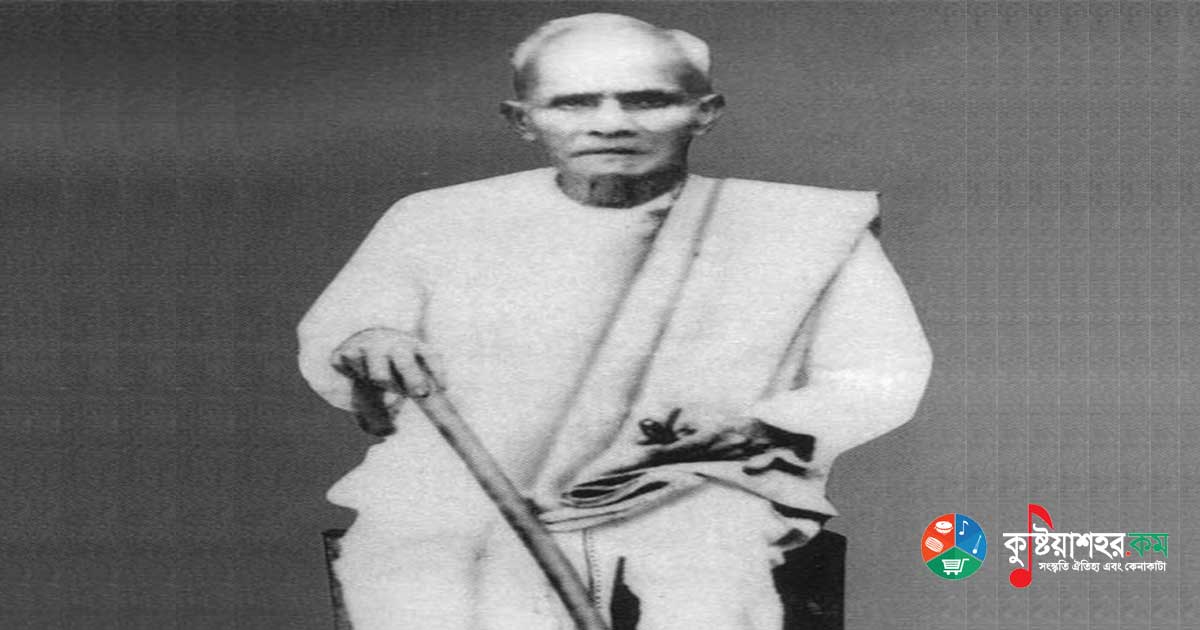
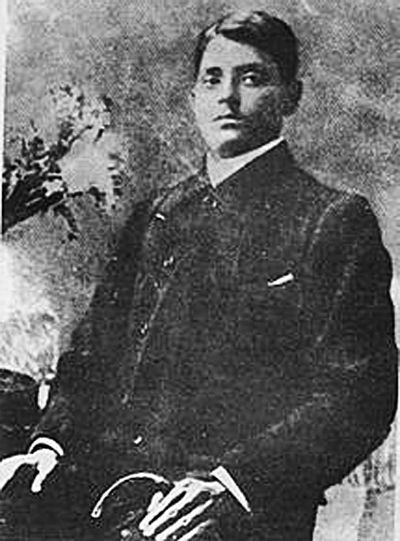
Jatindranath Mukherjee (born: 7 December, 1879 - died: 10 September, 1915) — the revolutionary Bagha Jatin (Bagha Jatin) was born on 7 December 1879 at his maternal uncle's home in Koya village on the bank of the Gorai river in Kumarakhali of Kushtia district. He was a Bengali anti-British revolutionary leader. He is best known to all by the name Bagha Jatin.
His real name was Jotindranath Mukhopadhyay (Jatindranath Mukherjee). His father was Umeshchandra Mukhopadhyay and his mother Saratshashi. The ancestral home was in Jhenaidah district. His father died when he was only 5 years old. After that his mother took them to her husband's home in Kushtia. The mother was a poet by nature. Jatin's eldest maternal uncle, Basantakumar Chattopadhyay, was the lawyer for the zamindari of Kabiguru Rabindranath Tagore at Shilaidaha.
Jatin had been remarkable for his physical strength since childhood. He killed a tiger with a knife in the sugarcane field of the Radharpada ground, two kilometres from the village, and saved himself — which earned him the name Bagha Jatin. Jatin and the tiger.
He played an extremely important role in the anti-British armed movement in India. Bagha Jatin was the chief leader of the Jugantar Party, Bengal's foremost revolutionary organisation. Shortly before the First World War, he met the German Crown Prince personally in Calcutta and secured from Germany a promise of arms and supplies. The German Plot during the First World War was the brainchild of none other than him.
Education-
After completing his primary education at Koya, he passed the Entrance examination in 1898 from the Anglo Vernacular High School in Krishnanagar. Later, as a student at Calcutta Central College, he became involved in the activities of a secret revolutionary society. Having become the leader of the Jugantar Party, he made the party better organised and forged unity with the revolutionary Anushilan Samiti. At a certain stage of the revolution it became dangerous for him to stay in Bengal. At that time he took position at Kaptipada in Odisha.
Revolutionary life-
Swami Vivekananda lived right next to Calcutta Central College. When plague broke out in the country, he responded to Swami Vivekananda's call and devoted himself to serving the sick.
Working life-
In 1899 he joined work at Muzaffarpur as secretary to Barrister Kennedy. Kennedy was famous for various researches in India. With Kennedy's encouragement, Jatin set up a football club for the young men of the area. Unfortunately, Kennedy died in the bomb thrown by Khudiram Bose and Prafulla Chaki. On Kennedy's recommendation, he was appointed as a stenographer to Henry Wheeler, finance secretary of the Bengal government.
In 1903, after meeting Sri Aurobindo, he became entangled in revolutionary activities. In 1906 he established a bomb-making factory with Barin Ghosh. In 1907 he was transferred to Darjeeling along with Wheeler. In 1908 there was a scuffle with four military officers at Siliguri station, over which a case was filed. On 27 January 1910 Jatin was arrested in the Howrah Conspiracy Case. Throwing dust in the eyes of the police, he started a contractor's business in Jhenaidah, on the Jessore-Jhenaidah railway.
While Jatin was in hiding at Balasore, a hunt for him began across the whole country. Jatin declared:
"No more fleeing. We shall die fighting. It is in that way the country will awaken."
While trying to recover the documents preserved in the Mahafizkhana archive in Odisha, Jatin and his companions came face to face with armed police. On 9 September 1915, with the setting of the sun, this battle came to an end. Wounded in the battle, Jatin breathed his last the next day at the Balasore government hospital.
Even while vomiting blood in the hospital, he said with a smile:
"Was there so much blood in this body? By good fortune, I have offered every drop at the feet of my motherland."
In personal life — before his death, he married Indubala Devi, chosen by his mother. One after another he became the father of four children: Atindra, Ashalata, Tejendra and Birendra.