বাংলা
 English
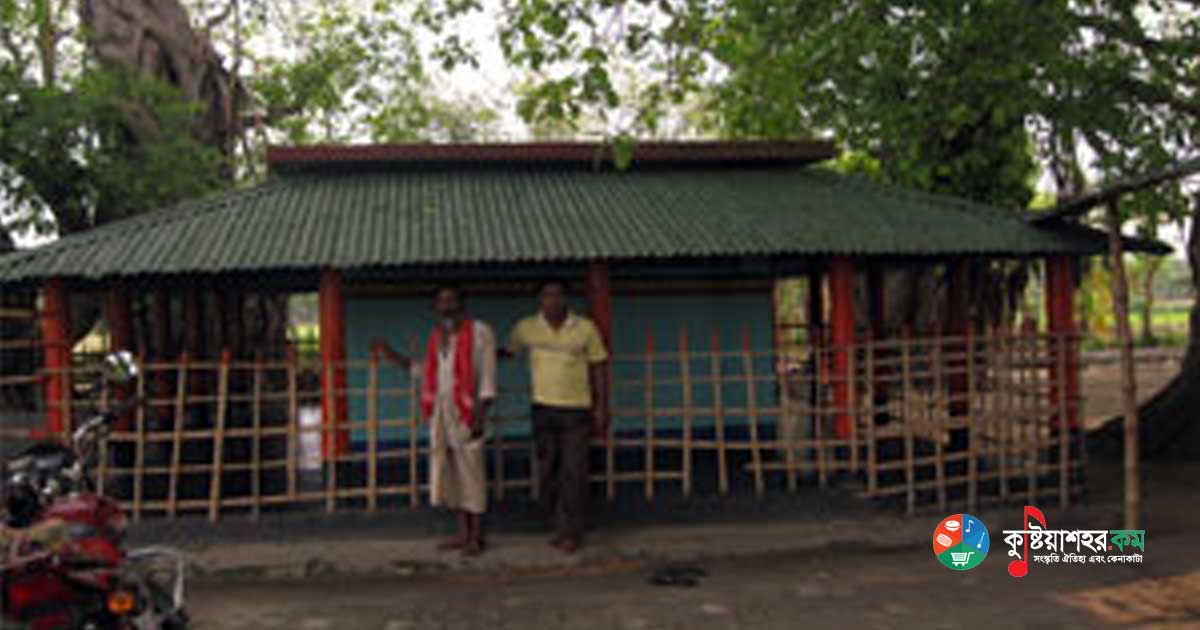
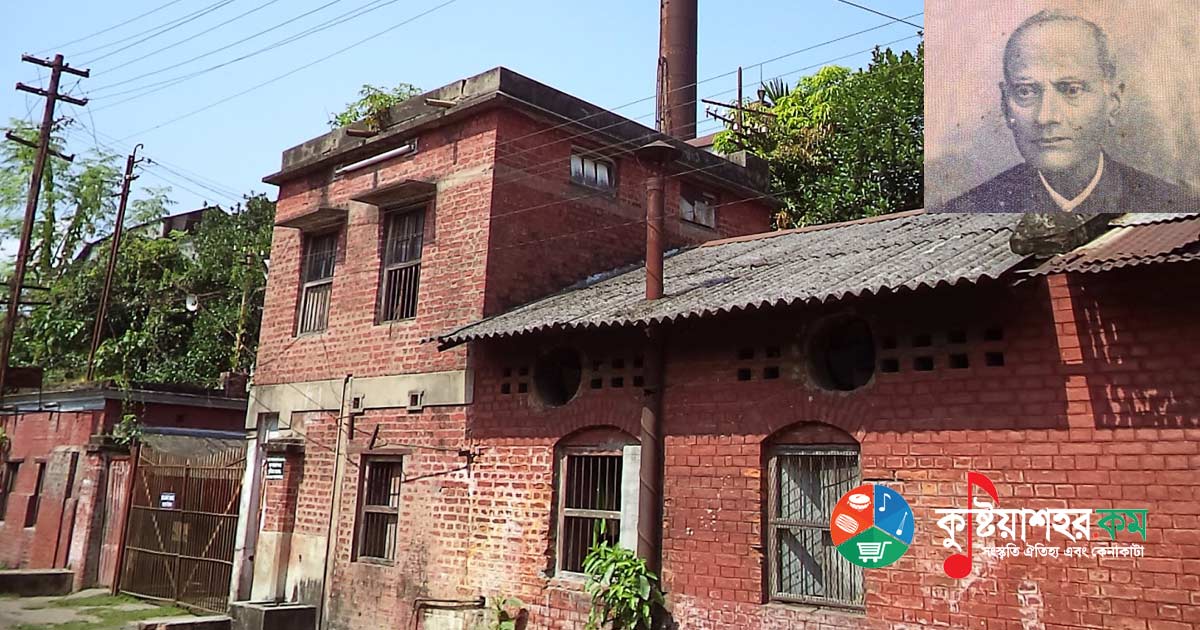
Written on the brick wall even today are the letters R. B. D. (Radha Binod Pal). The lock-gated ghat has crumbled with the passage of time. Nor is there the orchard of fruits of different species. After the independence of the country, the single-storey house has gradually wasted away. Yet even today everyone knows his name. The repute and fame of his career gave him a worldwide identity. Kakiladah is a secluded village of Sadarpur union in Mirpur upazila of Kushtia. It was in this village that the godlike Dr Radha Binod Pal, beloved of the Japanese, spent his childhood. The area is now known as Jojpara. Radha Binod Pal, son of Bipin Bihari Pal, was a judge of the international court.
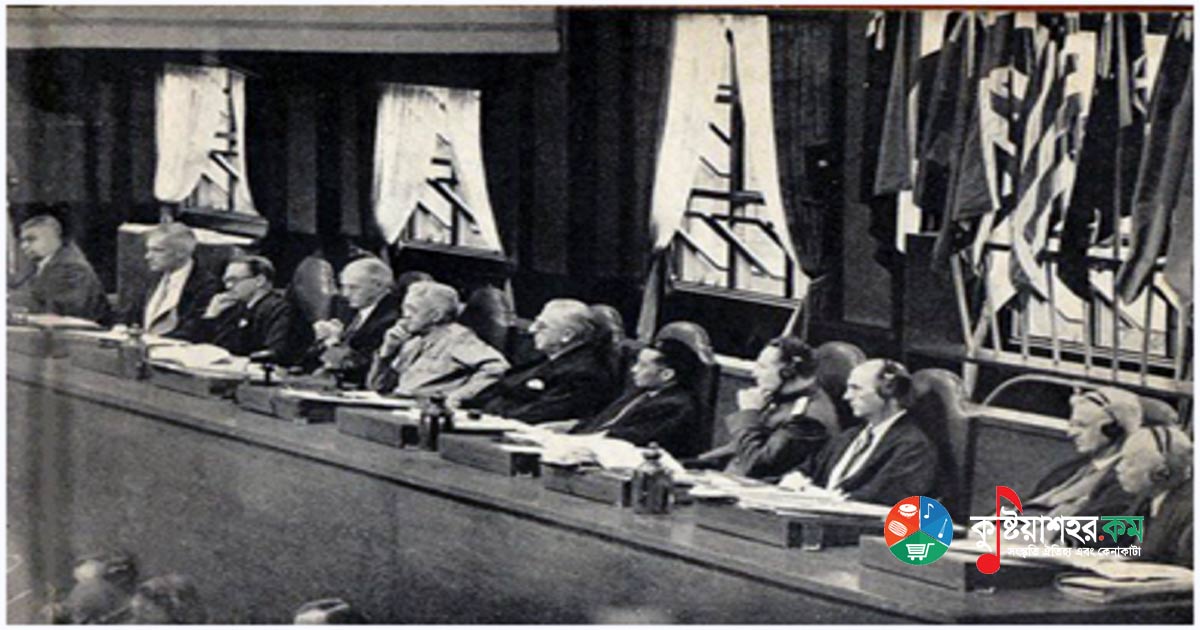
On 27 January 1886 he was born at his maternal home in the village of Taragunia under Mouza Salimpur of Mathurapur union of Daulatpur upazila. The fame of the exceptional individual Dr Radha Binod Pal was not confined only between Pakistan and India. In the Second World War, in the metropolis of Tokyo, Japan's capital, during 1946-48, when the special international court sat in judgment declaring Japan a war criminal, he was one of the judges of that court. With his 4,000-page reasoned verdict he freed Japan from the charge of war crimes. That verdict won the stature of a world-admired historic verdict. Afterwards he won fame as a Japan-friendly Indian. This illustrious man breathed his last on 10 January 1967 in Calcutta.
A visit to the Jojpara area shows that the pond made by Radha Binod Pal is strewn about the neighbourhood. Sixty-plus Billal Hossain knows that in the seventies of the last century the four sons of Radha Binod Pal came once to the village of Kakiladah. Even then, and even after independence, Radha Binod Pal had a single-storey house. A high raised plinth and a long boundary wall. Inside the house were a veranda and various articles of furniture; there was a piano too. There were orchards of mango, jackfruit, litchi and banana. He had planted the garden on 18 bighas of land. Abdul Ohab, also sixty-plus of the same area, said that the whole of the 130-bigha area had been fenced round with barbed wire. But because of the area's influential people and the lack of maintenance it disappeared in the eighties.
The locals say that before his death he entrusted the care of his land to an individual named Ainuddin Malitha, an influential man of the area, and left for India. Since then, whoever was able has occupied and used the land through official means or by influence. Furniture used in the house decades ago can still be found in some houses. The then Mirpur upazila nirbahi officer Mollah Mahmud Hasan told Prothom Alo that most of Radha Binod Pal's land has been illegally occupied.
The local social worker and barrister of the Supreme Court, Ragib Rab Chowdhury, said in the first light that for the making of the documentary on Radha Binod Pal, the director of Japan's NHK Television, Tarutakaji, the engineer Dai Sahakura and the technician Shinjiju had come to Kakiladah. Besides them, representatives of the Japanese government had taken the initiative of setting up several memorial plaques at this memorable place. For reasons of the local influential they did not come about. In the history of Japan the name of Radha Binod is written in letters of gold. In Japan's city of Tokyo there is a museum in his name, naming of roads and a statue. There is even a research centre at Japan University. But for want of maintenance his memory is being lost in Bangladesh. The land has been encroached upon.
Radha Binod Pal
He began his student life under Golam Rahman Pandit of the village of Shatian in Shatian union of Mirpur upazila of Kushtia. At Kushtia High School he studied up to the secondary level. In 1920 he obtained a postgraduate degree in law and in 1925 a doctorate in law. He began his career by teaching at Anandamohan College in Mymensingh in 1919-20. In 1925-1930 and in 1934 he taught law at the University of Calcutta. Later he joined the legal profession at the Calcutta High Court. From 1941 to 1943 he was appointed Chief Justice of the Calcutta High Court, and in 1943-44 he served as Vice-Chancellor of the University of Calcutta.
Information with thanks to: Tauhidi Hasan – Prothom Alo