বাংলা
 English
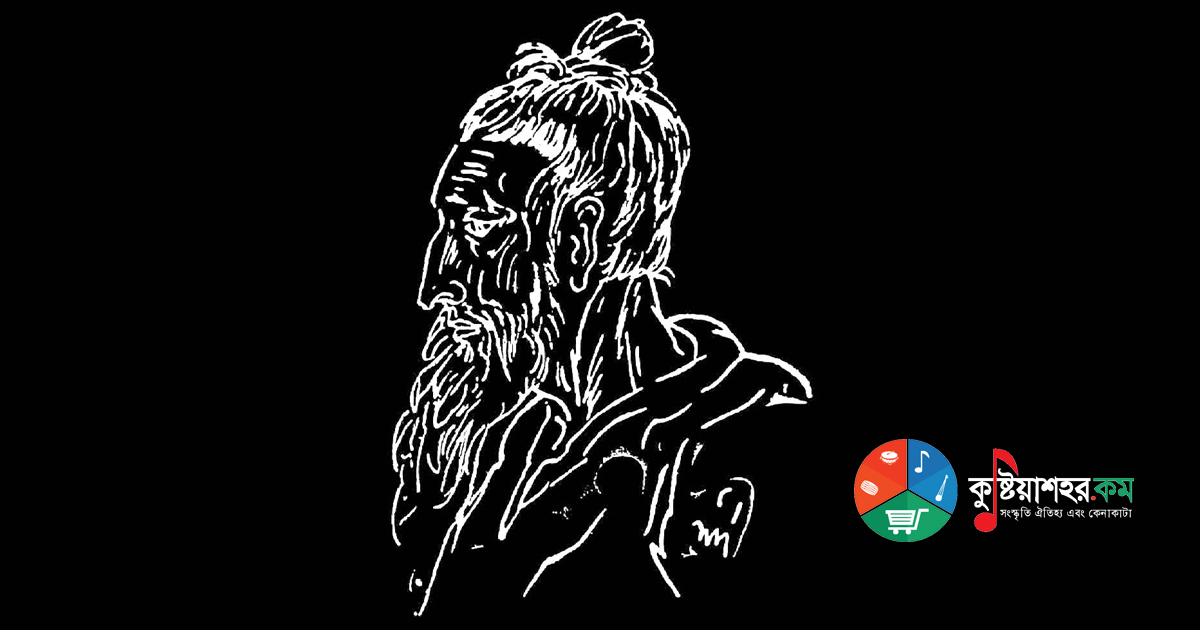
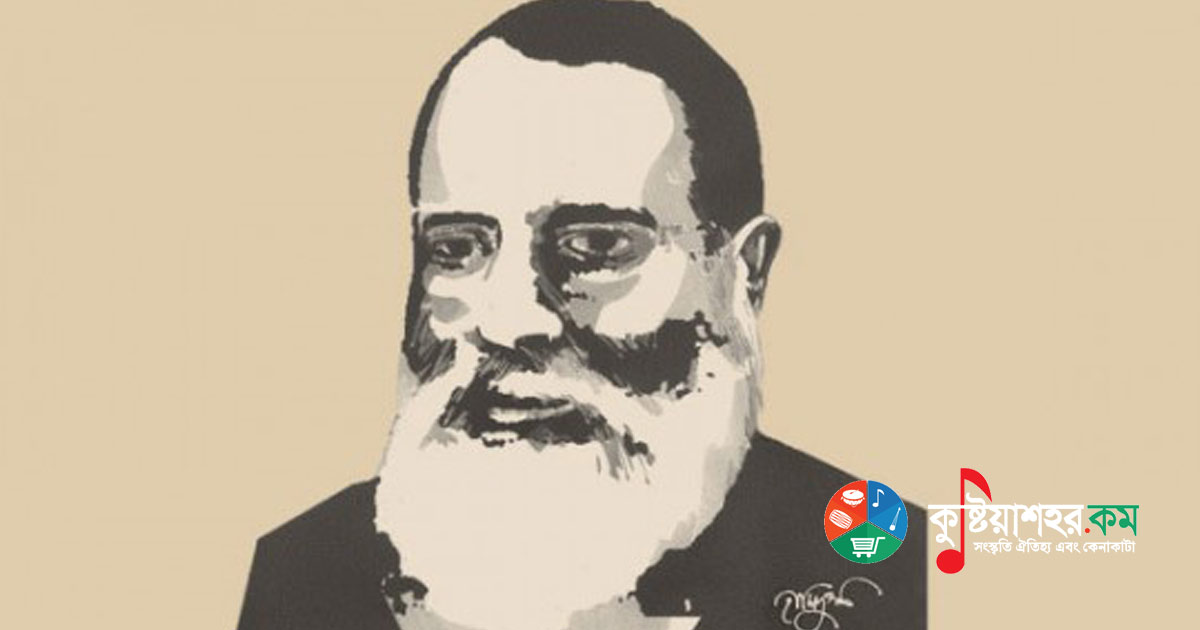
The profound intellectual and spiritual exchange between Fakir Lalon and Rabindranath Tagore is described in abundant detail in the research work “In Search of Lalon Shah” by Abul Ahsan Chowdhury. How Lalon's songs influenced Rabindranath can be understood simply by reading his poetry.
The Baul of his tender youth
took up a melody on his own ektara,
calling out
to the man of his restless mind
in wild tunes of unspoken pain.
And it was not in his poetry alone — a touch of the Baul found its way into Rabindranath's dress and appearance as well. The handsome Rabindranath, draped in an alkhella with his flowing wavy hair, seemed to be writing in the guise of a Baul –
“Alone in the morning sun, along the banks of that Padma, a river that knows no hesitation in breaking down the old foundations of brick walls.”
Once, after returning from Shantiniketan, Rabindranath said to Kali Mohan Ghosh in the course of conversation –
“You saw how, at Shilaidaha, hour after hour, my conversation with the disciples of Lalan Shah Fakir would flow. They wore no fine clothes; to look at them you could not tell how great they were. Yet how simply they could speak of such profound matters.”
From this alone one can see how, out of his own realisation, he honoured Lalon and his Baul community. Rabindranath himself said in many places that the spirit of Lalon lives in many of his songs. It was the world poet Rabindranath Tagore who first compiled Lalon's songs.
The poet Rabindranath Tagore, master of profound knowledge, understood Fakir Lalon and his songs deeply. That is why Lalon — cast off by the society of remote villages — and his poor disciples rose up in his songs, in his poems and novels.
One of the chief aspects of Lalon's philosophy is devotion to the guru. Devotion and dedication to the guru is their supreme practice. Just as the guru cannot be grasped without meditation, the inner soul is not purified without extraordinary devotion to the guru. Love for people, compassion for living beings, truthful speech, righteous deeds, righteous aims — this is the essence of the guru-centred human dharma. Ultimately, devotion itself is liberation –
The man devoted to his guru in this world
sees all his practice brought to fulfilment.
Those who seek the essence of the air are in truth the Bauls; in their view the practice has four stages — sthul, probort, sadhok and siddha. The learning of the first stage is sthul, of the second stage probort, of the third stage sadhok, and the learning of the fourth, or final, stage is siddha. That same vision appears in Lalon's songs –
Set a snare, thief, in the house of the wind.
Is that some petty thief
you will catch in your glass-bright corner?
Through his countless songs Lalon searched for the purified soul; in his songs and his thought the spirit of Sufism becomes clear –
If one can know one's own self,
then one can know Him — that is the true recognition.