বাংলা
 English
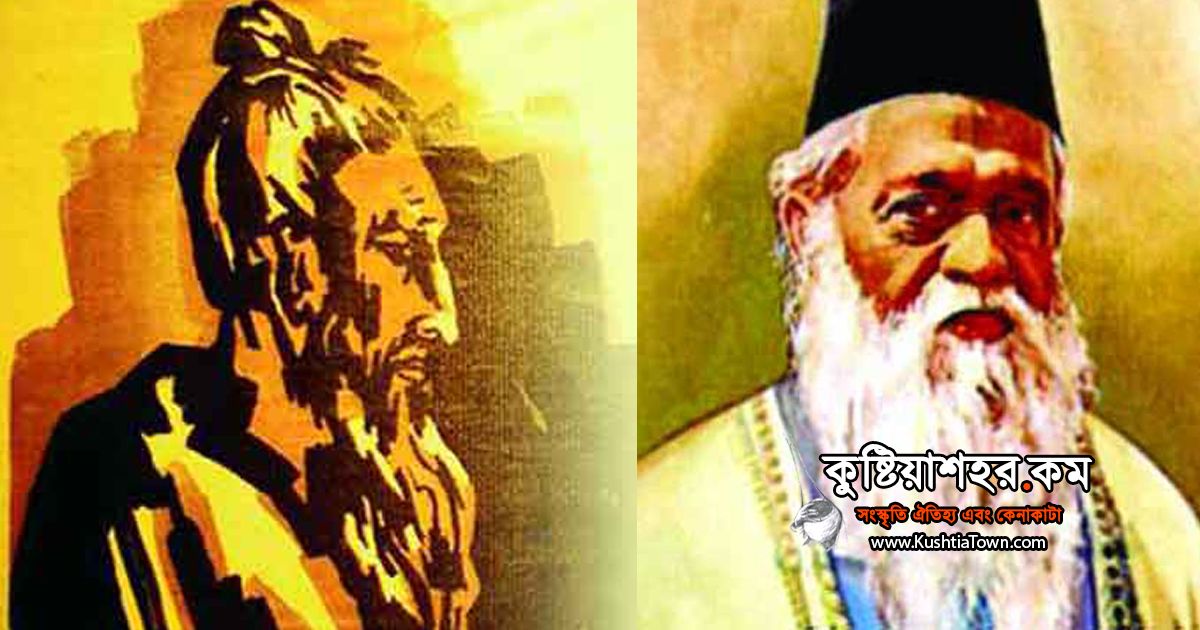
Among the dispositions of the human mind there are some whose cause can never be found - the sense of beauty, for instance. This sense of beauty exists among all the peoples of the earth, civilized, uncivilized and half-civilized alike.
Through the sense of beauty none of man's bodily wants is satisfied; yet the human mind is mad for beauty. The business of living has no need of it, but in man's heart there is a need of it. Such a disposition of man is love. Perhaps life has no need of it, yet nowhere in the world is there a human being without love. Another such disposition of man is faith in the Unseen. It is that faith which, age after age, has inspired mankind - guided it along the paths of religion and deeds - given it hope and joy amid sorrow, anguish and oppression; it is faith in God. In different lands, under different names and in different ways, believers have called upon Him, and in that calling they have found fulfilment. This is mysticism.
Outside the orthodox Hindu and Muslim religions of Bangladesh there was - and there still is - a class of seekers who yearned for God and yearn for Him still. Among the Hindus they are the Bauls, the Sahees, the Kartabhajas and the like; among the Muslims they are the fakirs and dervishes. Their ties with religious rites are but slight. Yet they never deny their allegiance to religion outright. One party of fakirs perhaps performs none of Islam's obligatory duties - namaz, roza and the like. But they profess that they are devotees of Allah and the Prophet. They say: the ordinary Muslim lives by the Sharia, the outward law of religion, while we live by Marifat, the inward truth of religion. These men are absorbed in zikr, dance intoxicated by Marifati songs, wear long hair and beards, and dress in ochre-coloured alkhalahs. The Maulanas and Maulavis call them be-shara fakirs and pronounce them kafirs, outside the pale of Islam. Truly, by proof and evidence, these be-shara fakirs do fall outside the pale of Islam. Yet it is also true that, however far astray their own creed may run, they are devotees of God. Madan Baul, Lalon Shah and others belong to this class. Their songs contain much enigmatic language that is extremely hard for anyone outside their community to understand. Some of their ideas spring from the Hindu religion, some from Islam, and some are their very own. Many of these songs deal with the philosophy of the body; they have probably been taken from the Sahaja-siddhi of the Buddhists.
Now I shall quote from Lalon Shah's songs a few of his different ideas. Here, of course, I must acknowledge my debt to our professor Muhammad Mansuruddin's folk-song collection Haramoni.
A tree without land, roots without branches, leaves without twigs,
fruit without bough - such are His impossible ways.
The tree is named Champaklata, its leaf's name is gold,
on one branch the bud of sap, on another the bud of love.
Lalon Sha the fakir says: these are the hidden words of devotion and love,
he in whose heart there is no substance - where, pray, would he find them?
The meaning of this song can be found nowhere but from the lips of the murshid. Here is part of another song:
you know not, friend, what misery awaits him too.
That devotee, say I - the king was lord of his realm,
and the Lord played his tricks in a dwarf's guise.
King Karna, they say, was a great devotee in this world,
beyond measure his own line was laid waste,
yet Karna's love never wavered,
and the sorrowful heart of the wretched found its solace.
Look at Prahlad's story in this earthly realm -
what suffering he bore for Krishna's name;
they burned him, drowned him, cast him into fire,
yet he never gave up the practice of the holy name.
Lakshmana was Rama's devotee through all the ages,
the mighty struck their chests with force,
yet of Ramchandra they never forgot their devotion -
Fakir Lalon says: weigh that deed for yourselves.
Certainly the source of this song is Hindu - culture. Here is a sample of another song:
Who can recognize Him?
All say: Nabi, Nabi - the prophet I behold as the Unstained One,
seated in the basket of my heart I shall come to know him - to whom did Ahmad give His name?
If he who holds the secret will not tell it, how can the seeker ever know?
For this my compassionate Lord of the faith goes round and round in human guise.
Whoever does not grasp "Nabi e-ja-bat" studies in vain;
Lalon says: not knowing the distinction of worship, he beats his brow in despair.
Outwardly the source of this song is Muslim, yet it hints at the doctrine of divine incarnation, which lies outside Islam. In this song "Nabi e-ja-bat" is, of course, Tasawwuf's "nafi-isbat" (negation and affirmation). Now I shall quote a song on the philosophy of the body:
Within the body there is a house,
a thief has broken into that house,
among the six the seal has been broken,
one of them has done the stealing.
Within this body there is a river,
a boat sails upon that river,
the six haul at the net,
one holds the oar.
Within the body there is a garden,
flowers of many kinds have bloomed,
the world is steeped in their fragrance -
only Lalon's soul did not swoon.
In Lalon Shah's songs there is that deep, sincere strain of self-offering to God; I quote one instance of it.
However much the devotee may practice and worship, he feels that none of it avails, and so his practices cannot save him. Only the mercy of the Merciful can save him. Therefore he surrenders himself wholly to Him. That feeling finds expression in the song below:
In the waves of this world of existence, O my Merciful,
give me, give me the boat of Your feet.
However many wrongs I do, forgive them all, O Lord,
You bear the name Purifier of the Fallen,
come to the shore and moor Your boat.
You are the ocean of mercy, the friend of the lowly;
give me, O give me Your lotus feet,
that I may cross the storm.
If You will not rescue the sinner, who will bear the name Purifier of the Fallen?
What else is in store for a creature's fate
but the mystery of Your name?
Drown me or float me - the hand is Yours,
in this world I have none of my own.
Fakir Lalon cries out his plea to You:
come, give me a place at Your feet, O Hari.
Through stern discipline the devotee has understood that his instincts will never obey his will; his mind is always trying to drag him off the right path, down crooked ways. So he asks to surrender his mind to the Lord of the mind:
that I may never forget Your reddened feet.
Guru, upon whom You show no mercy,
evil thoughts beset him day and night;
You are the charioteer of the heart's desires -
Guru, wherever You take me, I go there.
Guru, You are the minister of the mantra,
You are the weaver of the tantra,
Guru, You are the player of the yantra -
if You do not sound it, who else will make it sound?
From birth I am blind and dark of mind,
Guru, You are the awakened physician;
humbly, humbly Lalon pleads -
grant, O grant the salve of knowledge to my eyes.