বাংলা
 English
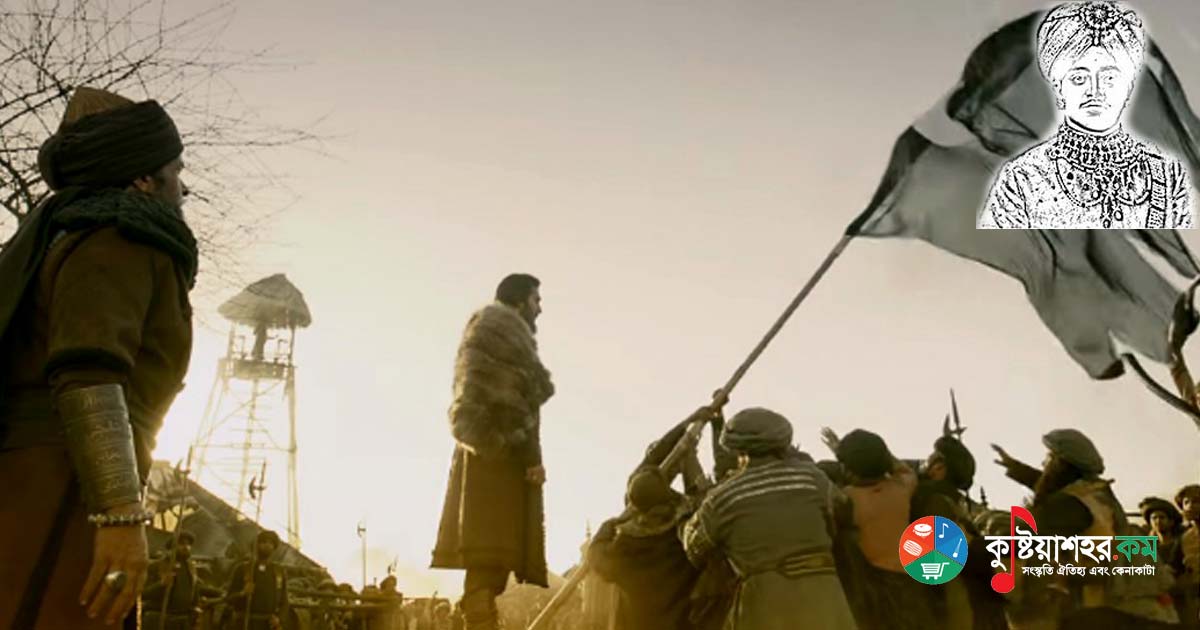
Shamsuddin Ilyas Shah (1342-1358) was an independent ruler of Bengal. After the conquest of Sonargaon in 1342 he became sultan of Lakhnauti. Shamsuddin Ilyas Shah was the first Muslim independent sultan of undivided Bengal and founded the Ilyas Shahi dynasty, which held power for 152 years. The Ilyas Shahi dynasty ruled undivided Bengal continuously for 73 years from 1342 to 1415, and then, excluding an interval of about 20 years in between, their rule stood for another 52 years. After Ilyas Shah's death his son Sikandar Shah came to power.
He was born into a noble family of Sijistan in eastern Persia. Ilyas Shah's father's name was Sultan. In his early life he served under Malik Firoz of Delhi. But after committing some offence there he fled to Bengal and took service under the Tughluq governor of Satgaon, Izzuddin Yahya. On his own merit he was raised to the rank of Malik. After Izzuddin Yahya's death he became the lord of Satgaon in 1338 AD. Having firmly established his authority there, he entered into a long war against Alauddin Ali Shah of Lakhnauti, and winning the war he ascended the throne of Lakhnauti in 1342 AD with the title Sultan Shamsuddin Ilyas Shah.
Having consolidated his power in Lakhnauti, Ilyas Shah devoted himself to expanding the kingdom. In 1344 AD he easily occupied Tirhut, and in 1350 AD he carried out a daring expedition into the Terai region of Nepal. No Muslim force had previously been able to enter that region. Advancing as far as the capital Kathmandu, he destroyed the Swayambhunath temple and returned with immense wealth. But he did not annex any part of Nepal to his kingdom. Then Ilyas Shah led an expedition into eastern Bengal, and defeating Ikhtiyaruddin Gazi Shah he captured Sonargaon in 1352 AD. Thus he became the master of the whole of Bengal. Shams-i-Siraj Afif honored him with the epithets 'Shah-i-Bangalah', 'Shah-i-Bangaliyan' and 'Sultan-i-Bangalah'.
Encouraged by his success, Ilyas Shah attacked Jajnagar (Orissa) and, advancing through Jaipur and Cuttack, reached as far as the Chilika lake. He destroyed the temples of Orissa and returned with abundant wealth including 44 elephants. Then Ilyas Shah attacked Bihar in 1353 AD. Beyond Bihar he extended his authority as far as Champaran, Gorakhpur and Benares.
But Ilyas Shah could not long avoid confrontation with the emperor of Delhi. Sultan Firoz Shah Tughluq marched toward Bengal to subdue Ilyas Shah. But he did not succeed. Making peace with Ilyas Shah, Firoz Shah Tughluq returned to Delhi. As a result Ilyas Shah continued to rule Bengal as an independent sultan. The friendly relations between the sultans of Bengal and Delhi grew stronger through the exchange of gifts and envoys. Envoys and gifts were exchanged between them in 1355, 1356, 1357 and 1358 AD. The reconciliation with the Delhi sultan gave Ilyas Shah the opportunity to extend his influence over the neighboring kingdom of Tripura.
In 1357 AD Ilyas Shah conducted a successful expedition against Kamrup and demonstrated special distinction. The ruler of Kamata, Indranarayan, had neither the means nor the strength to obstruct the invaders. In this favorable situation Ilyas Shah easily occupied parts of Kamrup. The valiant warrior Ilyas Shah possessed all the qualities of a successful general. He won glorious victories against his adversaries both in Bengal and beyond it.
Like an experienced diplomat, Ilyas Shah waited until the time and opportunity for unifying the whole of Bengal came in his favor. He realized the necessity of introducing good governance and, by introducing it, strove to win public support for keeping Bengal's independence alive. By generously granting facilities and privileges to the local people he gave his administration the shape of popular government. He gave worthy people the opportunity of being employed in service irrespective of caste, tribe and religion. He was probably the first to recruit local people into the army in large numbers. From Insha-i-Mahru it is known that the khans, maliks, umara, sadrs, akabir and marifs were entrusted with the responsibilities of military and civil administration. Among them, presumably, the khans, maliks and amirs were holders of jagir lands and high-ranking nobles of the state. Some of them were perhaps also the sultan's advisers as ministers.
Ilyas Shah was a devout religious man. He had deep respect for Sufi dervishes and Hindu ascetics. During his reign Hindu holy men and ascetics received stipends from the government like the sadats, ulama and mashayekh.
As a nation-builder, Ilyas Shah was the first to unite the regions of Satgaon, Lakhnauti and Sonargaon and establish an independent sultanate. He named this combined kingdom Bangalah and called its inhabitants Bengalis. He strove to bring about progress in the political, social, economic and cultural fields of Bengal. In fact, by adopting liberal policies and building solidarity among the people he inaugurated a new way of life in society. As a result the people of all Bengal came together in a common political-social and linguistic sphere. As a true national leader he treated everyone equally.
Ilyas Shah was also a builder. He founded the town of Hajipur. Besides, he built a hammam modeled on the Shamsi hammam of Delhi. Sultan Shamsuddin Ilyas Shah consolidated the independent sultanate of Bengal. That sultanate survived for nearly two hundred years. After a glorious reign of sixteen years he died in 1358 AD.
Source and acknowledgment: A. B. M. Shamsuddin Ahmed