বাংলা
 English
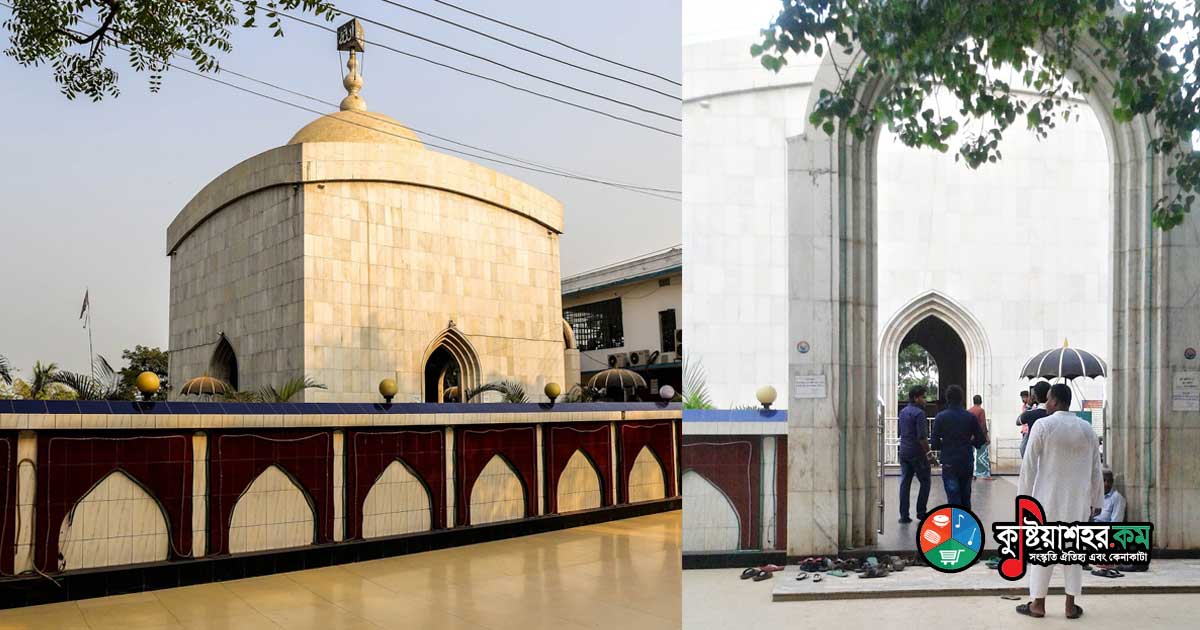
In 1303 Hazrat Shah Jalal (RA) came to Sylhet with 360 saints (auliya) to preach Islam. Among these 360 disciples one of the most notable was Syed Ahmad Gachhudaraj (RA). He was a person very close to Hazrat Shah Jalal (RA). The dargah of Hazrat Syed Ahmad Gachhudaraj (RA), located at Kharampur in Akhaura, is known throughout the country as the dargah of Kella Shahid or Kella Shah.
Gachhudaraj was one of the disciples of Baba Hazrat Shah Jalal Yamani Auliya (RA), the famous saint and preacher of religion in Bengal. From the episode of the beheading onward he became better known as Kella Shah. Hazrat Shah Jalal (RA) came to preach Islam in Bengal taking with him 360 saints, among them Gachhudaraj. The king of Bengal at that time was Gour Gobinda. He was mighty in tantric power. King Gour Gobinda had a miraculous well named 'Jiyon Kup' (the well of life). If a corpse was thrown into that well, it instantly came back to life. When Baba Shah Jalal came to Bengal with 360 saints with the aim of preaching Islam, a fierce battle broke out with Gour Gobinda; in this battle, whenever any of Gour Gobinda's soldiers died, the king would throw them into the well of life and bring them back to life again.
Thus, despite a thousand efforts against Gour Gobinda, Baba Shah Jalal could not win the battle. Then he learnt through meditation that victory in this battle was not possible until the power of that well of life was destroyed. He then called his 360 companion saints and spoke of destroying the well, yet he could persuade no one. For the well was guarded by forty naked women, and in Islam approaching indecency is haram. When Hazrat Shah Jalal was sunk in deep anxiety over this, his devoted admirer Gachhudaraj, unable to bear the sight of Baba Shah Jalal's troubled face, agreed to the task. Then, when Gachhudaraj went before that well, in order to preserve the honour of Islam he cried "Allahu Akbar" and, with a single stroke of his sharp sword, cut off his own head and threw it into the Titas river. Headless, Baba Gachhudaraj, sword in hand, advanced to the front of the well of life, and at the sight of this terrifying form of Baba, the forty naked women fled in all directions.
Baba Gachhudaraj then let fall one pious drop of his blood into that well, and instantly all the powers of the well were destroyed. After that, the headless body of Gachhudaraj Shah went to Baba Shah Jalal and, falling at his feet, gave up its life. That day Shah Jalal Baba said:
"Whoever comes to visit my dargah should first visit the mazar of Kella Shah; otherwise his visit will remain incomplete."
Baba Shah Jalal buried the sacred body of Kella Shah with his own hands in Sylhet. On the other hand, the severed head of Baba Kella Shah floated down the Titas river until it reached a place called Kharampur, where it was caught in the nets of the fishermen of Kharampur. At that time the fishermen of Kharampur used to fish in the Titas river. One day, while Chaiton Das and his companions were fishing in that river, a severed head suddenly became caught in their net. The fishermen were frightened, and when they moved to lift the severed head, by the power of Allah the head began to say:
"A believer and an unbeliever can never be alike. Unless you recite the Kalima and become Muslims, you shall not touch my head."
Hearing these words from the severed head, Chaiton Das and his companions, reciting the Kalima before the head, abandoned the Hindu faith and became Muslims. In accordance with the head's instruction they buried the head in the Islamic manner in the Kharampur graveyard. The converted fishermen were named Shahbla, Shahlo, Shahjada, Shahgora and Shah R Oshan. They are the earliest descendants of this dargah. The fame of this dargah slowly spread in all directions. From this, the shrine of the Pir Shah Sayyid Ahmad Gachhudaraj, alias Kella Shahid, came to be known as the holy Mazar Sharif or the Kella Shah Mazar. The dargah sharif, established on 260 acres of land, was donated by the Maharaja of the then state of Agartala. Historians surmise that of the 360 disciples who came to Sylhet together with the saint Hazrat Shah Jalal (RA), Hazrat Sayyid Ahmad Gachhudaraj was one of them.
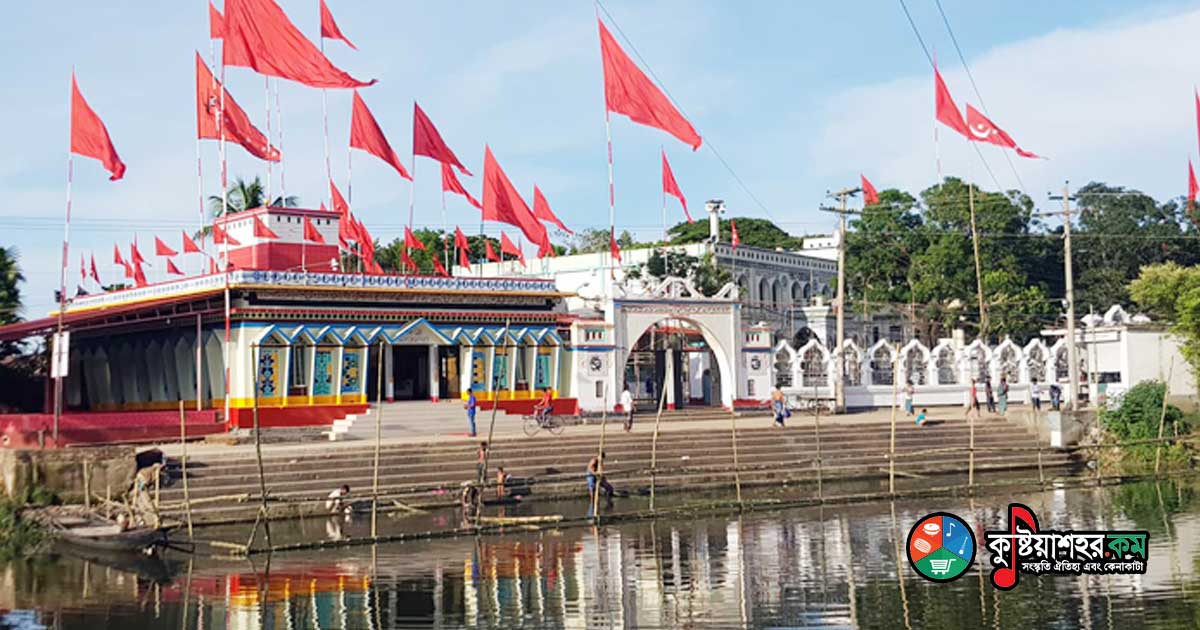
Even seven hundred years after this event, at the annual Urs of Kella Baba, hundreds of thousands of devotees still gather at Kharampur in Brahmanbaria. Since the Urs is held in the monsoon season, devotees come by the river route, hoisting flags on thousands of boats, playing songs and music, and gather together singing the praises of Baba. As every year, the Urs of Baba will be held in this month of Shraban too.
The Urs of Hazrat Kella Shah Baba
Six days long — beginning from the 26th of Srabon, 1426 of the Bengali era
Venue:
The Mazar Sharif of Hazrat Sayyid Ahmad Gachhudaraj (RA) (Kella Shah Baba).
Kharampur, Akhaura, Brahmanbaria.
How to get there:
Kharampur in Brahmanbaria can be reached from Dhaka both by bus and by train. On a train bound for Sylhet one must alight at Azampur, and on a train bound for Chittagong at Akhaura or Brahmanbaria. From Brahmanbaria one can reach the mazar of Kella Shah at Kharampur by auto-rickshaw.
However, most people come by the waterway. On this occasion thousands of boats crowd the Titas river and throng the ghat of Kharampur. Most of these boats are reserved in advance by the devotees.