বাংলা
 English
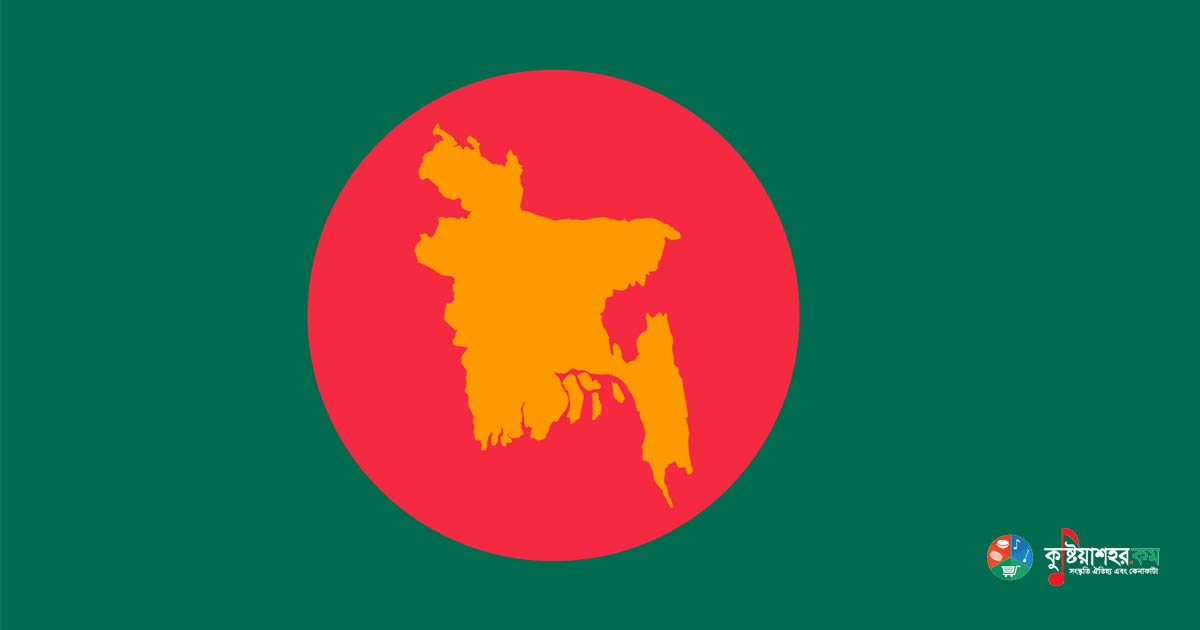
The Great Independence Day, known as 26 March. A proclamation issued on 22 January 1972 declared this day a national day to be celebrated in Bangladesh, and the government declared an official holiday on the day. On this day in 1971, the people of the then East Pakistan formally began their struggle for independence. On this day, Ziaur Rahman, on behalf of Bangabandhu Sheikh Mujibur Rahman, formally called upon the people of all corners of Bangladesh from the Kalurghat radio station in Chittagong to take part in the war of independence. Although this fact appears in various books, there is also disagreement about it.
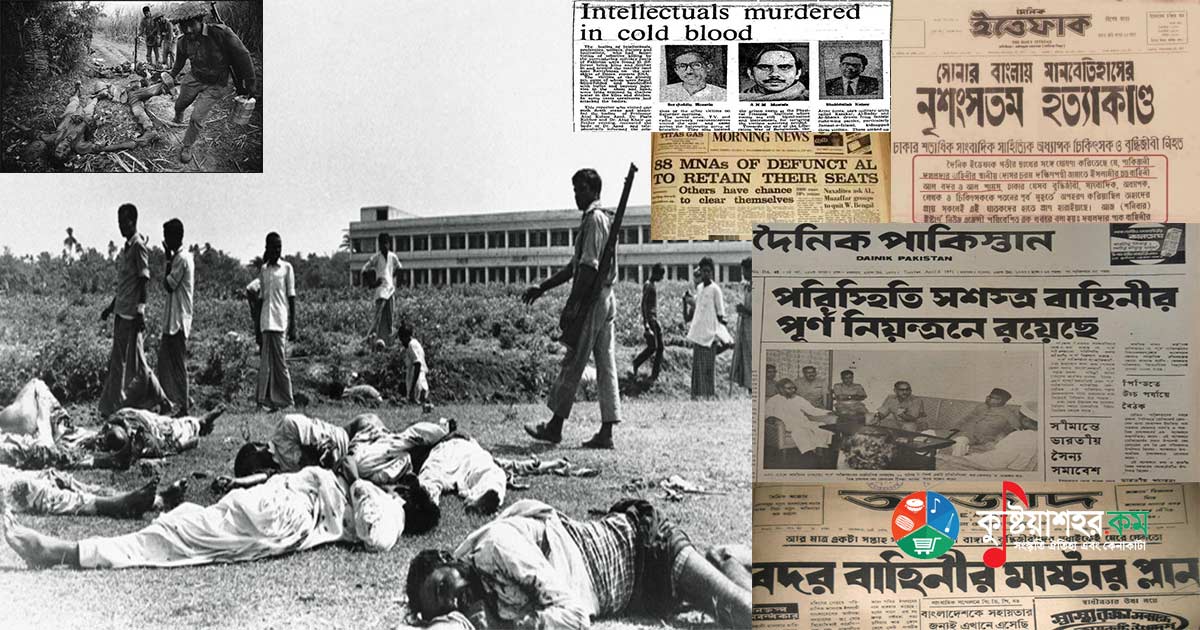
On the deep night of 25 March 1971, the government of the then West Pakistan launched an attack on the innocent people of East Pakistan (present-day Bangladesh). Shelling was carried out in various parts of Dhaka, brutal atrocities were committed on women in many places, and killings were carried out in a planned manner elsewhere. Under the circumstances, the Bengalis found their backs against the wall, and in many places many began preparing for war without waiting for any formal announcement. Later, after receiving the formal declaration, the entire Bengali people threw themselves into the war against the West Pakistani junta, and through a bloody war lasting a full nine months made East Pakistan independent and brought about the emergence of Bangladesh.
Operation Searchlight
Operation Searchlight was a planned genocide carried out by the Pakistani army from 25 March 1971, through which they sought to crush the Bengali nationalist movement that had taken place in March 1971 and the period preceding it. The genocide was carried out on the orders of the West Pakistani rulers, as a follow-up to Operation Blitz of November 1970. The real aim of the operation was to occupy all the major cities by 26 March and to eliminate political and military opponents within a month.
Declaration of Independence
At midnight on 25 March 1971, Sheikh Mujibur Rahman was arrested by the Pakistani invading forces. It is said that a little before his arrest, after 12 o'clock on the night of 25 March (that is, in the first hours of 26 March), he signed the declaration of independence of Bangladesh, which was sent to be broadcast through the transmitter of the then EPR located in Chittagong. The declaration reads as follows:
Translation: This may be my last message; from today Bangladesh is independent. I call upon the people of Bangladesh, wherever you may be, with all you have, to continue the resistance against the occupying army to the end. Let your struggle continue until the last Pakistani soldier is expelled from the soil of Bangladesh and final victory is achieved.
On 26 March, Belal Muhammad, Abul Kasem and several other officials of the Chittagong radio station, along with local Awami League leader M.A. Hannan, first broadcast Sheikh Mujib's declaration of independence by microphone. Later, on 26 March, Major Ziaur Rahman, a Bengali officer of the Pakistani army, proclaimed independence from the Kalurghat radio station in Chittagong. The text of the proclamation is as follows:
Translation: I, Major Zia, Provincial Commander-in-Chief of the Bangladesh Liberation Army, proclaim the independence of Bangladesh on behalf of Sheikh Mujibur Rahman. I further declare that we have formed a sovereign and lawful government under Sheikh Mujibur Rahman, which is committed to functioning in accordance with law and the constitution. In the field of international relations our government is firmly resolved to follow a policy of non-alignment. This state will maintain friendly relations with all nations and will continue its efforts for world peace. I call upon the governments of all countries to mobilize public opinion in their respective countries against the gruesome genocide being committed in Bangladesh.
The government of Sheikh Mujibur Rahman is a sovereign and legitimate government and is entitled to recognition by all the democratic countries of the world.
The Proclamation through Various Media
From 25 March, the Pakistani military kept all the journalists staying at the Hotel Intercontinental in Dhaka confined for two days. From there, Swadhin Bangla Betar Kendra announced that “Sheikh Mujib has declared the seven and a half crore people of East Pakistan citizens of an independent, sovereign Bangladesh”. For more than the last three decades there has been extensive controversy over who was the original proclaimer of independence. For this reason, in 1982 a history book was published officially in which three points were presented.
1. Sheikh Mujibur Rahman wrote a declaration at midnight on 25 March or in the first hours of 26 March.
2. Sheikh Mujibur Rahman's declaration was broadcast from Swadhin Bangla Betar Kendra on the 26th. But only a limited number of people heard that broadcast.
3. On 27 March, Major Ziaur Rahman of the East Bengal Regiment proclaimed independence on behalf of Bangabandhu Sheikh Mujib from Kalurghat in Chittagong. This was broadcast by the international media, and so the world came to know of Bangladesh's declaration of independence. The proclamation was as follows:
On behalf of our great national leader, supreme commander of Bangladesh Sheikh Mujibur Rahman do hereby proclaim the independence of Bangladesh. It is further proclaimed that Sheikh Mujibur Rahman is sole leader of elected representatives of 75 million people of Bangladesh. I therefore appeal on behalf of our great leader Sheikh Mujibur Rahman to the government of all democratic countries of the world specially big world part and neighboring countries to take effective steps to stop immediately. The awful genocide that has been carried on by the army of occupation from Pakistan. The legally elected representatives of the majority of the people as repressionist, it is cruel joke and contradiction in terms which should be fool none. The guiding principle of a new step will be first neutrality, second peace and third friendship to all and anonymity to none. ─ May Allah help us, Jai Bangla.
Translation:
On behalf of our great leader, the supreme commander of Bangladesh Sheikh Mujibur Rahman, I proclaim the independence of Bangladesh. It is further declared that Sheikh Mujibur Rahman is the sole leader of the elected representatives of the seven and a half crore people of Bangladesh. I therefore appeal, on behalf of our great leader Sheikh Mujibur Rahman, to all the democratic countries of the world, especially the great powers and the neighbours, to take effective steps. A dreadful genocide has begun as a result of the attack by the Pakistani army. To describe the legally elected representatives of the majority of the people as oppressors is a cruel joke and a false slander that should fool no one. Among the principal steps for resolving the conflict, the first must be neutrality, the second peace, and the third friendship with all and enmity towards none. ─ May Allah be our helper, Joy Bangla.
Through this proclamation of 27 March 1971, the bloody war of independence began on the soil of Bangladesh, which lasted nine months.
Celebration of Independence Day
Bangladesh's Independence Day is celebrated quite colourfully. Independence Day, or National Day, is observed with due dignity through the laying of floral wreaths at the National Martyrs' Memorial.
| Belligerents | |
|---|---|
|
India (joined the war on 3 December 1971)
Soviet Union |
Paramilitary forces: Supporting countries:United States United Kingdom China Saudi Arabia Indonesia |
| Leaders | |
| Sheikh Mujibur Rahman Tajuddin Ahmed Muhammad Ataul Gani Osmani Kazi Muhammad Shafiullah Ziaur Rahman Khaled Mosharraf Sam Manekshaw Jagjit Singh Arora Jacob Farj Rafael Jacob |
Yahya Khan Nurul Amin Abdul Motaleb Malik (prisoner of war) Amir Abdullah Khan Niazi (prisoner of war) Rao Farman Ali (prisoner of war) Mohammad Jamshed (prisoner of war) Tikka Khan Mohammad Sharif (prisoner of war) Leslie Mungavin (prisoner of war) Patrick Desmond Callaghan (prisoner of war) Golam Azam (Peace Committee) Motiur Rahman Nizami (Al Badr) |