বাংলা
 English

After spending a few years at Cheuria, Lalon called his disciples and said, I am going away for a few days; look after my sadhana chamber. A week and a half later he returned with a beautiful, young girl. Matijan Firani asked, who is this girl, father?
- Your Guruma.
On hearing this, everyone in the Akhra offered their devotion to the Guruma. This girl, named Bishkha, stayed with Lalon all her life. Three months after Lalon's death she too died. Bishkha Firani remained at Cheuria for nearly a hundred years, yet her real name and identity were never known. Even after her death none of her kinsfolk or acquaintances could ever be traced. Like the mysterious fakir Lalon, Bishkha Firani remains to this day a mysterious woman.
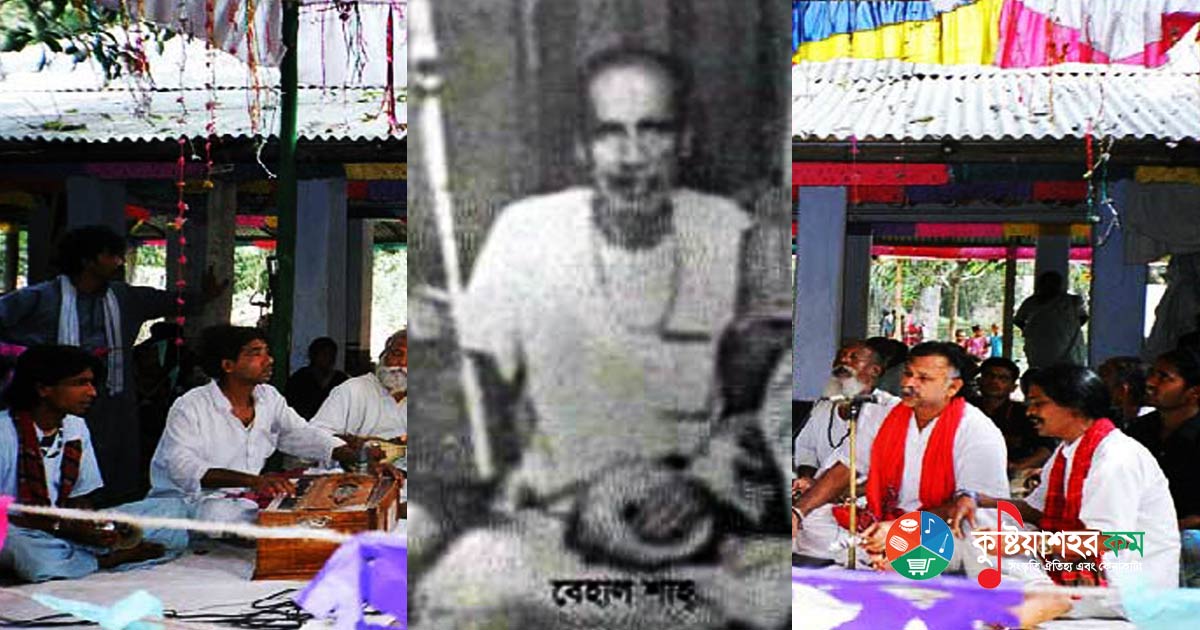
One day fakir Lalon was sitting alone in his sadhana chamber. At that moment two devotees from Kamalapur village of Khoksa thana came and told him that cholera had broken out in their village, and that the devotee fakir Rahim Shah there had died of cholera, leaving behind his minor son and wife. Hearing all this, Lalon was deeply pained. He brought fakir Rahim Shah's minor son Shital to his own side. Bishkha and Lalon began to raise him with paternal affection. On the other hand, several years later, fakir Shukur Shah brought his motherless daughter to Lalon; Lalon affectionately took her into his lap and told Bishkha — from today this child too is your daughter. Lalon would call this girl, beautiful as a fairy, not Pari but Parinecha. Bholai Shah was one of Lalon's closest disciples; from childhood he and Shital had lived in the same house. When Bholai Shah grew up, on one Dol Purnima night he was united in marriage with Parinecha.
Quite a few legends are in circulation about fakir Lalon. Once Lalon crossed the Ganges with his disciples and arrived at Nabadwip, the seat of Lord Gouranga, the Great Master. Seeing the strange attire of the newcomers, the people of the temple asked about their identity. Lalon's disciple Shital Shah said, we have come from Kushtia; we are all sages of the fakir creed. Then word was brought to the Mahaprabhu that some sage-fakirs had come from Kushtia, most of whom were Muslims. Having heard everything, the Mahaprabhu ordered that seating be arranged for them. A place was made for them under a large neem tree at one side of the courtyard. After the all-night ceremony, when the turn came for serving the sadhu-gurus and the bashtomi devotees, the young men brought lime in a brass bowl and asked everyone to stretch out their hands and accept the Mahaprabhu's prasad. Fearing that the lime would burn their mouths, none of the disciples stretched out their hands; instead they all begged forgiveness together.
The young men said, what a sort of sadhus you are! Out of fear that the lime would burn your mouths, no one stretched out a hand. True sadhus would never have feared burnt mouths!
Lalon was sitting in a corner; hearing the young men's words, he said —
Do you want?
- We want to see what sort of sadhus you have become.
Lalon asked the young men to bring banana leaves and a chunghi. He then placed a little lime on a banana leaf and dissolved the rest of the lime in the pitcher full of water. He himself ate the lime on the banana leaf, and made the disciples drink the lime-mixed sherbet, glass by glass, from the pitcher. They all tasted the satisfaction of drinking the sherbet. This sherbet drink is known as chun-seba.
Lalon used to ride on horseback; sometimes late at night he would ride about in the moonlight, and where he would vanish to, none of his disciples could tell.