বাংলা
 English
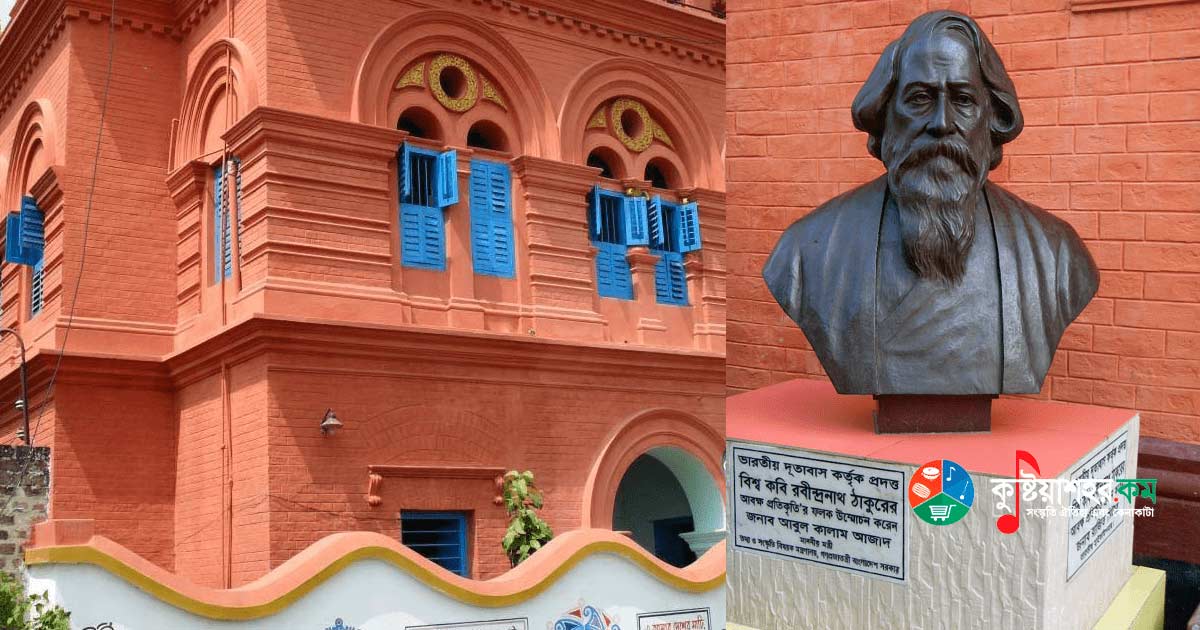
Tagore Lodge is a commercial establishment in the cultural capital of Kushtia, built with the world poet Gurudev Rabindranath Tagore's own hands. In 1895 Rabindranath Tagore involved himself in business. With the help of his two nephews, Surendranath and Balendranath, he founded Tagore & Company at Shilaidaha as a joint-capital business.
That very year, for the convenience of business, Tagore & Company was shifted from Shilaidaha to Kushtia. To look after the company, the poet built this two-storey house named Tagore Lodge at Milpara in the town, where he needed to stay for a short while.
With the passage of time, Tagore Lodge was at one stage forcibly occupied. After changing hands many times, its ownership finally came into the name of Salima Khatun, wife of Abdul Gafur, a local resident of Panchpai. The surrounding land too went under the occupation of various individuals, who prepared documents in their own names. Meanwhile the house fell into further disrepair. After independence, Md. Abdur Rahim, the first elected chairman of Kushtia pourashava, took the initiative to protect this house so rich in the poet's memories.
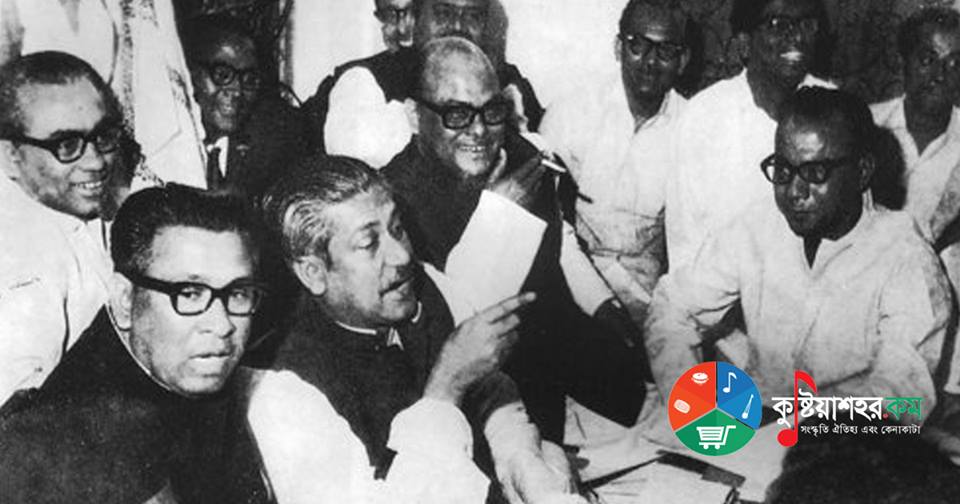
In order to have the house allocated in the name of the pourashava, he kept lobbying at the higher levels. At one stage, when Bangabandhu Sheikh Mujibur Rahman visited Kushtia in 1973, he made an application for the transfer of Tagore Lodge to the pourashava. Realising the dignity and importance of the house so rich in Kabiguru's memories, Bangabandhu directed the then District Administrator of Kushtia to take the necessary measures. But since the ownership of the house was at the individual level, complications arose over transferring it to the pourashava.
After Bangabandhu's martyrdom in 1975, the process of transferring Tagore Lodge came to a halt. Meanwhile the house fell into further disrepair. At one stage, in 1980, the pourashava's present mayor Anowar Ali again took the initiative to restore the house. But again came the same complications. At one stage, after discussions with the owners, in 2004 the house was bought on behalf of the pourashava for five lakh taka. Then the renovation work began. At present the house has been painted in the manner of the Kuthibari. His poem is painted on the outer wall.
The house is located at Milpara in the town, two hundred metres from the big station. The area is not very large — altogether nine katha. On it stands a small two-storey house, long from east to west, with verandas on both the north and south sides. At the corner of the chamber on the west side there is a spiral iron staircase on the two-storey for climbing up. The entrance to the house, however, is on the north side, right against the Milpara road. Though small in size, this house, being so rich in the memories of Rabindranath Tagore, has a greatness of dignity and pride; yet compared with the immense fame and recognition of the Kuthibari of Shilaidaha in Kushtia, this house inside the town can still be called almost unknown.
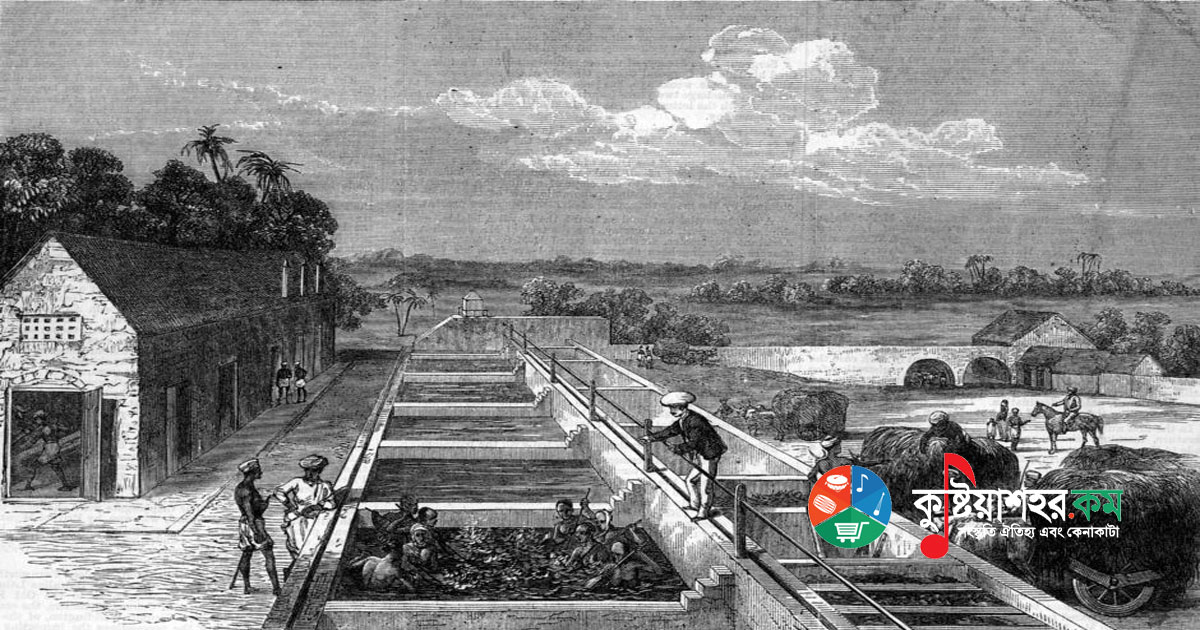
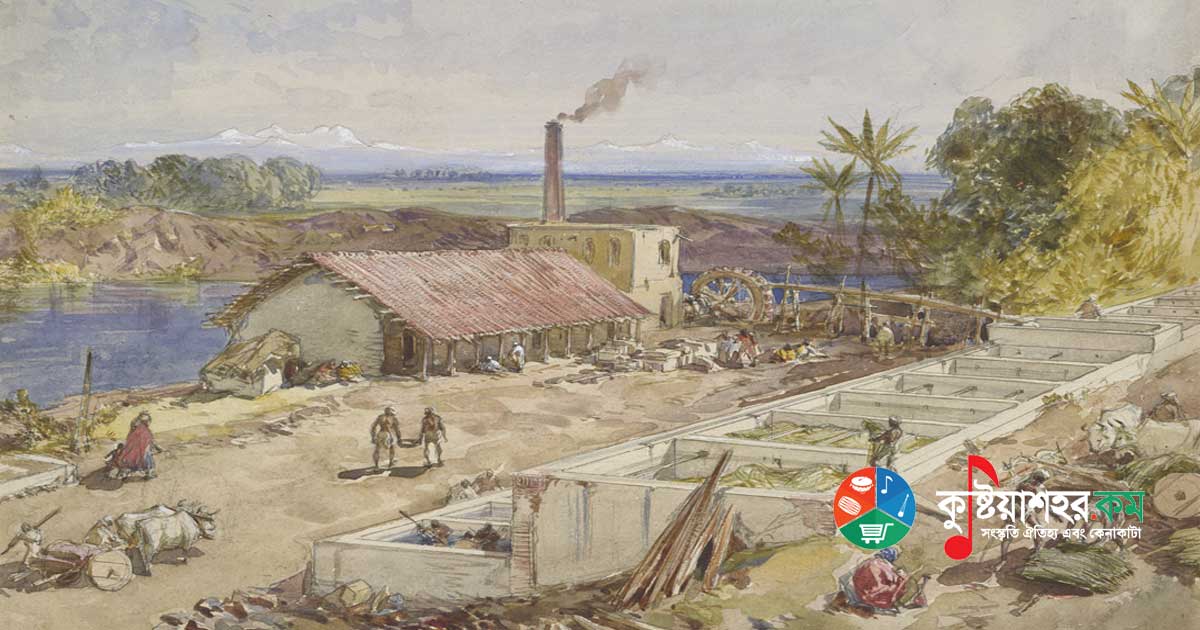
Along with the grain business, the poet also set up mills here for crushing sugarcane into molasses and for making jute bales. Later, in the spirit of the Swadeshi movement, he also built a large weaving house centred on Tagore Lodge. Though the business ran well at first, Tagore & Company afterwards began to suffer continuous losses. Getting into the jute trade, the poet fell into debt of more than a lakh of taka. Seeing no way out, he entrusted the responsibility of looking after the business to Yajneshwar, an enterprising young man of Dakshindihi, his in-laws' home in Khulna. Yajneshwar strove, through much toil, to keep the sinking Tagore & Company afloat. At one stage, for three thousand taka, the poet donated to Yajneshwar all the machinery and goods of the company, and settled Tagore Lodge along with two bighas of land here to him in exchange for an annual rent of 50 taka. Later Yajneshwar set up here a factory named 'Yajneshwar Engineering Works' (the factory building still exists). Since then many days have passed. On the ground floor there is a large hall room and a small room. Upstairs there are three rooms; the middle room on the upper floor is the largest. Here, in an almirah, are kept the poet's collected works; on the walls hang reproductions of twelve pictures painted by the poet.
To the south is a small courtyard covered with green grass, and there is a small stage there too. Right in front of the northern entrance stands the poet's bust. The custodian of Tagore Lodge, S. M. Nuruddin, said that the bust and the reproductions of pictures were donated by the Indian Embassy. Among the furniture upstairs are several chairs and a long bench for sitting leaning back; these were made in imitation of the furniture of Shilaidaha. Apart from its dilapidated walls, there was nothing else left in the house. Kushtia's cultural personality, Advocate Liakat Ali, said, 'Although the Kuthibari of Shilaidaha is well known, the poet's connection with Kushtia town centred on Tagore Lodge is unknown to many. As a result, Tagore Lodge remains neglected to this day.' He drew the attention of the government's Ministry of Cultural Affairs to converting Tagore Lodge, without delay, into a Rabindra museum and repository. He believes that, centred on this historic building, a platform for the practice of Kushtia's literature and culture can grow here. An association of the elderly of Kushtia has been formed here; the elders gather in the morning and evening for adda. Local people said that nothing of a research nature on Rabindranath has yet grown here. The mayor of Kushtia pourashava, Anowar Ali, said that soon Tagore Lodge will be developed into a Rabindranath research institution.
When the poet came from Calcutta by train, or went to Calcutta, he would rest at Tagore Lodge while travelling to and from Shilaidaha; many times he even spent the night there. It was from here that he supervised his business affairs. He wrote a poem about a kuruchi tree full of spring flowers beside Kushtia railway station. This poem, titled 'Kuruchi', written on 10 Baishakh 1334, was later included in the book Banabani. Rabindranath Biswas, former principal of Khoksa Degree College and a Rabindranath researcher, said that Rabindranath Tagore is one of those of whom the Bengali people will forever be proud. Therefore, to bring back the heritage and honour of Tagore Lodge, this house so dear to the poet's memories, it would have been good if the house were handed over at once to the Department of Archaeology; at present it is under Kushtia pourashava.