বাংলা
 English
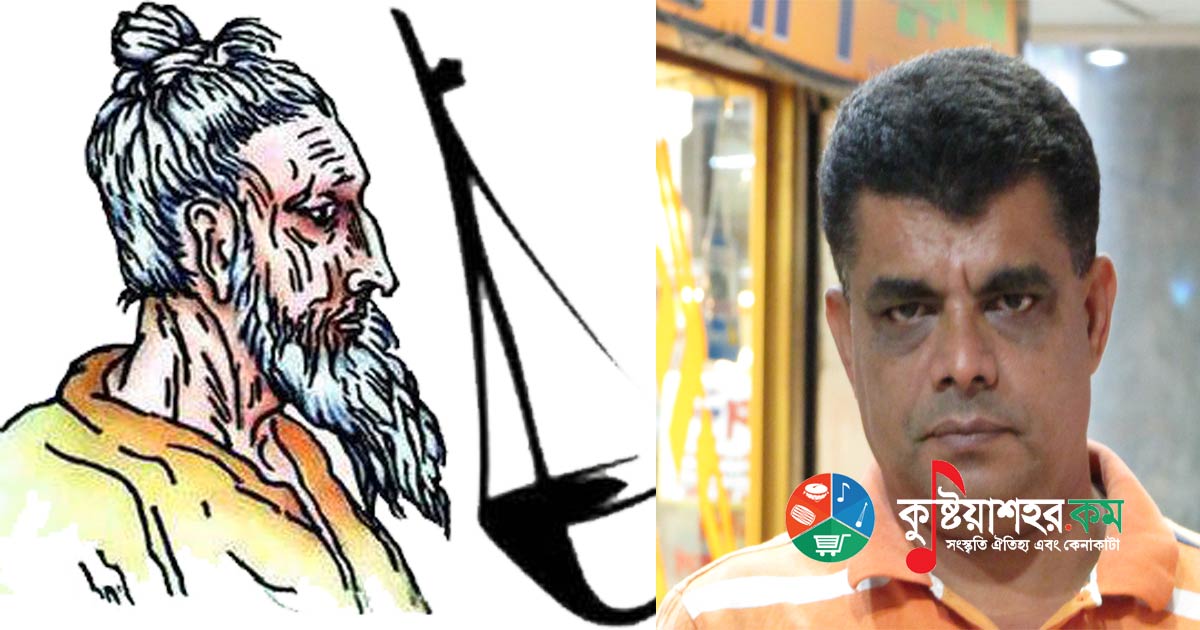
The ektara. In its string, the cry of the mind and the expression of the heart. In the resonance of its string, melody, lament and feeling. In the supplication of the mind, an attempt to cleanse society of its filth. From the earliest times, the sage Lalon Sai strove with all his life toward that - an effort of humanity and morality.
This is the land of Bengali settlement, a land that was never allowed to move along its own identity and its own stream of culture. To preserve their rule, exploitation and trade, the foreign merchants changed the laws again and again, and time after time we had to submit to the customs of the foreigners. Age after age, because of this condition, the practices and elements of diverse cultures have mingled into the many cultures of the Bengalis, a mixed people.
While some could not take much of the good from this, the result of confusing other cultures with our orthodoxy and superstition has been that everyone seems trapped in the same filth. Rather than being as attentive as we were to an escape from this problem, we have, again and again, sullied our social authenticity by entangling ourselves in quarrels and violence.
For that reason, seeking to suppress us and to rule and exploit in the name of business, communalism was given birth in Bengali society. That opportunity was made easily because the slanted reliance in our chromosomes was never mutual sympathy; it was always a mind of conflict. Out of the bustle of caste and creed, orthodoxy grew out of superstition, and the anger born of jealousy, under the influence of caste and creed, stirred that bent still further. As a result, without judging who is ours and who is alien - and inviting 'an outsider to dwell in one's own house' - our political, social, economic and cultural streams never gained momentum.
Yet, making us their guardians, those plundering foreigners seized their chances. Confronting this problem unceasingly, from time immemorial, individuals became sages and sages became great souls. In that continuum were present Gautam Buddha, Aul Chand, Nigamananda Saraswati, Kangal Harinath, Raja Ram Mohan Roy and Mauni Baba, Mahaprabhu Nimai, Nanak, Kabir and Tulsidas, and Baul Samrat Lalon Sai. Likewise Fikir Chand, the Baul school, the Sahajiya, Kartabhaja, Aul, Balarambhaja, Nyarabhak, Kishori Bhajani, Gobraho, Hazrati, Khushi Bishwas, Gourabadi, Saheb Dhani Naga, Avadhuta, Churadhani, Tilakbasi and the Vaishnava doctrine are directions of the same equanimity.
The historian and biographer Basanta Kumar Pal has written that, like the practitioners of vairagya, the bhava sages such as Lalon went about begging with the gopi, a single-stringed instrument. In the mould of the Vaishnava padavalis, the baul songs of the mystic sage Lalon Sai were quite popular in our society. Age after age the great ones came to blaze the path, to spread the felt experience of bhava-philosophy. In the medieval age came the venerable Sri Chaitanya, and in the early part of the eighteenth century came Mahatma Lalon Sai. In Chaitanya's bhava-philosophy, people sought liberation from the shackles of orthodoxy and superstition through the padavali songs. Again, the mystic sage Lalon Sai, seated on the bauls' mat, created the baul songs to seek the path of inner light in the vision of the mind, joining voice to the words uttered by the heart on the single string of the ektara. The unceasing human effort to resist society's constant decay - that is the idealist effort.
In it, the root longing of bhava is thought in the light of the folk, and the word of the mind is caught in the enchantment of melody. Coming to the juncture of the Kali age, Sri Chaitanya strove through lila-kirtan to connect the understanding and spread Sri Krishna's bhav-lila as a message of human liberation. The path of liberation that Lalon spread through his string moved in the same stream. The bhava sages stand in one line, at least on one point: they refused to judge caste and creed. Lalon called the judgement of caste and creed an immoral act of man; he called it an outrageous deed. In Lalon's words:
'The judge of caste is a hypocrite
I have seen the pride of caste, an outrage -
Lalon says, if it were in my hand,
I would burn caste down with fire.'
The British-bred cancer of Hindu-Muslim conflict and division in this subcontinent - Lalon was hurt by it again and again. On this, his doctrine was clear and stern too. For that reason he said,
'The yavana infidels, house after house -
hearing it, my eyes shed tears,
Lalon says, do not kill anyone
you have not known in the mind's reckoning.'
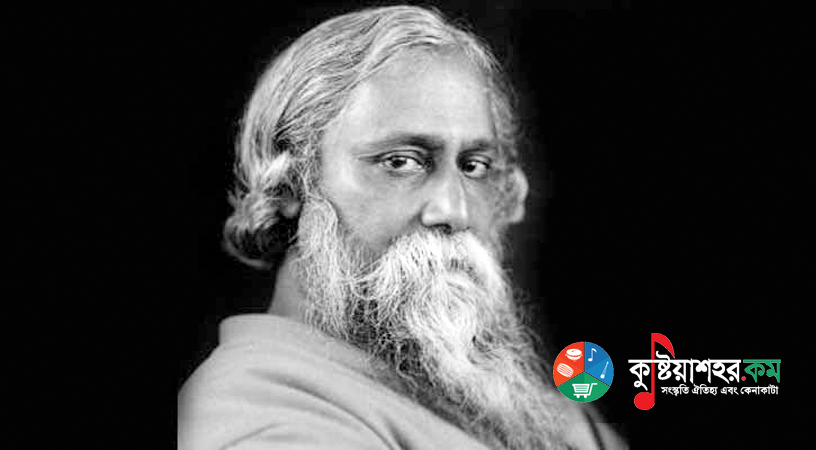
The world-poet was an unfeigned admirer of Lalon's bhava-ideology. That is why many similarities can be found in the bhava narration of the poet and the mystic sage. When Lalon said in his song,
'In this world of the poor and the distressed there lives one unknown man... ..
The day Sai floated him alone
in the One God of the formless,
that unknown man became
his second self at that very moment.'
And if we speak of the world-poet: this prince of poetry touched the thread of Lalon's bhava with the mere touch of admiration, writing exactly this,
'O wayfarer, catch the song of the road,
there is an ektara in the bazaar.
Let the soul rise up rapt in this joy -
there is no bank or shore.'
Thus binding the poem of life in folk mantras, Lalon's ektara has always touched the abundance in people's minds, seeking the way through sadhana and attainment. In the flow of time, therefore, in the revolt of bhava-force, this ektara still, in the power of its tune, preserves bhava and devotion in Lalon's songs as an instrument.