বাংলা
 English
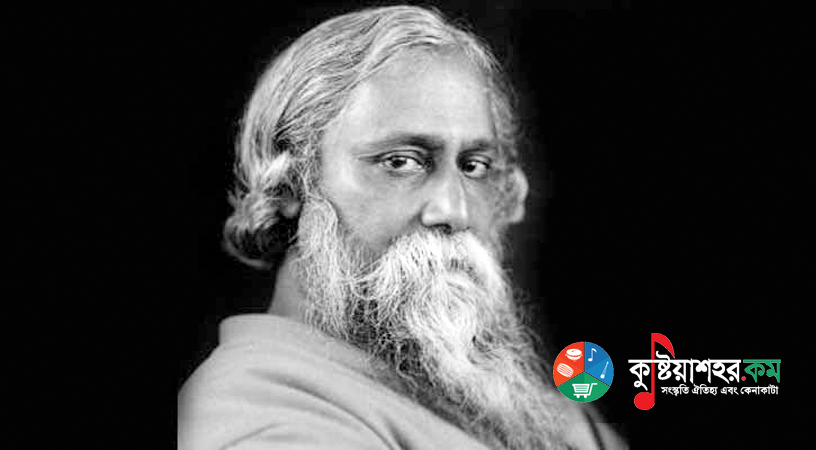
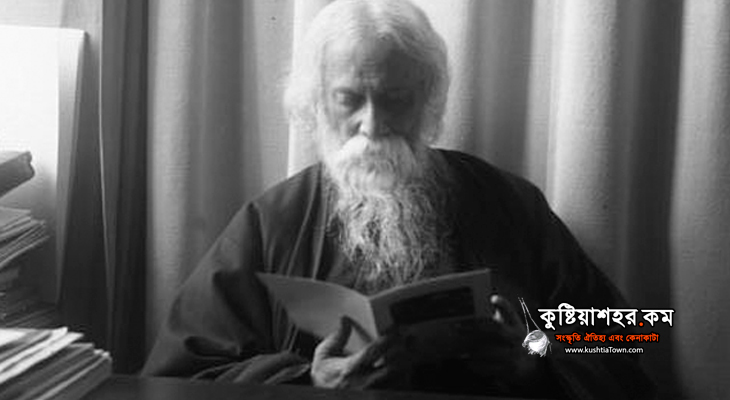
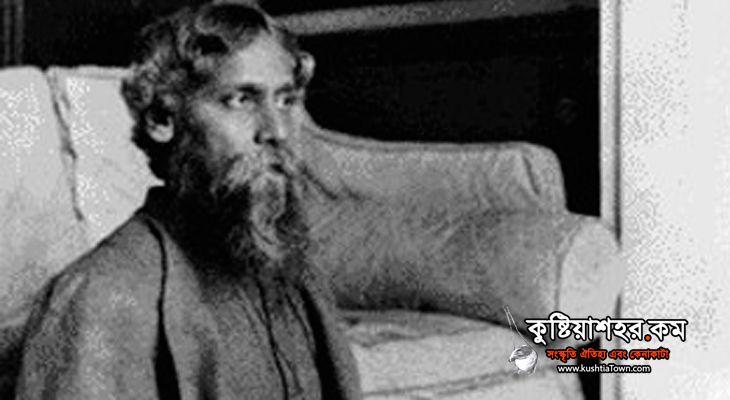
The immortal soul of Bengali literature and the great boon-child of Bengali poetry, the closest of kin to Bengal and the Bengali, the star in the sky of Bengali letters: world poet Rabindranath Tagore. Rabindranath is the poet of the spirit, the poet of love, the poet of life, the poet of nature, the poet of song — and above all, the poet of human love. And so the poet and man Rabindranath holds a special place in the heart-chamber of every lover of literature and nature, of all people.
As long as the sun endures on this vast beautiful earth, as long as the moon and stars remain and birds sing their songs and rivers flow in streams, Rabindranath will go on spreading light among literature and humankind as a most brilliant star. It is true that Rabindranath the man is no longer bodily among us, that no one will ever see his presence again; yet there is no doubt that he will live on among people for ever through the merit of his works. True creative work and the creative individual can never be erased for anything. Every creative person lives on in society and among people through his creative work alone.
There is no need to say today that of the few poets of great stature in Bengali literature — standing tall like the Himalaya — one, and a leading one at that, is Rabindranath Tagore. Rabindranath was a modern poet. Modernity found expression in his songs, poems and short stories. Rabindranath was a multidimensional creator of art. Especially in his poems and songs he embraced tradition and modernity very well indeed. Layer upon layer, we see modernity sounding loud in his poems and songs. His power of imagination was keen, and at the same time full of creativity and artistry. Rabindranath’s short stories presented him to readers as a unique human being. And it is as plain as daylight that without the poet Rabindranath the existence of Bengali literature can never be imagined.
Just as a child’s existence is not possible without the mother, and a tree does not attain completeness without fruit or flowers, in the same way Bengali literature cannot be thought of without Rabindranath. It can therefore be said that Rabindranath and Bengali literature are organically bound to each other. And so, whenever we think about any subject of Bengali literature, or seek to do something or say something about it, the poet Rabindranath Tagore will appear there, fully manifest. For this very reason, whenever we discuss or contemplate art, literature and culture, society and civilisation, humanity and life, Rabindranath naturally comes before us. The vast territory that Rabindranath occupies in art and literature has made Bengali literature very much richer. Rabindranath’s creative and great literary works inspire us to know and understand society and civilisation, feed the hunger of the mind, and teach us to think deeply about human life. We are therefore much indebted to him — a debt that can never be repaid.
The diverse and creative literary works of the poet Rabindranath Tagore have made Bengali literature stand much higher. That Bengali literature today holds the position it does in the court of world literature, that it has been able to touch the people of the world, is essentially the harvest of Rabindranath’s tireless effort and devotion. There is no corner of Bengali literature that has not felt the touch of his hand.
Poetry, rhymes, stories, fiction, essays, plays — everywhere Rabindranath has a resounding presence. He even painted alongside his literary practice. His paintings today are capable of feeding new thought afresh to the people of the world. Rabindranath is, quite as much, a painter alongside being a poet. In short, every branch of Bengali literature has been brightened by the touch of the ink of Rabindranath’s pen. Blessed, enriched and developed has Bengali literature become.
Poems and songs are the sustenance of human life; they act as a source of inspiration and a force of consciousness. Love, affection, equality, harmony, courtesy, creativity and mindfulness aid the beautiful in every age. And so, creating hundreds of songs and poems, Rabindranath turned people’s minds toward literature, gave them indomitable inspiration, gave them boundless strength, gave them unfeigned love. He was in no way a pessimist. We see that in all his works, in every field, he showed humanity and society the light of hope. With our life, with our consciousness, with our mindfulness, in movements, in language, in love of country, in creative work — Rabindranath was, is and will remain.
In our art, literature, tradition, culture, politics, life and consciousness, Rabindranath is indispensable. Rabindranath was a successful and accomplished designer and craftsman of the building of a sense of life and a sense of consciousness — pure, refined and polished. Because those who are the neglected of society are the ones who keep humanity, society, knowledge, creativity, consciousness and mindfulness forever alight like the flame of a lamp.
Through winning this award he held Bengali literature up before the world. As a result, Bengal, the Bengali nation and Bengali literature held their heads high in pride and astonished the world. The people of the world thus came to know and recognise the Bengali language and the Bengali nation anew.
What other countries of the world do not have, our country has — and we are proud of it. We have Lalon songs, Rabindra Sangeet, Nazrul songs, Bhatiali, Jari and Sari, Marfati and many other kinds of song. These are our spirit, our tradition and our pride; in our national life they are a source of inspiration and a great achievement. It is with these that we live and will live. But sad though it is, the Rabindra practice that ought to be pursued and spread here on such a wide scale is not happening to that extent. One of the great achievements of the Bengali nation’s life is Rabindranath. If we fall behind in that practice of Rabindranath, we shall fall far behind as a nation — which cannot be our desire. In truth, drawn by our spirit, our life, our consciousness, our art and our literature, we must return to Rabindranath again and again. There is no room for denying this.
In the end, however much the contemptible critics may look on Rabindranath with denial, disdain and neglect, Rabindranath will shine in the sky of Bengali literature as an eternally bright star. No one has the power to move him from there even by a hair’s breadth, nor ever will. Those who in the past conspired against Rabindranath or tried to slight him have themselves been flung into the dunghill of false history; and if anyone in the present does or thinks the same, they too will fail and be cast into filth.
For his immortal and great literary works, Rabindranath will live on forever among people, among the readers of Bengal. Bengal, Bengali literature and Rabindranath are one and the same entity; setting one aside, the fulfilment of the others cannot be attained.