বাংলা
 English
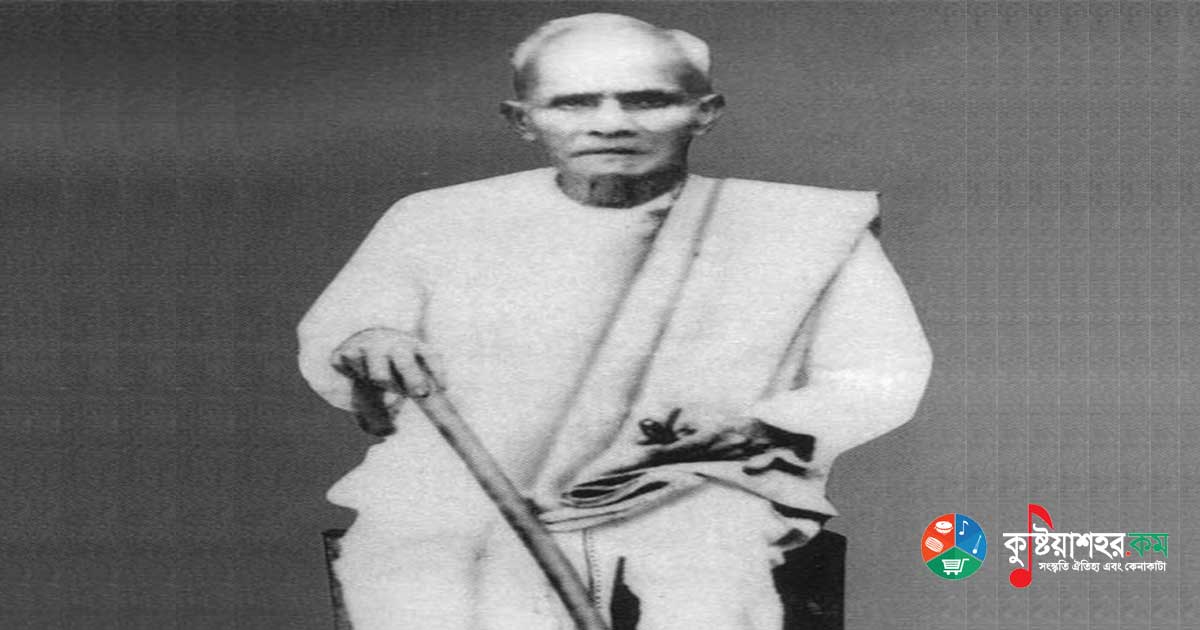
Ramesh Chandra Sil, or Kabiyal Ramesh Sil, or Ramesh Maizbhandari (Bangabda 26 Boishakh 1284, Chittagong district - 23 Chaitra 1373; CE 1877 - 6 April 1967) was one of the makers of Bengali kavigan. By achieving a successful fusion of the folk tradition of kavigan with modern social awareness, he attained wide popularity. He was a legendary sadhak of Maizbhandari song. This popular people's music artist took part directly in India's freedom struggle and Bangladesh's Language Movement, and also in the movement against Nurul Amin that followed the 1954 United Front election.
Kabiyal Ramesh Sil was born in 1877 in the village of Gomdandi under Boalkhali thana of the Chittagong division of Bangladesh. His father's name was Chondicharan Sil. Chondicharan Sil was by profession a barber and a kabiraj. Kabiyal Ramesh Sil's school life came to an end with his father's death while he was studying in class four, and all the responsibilities of the family came upon the poet's shoulders. In his own words,
'I am the boy, the driver, the guardian; I have no one else. My mother's ornaments are all we have to sell for food.'
Then he took up his father's profession. Finally he went in search of fortune to the city of Rangoon in Burma (present-day Myanmar). There he joined a shop as an employee and later became the owner of a shop. But out of love for his homeland he returned to his own village within five years. Coming to the village, he began work as a kabiraj (village physician) alongside his former barbering work. While practising this kabiraji work he became passionately devoted to kavigan.
Without any prior experience he performed kavigan on stage for the first time in 1897 and was appreciated. In 1899, when he defeated three rival kabiyals in a kavigan performance, he received a total of thirteen taka as an honourarium from the organisers and the audience, which later inspired Ramesh Sil to choose kavigan as a profession.
In 1938 the first association in the history of Bengali kavigan was formed at Ramesh Sil's initiative. This association of kabiyals was named 'Ramesh Udbodhon Kobi Sangha'. Kavigan free of obscenity was one of the aims of this association. In 1944 the poet gained membership of the Communist Party. In 1948 the poet was felicitated at Shraddhananda Park and honoured with the title 'The Greatest Kabiyal of Bengal'. In 1954 he took a strong stand for the United Front in the provincial election. For this reason, after the United Front government was dissolved, Ramesh Sil too was arrested along with other leaders and activists. His booklet 'Vote Rohossho' (The Mystery of the Vote) was confiscated by the central government. The poet suffered long imprisonment at that time. In 1958, for opposing Pakistan's martial law, Ramesh Sil's literary allowance was stopped. In the last part of his life the poet faced severe financial hardship. The poet's first wife was Apurbabala, and his second wife Obolabala. In this household the poet had four sons and one daughter.
At first, like the traditional kabiyals, Ramesh Sil composed songs based on the Puranas and legends. At that time the subjects of his songs centred on man and woman, truth and falsehood, guru and disciple, ascetic and householder and so on. Later, inspired by socialist ideals, the poet became strongly socially conscious. A radical change came over the subject matter of kavigan. War and peace, the tiller and the mazumdar, the moneylender and the debtor, autocracy and democracy - these became the themes of kavigan. He was one of the makers of the spiritual songs of the Maizbhandari tariqa.
In 1898, on the occasion of the Durga Puja at Mazhir Ghat in Firingi Bazar of Chittagong, a kavigan was arranged. The kavigan began in the presence of about a thousand and fifty people. The principal kabiyals were the then popular kabiyals Mohanbanshi and Chintaharan. But in the course of the session Chintaharan fell ill. The audience began to create an uproar. Then the organisers requested the kabiyal Dinabandhu Mitra to come to the stage. But kabiyal Dinabandhu Mitra, not accepting their request, asked Ramesh Sil to go to the stage. Although frightened at first, Ramesh Sil went up to the stage, winding his chadar around his waist. The rival kabiyal Mohanbanshi, showing disdain for Ramesh Sil, then only twenty-one years old, said, "Can one have a duel with this little one?" In reply Ramesh Sil said, "Festivity, fear and shame are no small matters. / Who can defeat whom? / A little child, true - but the child of Braja was wise with knowledge / whether or not he is known at the session." At that session he hurled a challenge at the audience, saying, "My mother is a princess, Chondicharan is my father; I am, O people, a child of man, and I shall not beg forgiveness." In the first session of his life he sang kavigan for eight hours at a stretch. At that session neither could defeat the other. Finally, at the intervention of the organisers, the kavigan was stopped for that day. But from that time Ramesh Sil's popularity spread far and wide.
The poet was ever eager to banish obscenity from the language and presentation of kavigan. The presentation of sexuality through crude gestures and tasteless wording was the real attraction in kavigan. Ramesh Sil's artistic presentation and elegant choice of words were a rare instance of refinement in kavigan. Patriotism, famine and the anti-colonial movement found forceful expression in the language of his songs. For example - 'In the guise of trade the merchant came / disguised as robbers he plundered / carried away the wealth of Malkotha - and dressed me up as a fool; / the peasant and the labourer, in unison, / if they join hands, hand in hand / they will slay the white oppressor - to keep life alive'. Or - 'The country burns in the fire of famine / why have the people still not awakened'. The poet's patriotism was profound - 'If life be given for Bengal, I shall dwell in heaven / my Bengal's claim shall stand firm though I face the gallows'.
From India's freedom struggle to Bangladesh's Language Movement of 1952, Kabiyal Ramesh Sil took an active part. His people's songs gave inspiration to the country's people in all these struggles. In 1954 the United Front government, elected by the people's votes, was ousted, and Nurul Amin was made Governor of East Bengal. When this Nurul Amin came to Chittagong he was humiliated before the people. About this he composed a famous satirical song. The song is:
Hear, brother, these strange news
Chief Minister Nurul Amin makes a tour of Chittagong.
At three o'clock the meeting was to sit at Paltan
Alas, what did I see, what happened.
People huddled together in fear
Suddenly I see a rotten egg
falling upon the minister to cool him.
The black flag began to fly
above the minister's eyes.
Revolutionary Chittagong, the chief fortress of Surya Sen,
The minister made his tawba-tilla,
never again in all my life will I visit Chittagong town.
This song became so popular that it spread across the whole country. For this he was taken to jail. He was there for one year. At that time he was seventy years old and had to suffer a great deal of mental persecution. At that time, showing him the temptation of abundant wealth, he was offered the writing of Pakistan's national anthem. But he refused it. He answered this enticement with the following poem:
Those who have made a minaret of my murder
having eaten flesh and blood have heaped up a skeleton
Now that time is no more; hasten, come, brother
The time to redress the sorrow has come.
No accurate information is available about the number of books written by Ramesh Sil. Among the titles of books that are available, Ashokmala, Shantibhandar, Nure Duniya, Desher Gan, Vote Rohossho, Chattal Porichoy, Bhandare Mowla, Jibon Sathi, Muktir Dorbar, Manob Bondhu and the Rural Songs of Chatgaon, Parts 1 and 2, etc., are notable.
Besides, outside the list of books composed by him, the following 8 books are found. For example:
- Pakistan Sangeet
- Desher Dordi Ganer Boi
- Lok Kallyan
- The Poem of the Storm of 1367
- Eshek Sirajia
- Mohakabbya Bahi
- The Poem of the Storm of 1963
- The Poems of Peace
Besides, Ramesh Sil had published two books: one titled "Bodolti Jomana" under the pen name Beduin, and another titled "Bhondo Sadhur Kobita" (The Poems of the Hypocrite Ascetic) under the pen name Rishibhatta. Among his other publications is "The Poem of Gandhi's Murder", written with the collaboration of Nikunj Bihari Chowdhury. Outside all these books, Ramesh Sil has more than one and a half hundred poems.
In the last two decades of his life Kabiyal Ramesh Sil was honoured with a large number of felicitations in recognition of his contributions. The birthday felicitation organised by fellow prisoners in the central jail of Dhaka in 1958, the felicitation given by the Bulbul Academy of Dhaka in 1962, and the civic felicitation in Chittagong in 1964 are especially notable.