বাংলা
 English
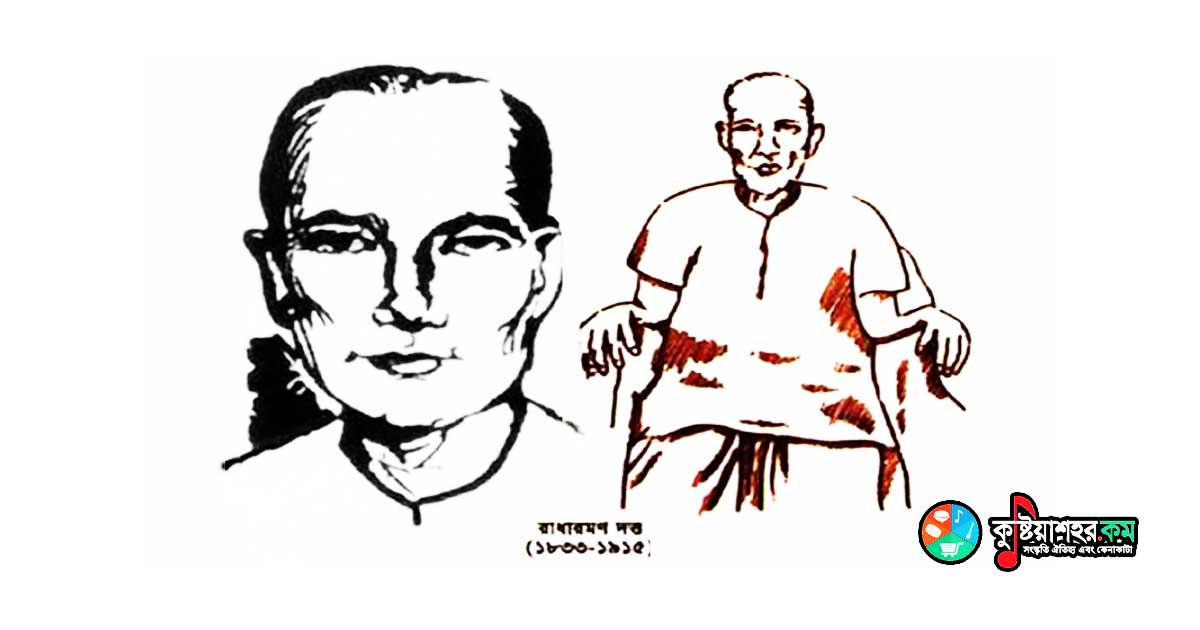
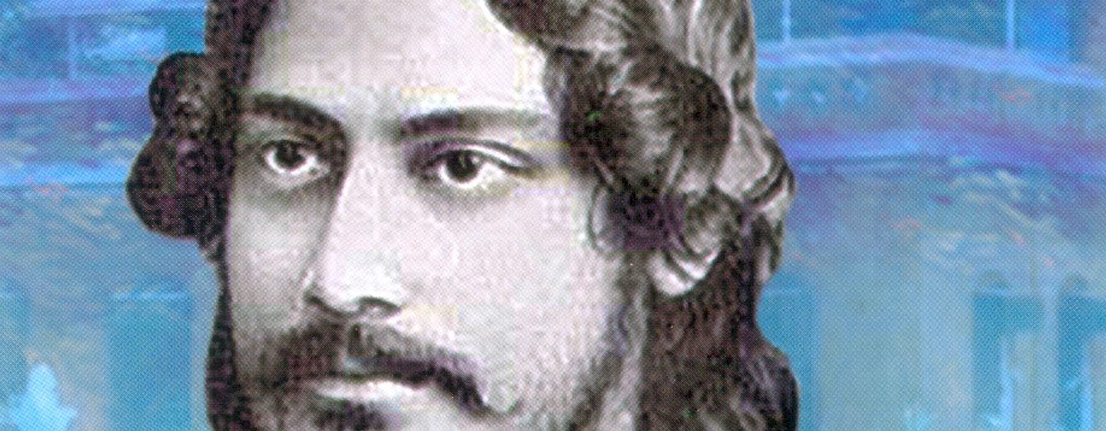
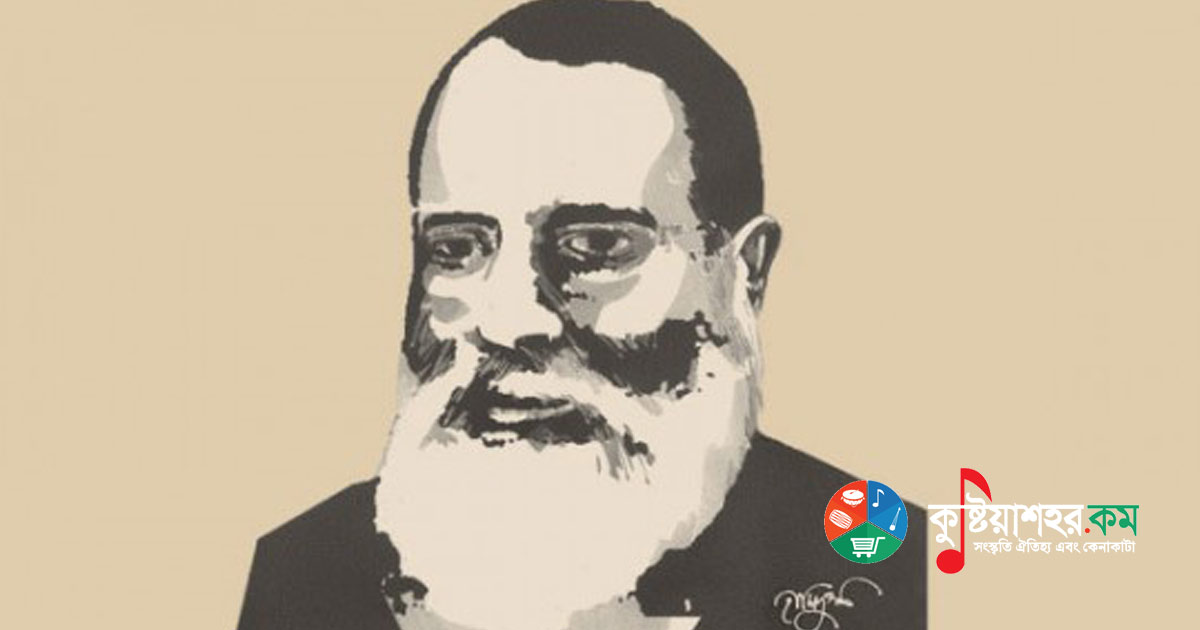
Radharaman Dutt (1833 - 1915) was a Bengali littérateur, a mystic poet, a Vaishnava Baul and the introducer of the Dhamail dance. To lovers of music he is best known simply as Radharaman. Radharaman Dutt was the doyen of Bengali folk song. His dhamail songs are a treasure most dear to the Bengalis of Sylhet and India.
Using his intellect and philosophy to good effect, Radha Raman has made for himself a permanent seat in people's hearts. The longing of separation from Krishna, the pain of not having him — or the anguish of having everything yet not having him — transformed him into a mystic. He composed several thousand songs of many kinds, including songs of dehatattva (the philosophy of the body), devotional songs, songs of love and longing, bhajan and dhamail.
By birth Radharaman Dutt was a Purakayastha. From the historical work Srihatter Itibritta by Achyutcharan Choudhury Tattwanidhi it is found that a famous personality named 'Ananda Shastri', one of the five celebrated Brahmins brought from Mithila in the seventh century by the Tripura overlord 'Dharma Phan' to the Panchakhanda region of Srihatta or Sylhet, was an ancestor of Radharaman Dutt. A son of Ananda Shastri was Nidhipati Shastri, and his son Bhanu Narayan was the founder of the kingdom of 'Ita' in the then Manukul province. Of Bhanu Narayan's four sons, Ramchandra Narayan or Brahma Narayan had a son named Prabhakar.
When the Mughal general Khwaja Usman occupied the Ita kingdom, the people of this royal lineage fled and took shelter in various places nearby. At that time Prabhakar Datta went with his father to Alisarkul, and after living there for some days he came to the kingdom of Jagannathpur and took shelter there. Some days later, with the permission of Raja Bijoy Singh, the then ruler of the kingdom of Jagannathpur, Prabhakar built a house in the village of Keshabpur near Jagannathpur and settled there. Later Raja Bijoy Singh appointed Prabhakar's son Sambhudash Datta to the post of minister.
Afterwards, because of the feud with Raja Govinda Khan or Habib Khan of Baniachong and the resulting ruin of the royal lineage of Jagannathpur, even the state-dependent employees fell into poverty. At this time Radhamadhab Datta, son of Sambhudash Datta, instead of depending on others, devoted his mind with a single heart to the pursuit of literature. Radhamadhab Datta earned special fame by translating Jayadeva's famous Sanskrit work 'Gita Govinda' into Bengali. Besides, his compositions — the lyrical poem Bhramar Gitika, Bharat Savitri, Suryabrata Panchali, Padma-Purana and Krishnalila — are notable. It was this renowned poet Radhamadhab Dutt who was the father of Radharaman Dutt. Radharaman Dutt of the Purakayastha lineage was born in 1833 AD (1240 of the Bengali era) - 1915 AD, 1322 of the Bengali era.
In the continuity of poet Radharaman's family tradition, his acquaintance with music — the chief support of worship — was from his very childhood. It was his father Radhamadhab Dutt who had translated the famous poet Jayadeva's Gita Govinda into Bengali. His father's pursuit of music and literature influenced him too. In 1250 of the Bengali era Radharaman lost his father and grew up under his mother Subarna Devi. In 1275 of the Bengali era he married Gunamoyi Devi, daughter of Nandakumar Sen Adhikari, of the lineage of Sen Shibhananda, one of the companions of Sri Chaitanya Deva, of the village of Adpasha in Moulvibazar. The books written by his father became his ideal at that time and took a place in his heart. In course of time he emerged as a natural poet. He composed thousands upon thousands of Baul songs. He wrote several hundred dhamail songs. Dhamail songs are sung collectively in women's voices at wedding ceremonies.
At one time its practice was very widespread, especially in the Sylhet, Cachar, Tripura and Mymensingh regions. Radharaman Dutt was at once a lyricist, a composer and a singer. It is known that there was contact between the mystic Radharaman Dutt and the mystic poet Hason Raja. The affinity of their hearts was very great. At various times they corresponded with each other in verse. Once Hason Raja, to inquire after Radharaman's welfare, framed a line of song: 'Radharaman, how are you? Hason Raja wishes to see you.' In reply Radharaman wrote: 'How are you, sir? Radharaman wishes to know.' Radharaman was a lover of the krintan (crane). In the grief of separation from the crane he wrote countless songs. Two of the famous ones are:
Whom shall I show my heart's sorrow to, oh, tearing open my breast?
Inside, a fire of chaff keeps burning on and on.I built my home with the friend of my soul; how many things were in my mind, oh.
The pair of love was broken — who was to blame?Whose fruit-bearing tree did I plant, and in whose son's grief did I pour out curses, oh?
Who knows under what curse things came to such a pass.It was promised he would take me along with him, but he did not take me, oh.
Radharaman was left behind in this world, having conquered death.
Go and tell the bee,
in the fire of separation from Sri Krishna my body burns away,
go and tell the bee.O bee, tell him, tell him, do tell him, bee,
understanding Krishna, I, Radha, shall die,
having lost my Krishna, oh — go and tell the bee.O bee, had I known before, bee, that you were going away,
I would have parted the hair of my head in two
and kept you tied there, oh — go and tell the bee.O bee, hear what Radharaman says, O dark one:
the fire of my heart was to be carried away —
who handed it over all lit and burning, oh? Go and tell the bee.
From his very childhood he was a believer in God and devoted to religion. Coming into the study of scriptural books and into the company of saints and ascetics, he became acquainted with the many creeds and paths of the Shakta, Shaiva, Vaishnava and the like. Not much information is available about the poet's family life. It is known only that Radharaman and Gunamoy Devi had four sons. Their names were Rajbihari Dutt, Nadiyabihari Dutt, Rasikbihari Dutt and Bipinbihari Dutt. But, sadly, all three sons except the sole surviving son Bipinbihari Dutt, and the wife Gunamoy Devi as well, died an untimely death. With the passing of his wife and sons, the poet Radharaman Dutt grew indifferent to family life.
In 1290 of the Bengali era, at the age of fifty, the poet went to the village of Dheupasha under Moulvibazar district, to the mystic Raghunath Bhattacharya. He received discipleship from him. Then began the poet's life of ascetic detachment. He began his spiritual practice. Leaving home, he built an ashram beside the Nalua haor of Jagannathpur upazila. His devotional practice went on here. The poet himself sang:
Shyam's flute drove me out of my home;
the pain of it — going to the woods does not feel like living at home to me.
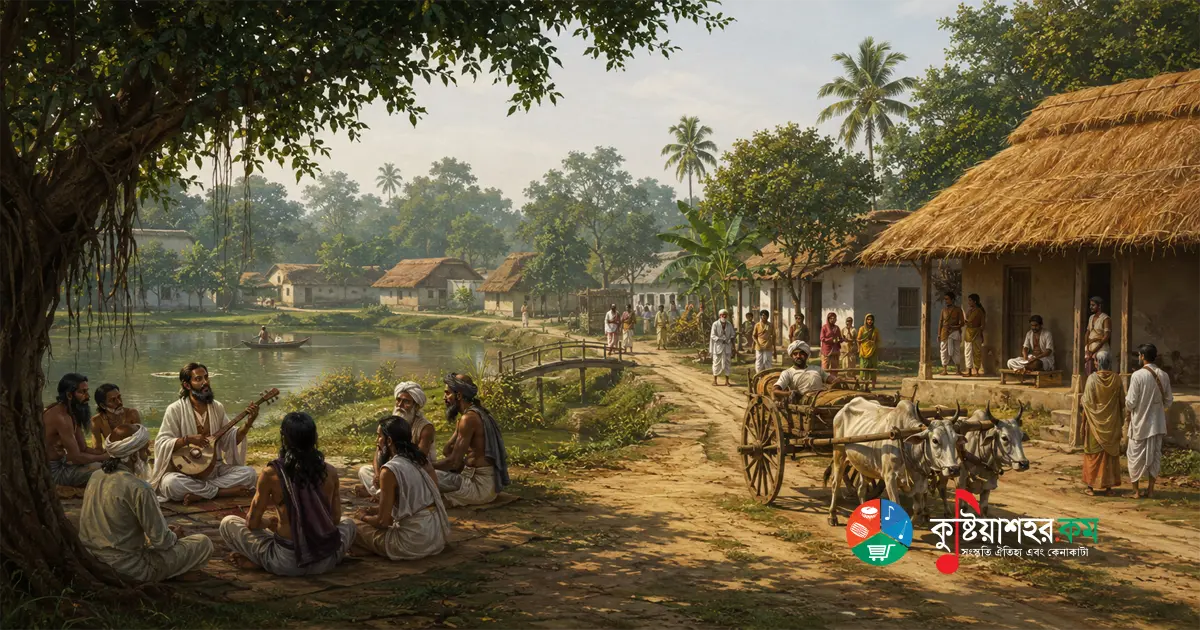
The ashram by the Nalua haor remained immersed day and night in spiritual practice and in the name of the beloved deity, surrounded by countless devotees. In a state of absorption in meditation he would compose songs and sing them. The devotees, hearing them again and again, held them in their memory and later wrote them down.
According to various collectors, the number of Radharaman's songs is above three thousand. Books of a good number of the mystic Radharaman's songs have been published at various times. Professor Jatindra Mohan Bhattacharya first took the initiative of collecting the songs of Radharaman Dutt. From Calcutta a book of 898 songs was published under the name Baul Kabi Radharaman. Mohammad Mansur Uddin included 51 songs of Radharaman in the seventh volume of his Haramoni. A book collected by Chowdhury Golam Akbar Sahityabhushan was published in 1981 under the name Radharaman Sangit from the Sahitya Parishad (Literary Council) of Modon Mohan College of Sylhet.
Arden Publications of Dhaka published Agranthito Radharaman, edited by Suman Kumar Das. As the uncollected songs of Radharaman were gathered after a long time, this book won wide praise among the connoisseurs. Besides, Gurusaday Dutt, Nirmalendu Bhaumik, Abdul Gaffar Choudhury, Ketaki Ranjan Gun, Muhammad Abdul Hai, Hussan Ali, Syed Murtaza Ali, Naresh Chandra Pal, Yamini Kanta Sharma, Muhammad Asaddar Ali, Mahmuda Khatun, Dr Bijan Bihari Purakayastha, Syed Mostafa Kamal, Mohammad Azizul Haq Chunnu, Jahanara Khatun, Narendrakumar Dutt Choudhury, Professor Sudhir Chandra Pal, Professor Dewan Mohammad Azraf, Nandalal Sharma, Shamsul Karim Qais, Shubhendu Imam and many more scholars have collected the songs of Radharaman Dutt.