বাংলা
 English
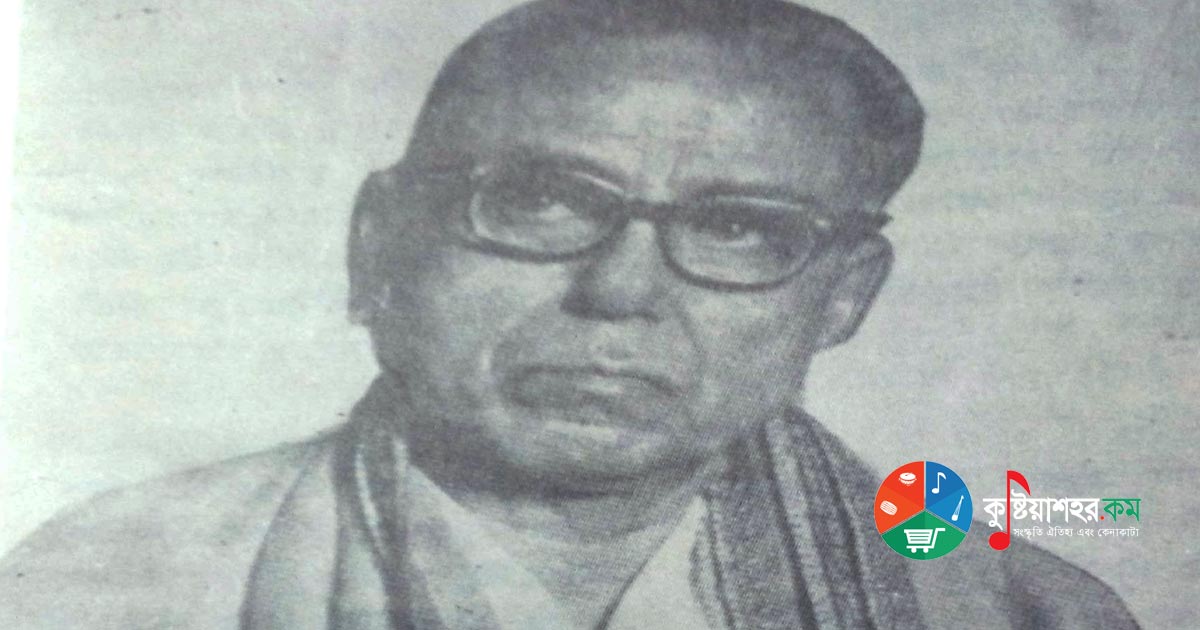
Life-story:- In the thirties Azizur Rahman began his literary career. The son of a wealthy father, drawn by the pull of literature he left his property behind and lived the life of an exile in the cities of Calcutta and Dhaka. In his adolescence, within the family environment itself, he became closely and intimately acquainted with literature and culture. Enjoying puthi readings, kabi gaan, mystic songs, jatra performances and the like, he grew attached to literature and culture and devoted himself intensely to literary pursuits.
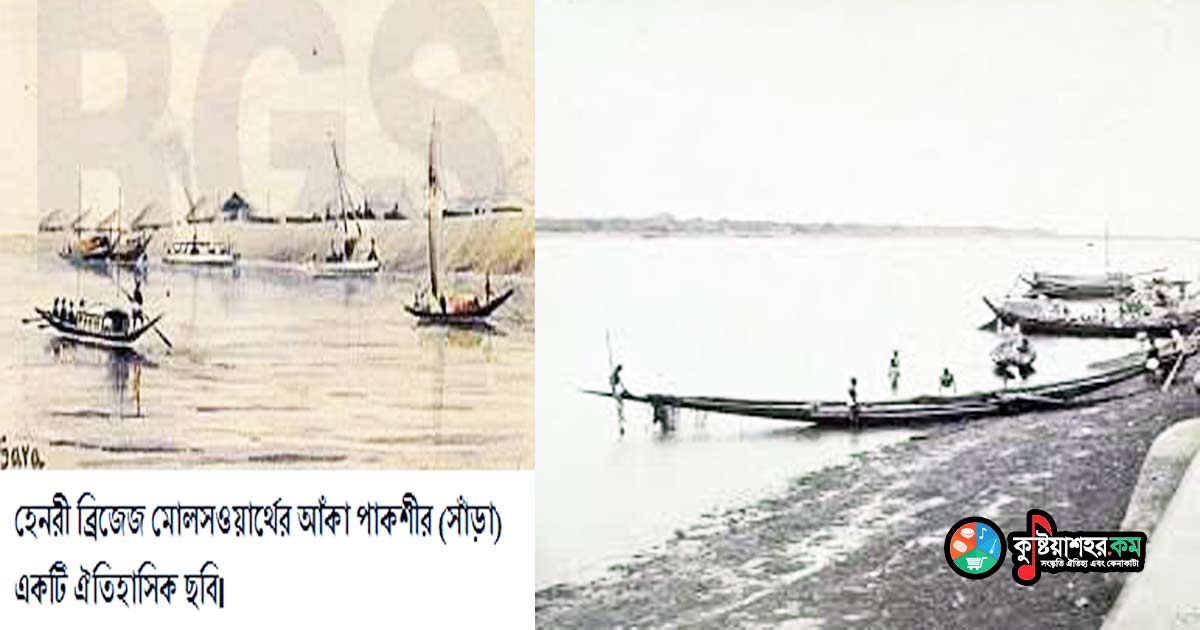
Birth and lineage:- Poet, songwriter and radio personality Azizur Rahman was born on 18 October 1914 (according to some, in 1917) at Hatsh Haripur village under Kotwali thana of Kushtia district (then part of Nadia district). (His service book records his date of birth as 18 October 1922.) The village of Hatsh Haripur lies on the other bank of the Gorai river that flows past Kushtia town.
Poet Azizur Rahman's father's name was Mir Mohammad Basiruddin and his mother's name was Bibi Saburannesa. The late Basiruddin was the eldest child of his parents. Azizur Rahman had three more younger brothers. Their names were Mir Mojibor Rahman, Mir Lutfor Rahman and Mir Habibor Rahman. All three of them lived in the village. They had no sisters.
Poet Azizur Rahman's full name is Mir Azizur Rahman. But in the literary world he came to be known simply as Azizur Rahman.
As the first child of his parents, Azizur Rahman was raised with abundant affection and care. He had very little appetite for formal schooling. The natural beauty of the Gorai banks kept him enchanted. He was extremely emotional. Once, in his childhood, while travelling by boat on the Gorai on a moonlit night, he took the river's calm, still water to be solid ground and jumped from the boat into mid-river. Thanks to the boatmen's efforts he survived that time.
In 1927, at the age of only twelve, Azizur Rahman lost his father. Losing his father in adolescence, many responsibilities of the household fell upon him. Managing the estate disrupted his studies. After moving up to class eight at Kushtia High School he had to end his education. Because of his father's death, and as he was still a minor, the Court of Wards took over the zamindari.
Though fortune did not grant him higher education at school, through powerful will and insatiable curiosity he read books on many subjects at home and became a self-taught personality.
Adolescence and youth:- For the pursuit of learning, along with reading books on various subjects, Azizur Rahman got involved in theatrical performance. Before he began his literary career, his enthusiasm for acting in plays was greater.
He formed a theatre troupe with the old actors. They performed in the courtyard of the Thakur House at Shilaidaha. Through this acting work he earned quite a reputation in Kushtia's cultural arena. The noted actors of that era, Dhiren Dutta and Upen Thakur, also took part in the theatrical performances.
Azizur Rahman felt greater enthusiasm for staging plays based on the lives of Muslim heroes. His staging of the plays Kamal Pasha, Tipu Sultan and Sirajuddaula was a mark of his organisational ability. Through performing these three plays he wanted to turn the audience's attention to Muslim valour and heroism. Poet Azizur Rahman dreamed of the reawakening of the Muslims of subjugated India.
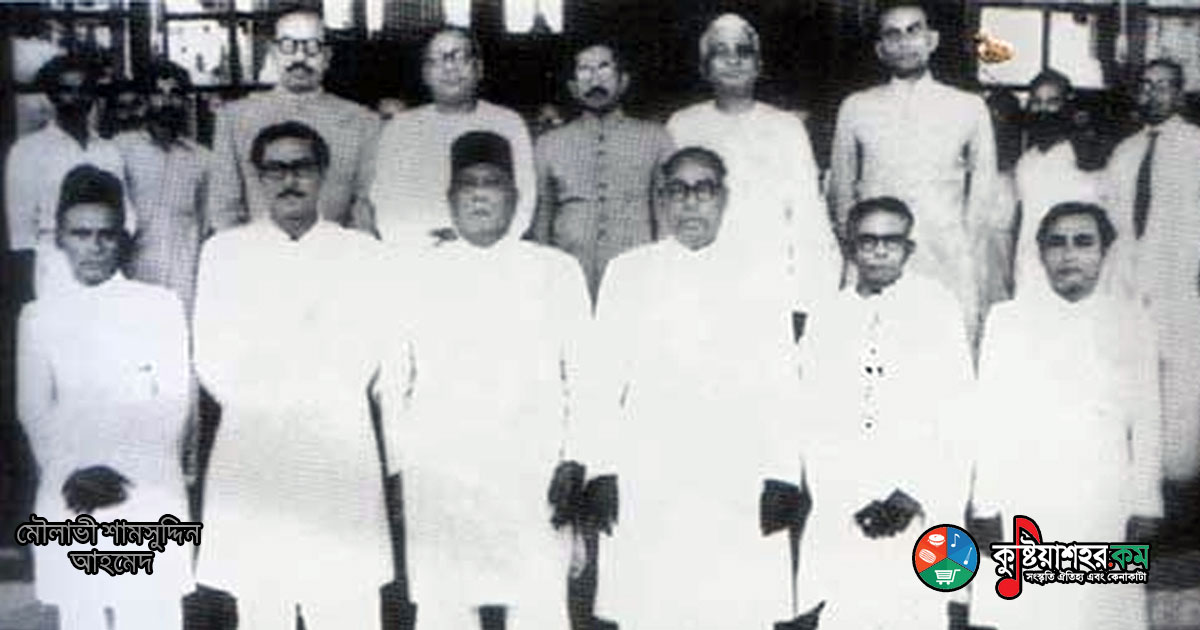
He and his cousin Hasan Faiz, both of the same age, were the first in their region to wear pyjamas and sherwanis. For this they had to endure much mockery. He wanted to join the Congress in order to serve the country. But inspired by Maulana Ansaruddin, the elder brother of Kushtia's illustrious son and former minister of undivided Bengal Shamsuddin Ahmed, he joined the Muslim League.
More than he was active in politics, he was engaged in social service. He felt deeply pained by the poverty and misery of the Muslims and, with the aim of restoring their glorious past, kept himself occupied in various activities.
To encourage Muslim youth towards constructive work, an organisation named 'Tarun Jamaat' was founded in 1934 through his efforts. The members of this organisation devoted themselves to various public-welfare works. They regularly did physical exercise and parades. Azizur Rahman always encouraged exercise and physical culture. Right up to the end of his life, until nine years of diabetes broke his body, he enjoyed good health. Looking at the body of this five-foot-five-inch man one could tell that he once exercised regularly. In his boyhood he would often sit on the bank of the Gorai at sunrise, his body smeared with the river's mud. Seeing him in that state, one or two morning walkers would even be frightened.
In 1934 he established the 'Chand Memorial Library' in the name of his grandfather. It gained fame in the region as an extremely rich library. Readers came to this library from far and wide in search of books.
By organising boat races on the Gorai river on Eid day he gave proof of his organisational ability. Since some Muslims would not take up certain professions, they had to live dependent on other communities. This state of affairs displeased Azizur Rahman. For that reason, whenever he got the chance, he encouraged Muslims to take up the trades of the blacksmith, the potter and the milkman.
At the call of the late Abdul Walek, leader of the student movement of undivided Bengal, he joined the Muslim student movement and took active part in the Pakistan movement.
Social service:- From after his father's death until the Court of Wards took over the zamindari, Azizur Rahman managed the estate.
When famine struck the country after the Second World War, he was appointed secretary of the Kushtia (Nadia) Food Committee in 1945. In 1950 Azizur Rahman was elected president of the Hatsh Haripur Union Board. In 1951 he was elected secretary of the Kushtia Union Board Association. The same year he was nominated a councillor of the Provincial Muslim League.
Marriage and family:- In 1931 he married Mosammat Fazilatunnesa, daughter of Ejahar Sikdar of Fulhari village in Shailkupa upazila of Jhenaidah district. At that time he was seventeen.
Azizur Rahman had three sons and four daughters. The eldest son Fazlur Rahman lives at the poet's home in Hatsh Haripur. He manages the ancestral property and does business.
The second son Shamsur Rahman is a science teacher at a government girls' school in Dhaka.
The third son works at the Bureau of Statistics.
The daughters are Rowshan Ara (Buri) with husband Otiuddin, Hosne Ara (Tuku) with husband Nawab Huda, Akhtar Ara (Bebi) with husband Sohrab Ali, and Nazma Ara (Beli). Nazma Ara is unmarried.
According to the poet's family, the daughter born to the poet after Rowshan Ara was named by him Hosne Ara. In the year this child was born the harvest was abundant. For that reason the poet considered this daughter his bringer of good fortune. But within a few months of her birth, in 1944, the daughter died and the poet was utterly shattered. At that time he wrote: 'O God, if You inflict a blow, give me the strength to bear it.' And right after that he wrote his famous song:
that wound lands in the Kaaba's house,
the more you despise a person,
God moves that much further away.'
After the dead daughter another daughter was born to the poet. Her name was first kept as Jahan Ara. But after a while the poet changed her name to Hosne Ara.
Working life:- Azizur Rahman came to Dhaka in 1954. It is known that, wounded by the behaviour of relatives and social opposition, he left his ancestral home and became an expatriate in Dhaka. In Dhaka he lived at various times in the houses of various people. Among them poet Benjir Ahmed is especially notable.
During this period he regularly visited the former Radio office on Naziruddin Road. With the help of poet Farrukh Ahmed he became acquainted with various artists and litterateurs. It was poet Farrukh Ahmed who first brought him to Dhaka on a visit.
Since pursuing literature while living in the village was not possible, poet Azizur Rahman decided to settle permanently in Dhaka. In 1954 he was approved as a lyricist on Radio Dhaka. He joined the Radio Pakistan of the time as a regular artist. He took regular part in the music section, the Parashmoni programme and the children's session. Besides, along with poet Golam Mostofa he regularly took part in the Bengali-translation session of the epic poem 'Muaddase Habi'.
The association with radio was a significant event in poet Azizur Rahman's literary life. Rather it may be said that through joining the radio, the identity of lyricist Azizur Rahman gained primacy over poet Azizur Rahman.
Though poet Azizur Rahman began his journey with poetry, it was in composing songs that his talent found its fullest expression. He wrote many songs. According to some, the number of his songs is close to two thousand. He became renowned by composing ghazals, hamds and naths.
Editing and Literary Organisation
Around 1960 Azizur Rahman was appointed acting editor of Alapani, the famous juvenile monthly of the day. In those days Alapani was especially praised as a widely circulated publication of high quality. The monthly editor of Alapani was Abdul Wahed. The paper was published from Rajar Deori.
As editor he showed his devotion to the work of creating new writers. He would patiently read the writings of novice authors, correct their errors and mistakes, and print them. In 1970 he was still attached to the periodical.
In 1964 he was appointed literary editor of the daily Paygam. The literary section of this daily, published from Gopi Krishna Lane in old Dhaka, was of high quality.
In his youth he was associated with the papers Jagaran, Dipika and Sandhani published from Kushtia. He was also associated with 'Lokosahitya' (Folk Literature), a quarterly research journal edited by Abul Ahsan.
Poet Azizur Rahman was also very interested in writing the history of his home district Kushtia. For this he even collected plenty of material, but for lack of time and opportunity could not accomplish the work. During the upheaval over his residence, much of the collected historical information, booklets and correspondence was lost or destroyed.
Azizur Rahman knew no fatigue in literary organisation. He was by nature a sociable, convivial man. Literary gatherings were held regularly every Sunday at poet Jasimuddin's residence in Kamalapur. The prominent as well as the young poets, litterateurs and writers of Dhaka regularly took part in this session. Azizur Rahman's presence at this session was regular. Besides poet Jasimuddin, learned personalities such as Professor Munier Chowdhury and Professor Ajit Guha took part in this session. He also regularly joined the literary gatherings of 'Sahitya Sadhana Sangha' and 'Kaykobad Sahitya Majlis'.
Poet Azizur Rahman was an active member of the literary organisation 'Rownak'. Rownak had eleven members.
In this connection Abul Kalam Shamsuddin wrote in his book 'Atit Diner Smriti' (Memories of Bygone Days): I (Abul Kalam Shamsuddin) posted fifty invitations in my own name for a gathering at my home address. On the appointed date the following litterateurs gathered at my house: (1) Principal Ibrahim Khan (2) Mohammad Barkatullah (3) Jatinuddin Ahmed (4) Mujibor Rahman Khan (5) Akbaruddin (6) Syed Shahadat Hossain (7) Khan Mohammad Moinuddin (8) Mohammad Nasir Ali (9) Mohammad Mostafizur Rahman (10) Poet Azizur Rahman (11) Poet Golam Mostofa (12) Poet Benjir Ahmed (13) Ashrafuzzaman Khan (14) Poet Talib Hossain (15) Poet Mohammad Mahfuzullah (16) Abdur Rahman (17) Abdur Rashid Wasekpuri (18) Abdul Hannan (19) Shamsul Huda Chowdhury (20) Dr Mohammad Hossain.
Rownak was founded in 1959, and "after nearly three years this organisation could gradually no longer keep its existence perceptible.
Though Azizur Rahman had his connections with the radio, he received appointment as his own salaried (staff) artist employed at the radio with effect from before 1 August 1972. Three years after that, on Monday, 11 August 1975, Azizur Rahman died.
Last Days and Death
After coming to Dhaka, Azizur Rahman could not set up a proper household because of financial hardship. Yet he was the head of a large family. The poet was living in the house at 1/20 Humayun Road, Mohammadpur, on a government allotment. Suddenly one day, in 1977, the poet's family was evicted from that house. Until March 1978 he made many appeals and applications for the allotment of a house. During this time his family suffered much sorrow and hardship.
In these hard days poet Azizur Rahman met with many people and sought help from many. He took shelter at the house of one of his dearest friends, the lyricist Sabir Ahmed Chowdhury. Separate housing was arranged for his wife and children with Sabir Ahmed Chowdhury's financial help.
The poet's own library was rich with many valuable books. After being evicted from the house his concern was the safety of the books. The poet had been suffering from diabetes for several years. In the meantime he somehow injured a finger of his left hand. The finger developed a wound. But he was somehow indifferent about the matter. He did not arrange proper treatment. The joy of receiving the allotment of a new house somehow seemed dimmed to him.
Diabetes together with blood pressure and anxiety completely broke his body. Displaced from home, after receiving a house allotment again, he seemed to hear the call from the beyond. Barely a month before the poet's death he told his dear friend, the lyricist Sabir Ahmed Chowdhury, of a dream which was later regarded as an omen of death.
After 2 September 1978 the pen no longer rose to the poet's hand. Quietly, at all hours, the poet lay alone on his bed. According to the poet's family, during this time he wrote, lying in bed:
alas, poet who lost the path
on water-writings and shifting sands
the picture was drawn in vain.
That line is wiped away in the eye's nest
no one is near — weep, you are alone
after Phagun comes Shraban
that fragrant earth of distant memory.
How much given, how much received —
tell it to the world
I fancy those words have today
scattered across the sky.
For what fault, after the dust,
on this desert march,
asking for a flower you received the pain of thorns
fault, only fault, all of it.
On 9 September the poet fell gravely ill. He was admitted to the Postgraduate Medical and Research Institute (PG Hospital) in Dhaka. The disease diagnosed was diabetic gangrene. The wound on his left hand had turned septic and begun to rot.
Within barely three days of admission he breathed his last — 12 September 1978.
The death notice of poet Azizur Rahman issued from PG Hospital is as follows:
Postgraduate Medical and Research Institute, Dhaka. Registration No. ... JBMF. GHR. 373/2
Name Poet Azizur Rahman. Age : 55.
Father's/Husband's name Late Mir Md. Basiruddin
Address 2/2. Humayun Road, Mohd.pur, Dacca.
Ward 9, Bed No. 38, date of admission 9.9.78
Time and date of death 3-25 PM 12.9.78
Diagnosis Diabetic Gangrene Left Hand
Body handed over to relatives - Yes
Body retained for further examination - No
Need to inform the police - No
Signature of the certifying doctor unclear 12.9.78
Time of removal from ward ...
On what date, at what hour, and by whom the body is being taken, and the name, address and signature of the person taking it ............... B.S.U.M.U.-Doc No. 15159 J-7.77, 20,000 copies, 1977.
At the time of his death poet Azizur Rahman's tenure of service as a staff artist at the radio was 6 years 1 month 12 days, and his total monthly salary was Tk 780.
At quarter past nine at night on 12 September, the poet Azizur Rahman's namaz-e-janaza was held at the College Gate Mosque in Mohammadpur. Then the poet's body was taken by road to his village home, Hats Haripur. All the expenses of carrying his body were borne spontaneously by the poet's relative, the one-time famous footballer Tajul Islam Mannan.
After the news of the poet's death was broadcast on the radio, many people gathered at Kheyaghat awaiting his body. The corpse reached his village at dawn on 13 September. Countless relatives and admiring devotees had gathered to pay him their last respects. The namaz-e-janaza was held again in his village. Around fifteen hundred people took part. According to the poet's last wish he was buried at a spot adjacent to a mosque by his village home.
In a sense poet Azizur Rahman died leaving nothing behind. Among his possessions were some valuable books, which in a materialistic society have no value. The radio authority paid the poet's family six months' salary of the poet as gratuity. His savings in savings account No. 349 at the Stadium branch of Pubali Bank stood at Tk 1,962 and 16 poisha. A year after his death, on 14 September 1979, a certificate of inheritance was obtained in the names of the poet's wife and children from the Third Sub-Judge Court in Dhaka.
By the end of 1981 the poet's family settled with the authorities the debts and dues concerning the pension and gratuity related to the poet's death.
Honours
In 1979 the Government of the People's Republic of Bangladesh honoured poet Azizur Rahman with the posthumous 'Ekushey Padak'. In the citation on the award to poet Azizur Rahman, published in the booklet of the Ministry of Sports and Culture, it is said:
"The late poet Azizur Rahman
---- Literature (posthumous)
The late poet Azizur Rahman earned considerable fame as the composer of numerous patriotic poems and songs. He has also written many poems for children. As literary editor of various periodicals the late poet has been able to make an immense contribution to the world of literature.
In recognition of his contribution to the field of literature, the late poet Azizur Rahman has been awarded the “Ekushey Padak-1979”."