বাংলা
 English
Lalon's spiritual successors believe that within physical love there is no true peace; true peace lies in heavenly love. Only when a disciple attains a special stage of sadhana after receiving initiation from the guru may he be granted khelafat.
Lalon's followers may marry and live with their wives, but they believe that procreation divides the self, and with a divided self one cannot attain nearness to God. That is why they abstain from bearing children.
Besides, they regard procreation as a painful burden too. The concept of khelafat comes from Islamic Sufism, whose essence is that through spiritual practice the soul is purified and nearness to God is attained. Sufi practice has two stages: baqa-billah and fana-fillah. Baqa-billah means boundless love of God, while fana-fillah means holding God within the soul. Attaining baqa-billah and fana-fillah requires the purification of the soul. After attaining khelafat, a seeker rises above all attachment to worldly matters.
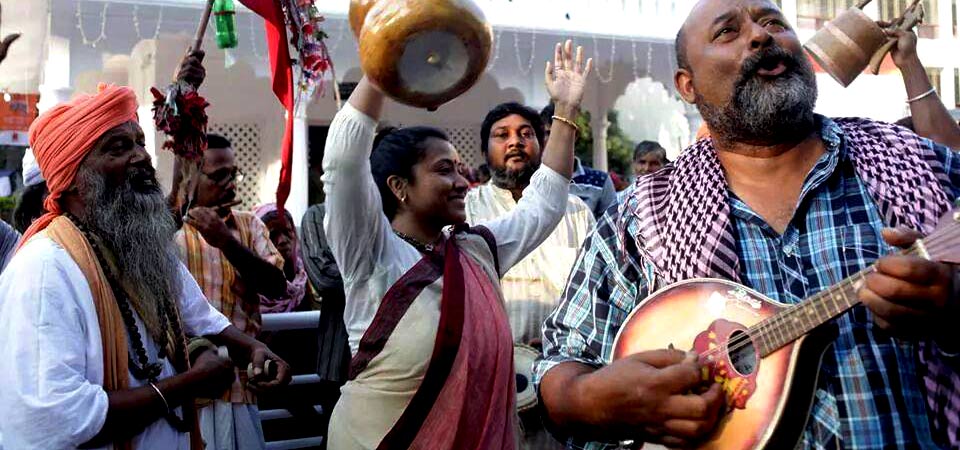
The men wear white alkhalah robes and white lungis, while the women wear white saris, which they call khilka. The khilka is a shroud-like garment - in their words, the dress of the dead worn upon a living body.
At the time khelafat is conferred, the recipient is blindfolded with a white cloth, dressed in the khilka, and led to circle Lalon's mausoleum seven times. During this they sing a special song of Lalon - "Who dressed you in this fine adornment, tell me, do I hear?"
A dead man's garb on a living body,
the khilka a crown, and the kopaani its ornament.
At that time Fakir Lalon was 116 years old. One day he called his disciples and said, do not go anywhere toward the end of this month of Ashwin, for on the first of Kartik there will be a gojab (calamity). None of the disciples could rightly guess what the gojab would be, yet they began to dread an approaching danger.
About a month before his death, an ailment settled in his stomach and water gathered in the joints of his hands and feet. Even in his suffering he kept practicing the name of the Almighty, and now and then he would burst into song. Whenever talk of religion began, he grew vigorous again and forgot the pain of his illness.
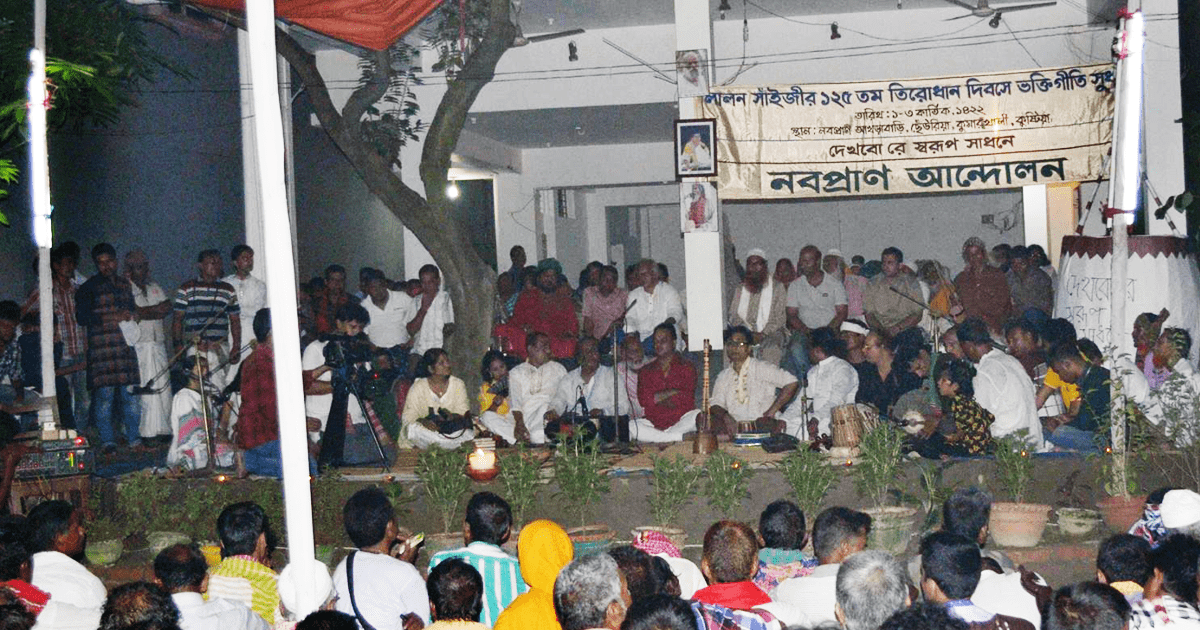
During this time he ate nothing but milk, though whenever he wished for hilsa fish, the disciples brought it from the market. For the midday sadhana a canopy was pitched before the practice house and arrangements were made for serving food. From afternoon until late in the night, Lalon gave his disciples his eternal message, and now and then his songs were sung. When the night's discourse ended, Lalon returned to the practice house to rest.