বাংলা
 English
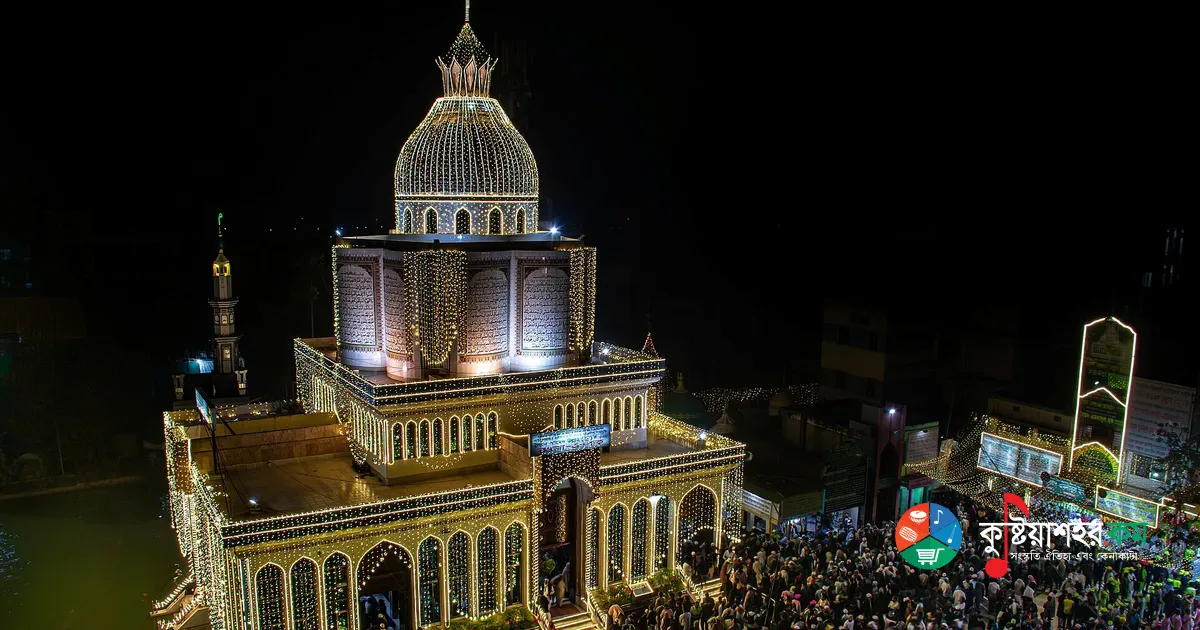
A small village of Fatikchhari in Chittagong - Maizbhandar. This village is the heart of the only Sufi order born on Bengal's soil. The seed of the Urs that each year in the month of Magh draws a flood of millions of people here was sown by one scholar-saint - a man who gave up his post as qazi in the Jessore region, gave up even the seat of head teacher at a Calcutta madrasa, and, leaving everything, chose the spiritual life. The complete history of the Maizbhandar Darbar Sharif founded by Gausul Azam Syed Ahmadullah (1826-1906), the line of his successors, thousands of Maizbhandari songs and the musical world of the kabial Ramesh Shil - all together make up this essay.
Where Maizbhandar Is
The village of Maizbhandar lies in Fatikchhari upazila of Chittagong district, Bangladesh, about 42 kilometres north of Chittagong city. At the beginning of the nineteenth century it was a remote village; today that village's very name has become the name of a Sufi order, a school of music and an annual great assembly. Within the Darbar Sharif complex stand the founder's mazar, a mosque, a manzil and a pond - ziyarat visitors arrive from far and wide on almost every day of the year.
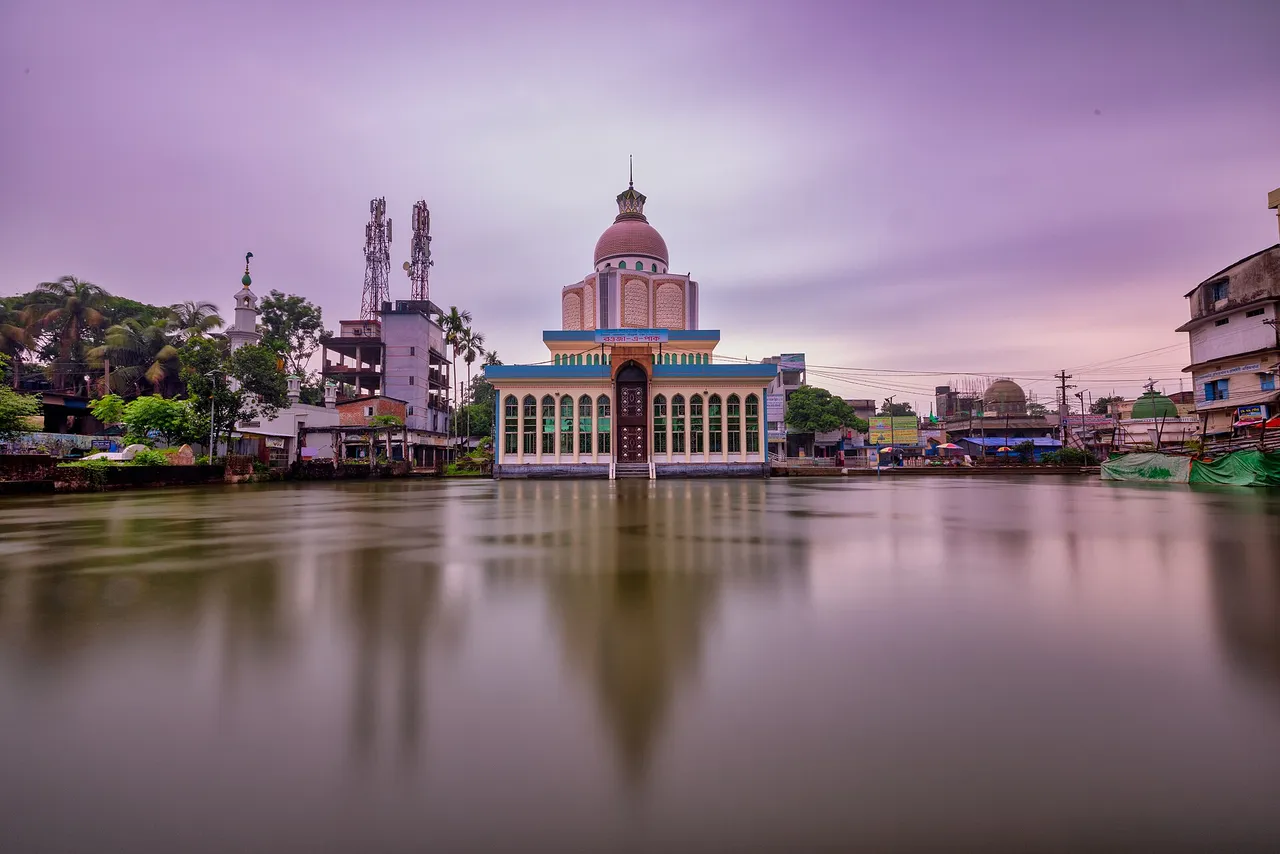
The mazar building of the Darbar Sharif reflected in the pond's water (Photo: Azimronnie / Wikimedia Commons, CC BY-SA 4.0)
The Founder Syed Ahmadullah: Birth, Lineage and Education
Syed Ahmadullah was born on 14 January 1826 (1 Magh 1233 of the Bengali era) in Maizbhandar village itself. His father was Syed Motiullah, his mother Syeda Khairunnesa. His forefathers were of the Syed lineage - it is said that they came from Medina through Baghdad and Delhi to Gaur, the capital of medieval Bengal. His great-grandfather Syed Hamid Uddin was the appointed imam and qazi of Gaur; when a plague broke out in the city he moved to Patiya of Chittagong. His son Syed Abdul Kader became the imam of Azimnagar in Fatikchhari - and from there the family took root in this region.
Having finished his primary studies at the village maktab, Ahmadullah enrolled at the Calcutta Alia Madrasa for higher education (1260-1268 Hijri). Proficient in Arabic, Persian, Urdu and Bengali, this young man gained command of hadith, tafsir, fiqh, mantiq, philosophy and all the subjects current in his day - and in the society of the time he became known as an eminent preacher and orator.
Leaving the Qazi's Post for the Sufi Path
On completing his studies, in 1269 Hijri he joined the judicial qazi's post in the Jessore region of British-ruled undivided India. Alongside, he studied munsefi (law) and stood first in that examination too. But the very next year he left the qazi's post and returned to teaching - becoming head teacher at the Munshi Bu Ali Madrasa in Calcutta.
Meanwhile came the most important turn of his life: taking bayat in the Qaderia order and receiving khilafat from the Sufi saint Syed Abu Shahama Muhammad Saleh Kaderi Lahori. He also studied under that master's brother Dilwar Ali Pakbaz Lahori. Within a short time he relinquished worldly responsibilities and devoted himself wholly to the spiritual life.
1857: From Family Home to Darbar Sharif
At his pir's instruction, in 1857 Syed Ahmadullah returned to his home village of Maizbhandar. Gradually, amid the throng of saints and those longing for prayers, his own family home was transformed into a spiritual darbar - and by word of mouth it became known as the Maizbhandar Darbar Sharif. For nearly half a century he pursued his devotional path and served people in this village. On 23 January 1906 (10 Magh 1313 of the Bengali era; 27 Zilqad 1323 Hijri) he passed away at the age of 80, and he was buried at Maizbhandar itself. His followers to this day address him by many honorifics - Gausul Azam, Hazrat Kebla, Bara Maulana, Khatemul Olad, Shai-e-Lillah.
The Successors: From Baba Bhandari to Today
After the founder, the leadership of the darbar passed to his nephew Syed Golamur Rahman (1865-1937) - immortal to his followers as Baba Bhandari. His uncle used to call him affectionately 'the flower of my garden'. In the later part of his life he was so absorbed in unceasing devotional practice that meeting people became rare - for this he was famed as the 'Magdub Pir'. His passing falls on 22 Chaitra (usually 5 April) - his Urs is held on that very day.
Then came the most popular successor of the twentieth century, Syed Ziaul Haq (1928-1988) - Baba Bhandari's daughter's son. His followers call him 'Bishwa Oli', 'Shahenshah', or affectionately Zia Baba. His part in propagation and expansion was vast; his Urs is held every year in October.
In researcher Hans Harder's account, Maizbhandar's heritage today is divided into two family lines - the founder's own lineage (Ahmadia Manzil) and Baba Bhandari's lineage (Rahmania Manzil); both lines continue their service and observances side by side. At present Syed Mohammad Hasan Maizbhandari and Syed Saifuddin Ahmad lead the darbar's arrangements. This family's repute has crossed the bounds of the institution too - Baba Bhandari's grandson Syed Najibul Bashar Maizbhandari is chairman of the Bangladesh Tarikat Federation and a former member of parliament, and he has also served as president of the Bangladesh Dorga-Mazar Federation.
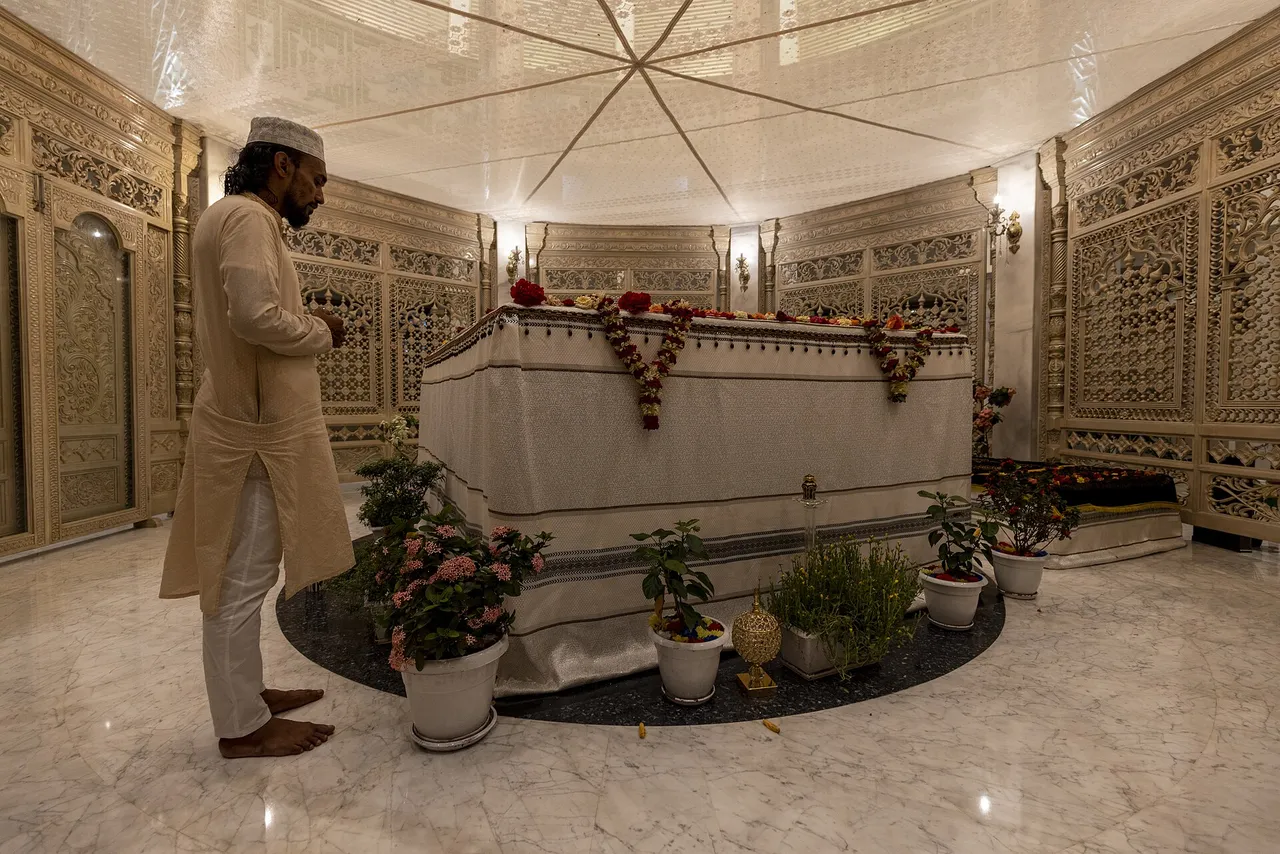
Devotees' ziyarat at the Darbar Sharif (Photo: Azimronnie / Wikimedia Commons, CC BY-SA 4.0)
'Living Sufism': The Character of the Maizbhandari Order
Born of the Bengal branch of the Qaderia order, the Maizbhandari order is known as the only Sufi order born in the Bengal region. Its adherents call this path living Sufism - where music is the vehicle of devotional practice, and Sufi observance is woven into the ordinary lives of ordinary people. Zikr, milad and mystic song - these three are the life of the order. The adherents believe that the great Sufi thinker Ibn Arabi (died 1240) prophesied that a great saint would be born in 'China' who would speak the local language - the Maizbhandaris interpret that 'China' as Chittagong and hold Syed Ahmadullah to be that awaited saint.
Research reports say that the followers of the Maizbhandari order today number more than one million. But the order's greatest characteristic is its spread across many strata of society - from the ordinary farmer to the urban middle class; even the participation of non-Muslims is normal here, and many famed performers on the Urs stage are Hindu.
The Maizbhandar Urs: A Fair of Union for Millions of Devotees
In memory of the founder's passing, the main Urs of Maizbhandar is held for three days every year on the 8th to 10th of the month of Magh (usually the last week of January). With the gathering of an estimated five to six hundred thousand people, the village then becomes a sea of humanity - many claim it is among the largest Muslim assemblies in the world. With cries of 'Amin Amin' resounding in the grounds, milad, zikr, discussion meetings and assemblies of Maizbhandari song go on; everyone from the Chief Justice to foreign ambassadors comes on ziyarat.
Not just one in a year - Baba Bhandari's Urs falls on 22 Chaitra (early April) and Zia Baba's in October; so several times a year Maizbhandar becomes a fair of union for millions of people.
Maizbhandari Songs and the Kabial Ramesh Shil
Along with the Maizbhandari order was born a distinct school of Bengal's music - Maizbhandari songs. By researchers' count, more than ten thousand songs have been composed in this school, by over a hundred devotee-poets: Syed Abdul Hadi Kanchanpuri, Syed Abdul Gani (Makbule Kanchanpuri), Bazlul Karim Mandakini, Abdus Salam Bhujpuri, Aminul Haque Dhormopuri, Abdul Gafur Hali, Monmohan Datta and others. The school is rich in tattva literature too - Abdul Gani Kanchanpuri's Urdu work 'Aina-e-Bari' (1915) is regarded as the fullest composition of the order's theology.
The crowning name of this school is the kabial Ramesh Shil (1877-1967) - this kabial of Gomdandi village in Boalkhali is widely known simply as 'Ramesh Maizbhandari'. Raised in the folk tradition of kabigan, Ramesh Shil composed nearly 350 Maizbhandari songs, in nine collections - Ashikmala, Shantibhandar, Muktir Darbar, Nure Dunia, Jibon Shathi, Satyadarpan, Bhandare Maula, Manob Bondhu and Ishke Sirajia. His songs are still sung in the Urs grounds. The full collection of Ramesh Shil's songs can be heard in our regional music section.
Two Ends of Mystic Bengal: Lalon and Maizbhandar
Bengal's mystic mind has two great parallel currents - on one side the Lalon songs centred on Kushtia, on the other the Maizbhandari thought centred on Chittagong. Both currents hold music to be the vehicle of devotion, and both live as vividly as ever in the folk mind. Ramesh Shil's own life is the proof - emerging from the kabial tradition of kabigan, he became the shaper of Maizbhandari spiritual music; that folk world of song is what binds all of Bengal's mystic currents together.
Maizbhandar Darbar Sharif at a Glance
| Subject | Information |
|---|---|
| Founder | Syed Ahmadullah (Gausul Azam); born 14 January 1826 |
| Death | 23 January 1906 (10 Magh 1313 of the Bengali era) |
| Location | Maizbhandar village, Fatikchhari upazila, Chittagong (about 42 km from the city) |
| Founding | 1857: his own family home turned into a spiritual darbar |
| Order | Maizbhandari (a branch of Qaderia); 'living Sufism' in the adherents' words |
| Main Urs | Magh 8-10 (late January), over three days |
| Other Urs | Baba Bhandari: 22 Chaitra (April); Zia Baba: October |
| Maizbhandari songs | More than 10,000; over a hundred composers including Ramesh Shil |
| Followers | More than one million according to research reports |
Sources
- Bengali Wikipedia - Syed Ahmadullah, Maizbhandar Darbar Sharif, Maizbhandari songs, Ramesh Shil
- English Wikipedia - Maizbhandari, Gulamur Rahman, Sayed Ziaul Haq, Syed Najibul Bashar Maizbhandari
- Hans Harder, Sufism and Saint Veneration in Contemporary Bangladesh: The Maijbhandaris of Chittagong (Routledge, 2011)
- Prothom Alo - "Devotees' fair of union at the Maizbhandar Urs in Fatikchhari" (January 2017)
- Samakal - "'Baba Bhandari's Urs' draws vast crowds to Maizbhandar" (April 2026)