বাংলা
 English
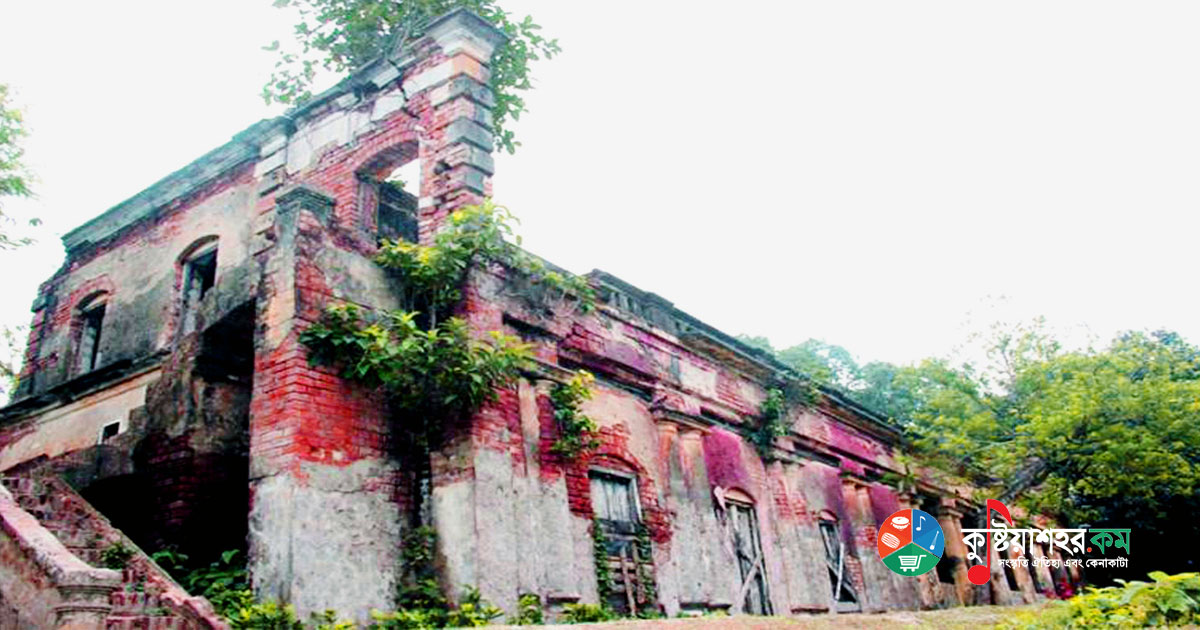
It was from the kachari bari of Shilaidaha that Rabindranath Tagore conducted the zamindari affairs. With the flow of time that zamindari exists no more, nor the people to pay the rent. And barely half a kilometre from the kachari bari stands the poet guru's charitable dispensary.
From 1891 to 1901 the world poet Rabindranath Tagore discharged the zamindari responsibilities at the kachari bari of Shilaidaha. The rent received from the land was managed from the kachari bari. This kachari bari was the life and soul of the Shilaidaha zamindari. The Shilaidaha Rabindra Kuthibari lies at its north-eastern corner, close to the Padma. He noted down the essence of each day's imports and exports, and gave the report of every week to his father Debendranath Tagore. The zamindari of the Tagore family of Calcutta lay in different parts of India; there were quite a few in East Bengal as well. Among these, the sadar kachari of Rabindranath's favourite Birahimpur zamindari is Shilaidaha.
This kachari bari, with its two-storeyed building, was constructed in 1892. Built on thirty bighas of land, this building once throbbed in the bustle of the common people. On Punyah days Rabindranath merged with the tenants, and the barkandazes made their rounds carrying chowkis. At this kachari there was no difference between zamindar and tenant: it was Rabindranath's command that all must sit in one seat. At this fair he took the initiative of establishing Hindu-Muslim amity. Before this, there had been separate arrangements for the Hindu and Muslim tenants to sit; he fixed the same kind of seating place for them. He made the endeavour of strengthening the direct relationship between zamindar and tenant. Let the sadar naib be annoyed; what if he is annoyed - here everyone is equal. In the middle of the kachari bari there is a pond, and right beside it a vast staff quarter. To the east there is a dighi; on the western bank of this dighi stood the horse stable. Some ruins can still be seen.
At the kachari bari, besides the land affairs, judicial work also went on. Houses were built for the residence of the naibs, gomastas, peons and barkandazes. An iron gate was placed at its entrance for the sake of security. Along the middle of the southern side of the kachari bari stood kadam flower trees. The poet guru often came under this kadam tree. He had the base of the tree paved with bricks and encircled round, where many people could sit together. Beside this tree, in the open space, kirtans, Baul songs, stick plays and other events were arranged. The zamindar Rabindranath was the object of everyone's respect and the centre of all. It is heard that a bell used to be hung at this kachari bari; to keep an exact reckoning of the staff's time and to have the tasks done on time, it was rung every hour. The kachari bari was enclosed by a wall; for lack of repair and renovation it has merged into nothing. On the occasion of Rabindranath's arrival the kachari bari used to be adorned in full glory. The lathials displayed their valour in various stick plays, wrestling, spear and sword games and took prizes from the Babu moshai.
The Babu moshai was so affectionate to the tenants crushed under debt that many thought these were but the people-pleasing, hypocritical tears of the Babu moshai. The common tenants respected him beyond measure. The pomp and splendour of this kachari bari exist no more; standing with head held high it remains the witness of that unfading past. From here the poet travelled back and forth to Shahzadpur and Patisar. So, all things considered, Rabindranath's kachari bari at Shilaidaha is a unique treasure for the Bengalis.
Information and credits: - the local people, and Kushtiar Itihase: Shilaidaha Kachari Bari - Dr. Emdadul Hasnayen