বাংলা
 English

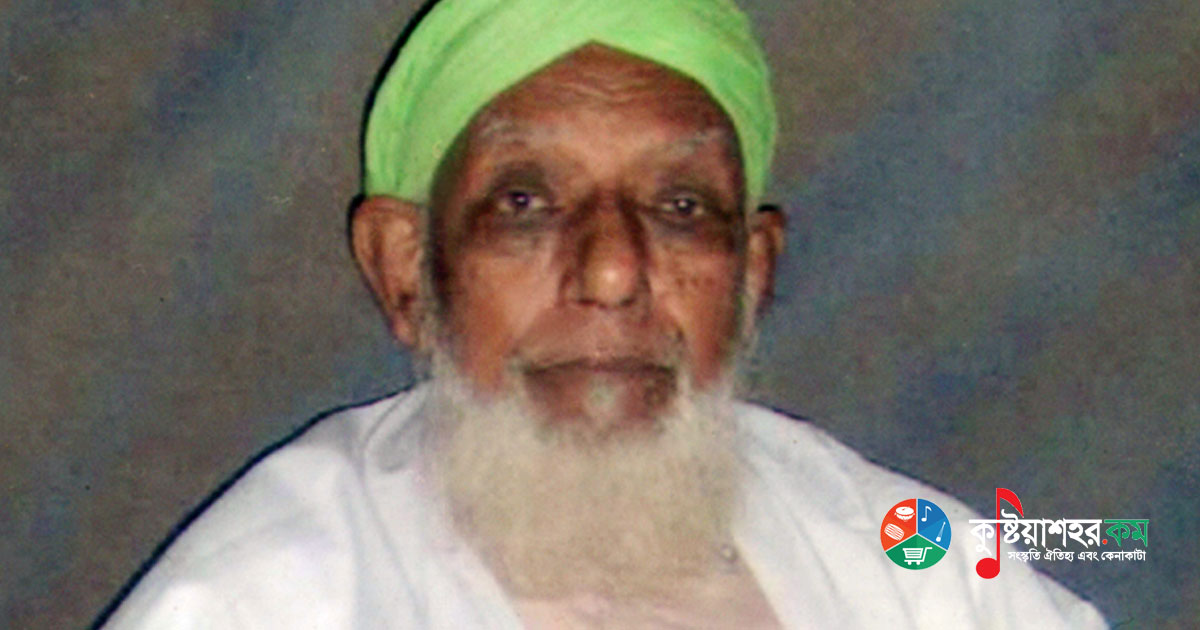
Doctor Muhammad Shahidullah (1885-1969) is the very image of a true devotee of knowledge. He is a brilliant star of the Bengali language and its literature. He is always valued as one who transformed the Bengali language into a resource of knowledge and pioneered its glorious study. His credit lies in the discussion of the Bengali people's language and culture.
The very Bengali language that gave the Bengali nation's Bengali-ness a definable form has had to face many obstacles and trials and many struggles in order to be established in a place of dignity. The Bengali's pride and identity are language-based and self-protective. The historic language movement opened an important chapter in the preservation of that self-identity. For the unity, cohesion, stability and existence of a nation, the existence of its language is absolutely essential. That is why the language movement played the role of a milestone in the struggle for the Bengalis' self-determination and self-rights. With the aim of the rational development of Bengali statehood, Dr. Muhammad Shahidullah, devoted to the movement for establishing the dignity of the Bengali language that lies at the root of the Bengali nationhood, descended in the role of a committed political activist.
In certain phases of history, when the ruling class tried by special decree to force the language of the elite upon the people in place of the people's own language, Dr. Shahidullah was one of those who came forward with defiant, intellect-lit pride to resist that attempt. Almost as one of the pioneers, he played the role of a defiant intellectual in the language movement. In the psychological phase of the language movement, his intellectual endeavours and the power of his pen had an enormous influence on the struggle to establish the dignity of Bengali. In particular, the knowledge-rich arguments in his writings in favour of Bengali's claim to be the state language served as weapons in the hands of the language movement's activists. From before the start of the state language movement to after its end, Dr. Muhammad Shahidullah was one of those who worked to realise the spirit of the language movement.
From ancient times the Bengali language has had to cross a thorny path. At that time the Bengali language was not named Bangla. Bengali was then known as the spoken language of the people or simply as 'bhasha' (language). Sukumar Sen has acknowledged that up to before the eighteenth century the Bengali language had no particular name. Except for those who were erudite scholars, hardly anyone even knew the names Prakrit-Apabhramsa-Avahatta. Among the generally educated, two names of native languages were in use. One was the language of the scriptures and of the pundits - Sanskrit. The second language was then called 'deshi' (of the country), 'laukik' (of the folk), the Prakrit (or Parakrit) language, or simply 'bhasha', identified as the 'deshi language' on its way to birth from the womb of Apabhramsa. It was for historical necessity that its beginning took place in the field of Sanskrit and spiritual knowledge. Though it began in the Buddhist era, its fortune was overturned with political changes and changes in the ruling groups. After the Sena kings established their rule in Bengal, the fate of the Bengali language too took a final turn for the worse. By state decree the Sena kings forbade the practice of Bengali, the language of the common people. On the pretext of preserving spiritual refinement and gentility, the Hindu scripture-scholars and Sanskrit pundits issued even such a fatwa: 'Ashtadasha puranani Ramasya charita nich bhashayam manaba shrutba rauravam narakam brajet.' That is: 'the man who hears the eighteen Puranas and the Ramayana in the Bengali language will go straight to the terrible Raurava hell.' This stream of gentility-consciousness continued until the British period. The influence of the ruler's language, religion, educational-cultural and civilisational heritage inevitably falls upon the ruled, who are the heirs of those traditions. The native language Bengali was never in any way seated in the dignity of the royal court, and for that reason the Bengali language had no place in the practice of education and culture. Dr. Muhammad Shahidullah is among those foremost in credit for making us understand how intimately the political, economic and cultural existence of the entire population of Bangladesh is bound up with the state establishment of the Bengali language. In fact, for the proper development of a modern nation-state, the practice of knowledge and science in the mother tongue and the need of the mother tongue as the vehicle of education are inevitable. Dr. Muhammad Shahidullah observed with deep insight the impediments of the Bengali language's period of development according to society, time and context. That society, culture and language are interrelated in many ways did not escape his sight either.
With the establishment of Muslim rule in India, new horizons of literary-cultural practice in the Bengali language were indeed opened, but the state language was Persian. Until the nineteenth century an educated and upper class of Bengali Muslims was captivated by the spell of Persian. They regarded the Bengali language as a Hindu-ish and infidel language. Though they used Bengali in everyday conversation, their family language was Persian-Urdu. Many Muslim poets and litterateurs had to answer for translating the scriptures into Bengali. Disregarding the bloodshot eyes of the orthodox mullahs and moulvis, the Bengali-loving poets and litterateurs kept up the practice of Bengali. In the British period again, the worshippers of Sanskrit became vocal in Sanskritising Bengali. The followers of William Duger stretched out a helping hand to it. They kicked away the puthi literature written in Bengali, calling it the literature of Battala. Along with the elite Muslims, the practice of Bengali was looked upon with hatred in elite Brahmanical society too. They detested the Bengali language as 'the jabanik sound and mlechchha tone'. Krittibas and Kashidas too had to endure the slander of being 'sarbbanesh', just for keeping the practice of Bengali alive. So the ashraf class of the Muslims and the Brahmin class of the Hindus obstructed the endeavour for the liberation of the Bengali language - that is the cruel truth of history.
Under English rule, English came in place of Persian as the state language. Many Brahmin pundits became educated in the English language. The Muslims, declaring English haram, kept away from it. The Hindus went ahead of the Muslims in education and in economic, social and cultural directions. They also began to feel nationalism for establishing Swaraj (self-rule). On the question of India's lingua franca, Rabindranath Tagore proposed Hindi. The poet who brought Bengali to the world court thought of Hindi as the all-India language. Dr. Muhammad Shahidullah came forward in protest. From a linguistic point of view he brought out the superiority of Bengali among the languages of India. Not only that, he raised the claim that Bengali was the best language in the whole of Asia. On the very eve of the creation of Pakistan, Dr. Ziauddin Ahmad, vice-chancellor of Aligarh University, expressed the opinion in favour of Urdu, following Hindi, as the future state language of Pakistan. Again Dr. Muhammad Shahidullah protested in a loud voice. He said: 'It will be another form of political subjugation. It is not only opposed to scientific education and policy, it is also a violation of the principles of provincial autonomy and the right of self-determination.' He regarded mother, mother tongue and motherland with the highest reverence. That is why he alone could ascend to such an uncompromising role.
In the socio-cultural crisis of the Bengali Hindus and Muslims over the mother tongue, especially after the creation of Pakistan when the storm over the Bengali-Urdu conflict on the question of the state language rose high, he was never seen to suffer any mental crisis in being committed to nationalism or the Bengali nationhood. If the defiant background of this Bengali Muslim intellectual of East Bengal is forgotten, it will be impossible to understand the ever-living Bengali's combative history. In the psychological phase of the language movement he descended in the role of a pen-soldier to a great extent and entered the rational struggle through writings in periodicals like The Weekly, Comrade and the daily Azad. Dr. Muhammad Shahidullah was the first to raise the demand for Bengali as the provincial state language. So it is no exaggeration to say that he was the pioneer of the state language movement. Before September 1947, apart from writings and oral debates, no organisational step had been taken to make Bengali the state language. The Tamaddun Majlish was the first to start the movement in a planned and organised way in the then East Pakistan, demanding Bengali as the state language. On 15 September 1947 at 4 in the afternoon, he presided over the in-house seminar titled 'Pakistaner Rashtrabhasha Bangla O Urdu' (Bengali and Urdu as the State Language of Pakistan), held at 'Nupur Villa', the students' hostel of the then Government Intermediate College (the present Dhaka College). Besides, whenever he got the opportunity in various meetings, associations and milad mahfils, he kept presenting reasoned arguments in favour of the Bengali language.
The conspiracy to write the Bengali script in Roman letters like Arabic or Urdu is also of long standing. Dr. Shahidullah very consciously resisted this initiative. Referring to this initiative as a ruinous one, he said: 'It will cut off the flow of knowledge of East Pakistan, and perhaps the very foundation of Pakistan will be destroyed by it.' According to the conditions of democracy, in his view Bengali alone has the claim to be the state language of Pakistan. For him there was no place for orthodoxy or untouchability in the field of language. Those who tried to impose Urdu upon Pakistan by force - he did not rest content with merely calling them enemies of Pakistan; personally he declared rebellion. Many gifted and knowledgeable persons have served the Bengali language in various ways. But no one else, it seems, ever thought of waging a fight to the death to protect the honour of this language as he did. Without harbouring any political ambition and without being directly involved in politics, he is unique even in the example of such leadership in the service of the nation. That is why, perhaps, he was never seen to hesitate to shoulder the burden of young leadership at the front of the procession for the sake of language. That day, taking part in the Bogra procession and in the president's address at the rally, he captivated the assembled crowd with an argument-and-information-based speech in favour of making Bengali the state language.
On 21 February 1952 the university campus resounded with the slogans of the firm resolve of the students and the people to break Section 144. Armoured police stood in cordon. Anxious shadows clouded Dr. Shahidullah's face. The students and the people were dispersed by the police's reckless baton charges and teargas shells. When the little children and teenagers who had come to join the procession were trapped, Dr. Shahidullah ordered that the wall beside the Medical College be broken to take them to safety. The incident happened before the police could notice. At about three o'clock the procession, dyed red with the blood of the martyrs under police firing, resounded along the royal road. Dr. Muhammad Shahidullah, along with Professor Ayer and others, came to the hospital to see the injured and the dead. In protest against this unprecedented brutality he cut his black achkan and became the first to wear a black badge. Later, at the Dhaka District Teachers' Conference, referring to the massacre of Ekushey and the casualties, he said: 'The students are involved in these matters; we cannot remain silent about them. We hope that a judicial committee of inquiry will be constituted to investigate the incident.'
The development of the Bengali language was tied up with the state language movement. For the development of Bengali he was the first dreamer of establishing the Bangla Academy. In the application of universal education he considered the mother tongue the proper vehicle. He regarded the practice of knowledge and science in a foreign language as an imitative fashion. That is why his initiative in establishing the Bangla College is praiseworthy. He also thought of establishing a full-fledged Bengali university. The independent Department of Bengali at Dhaka University was established by his own hands. His well-thought-out opinion for removing the complexities and irregularities of Bengali spelling was also reasoned. There are many things in the Bengali language and alphabet which are not only unscientific but also unnecessary and hard to understand. He also made the excellent recommendation of correcting the instability and changing character of the Bengali calendar and making it suited to the age. His example of serving the Bengali language from so many directions is rare. His multifaceted contributions to the Bengali language have given him a noble character among the Bengali-speaking people.
It was for the proper development of a modern nation-state that he dedicated himself as such a servant of the Bengali language. His opponents sneered at his reverence for the mother tongue as a Hindu-leaning attitude. His courage to speak the truth and his sharp insight made the eyes of the Pakistani ruling clique bloodthirsty. Even when they called him 'You are a traitor!', this octogenarian fighter could not be stopped. Holding his head high like a mountain, he discharged his responsibility as a pioneer of intellectuals, poets and litterateurs and of the militant language soldiers. The debt of his contribution to the historic language movement is unrepayable.
Information source: - Daily Inqilab - Md. Israfil Hossain - essayist and teacher (BIAM Model School and College, Bogra)