বাংলা
 English
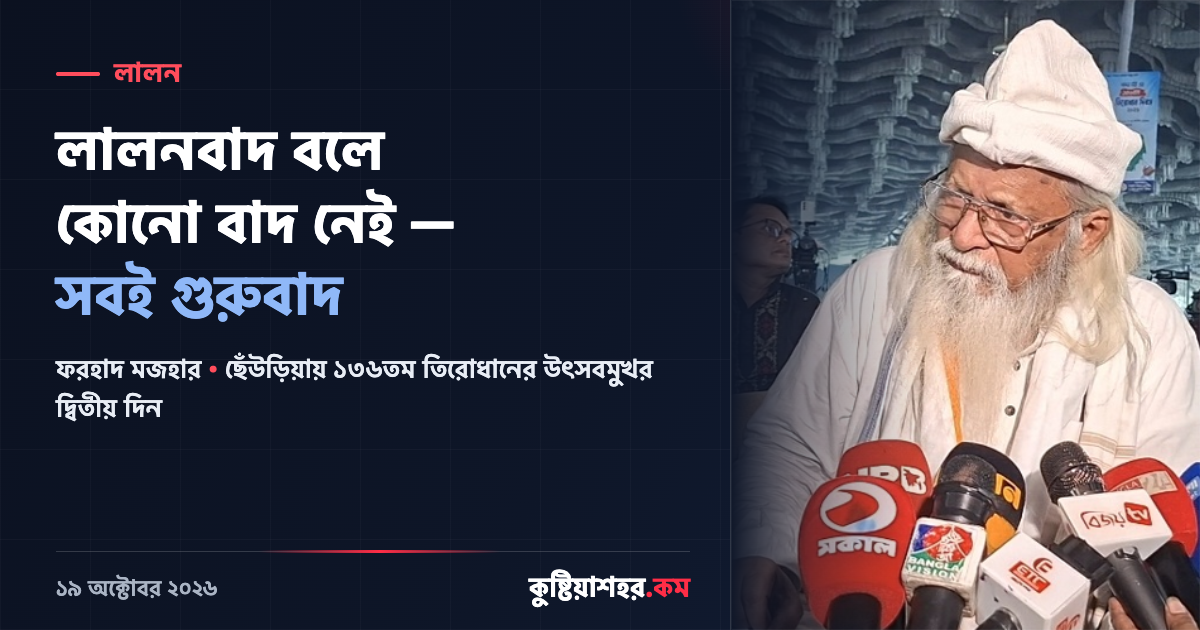
Cheuria was crowded with song after song, with rites and rituals, and with the arrival of devotees. On the second day, Sunday (18 October), of the three-day observance on the occasion of the 136th Tirodhan of Baul Samrat Fakir Lalon Shah, the festival-ground in the environment of the festival crowd overflowed at the Lalon Akhrrabari of Cheuria in Kumarkhali of Kushtia.
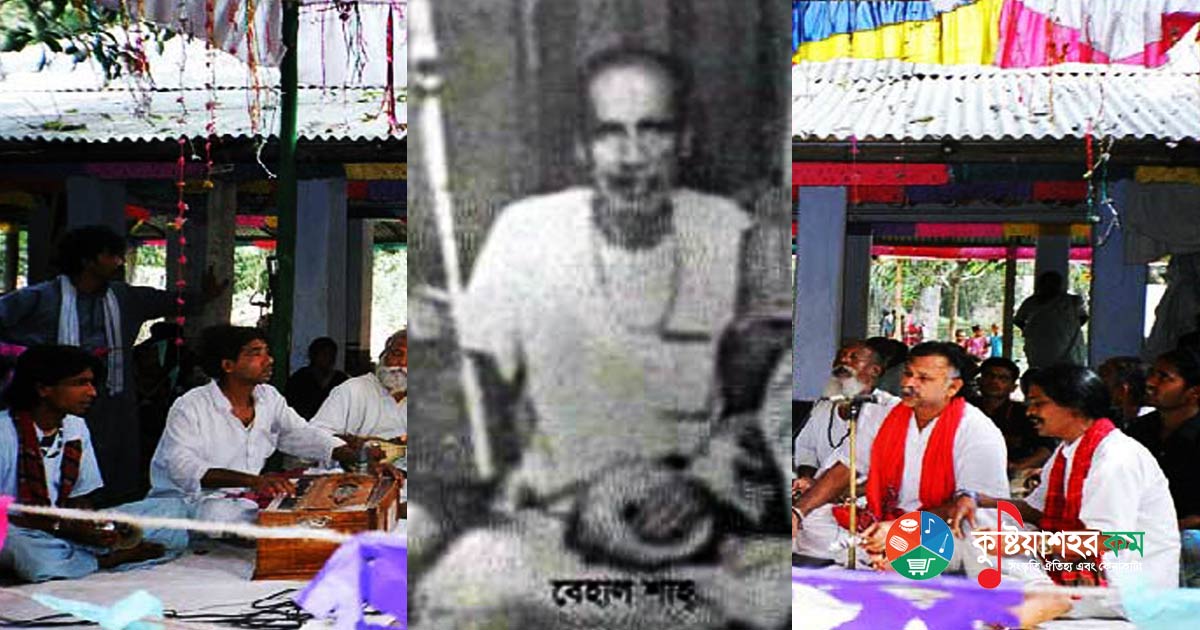
The day begins with the group-song of the fakir-sadhus in the morning. In the morning comes the 'Balya-seva' - some Bauls' 'bhek-grahan', the rite of taking pai-mudi, the singing of songs and the discourse on the doctrine. At midday, at the Rajghat of the Kaliganga river, after the gosal, the 'Purna-seva' is performed - white rice, hilsa fish, kalojam dal, vegetables and pulses are served among the devotees and followers who have come from far and near. Even after the evening's twenty-four hours of sadhu-sanga have ended, singing and mystic discourse do not stop in the akhrrabari.
In the akhrrabari sound the bansuri, the dotara, the ektara, the mandira and the dugi's beat; now and then someone hums a picture of Lalon. Bauls, fakirs and devotees come from different corners of the country, and people even from abroad come to this festival. Yet it has been observed that compared with previous years the gathering was somewhat smaller this time.
Devotee Suraiya Mariyam, who came from the village of Baliya in Palash upazila of Narsingdi, said, "Saiji's words are dear to me. This time it was possible, so I could come." In the words of Noor Mohammad, who came from Natore, "I have come drawn by the heart. One does not come to know Lalon's words by hearing them; one must take them within." Abdul Shah Fakir of Kalukhali in Rajbari, who has kept company with the akhrrabari for nearly fifty years, said that before, four or five assemblies used to sit in the thatched house; now the crowd is immense, and people come from many lands.
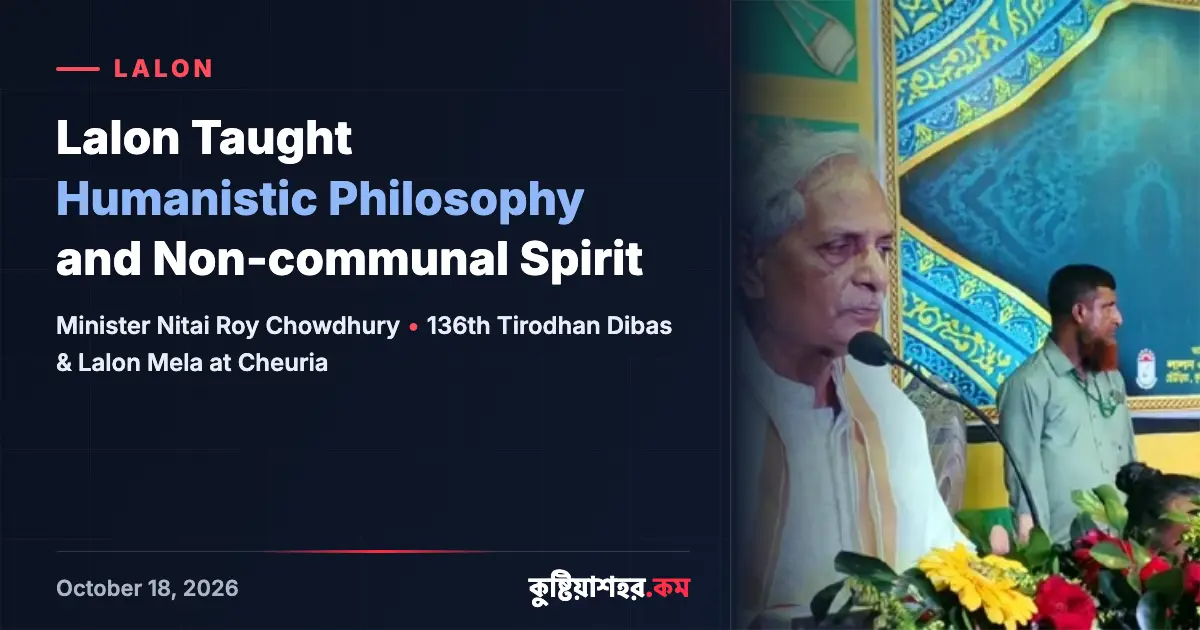
In the evening the second day's discussion meeting was held on the Lalon mazar stage. Chaired by district administrator and Lalon Academy president Tauhid Bin-Hasan, the chief guest at the meeting was Khulna Divisional Commissioner Md. Abdullah Harun, and the honoured guest was the poet, writer and thinker Farhad Mazhar. Special guests were Khulna Range DIG Mohammad Rezaul Karim, Police Super Mohammad Aminul Islam, commander of the 47th BGB Lieutenant Colonel Rashed Kamal Roni, district council administrator and freedom-fighter Principal Sohrab Uddin, and Kushtia district BNP convener Kutubuddin Ahmed. Professor Dr. Rashiduzzaman of the Bangla department of Islamic University and Kumarkhali's acting upazila nirbahi officer Nabid Sarowar also spoke at the event.
At the discussion meeting the honoured guest Farhad Mazhar said in his speech, "There is no creed called Lalonism; all of it is guru-devotion." He related that a long struggle had been needed to stop the tendency of presenting Lalon as a 'Baul', and remarked that in none of Lalon's songs does the word 'Baul' occur; not 'Baul' - to understand Lalon one must sit with the fakirs.
Objecting to the changing of the words and melodies of Lalon's songs in their presentation at the Lalon Academy, Farhad Mazhar said that the Academy has no right to make changes of this kind. He related that on the previous day he had heard many songs presented with altered words and tunes; more research is needed on Lalon's music. Remarking that the renowned Lalon artist Farida Parveen once sang Lalon's songs to the melodies of palli-giti (folk song), he expressed regret that she had not been honoured at the event; he dedicated his own speech to her name.
After the meeting, on the main stage the artists of the Lalon Academy and the country's eminent Lalon Sangeet artists performed the spiritual songs of Fakir Lalon Shah. The event is being organized nationally by the Ministry of Cultural Affairs, with local cooperation from the Lalon Academy. Today, Monday (19 October), the three-day programme will end with the evening's discussion meeting and stage performance.
Information sources: Prothom Alo and Sarabangla