বাংলা
 English
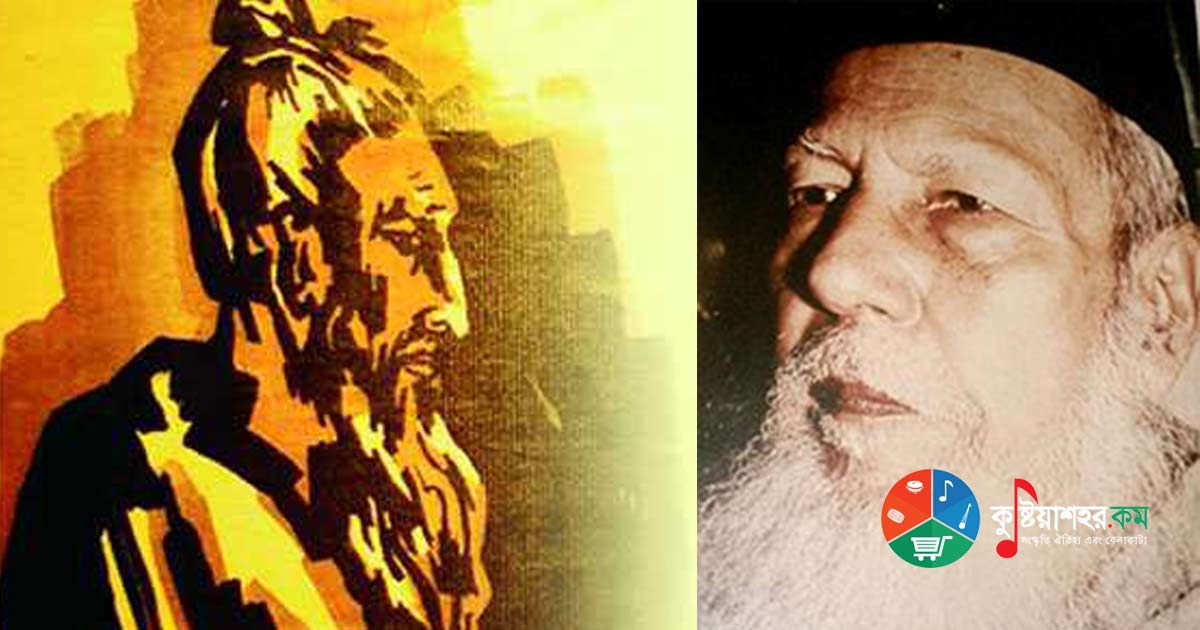
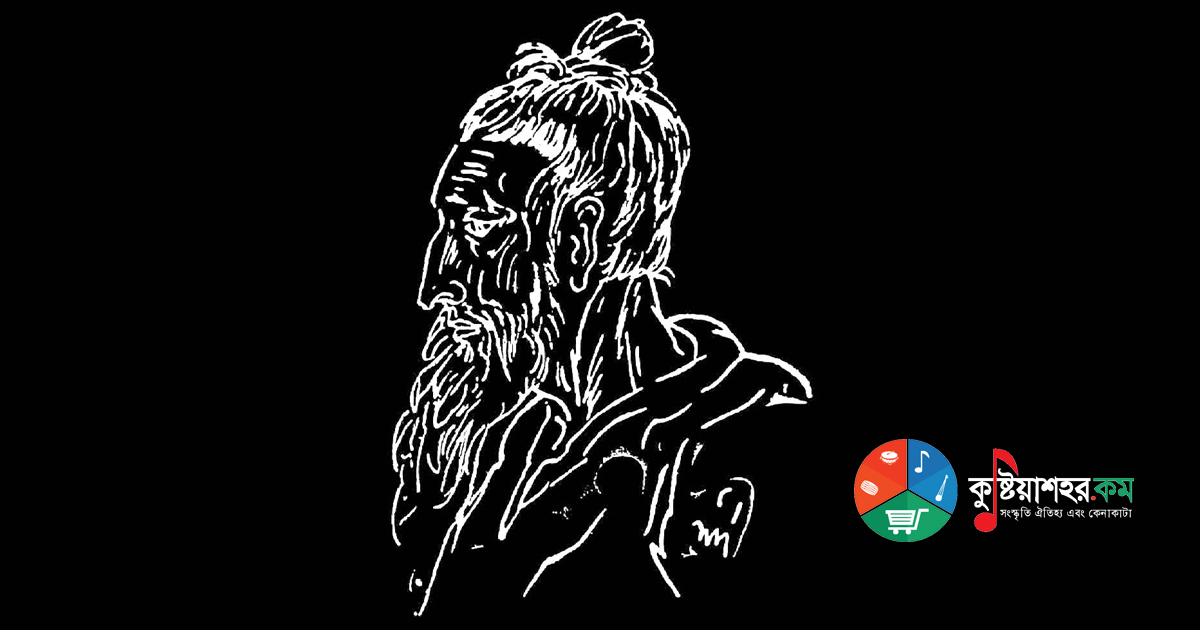
The bank of the Kaliganga, the closing years of the eighteenth century - Lalon was then a young man. In the bushes lay a burnt, charred, unconscious body by the river - those who had thrown him away had left him for dead; in that age, to be thrown in the bushes was all but certain death, and those who cast him out took it for granted that this body would not survive. That body was lifted, cleaned, and carried away by Fakir Dampati Molom Shah of Cheuria and his wife Matijan. And from that discarded body was born the greatest sage-poet of the subcontinent - Fakir Lalon Shahiji, who is believed to have lived almost a hundred and sixteen years.
Two hundred years have passed. Today that discarded body's ownership is being fought over by universities, ministries, record companies, television - and religion too. The man who sang all his life against the pomp of caste, wealth and creed now sits with equal ease in the drawing-rooms of the upper class, on the stages of state festivals, in corporate advertising, in theological treatises - everywhere. Has Lalon, then, won? No - and that is the chief anxiety of this essay: under the guise of victory, Lalon is being captured again. And the price of this capture is being paid by his own people - the poor, the letterless, the outcast men and women in whose language, in whose akhra, in whose boat Lalon was born. If history gives any warning, it is this: the process now under way of carrying Lalon away from his own people for the second time is different from the first - this time it is happening not in the name of hatred but in the name of love.
A Discarded Body on the Bank of the Kaliganga
There is no certain information about Lalon's birth - perhaps he himself deliberately left it unclear out of caution. Researchers put the year of birth around 1774; since there are differing views on the birthplace, it cannot be stated with certainty - let it remain unknown. But more important than his birth is his "second birth" - that event on the bank of the Kaliganga. The tradition says: stricken nearly to death by smallpox, Lalon was abandoned by his family; Molom Shah and his wife Matijan rescued him and brought him to Cheuria; and when he recovered and returned home, his kinsmen would not let him enter the house - because he had long lived "in a Muslim home" and his caste had been "broken". This story is the treasure of oral tradition rather than of written evidence; yet as a symbolic truth there is no biography more exact than it. A body flung away by the hands of caste - this is the birth-certificate of Lalon's philosophy.
The first proclamation of that rebellion he made in song -
What a strange factory is this, that says "the caste is gone, the caste is gone"
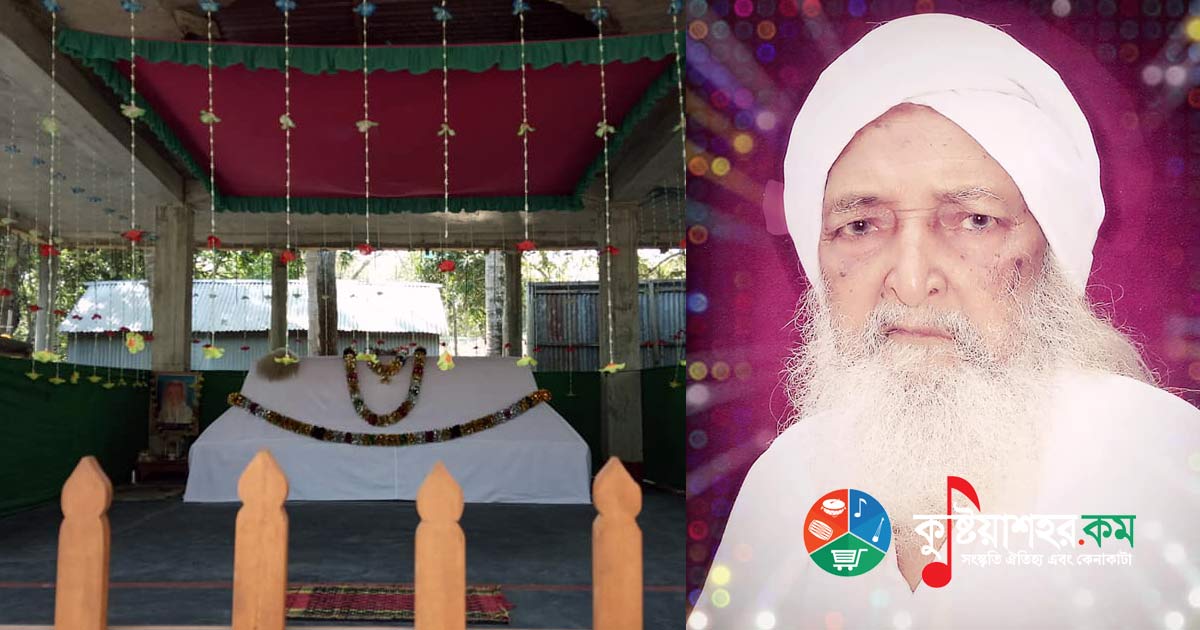
With initiation from Guru Siraj Sai he built the akhra at Cheuria - an address whose door stood open to all, irrespective of caste, clan and community. On 17 October 1890, at Cheuria in Kumarkhali of Kushtia, in his own akhra, came his Tirodhan - the last part of the nineteenth century; the samadhi is there itself. Yet even in his lifetime he belonged to the lowest floor of society. His disciples were sharecropping farmers, boatmen, weavers, cobblers, potters, Doms, fakirs of broken homes. Society called them "fools" - because they knew no letters.
In that age the akhra of Cheuria was a rare address. For those whom society had thrown away - the outcaste, the widow, the sick, the lost, the hungry - there was here food, shelter, service, and the rarest thing of all: unquestioned respect. Alongside it was living education - the questions of the body's philosophy, the sadhana of song, the discourse of guru and disciple. In modern language, the akhra was at once a shelter, a school, a platform of thought and the social security of the poor - what society had snatched from outside, Lalon returned from within. And in his own lifetime he had to pay for this standing: the pandits of the community asked his caste, criticized him, and some spread the word that his akhra was "impure". Lalon's answer has cut its mark in history - he did not answer with caste; he answered with song.
For the Letterless, Knowledge Beyond the Letter
The greatest confusion in understanding Lalon's philosophy is to call him a "philosopher" - a word that to our eyes means university tomes, English terminology, seminar halls. Yet the most revolutionary aspect of Lalon's philosophy was its address: he did not write knowledge down in books; he kept it on the lips of men. Because his students knew no letters - and he took that not as a barrier but as an opportunity. Bound in rhythm, metre and melody, knowledge stays by heart; it opens in question and answer; it grows in the discourse of the akhra. And so the bearer of his philosophy is the song - a medium for which no certificate is needed to become a teacher.
It is in this song that he asked the sharpest question of his age - of the caste system:
All the people say, Lalon, what caste is there in the world?
Lalon says, what is the form of caste?
I have not seen it with these eyes.
Mark this: the question is not only about Lalon's own caste; the question unravels the very weave of the institution - what is really understood by caste? Blood? Occupation? Ritual? None of it goes with a human soul. Lalon did not merely mock caste; he broke its epistemological foundation. And this was not for the society of that time alone; the tendency to divide people layer upon layer by race, class and property exists today too - only its language has changed.
For the same reason his "man of the heart", the philosophy of the body, should be seen as the democratization of knowledge. To attain truth one needs no priest, no pandit, no charter from Kashi or Medina; one needs one's own body, one's own heart, a guru met face to face. The door of knowledge is open to all - the cobbler's boy may enter; even the king may fail to enter, if he cannot put down his pride. Nor should it be forgotten that in Lalon's akhra women too practised alongside; the Lalon tradition has accepted countless women sages and singers. This much is proof enough - his call for equality was not a paper speech; it was a practised custom.
And one more thing must be said here, or the discussion that follows will not stand: the hundreds of Lalon's songs were never bound into any collection in his lifetime. The songs were carried mouth to mouth - guru to disciple, disciple to new disciple, akhra to road and market. The meaning is enormous: Lalon's treasure had no deed of ownership, so the owner of that treasure was anyone who learned the song by heart, practised it, and taught the next person. In this oral covenant of knowledge lay the life of the Lalon tradition - and it is this covenant that today is under the greatest strain.
So the address of Lalon's knowledge was: the akhra, the mela, the boat, the field, the mouth. The owner of knowledge was those very people called "fools". Keep this picture in mind - and now let us see how, in two hundred years, the picture turned over.
The Four Forms of Capture
After Lalon's Tirodhan, four forces slowly turned their gaze toward him, and then began the capture - the world of scholarship, the state and administration, the market-industry, and religion. The frightening part is here: none of them captured Lalon taking him for an enemy; all of them captured him in the language of love, under the guise of honour. The capture is so smooth that it is hard to find any ground for resistance.
I choose the word "capture" not for poetic flourish. Let the definition be in the ordinary sense: when the use, income and value of a treasure that a society has created is taken away from that society's hands by someone else, that is called capture. By this measure Lalon's case matches directly - he made the songs; it was the poor people of his tradition who carried them; but the use, income and value of the songs now passes into other hands.
The Capture of the Knowledge Industry
The first touch came from the world of the learned. Through contemporaries like Kangal Harinath Majumdar, word of Lalon reached the city; Rabindranath came to know of his songs and lifted some of them into his own journal; Baul melodies entered the hermitage of Santiniketan. This in itself is no harm - to be read by a great writer is an honour for any artist. The problem came in the next step: in a hundred years Lalon became a "subject of research". Chapters of the PhD, international seminars, the English library of "Baul Studies", the notebooks of foreign researchers. Lalon's philosophy of the body is now expounded in English terminology; his songs are quoted in translation; the people of his tradition sit in the visitors' seats. Lalon is now a career - research projects, keynotes at foreign conferences, seminar sessions of festivals. None of this is in itself wrong; the harm lies elsewhere: this whole economy runs on the coin of the certificate, and the coin of the certificate is minted in the university - a place where, before one can even reach it, nearly every fakir-Baul falls away. The language of knowledge changed, the certificate of knowledge came into being - and the day knowledge requires a certificate, the letterless man needs a translator to understand his own philosopher. The fakir Lalon of Cheuria did not become a reader - he became a text.
The Capture of State and Administration
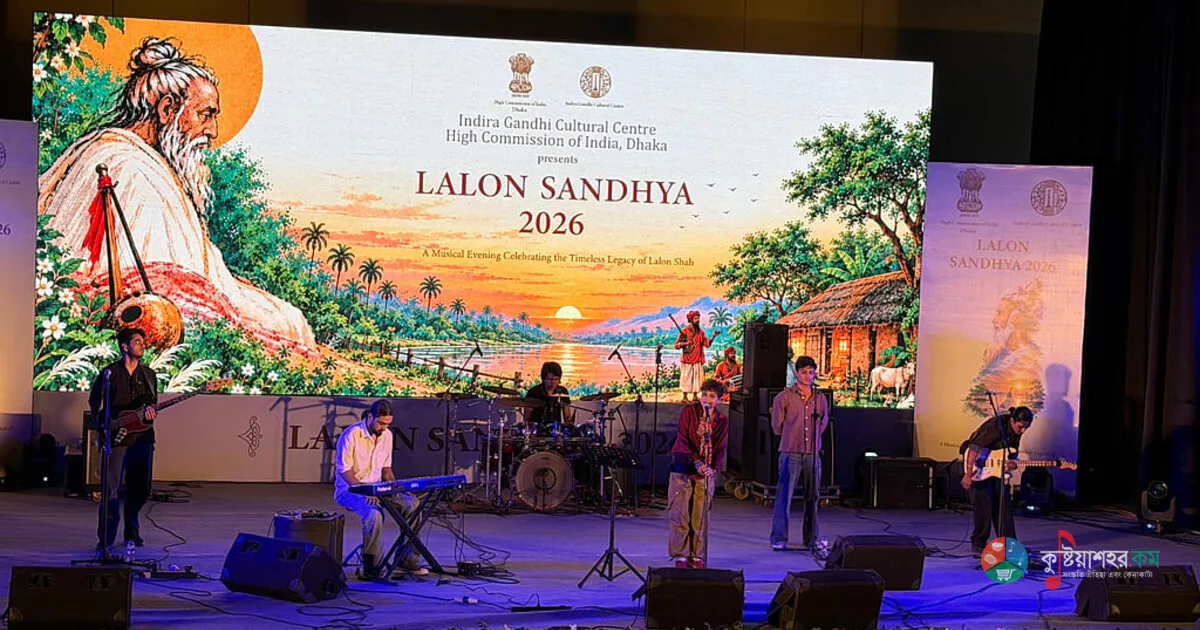
In the first decade of the two thousands UNESCO proclaimed the Baul song among the foremost treasures of humanity's intangible cultural heritage. In the state's eyes Lalon then became an asset - of tourism, of diplomacy, of identity. The annual Lalon Utsab at Cheuria turned into an event of state management: minister and minister-of-state inaugurations, traffic plans, banners and festoons, VIP gates, TV cameras. In textbooks he is the "Baul Samrat". One might take these for honours. Yet on the other side: year after year we hear of land-grabbing disputes over the akhra and the lands around it; there is no protection of livelihood, medical care, or children's education for the fakir-Bauls of the tradition; at the festival the singing Baul is a performing labourer, and the ownership of the festival rests with the bureaucracy. Look too at the fringe of the festival: the mela's middlemen, banner printers, hotels and restaurants, transport owners - all take part in the festival's economy; but who gets the microphone, who mounts the stage - the list of that is made on an office desk. The fakirs of the tradition come to the festival the way one goes to a village market - when called, when sent back. The festival that is held in the memory of their guru - in that festival they are neither audience nor partners, but backdrop. The state has made Lalon a brand, but it has not made Lalon's society an asset. Lalon is in the charter; he is not in the policy.
The Capture of the Market
Then came the industry. Dhaka's urban bands borrowed his name; fusion albums, concerts, streaming royalties, cinema, documentary - Lalon became a popular cultural commodity. There is a good side to this too, nothing to hide: it is on this wave of old melodies made new that a million people heard "Khachar Bhitor Ochin Pakhi" for the first time. But the question lies elsewhere: where did the money stitched into the song go? Into record labels, the concert business, the fees of city artists. The fakir of Cheuria still sings without a microphone, and "versions" of his very songs sell on premium tickets. See the new form of it in the digital age: type "Lalon" on YouTube and there are millions of views; but whose song does the algorithm pull up? The version of the city composer. The fakir who has carried that song by mouth for a hundred years has no name in the search - in the history of the song he is the "source", in status he is the "cover". The market has bought Lalon's melody; it has not bought his philosophy - philosophy has no shop to be sold in, and so at the time of the transaction it is simply left out. The result is a strange Lalon brought into being: the man who knows the melody by hand is left out; only that Lalon which can be dressed up and sold remains.
The Capture of Religion
The most intricate capture is religion's. In his lifetime Lalon bore the rebuke of organized religion - his akhra was the address of the "infidel", his question of caste was unbearable to both communities alike. Even after his death dispute was raised over his samadhi; in the seventies militants broke the samadhi structure at Cheuria, and his remains had to be buried once more by the hands of devotees. Yet today a large part of that very society walks the opposite way: one by one they are declaring Lalon a saint of Sufi doctrine, a man within Islam; one by one they are making him a branch of the Vaishnava tradition of devotion; in the race to mazar-ize and temple-ize, Lalon has come to stand in the seat of a witness. But the very first condition of Lalon's philosophy was to refuse the exclusive claim of organized religion. The religion that demanded his caste is the religion that today writes his charter, and dressing up the history of his rejection it says: "At all times he was ours." For religion this is a natural tendency; for Lalon it is a surrender.
Yet a distinction must be drawn at this point. In Lalon's philosophy there is the influence of the Sufi and the Vaishnava streams - it is his own tradition that acknowledges this; in his songs there is Medina as well as Brindaban. This is not capture; this is a source. Capture happens only when that diversity is given the form of an exclusive charter - when the attempt is made to build a certificate saying "Lalon was really ours". The source is the meeting-ground of sages; the charter is the boundary-wall of a community. In his lifetime Lalon did the first, and against the second he sang.
Why Was the Capture of Lalon So Easy?
Seeing the list of four captures, the question comes naturally: why was Lalon captured so easily? Tagore cannot be captured just like that - behind him stand his complete collected works, legal copyright, the vigilant institutions of Tagore's admirers; behind Lalon there is no legal owner, no institution, not even a certificate of birth and death. Secondly, his life and philosophy were deliberately unclear - that very un-clarity by which he was able to endure the attacks of every force in his lifetime is now giving everyone the chance to lodge a claim: since Lalon left no clear proof behind, anyone who wishes may write him into their own ledger. Thirdly, he is here no more - a dead artist does not oppose the use of himself. The Baul-fakirs may wish to protest, but in their hands there is not that wealth of language with which one can speak the language of the state, the university and the market. This vacuum of ownership may be named "unclaimed property" - and society's rule is an old one: unclaimed land is grabbed.
The Distance That Is Coming Back
Now pause a little, and weigh together the fruits of the four captures to see what is taking shape.
The first distance of Lalon's life was one-sidedly cruel: society had cast him out in the name of caste. The hatred was open, public. Yet within that cruelty there was an advantage too - when rejection is clear, the road of rebellion is clear as well. From that very rejection Lalon built his philosophy, and the readers of his philosophy were precisely those people whom society had cast off.
Today's distance is of a completely different kind. No one is throwing Lalon away - on the contrary, everyone is receiving him, dressing him, seating him on the high seat. But at every layer of that acceptance there is a silent condition, by which the poor "foolish" man falls behind again.
The distance of language. The discussion of Lalon now happens in seminars, in English terminology, behind charters. The language in which the village fakir taught philosophy - the place to speak of philosophy in that language has almost vanished.
The distance of place. From the akhra the song has moved off to the city's gallery, behind the ticket counter. The man who used to listen to songs on the riverbank with a gamchha on his shoulder does not know today how to stand at the gallery's door.
The distance of money. The earnings of Lalon's songs do not return to the traditional fakir-Bauls. Because there is no livelihood in the fakir's life, fewer young people are entering the tradition of Cheuria. When the bearer of the tradition is hungry, the heritage lies banked away.
The distance of dignity. In the name of "preservation" the Bauls are being made into museum specimens: the right to ask questions belongs to the pandit, the duty of singing belongs to the Baul. But in the Lalon tradition the Baul was a philosopher-teacher; today he is an "artist" - that is, an arranged object.
The most piercing aspect of these distances is this: in Lalon's song the poor man saw himself as great; at Lalon's festival he sees himself as small. "Close to home is Arshinagar, and there my neighbour dwells" - truth is not far away; it is as near as a neighbour, within oneself, in one's own language - Lalon's whole philosophy is the unfolding of this one saying. But gone to the seminar of that very song, the same man will not understand what "deconstruction of caste" means. The very steps of the ladder of knowledge that Lalon broke down are now being built anew - with the statue of Lalon set in front of them.
The picture that takes shape when these four distances merge is this: Lalon is on the signboard, in the souvenir, in the status update; yet the poor people of his own society are farther from him than before. When society threw him away, at least it knew - those who threw him were the rejecters. Today even the face of the rejecter cannot be found, because the casting-out is now happening on the lips of honour.
And the deepest wound lies here: Lalon's philosophy is no written object; it is a living process - guru, disciple, akhra, discourse, question. If the bearer-class of this process wastes away, the songs will remain but the philosophy will not - just as if the sun were gone there would remain a picture of light, but not the light. "Preserved" Lalon therefore means dead Lalon: not the man of the heart, but the man of the museum.
And the most terrifying form of this distance has not yet been seen - it will come in the coming generation. The child of a poor family will read Lalon as a chapter of the textbook, not as the tradition of his own quarter. He will know that Lalon is "famous"; he will not understand that Lalon is "ours". He will know the date of the festival; he will not understand the discourse of the akhra. When the genealogy of memory is torn apart by one generation, it cannot be restored with recordings - for memory carries not only the melody of a song; it carries, along with the melody, the relation of life to it. When the caste system cast Lalon out, its price was plain and immediate; the price of this new casting-out will come thirty years later - and then there will be no address left at which to ask for repayment.
What Is the Form of Caste? I Have Not Seen It with These Eyes
Lalon saw this day coming - to say so would be no exaggeration. "All the people say, Lalon, what caste is there in the world? / Lalon says, what is the form of caste? / I have not seen it with these eyes" - we read the saying as the sage's proclamation - by caste one cannot know a man; but in today's setting another reading stands out: the upper-caste power of the very caste whose form Lalon's eyes could not bear is now wrapping itself around Lalon - writing Lalon's name, we are putting out Lalon's light. "How does the unknown bird come and go inside the cage" - the bird is inside one's own breast, yet we go round and round looking at other people's cages. Carrying the philosophy of one's own people away from one's own hands, and then racing to the fair with that far-off thing - this very habit is what Lalon cursed all his life: truth is not outside; nothing is far away. "If you would weigh the mystic's good and ill, / the resolution of Lalon's practicing soul / needs no thread of love" - mark the song's condition: the mystic must be judged; one may not believe on the strength of a charter. The thread of love means direct relation - with the guru, with the song, with life. That very relation is now slipping behind the institution, and at the institution's door no passport of love is needed - a protocol is.
And one thing needs to be admitted - in this capture we ordinary decent people too are willing partners. There is in Lalon's songs the melody of protest, and to hear that melody is a great delight. And so a comfortable equation has come about: hearing revolutionary songs, the mind takes the pleasure of being revolutionary, while none of the dangers of revolution need be run. Presence at a concert of Baul song becomes proof of fellow-feeling; the question of any change in how one lives never arises. This may be called revolution without revolution - and the safest grave of any movement is this luxury of delight.
The Way to Bring Lalon Back
Criticism is easy, the work hard - yet there is a way. In my thinking several directions deserve priority.
- Help centred on the akhra must come as a right, not as alms. The livelihood, health and children's education of the fakir-Bauls of the tradition must be secured through regular arrangements - not as tips in exchange for the festival.
- The ownership of the festival must pass into the hands of the performing community. Fewer VIP inaugurations and banners; let song and discourse - Lalon's original format - come back to the stage.
- Language. The deep discussion of Lalon should happen again in Bengali - at the tea stall, in the village reading circle, in the school classroom. Let research in English go on, but let it be the gateway to the mother tongue, not the door. For Kushtia there is a chance of its own here: an archive of Baul-mouthed recordings in local libraries and schools, reading circles directly with the fakirs of the tradition, song sessions for the young - these are not costly, yet these are what turn Lalon from "a book to learn" into "a person to learn from".
- The account of money. From any commercial use of Lalon's songs a fair share must return to the traditional fakir-Baul community. This claim is not one of charity; it is a question of cultural entitlement.
- The ethics of research. To anyone doing a PhD on Lalon one may put a question: will the people of his tradition be able to use the results of your research? Let research be not about the Bauls but with the Bauls.
- And perhaps most important of all - our duty as listeners. Whose song are we hearing, whose ticket are we buying, into whose hands are we putting money - every small decision is a vote for capture or release. Even once a month, going to Cheuria or to some akhra and hearing song without a microphone keeps the tradition a little alive.
The Last Word
The university, the state, the record company, religion - all of them today speak of that body flung on the bank of the Kaliganga, all of them full of words. But the grandchildren and great-grandchildren of those who lifted that body up stand in a corner of the crowd - far off, empty-handed. Lalon's true samadhi is not in the stone of Cheuria; the stone has been broken once already. The samadhi is in the tradition, in that song that comes round mouth to mouth. If the tradition stops, the song will remain on the hard disk, and Lalon will remain only in history.
"All the people say, Lalon, what caste is there in the world" - for two hundred years we have been holding this question up to Lalon. Today it seems the question must be turned around: have we truly recognized Lalon - that Lalon who lived in the poor man's house, on the letterless man's lips, in the discourse of the akhra - is he being recognized at our festival, in our seminar, in the name of our band? The answer will not be found far away; one need only sit in a fakir's courtyard beside Cheuria and ask it. And if the answer is not to be had, then we must understand - we did not lose him because we asked his caste; having gained him, we are losing him by losing his people.