বাংলা
 English
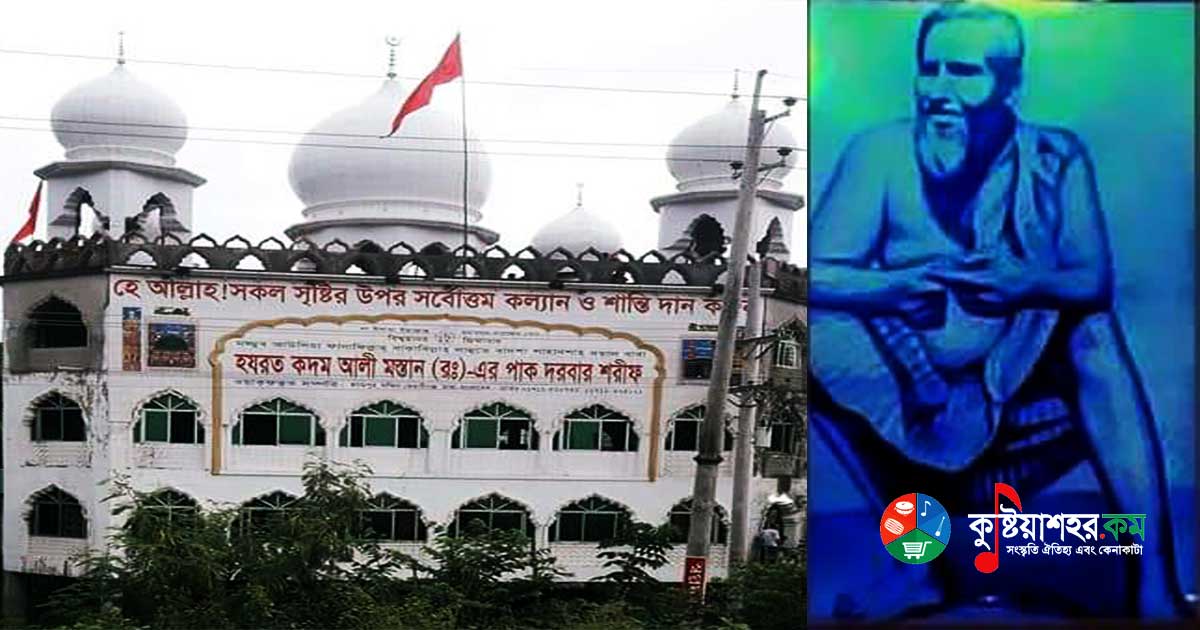
Kind Baba Kodom Ali Mastan was born at Dahari Naopara in Vikrampur. His abode (astana) was the house of the late Sattar Bepari on the east side of the then Dighli Bazar. The coming of this holy madman was like a blessing for the people of Vikrampur. The people of Vikrampur were at their wits' end with various diseases and epidemics.
Good doctors could not be found, and there was no money to buy medicine. Cholera, tuberculosis and smallpox had filled the area. People were helpless. How could they be saved from all this? At such a time came Kodom Mastan. Drinking his blessed water everyone recovered; everyone's heart's wishes were fulfilled. The news began to spread all around. Children came to the laps of the childless. Everyone began to throng Kodom's dargah.
On the other hand, Suman Sikdar, a devotee of Kodom Ali Mastan, has said: at that time river erosion too was very severe. Mile after mile of houses, farmland and people sank into the grasp of the Padma river. Panic set in among the villagers, and cries of wailing fell everywhere. When Kodom Ali Mastan sat absorbed in thought on the bank of the Padma river, the villagers said to him, “Move away from here, or you too may sink into this grasp.” Thereupon he cut open his belly with a knife, drew out his entrails and began washing them in the water of the Padma river. Seeing this scene the villagers fled in fear. Later it was seen that the river no longer eroded with the same terrifying fury as before.
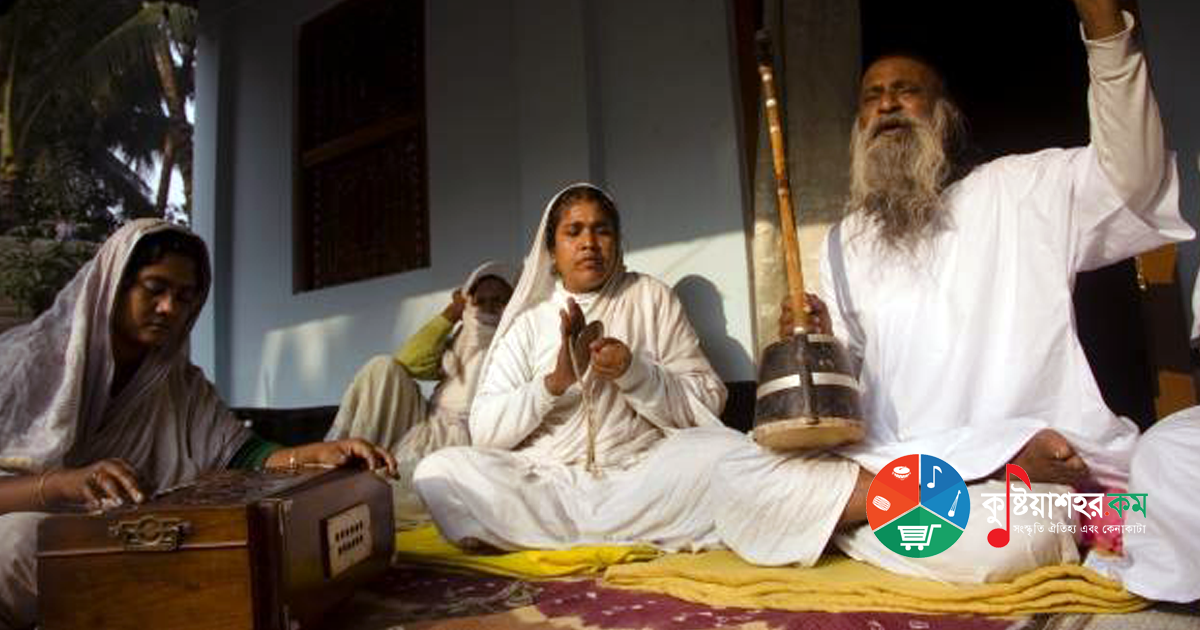
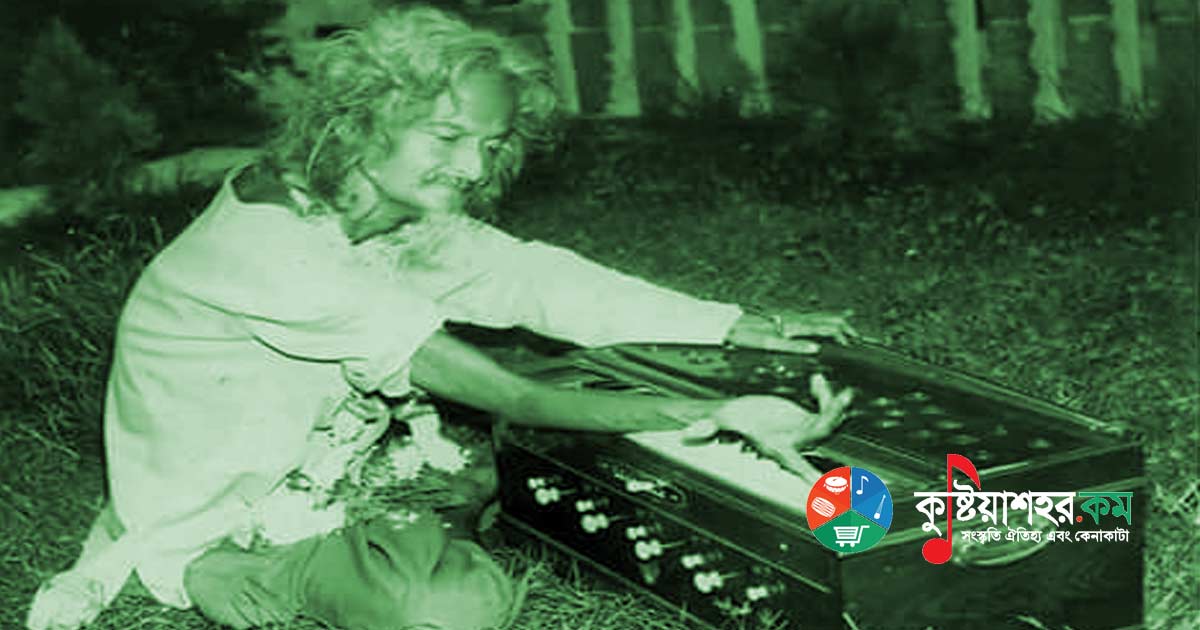
Mohonto ran a small shop at Dighli Bazar. Minding the shop all day, at night everyone came to the pagla's abode. Music and song went on until deep in the night. With Nurali Dhali's deft harmonium playing and the artistes' songs, the pagla too took much delight.
The Naming of Mohonto
One day late at night Kodom entered the abode. He saw everyone sunk in deep sleep. Kodom called out, “Mohonto! Baba Mohonto!” Who is Mohonto? Where is Mohonto?
Everyone's sleep was broken. Everyone stared at the pagla. The pagla's gaze fell on Mohonto. Signing to Mohonto he said, “I am calling you. Sing a song.” Mohonto was dumbfounded, for the pagla's friendship with him had not yet been formed. Mohonto said, “But I can't play the harmonium.” The pagla said, “Go over to that corner, take the harmonium and play paan-pon. If God wills, it will come out.”
The moment Mohonto put his hand on the harmonium's reeds, as the pagla had said, he felt a shiver, as if the tune was rising by itself. Mohonto then played the harmonium and sang for Kodom. Mohonto realised the pagla's charisma. From then on he stayed with Kodom until his death.
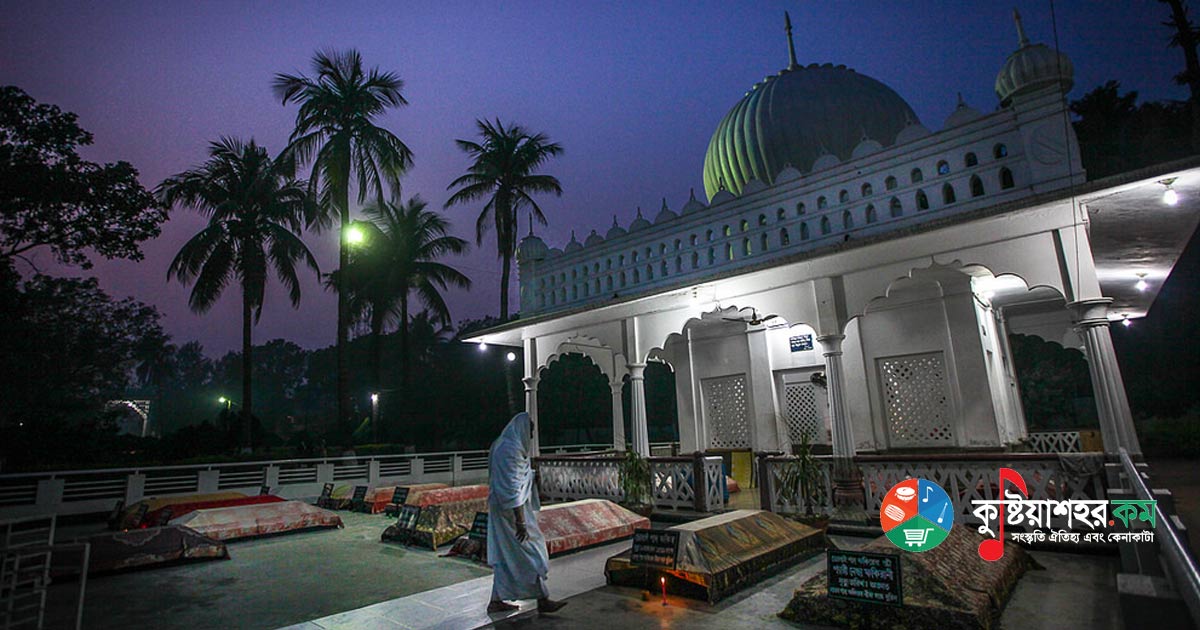
Dear reader, Mohonto's real name was Abdus Sattar. In fact the name “Mohonto” was the name given by Kodom. Just as he spent his life serving Kodom, after death too, in the desire of the great union (mahamilon), he was buried beside his guru's rauza at Kadompur in Keraniganj of Dhaka.
In memory of Kind Baba Kodom Ali Mastan (Rah:), his devotees and well-wishers gather together every year on the night following the last Thursday of the month of Agrahayan, on the occasion of a musical jalsha. And this gathering of union has been given the poetic name “The Grand Jalsha of the Great Union”.
It was started long ago by Abdus Sattar Mohonto Shah, the mystic Baul poet famous for “Amito Morei Jabo” and an intimate devotee of Kodom Mastan. Since he belonged to the spiritual lineage of the Baul world, he invited thinkers of every class — Sufi Bauls, poets and litterateurs, sadhus and ascetics. In his lifetime people of all classes attended at his invitation. It turned into a gathering of union. From the evening came the discussion on the life of Kodom Mastan (R), the prayers (dua) and the distribution of tabarak. From 10 o'clock at night the Baul songs began. At times it happened that even renowned artistes got no chance to sing more than one song.
All night they sang Murshidi, Marfati and Dehattattva songs, trying to attain nearness to the Creator. The Grand Jalsha of the Great Union is held for the spiritual grace (ruhani faiz) and blessings of the Merciful Lord.
After Abdus Sattar Mohonto died in 2013, his only son Golam Kibria (Jihad Mohonto) continues this jalsha, taking Kodom's devotees with him.
The annual urs of Kind Baba Kodom Ali Mastan (Rah:) is held every year on the 17th of Magh. Though the urs at Lauhajang is said to last 7 days, it actually runs up to 10 days. Baul songs are held here every night. Famous Baul artistes of Bangladesh sing there. Thousands of devotees gather here. The urs spreads over the vast area of Lauhajang.