বাংলা
 English
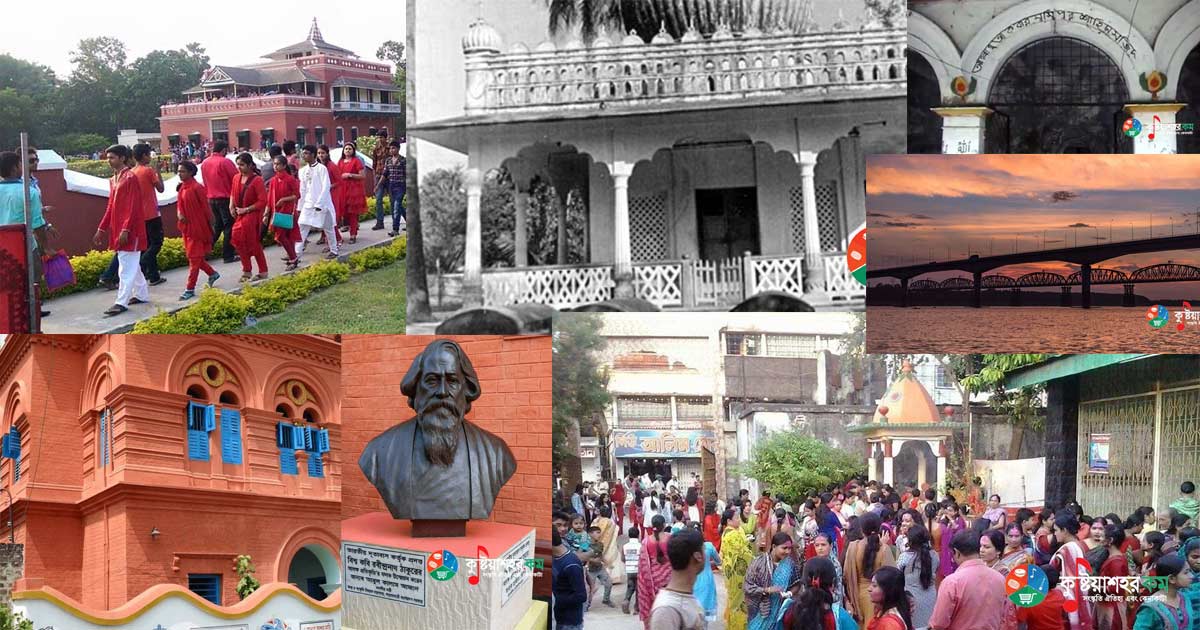
Kushtia has earned a reputation as one of the scenic destinations of Bangladesh. The greater Kushtia district is home to renowned mosques, temples, churches, places of interest, rivers and the birthplace of eminent personalities of history. Every corner of Kushtia's soil is steeped in the movement against the British, the movement against indigo cultivation, the movement against the Pakistani forces, social movements, Islamic movements and the movement of Baul philosophy. Jhenaidah, Meherpur, Chuadanga and Rajbari are also included within it. Those who came to Kushtia from outside did not go back; they settled down permanently in Kushtia. Kushtia's nature and the people of its society may be cited as the reason. Descriptions of some of the places of interest are given below:
The Kutibari of Shilaidaha, entwined with the memories of poet Rabindranath Tagore:
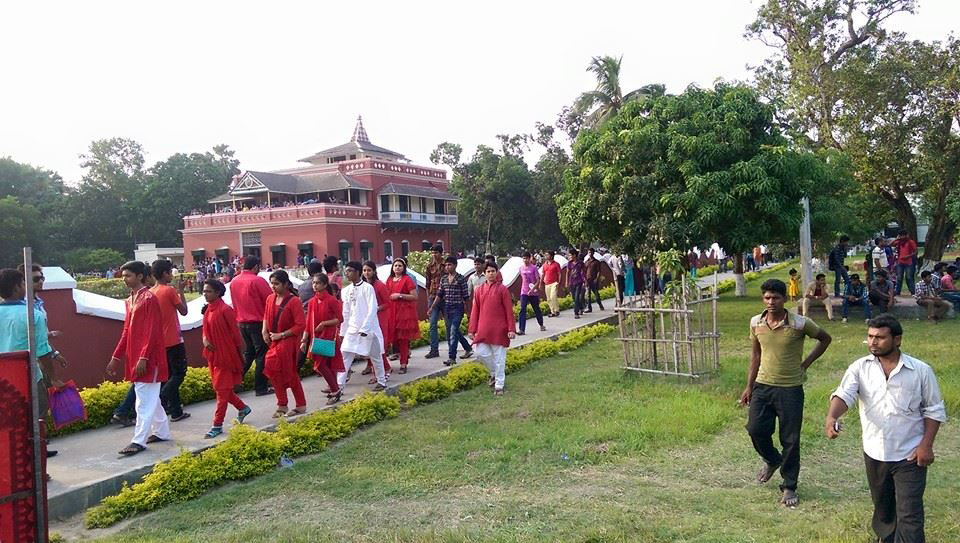
Towards the end of the eighteenth century, Rabindranath's grandfather Dwarkanath Tagore bought the zamindari of Shilaidaha and built the kuthibari in 1813. Almost the entire Tagore family, including Dwijendranath, Jyotirindranath, Hemendranath and Satyendranath Tagore, lived here, cradled by the Padma and the Gorai. The house was, in fact, built to look after the affairs of the zamindari. At that time the Tagore family held three zamindaris: Shilaidaha in Kushtia, Patisar in Natore and Shahzadpur in Pabna. On a family order, Rabindranath came to Shilaidaha to manage the zamindari.
This kuthibari is located 16 kilometres from Kushtia town. The Dak Bungalow of the District Council is here. There are a peon and a night watchman.
Tagore and Company (Tagore Lodge):
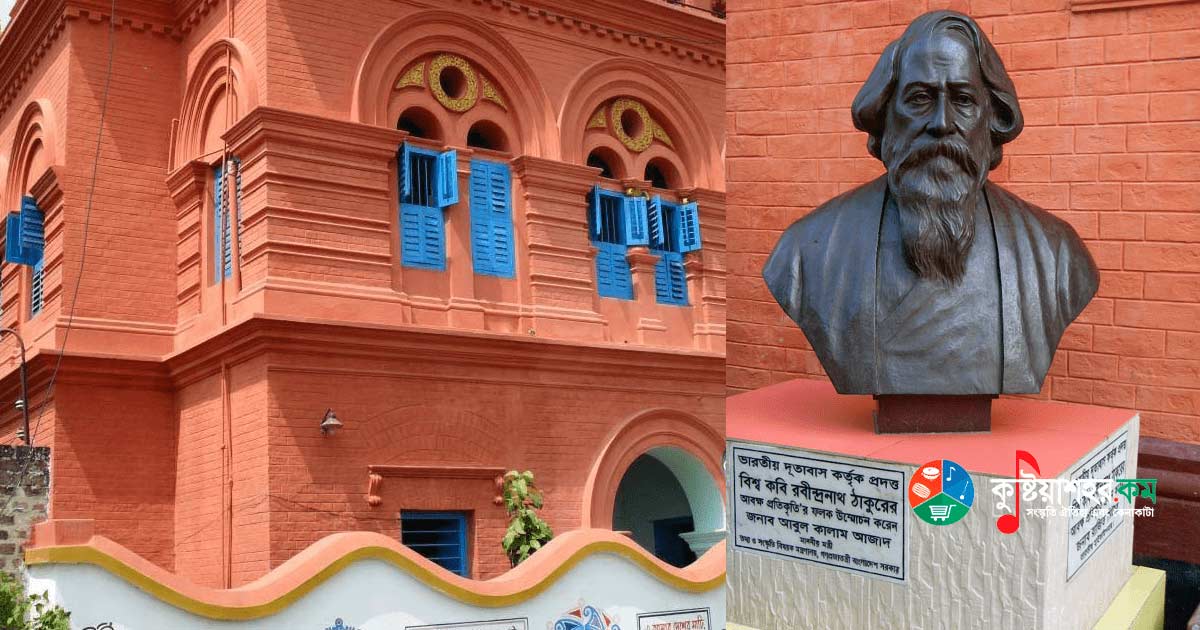
In 1895 Rabindranath Tagore got himself involved in business. With the help of his two nephews, Surendranath and Balendranath, he set up Tagore and Company at Shilaidaha as a joint-stock concern. That very year, for the sake of business convenience, Tagore and Company was shifted from Shilaidaha to Kushtia. To look after the company, the poet built a two-storeyed building at Milpara in the town. Sitting here, the poet wrote countless poems, which were later published in "Kshanika" and "Katha o Kahini". Today this building too is a place of interest.
The mazar of Lalon Shah, the emperor of Bauls, at Cheuria:
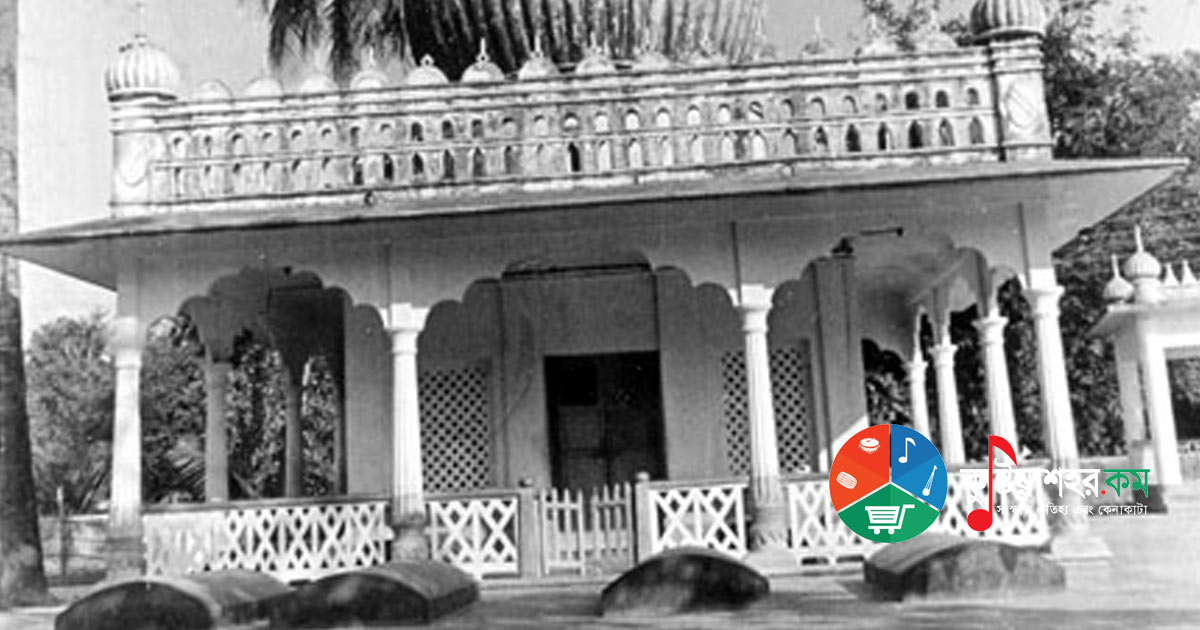
The spiritual seeker Lalon Shah took shelter at Cheuria in Kumarkhali, and in later years, after his death at Cheuria, a place of communion (akhra) grew up at the very site of his grave. The disciples of Fakir Lalon Shah and countless Bauls from home and abroad gather at this akhra on special occasions and join in festivities. Though illiterate, this mystic folk poet composed innumerable folk songs. Baul philosophy today arouses the curiosity not only of the people of this country but also of thinkers abroad. The present mazar there was built in 1963, and it was inaugurated by Monayem Khan, then Governor of East Pakistan. In 2004 an academy building of modern standard, with an auditorium, was constructed on the same spot.
Parimal Theatre:
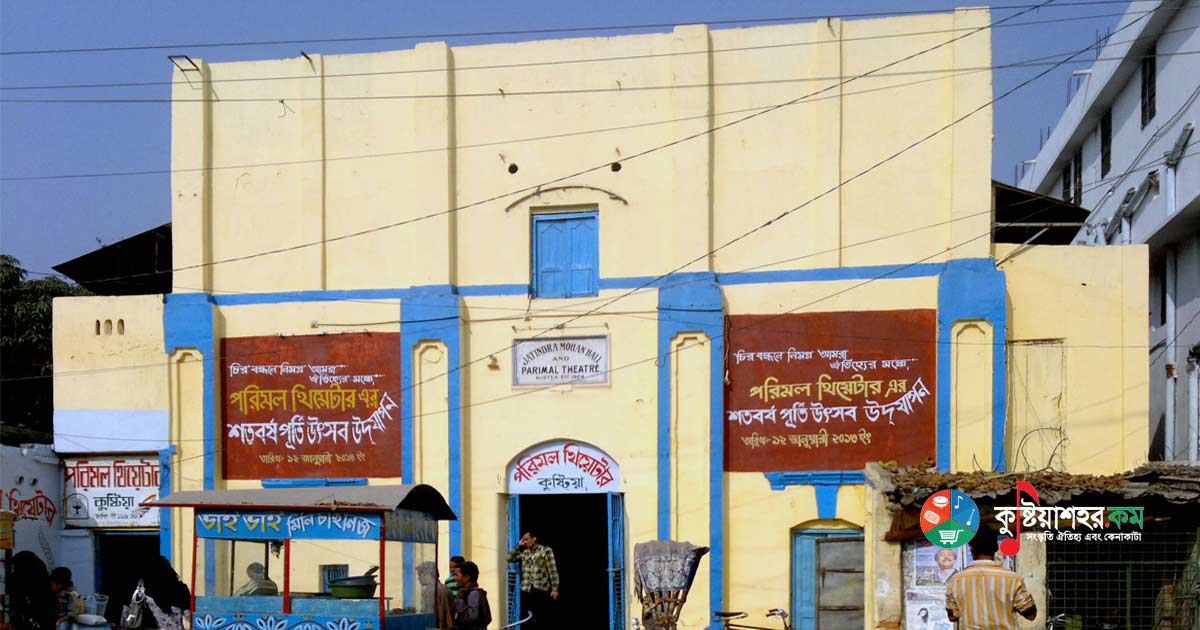
From the beginning of the nineteenth century, plays began to be staged at various places in Kushtia district. It was then that a permanent stage was built in the district. The theatre was named Parimal Theatre after the son of the then ruler of the Kushtia subdivision. Famous Calcutta actors such as Promothesh Barua, Durgadas, Shishir Bhaduri, Angurbala and Indubala came here many times. It was here that, in 1912, the rebel poet Kazi Nazrul Islam was felicitated on behalf of the people.
Gopinath Jiu Temple:
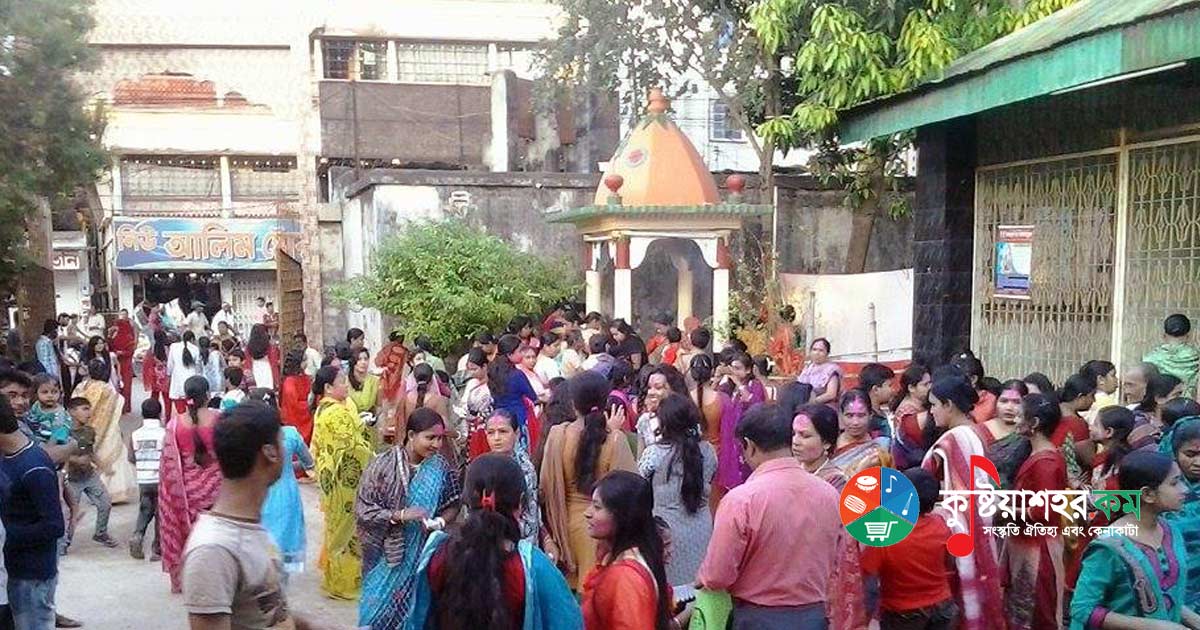
In 1900 this temple was built in Kushtia town on land donated by Maharaja Pramatha Bhusan Deb Roy of Naldanga in Jessore district, with money raised as subscriptions from local businessmen. In 1905, to preserve the memory of his wife, Maharaja Pramatha Bhusan Deb instituted the present Rathkhola Gopinath Jiu temple and the chariot fair. In 1913 the wealthy businessman Makhan Roy built a huge brass chariot of exquisite craftsmanship, which was the only chariot of its kind in the whole of India.
The ancestral homestead of Mir Mosharraf Hossain:
The ancestral home of Mir Mosharraf Hossain, one of the greatest novelists of Bengali literature and the creator of Bishad Sindhu, is located at Lahinipara in Kumarkhali upazila. There is a primary school, a secondary school and a small library here. Recently, on 17 October 2008, Mr Ali Imam Majumder, Hon'ble Cabinet Secretary of the Government of the People's Republic of Bangladesh, laid the foundation stone of a library and auditorium to be implemented by the Kushtia District Council at a cost of Tk 54 lakh, financed by the Local Government Division in the name of Mir Mosharraf Hossain.
Jhaudia Shahi Mosque:
The Shahi Mosque in Jhaudia village under Kushtia Sadar thana was built during the reign of Mughal Emperor Shah Jahan by Shah Sufi Ahmad Ali, alias Adari Mia, the zamindar of Jhaudia. It is a unique specimen of Mughal art. The mosque has three domes and four large minarets at its four corners. The Department of Archaeology has been preserving it since 1980.
Swastipur Shahi Mosque:

Built during the time of Subedar Shaista Khan, this mosque with four pillars and four minarets in Swastipur village of Sadar upazila remained hidden in the jungle for many years. Legend has it that the original name of this village was Shaistapur. During the time of Shaista Khan a royal road ran past this village, which went from Krishnanagar in West Bengal, through Damurhuda in Chuadanga and across Faridpur, all the way to Dhaka.
Hardinge Bridge:

During the British period there was rail communication between Kushtia and Calcutta. In 1909 work began on the Bheramara-Pakshi railway bridge over the Padma river, and it was completed in 1915. It was named Hardinge Bridge after Lord Hardinge, the then Governor-General. The bridge is one kilometre long and has 18 spans. It is one of the largest railway bridges in the world. In 1971 two of its spans were destroyed by bombs dropped by the Pakistani forces. It was repaired again in 1974. Today the Lalon Shah Bridge stands right beside it.