বাংলা
 English
He was an emperor. A fakir emperor. All his life controversy surrounded him, and the leaders of the two religions were locked in a tug-of-war over him. Without leaning to any side, he sang the songs of the human faith. Even after his death the tug-of-war over him goes on. Now it is no longer only religious fundamentalists; the brokers of politics too have entered the field over him. By turning him into a commodity, the cultural mafias have descended on the world market.
'In Arshinagar near my home there dwells a neighbour'
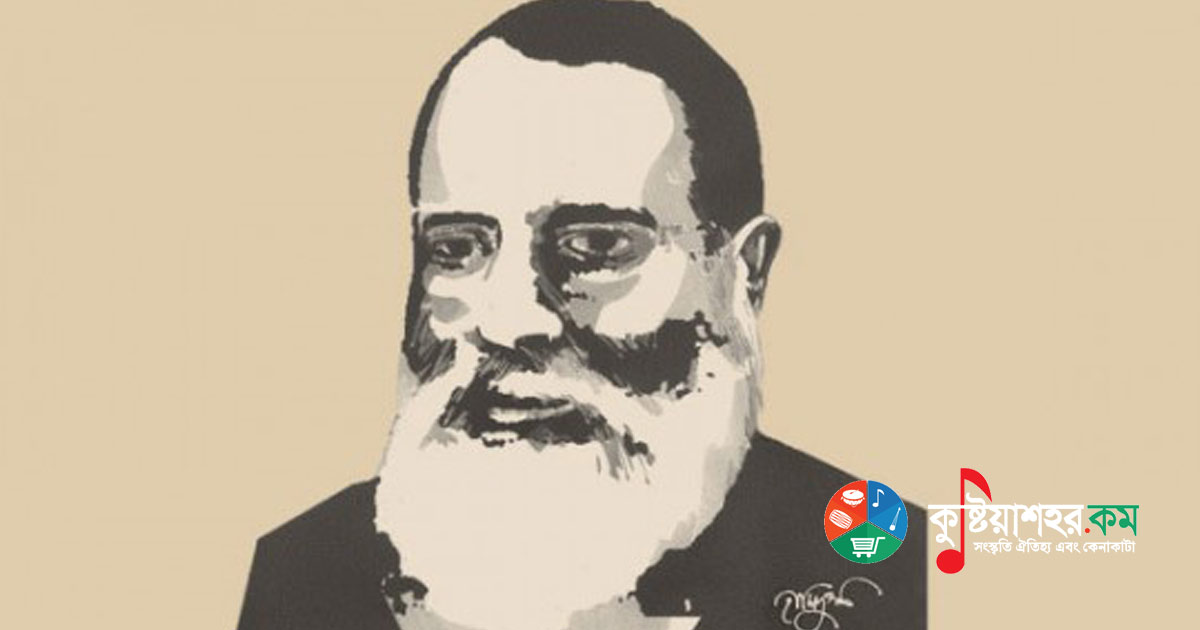
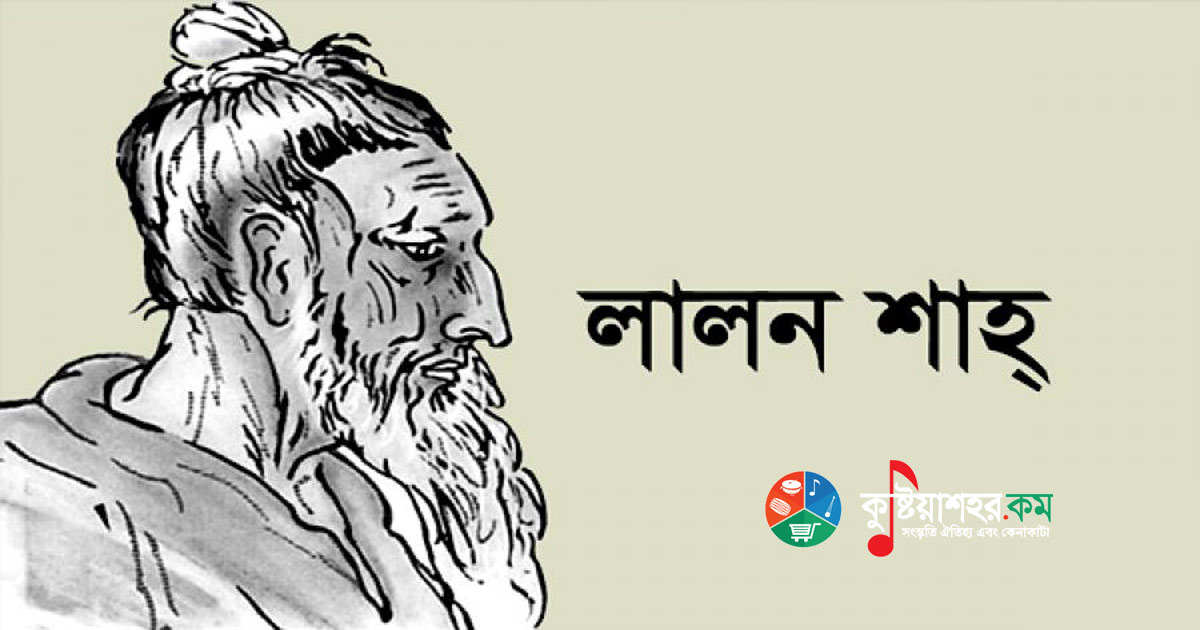
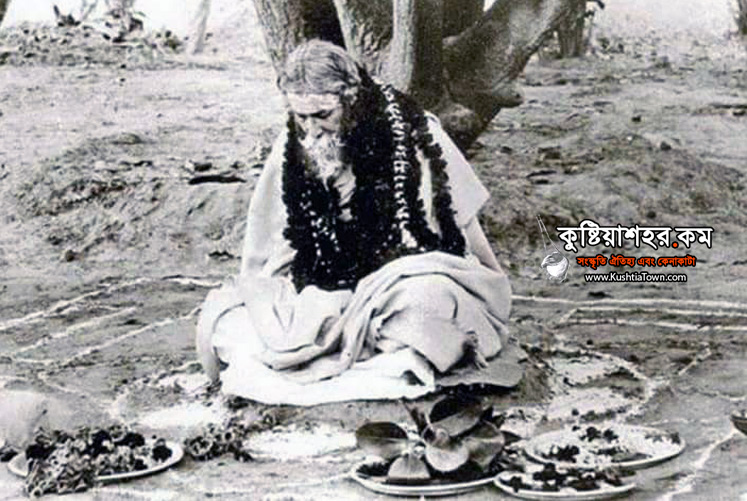
Fakir Lalon. He was a poet, an aul-baul and a philosopher. A philosopher of humanism. All of this together made up the whole of Lalon. There is now an attempt to tear that Lalon to pieces, and it has been going on since Partition. After Bangladesh emerged as a state, the fakirs and Lalon devotees of the two Bengals had thought that the practice of Lalon's philosophy would now grow. But no; day by day Lalon has become a special issue for the brokers of religion and politics as well. Lalon is now torn into three pieces: Lalon of the 'Muslim' community, Lalon the 'secular', and Lalon 'a commodity to be bought and sold'. In this situation, if one wants to know how Lalon's followers and devotees are still practising Lalon, it will not do to go to Birbhum, Nadia or Murshidabad. One has to go to the other side. To Bangladesh. To Cheuria in Kushtia. To Lalon's akhra. Lalon is not there. To some the akhra has become 'Lalon Dham'; to others 'Lalon Mazar'. Cheuria remains to this day one of the great pilgrimage sites for the auls, bauls and fakirs of the two Bengals. Ignoring the cold eyes of the religious and political bosses, fakirs reach Cheuria with an ektara in hand, quite at ease. On that road, at times, some fakir's blood is shed. Yes, even today innocent fakirs with an ektara in hand are under attack in many places of Bangladesh. But the practice of Lalon has not stopped. In the old style as well as in today's style, lakhs of people still sing Lalon's songs, and crores of people listen.
Joy Guru
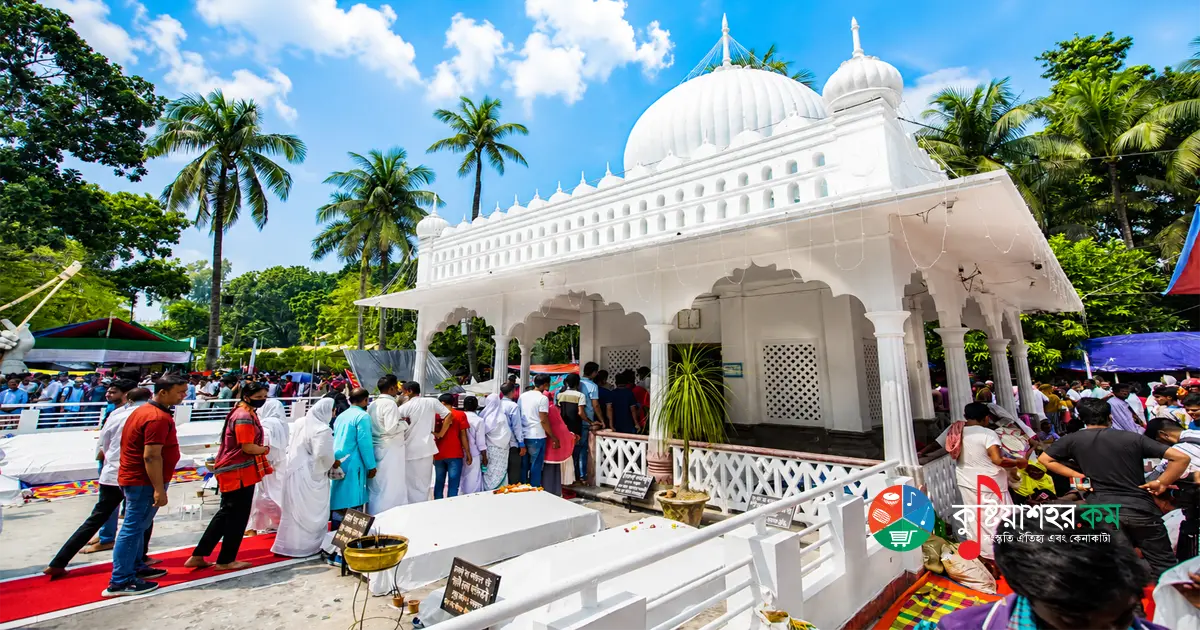
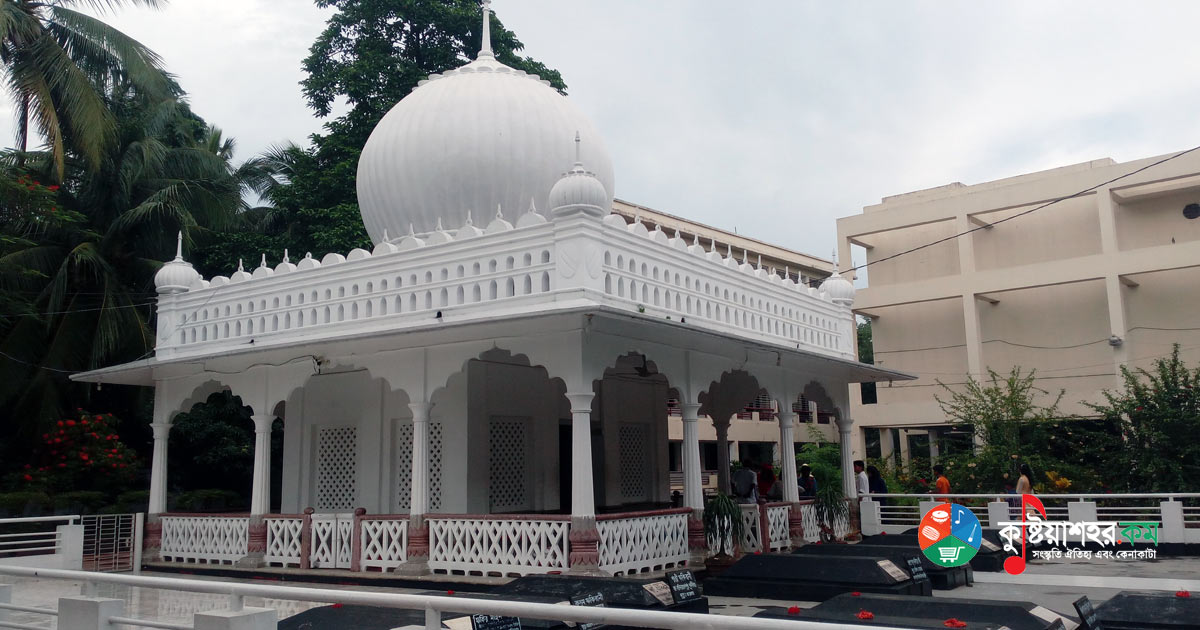
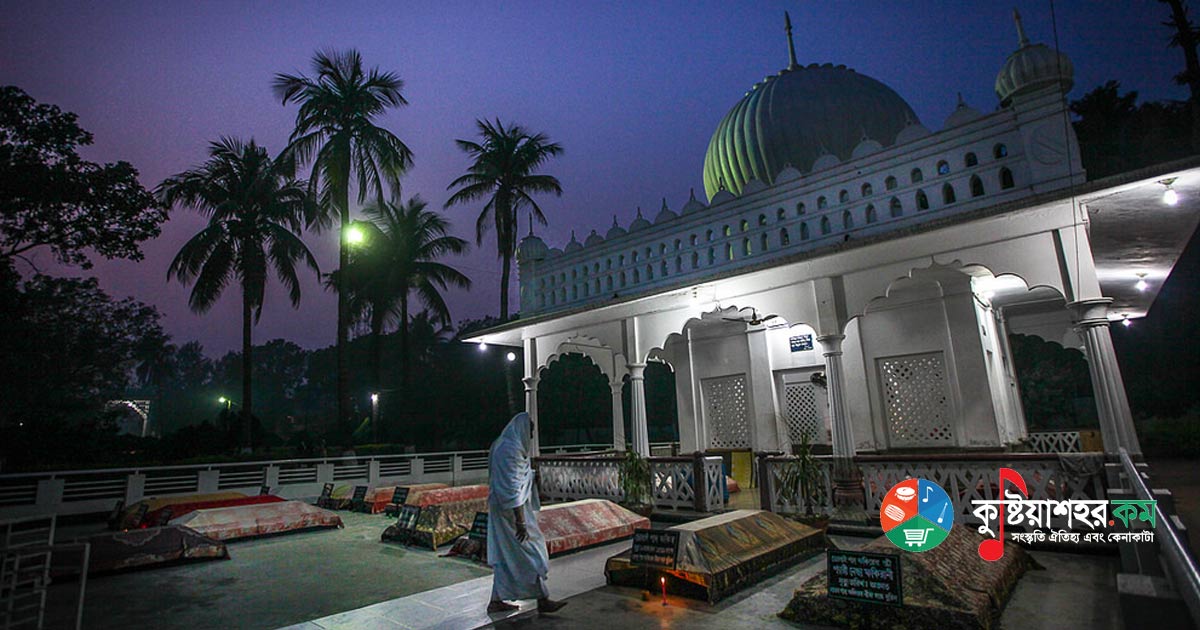
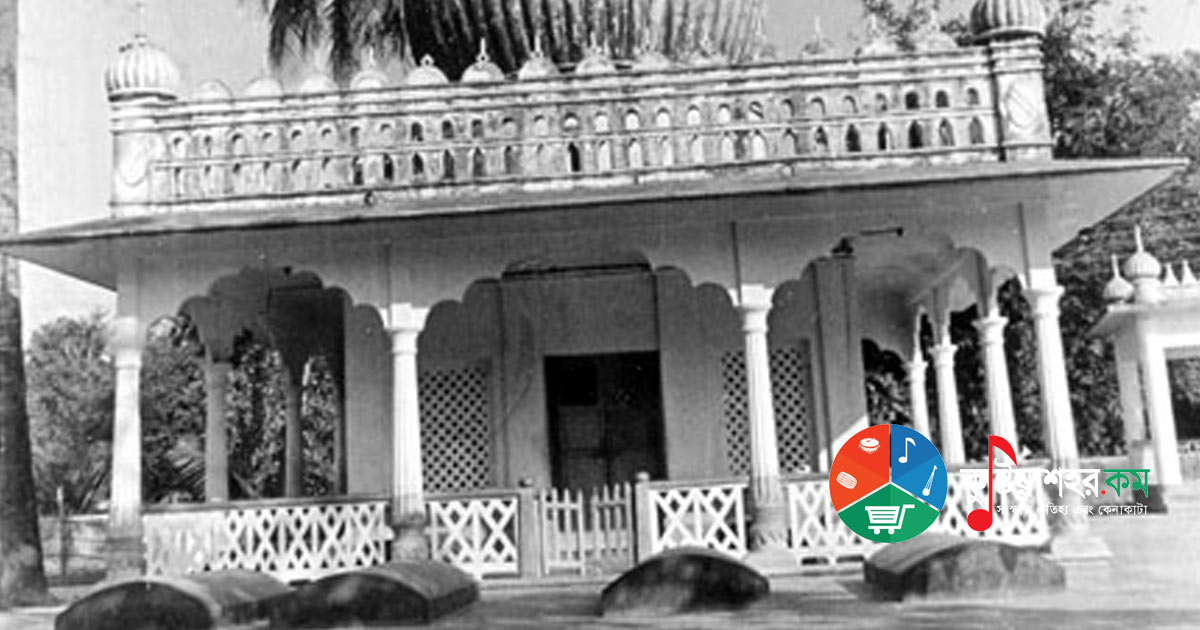
At Cheuria, Lalon lies beneath the earth. That spot is Lalon's dham, though it is labelled as a mazar. For everyone other than the fakirs of the two Bengals, the identity of Lalon Dham today is a mazar. Even if at a slow beat, a place for Lalon is being made beside Rabindranath and Nazrul in the drawing rooms of educated Bengalis. The educated Bengali today feels that without Lalon one cannot be a complete Bengali. Fakir Rahman Shah of the Lalon Sangeet Charcha O Gobeshona Kendra (Lalon Song Practice and Research Centre) thinks so. Without any pretence he says: 'Instead of caring for Lalon, some influential quarters want to use Lalon for their own ends. We sadhus are firmly against this. But who listens to us!' In his view, Lalon sang of the Gita, the Quran and the Tripitaka. Lalon belongs neither to the Hindus, nor to the Muslims, nor to the Buddhists or any other faith. While this conversation was going on at the Lalon Sangeet Charcha O Gobeshona Kendra in Kushtia, Al Amin, a lawyer of the Supreme Court of Bangladesh, looked towards Rahman Fakir and entered the room saying 'Joy Guru' with folded hands. Gently stroking his white beard, the fakir said: 'Because of the kind of words used in Lalon Sai's songs - folding the hands in salutation in the presentation, saying Joy Guru with folded hands, or not eating meat of any kind - many Muslims believe that Lalon's songs mean the propagation of Hindutva. That is not right at all.' A large portion of Hindus too, on these very grounds, believes that Lalon is theirs. That thinking is equally improper. In the fakir's words: 'When we meet someone we say Joy Guru instead of Salam Alekum or Namaskar; many dislike that too. Lalon Sai spoke of people in his songs. Lalon Sai spoke, in his songs, of the lives of the poor, the uneducated, working people.' There is no talk of any particular religion in the words of Lalon Sai's songs. Rahman Fakir says: 'Now educated people are listening to Lalon's songs. Earlier, apart from those at the bottom of society, nobody wanted even to listen to Lalon's songs, let alone sing them.' Now they do - for their own sake. As I said, suddenly the Bengali has begun to feel that a full Bengali cannot be made without Lalon. But Rahman Fakir did not forget to point out that in reality none of this brings any benefit to Lalon's philosophy.
Lalon in the band
Smoke rises on a half-dark stage. Faint rays of red, blue and yellow light wander across the stage. Suddenly, together with the synthesizer, the drums strike up their dum-dum. The focus of light falls on a guitarist with a face like a stormy crow. Suddenly all the instruments fall silent. In a high pitch the guitarist sings 'Manush bhole manush hobi' - if man wishes, he becomes a true human being. Hearing it, the few hundred young listeners gathered in the hall awaken, as it were, with a strange cry. Then, joining the beat one by one, the other instruments strike up. Clapping their hands to the rhythm of the song and music, the audience finds itself singing along. Today's young boys are singing Lalon's songs - in their own way. Over this there is a mild quarrel between the young and the old. One group feels that singing Lalon's songs through bands, with drums, guitars, synthesizers and mouth organ, means distorting Lalon's music.
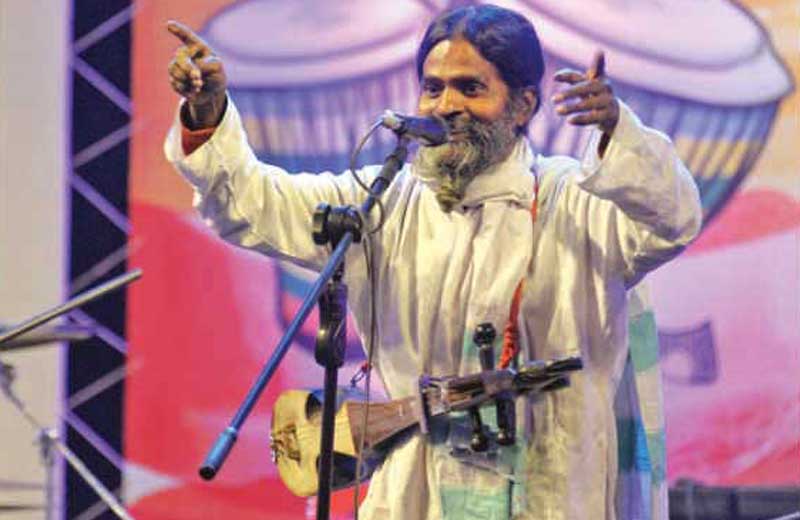
The young ones are even breaking into fragments the tunes with which the fakirs sing Lalon Sai's songs. But the younger generation's Saida Habiba or Mustafir Rahman Khokon feels that, whatever the style, the message of Lalon's songs is reaching more and more people. Today songs are sung at Lalon's shrine itself, with harmonium, tabla, khanjani, jypsy and flute for accompaniment. Playing the ektara and dotara, Habiba says: 'Fakir Lalon sang with the ektara alone. Not only he; the other fakirs too sang playing the ektara. Alongside would be the duggi and the mandira, or the premjuri. To keep pace with the times, if one can sing Lalon's songs with harmonium and tabla sitting at Lalon's mazar, then I do not think singing in a band is any wrong.' Habiba points out that Bengali bands are carrying Lalon's songs to the young generation - that too should be pondered. In this quarrel between the young and the old Lalon devotees, the elderly fakir Rahman Shah has, however, taken the side of the young. Rahman Fakir's straight talk: 'There is no conflict between the main stream and today's presentation. Rather, it is the young boys and girls who are making Lalon's music suited to the age. If a boy who plays the tabla is drawn to Lalon Sai, there is nothing to wonder at that he will want to bring out Lalon's beats on the tabla! One who plays the flute will play the fakir's wistful tunes on the flute.' Rahman Shah Fakir wants to give the new generation some encouragement. In his words: 'It is as if they have found Lalon Sai afresh.'
No grammar exists
How many songs did Lalon sing?
Some say a few hundred, some say a thousand. Many say that, since there is no notation of Lalon Sai's songs, the songs are being lost. Many Lalon devotees voice this fear. At the initiative of the Lalon Academy, a few composers have written notations of some songs. But Fakir Mohammad Ali Shah, khadem of the Lalon Mazar, does not consider this the way. Lalon Sai's songs will live on in the throats of the fakirs, says Fakir Mohammad Ali Shah: 'This is how Lalon Sai's songs have survived all this time. For that, no notation was needed.' Fakir Mohammad Ali Shah also believes there is no notation because in the past it was the illiterate who sang Lalon's songs. While Fakir Rahman Shah of the Lalon Sangeet Charcha O Gobeshona Kendra encourages this generation's renditions of Lalon, Fakir Mohammad Ali Shah of the Lalon Mazar refuses to accept them. He said: 'Lalon's music is drifting away from the main stream. The original tunes are no longer sung.'
The words of Lalon - which are a philosophy - are being drowned by the sound of instruments. Now, because the words of the songs are not pronounced properly, in many cases the meaning of Lalon's songs is changing. To give an example, he sang two lines of a song: 'Khachar bhitor ochin pakhi komone ashe jai' - the unknown bird in the cage, through which door does it come and go. Now many fakirs too say 'kemone' instead of 'komone' in the song. But that changes the meaning. Fakir Mohammad Ali Shah explained that 'komone' means 'through which way', while 'kemone' means 'in what manner'. Even in the way the fakirs of West Bengal sing Lalon's songs, variations of language are often seen, he says: 'Of the roughly thousand songs of Lalon Sai, only about a hundred are sung by most bauls or fakirs. As a result, the rest of the songs are gradually being erased.' So today, while some people are insisting on preparing notations of Fakir Lalon's songs, Fakir Mohammad Ali Shah refuses outright to accept it.
'To speak the truth is a hindrance; to speak a lie is forbidden'
By now, what has been learned would make it seem natural to think that everything is fine. But no; talking to more than one fakir at Lalon's dham, one learns that a social barrier exists. Because Lalon's music is still a religious movement, obstacles often come from the direction of the preachers of other faiths - from Lalon's own time. That continues even today. Recently attacks on fakirs have increased in various parts of Bangladesh. In some places their hair and beards are forcibly shaved off; elsewhere a decree is issued over them about how the beard is to be kept. 'Some religious leaders look at us with eyes of hatred. But we respect all religions,' said Fakir Mohammad Ali Shah. Not once did he say what kind of persecution is being inflicted on fakirs. But talking to Lalon devotees one learns that even in this modern age, medieval barbarity is being brought down on fakirs in many villages. One political party of Bangladesh has taken great pains to stamp Lalon as a Muslim; another political party is promoting Lalon as a symbol of secularism. 'Actually it is votes. For the sake of votes Lalon is being projected in one image after another,' said a follower of Lalon. In his words: 'You know there is another group that does nothing but business with Lalon. Various funds, domestic and foreign, come to the Lalon Academy. In the name of promoting Lalon's music abroad, many take a trip abroad every year.'
Source: Anandabazar Patrika