বাংলা
 English
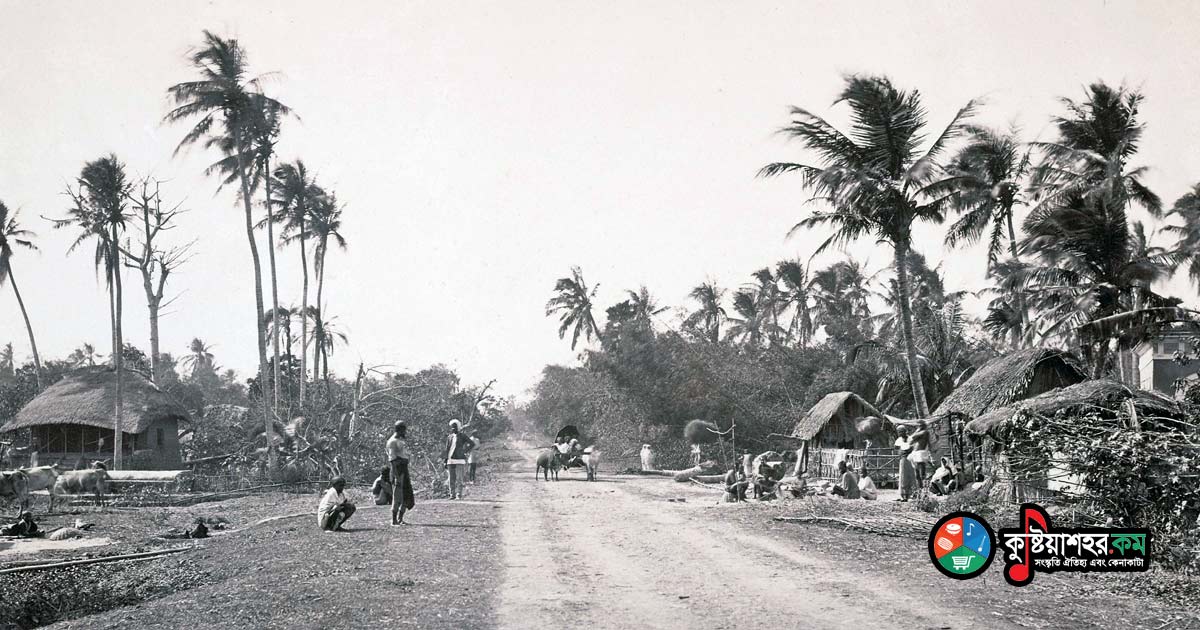
Kumarkhali — the commercial port of 'Mulk Fatehabad' during the imperial and Nawabi era, a centre of trade and commerce of the East India Company and the Victorian age, then a sub-divisional town of the then Pabna district and from 1871 AD a thana town of present-day Kushtia district, famous for its railway station and its cloth market. In 1861 AD a municipality was established here.
In the imperial and Nawabi era Kumarkhali was specially mentioned in the accounts of many foreign travellers. Large quantities of rasson, fine cloth, rice, salt and the like were exported from here abroad. These accounts are known from the travel records of Ralph Fitch, Tavernier, Bolts and other travellers.
The fame of Kumarkhali's textile industry in particular was known across the world. Kumarkhali of that age was famed for its 'Asman Tara' (Sky Star) and 'Mayur Pekhom' (Peacock Plume) sarees and the cloth 'Nojonsukh'. The boats built here were also widely renowned.
European merchants had been trading here from long before. During Mir Jafar's Nawabi era they built permanent rasson factories here. At present, adjoining the wall of the Kumarkhali railway station, there is a walled Christian cemetery. On the stone slab of the cemetery's most recent grave, 1794 AD and the name of the deceased, Miss Elizabeth Hanna-Norton, are inscribed.
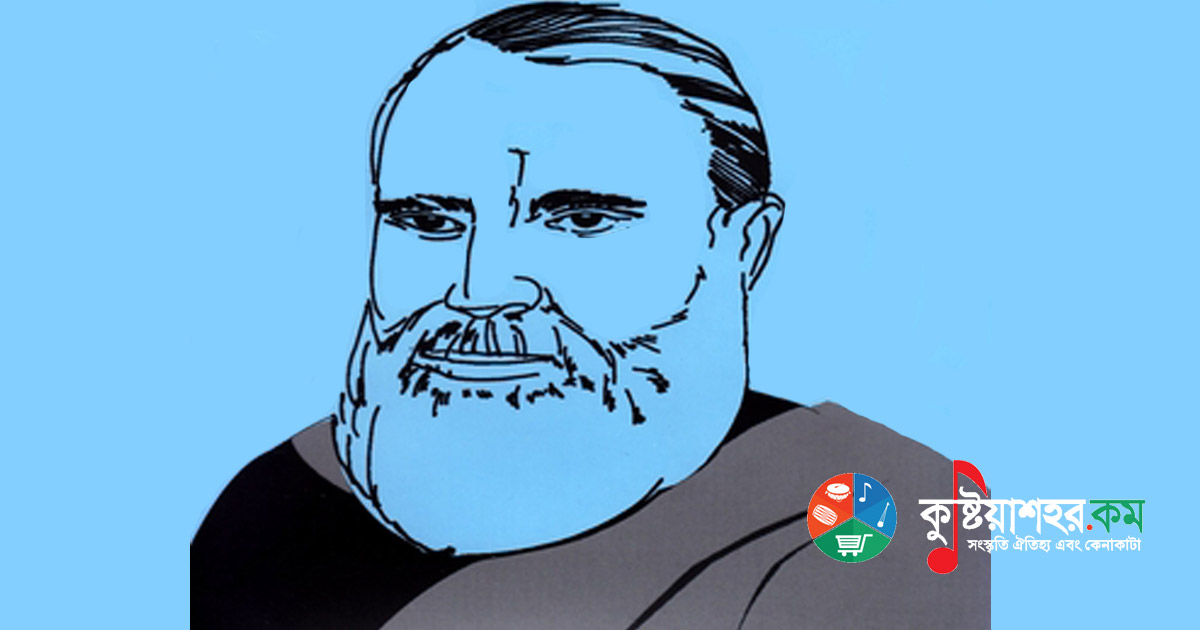
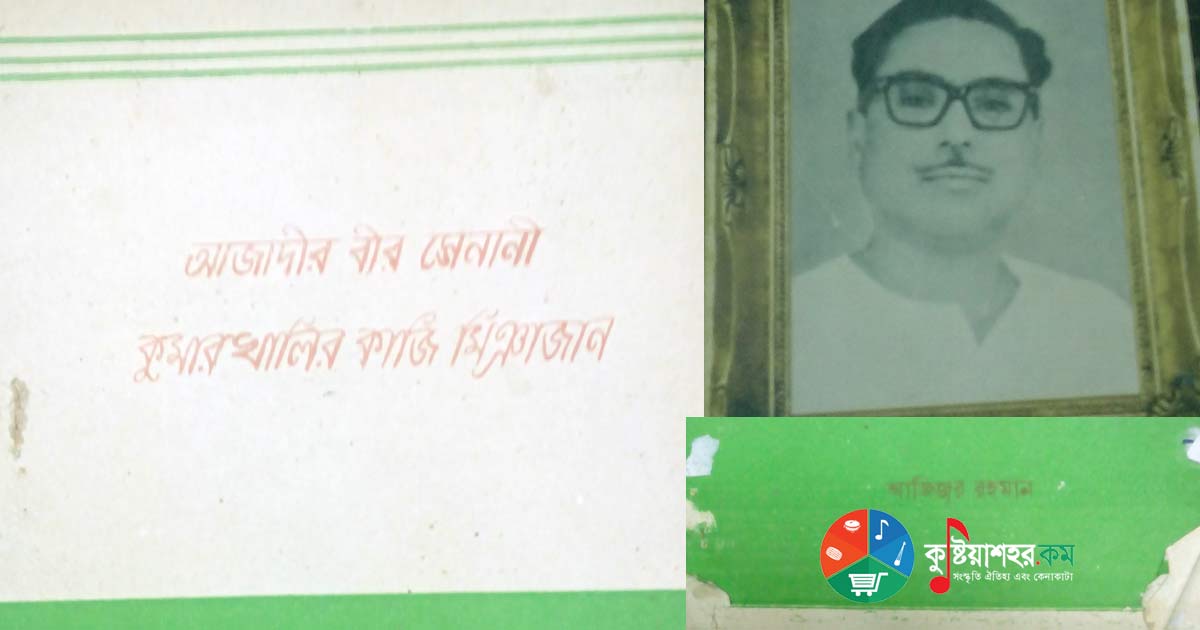
Towards the end of the eighteenth century, or around the first decade of the nineteenth, Kazi Miazan was born into a respectable family of Durgapur adjoining the town of Kumarkhali. Many also called him Miazan Kazi. Most probably he was born in 1809 or 1810 AD.
As far as is known, he received his early education at a maktab in childhood and boyhood. According to some, at home. Calm, steady and of few words, in character he possessed far more distinctiveness than his contemporaries. In his very boyhood he became skilled in the lathi, the sharaki, the sword, magic and the handling of the gun. The events of the times and the family circumstances shaped his mind.
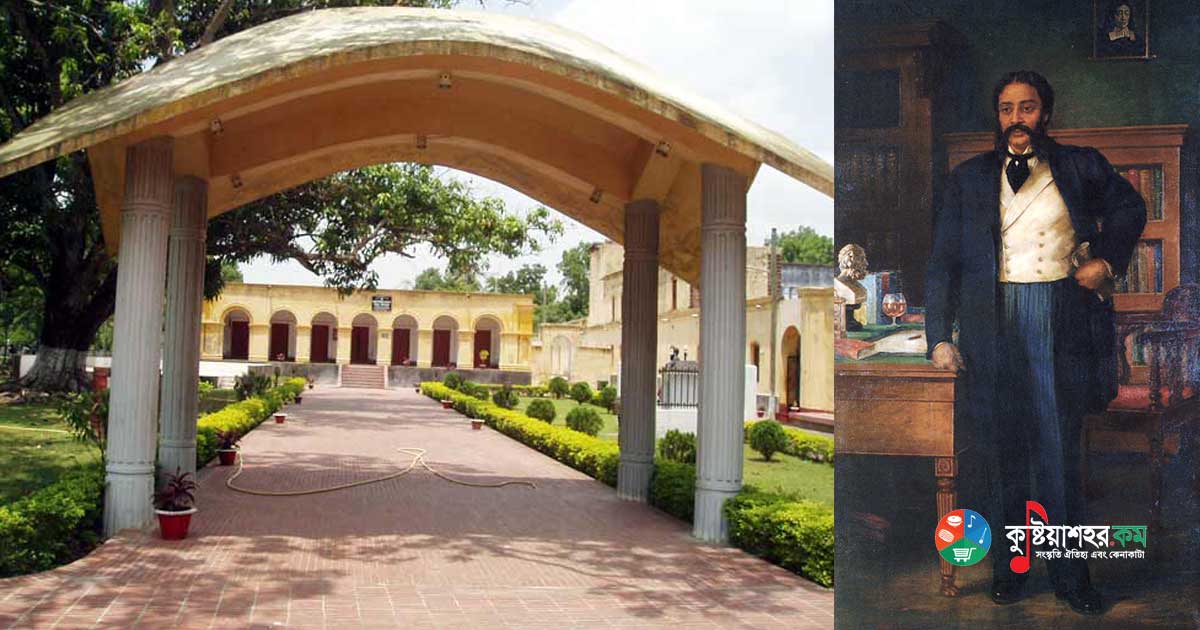
In 1800 AD Prince Dwarkanath Tagore bought the Birahimpur pargana zamindari of this region and purchased the indigo factory at Shilaidaha under it belonging to one European named Mr. Shelly. It was at that kuthi bari of Shilaidaha that the kachari of the Birahimpur zamindari was set up in its time.
At this time Islamic rites and customs were practised among very few Muslims. The rest were Muslims in name only. Their observance of conduct and custom could hardly be called uniform. They imitated the Hindus. This is mentioned in the editorial of a serial essay titled 'Bharatbashi Musalman' (Muslims of India) in the paper 'Grambarta Prakashika', published from Kumarkhali and edited by Kangal Harinath Majumdar.
A Muslim of one village under the Thakur zamindari defied the kachari's written decree and slaughtered a cow, suffered severe persecution, and his neighbours too received ample punishment. Centred on this incident, the Muslim tenants of the whole Kumarkhali and Khoksa area rose in rebellion against the Thakur zamindars. The chief leadership of this movement was taken by a gentleman of the Rumi family of Khoksa. Kazi Miazan's family of Kumarkhali and many other Muslims were associated with this great movement.
Some time after this incident, the zamindar of Pangsha under present-day Faridpur, Bhaibabu, and other Hindu zamindars, following the path of Krishdeb Rai, zamindar of Pura, began imposing taxes on the Muslims' prayer mats and trying to change Muslim names. The compulsory subscriptions, bhet and mathot levied at puja festivals — these were there anyway.
Haji Shariat Ullah (1786–1831) of Bahadurpur under Faridpur, lying to the east of Kumarkhali, and Titumir (Mir Nisar Ali) (1782–1831) of Narikelbaria in Barasat to the west, began a firm protest against this oppression and a struggle with their people.
At this time Syed Ahmad Shaheed (1786–1831) had sent organisers almost everywhere in India and had himself begun jihad against the Sikhs and the English. From these regions — and especially from Kumarkhali — mujahid recruits and money had to be collected and sent to him.
One of Syed Ahmad Shaheed's khalifas, Maulana Mohammad Ishaq, was a resident of this very region, that is, of Bajitpur under Meherpur sub-division of Nadia district (present-day Kushtia).
Out of this stream of events and these surroundings were shaped Kazi Miazan's youth and his future revolutionary life.
After Major Rennell's survey of 1777–78 AD, Pabna district was formed in 1878 AD from various thanas of the Jessore, Kushtia (old Kushtia) and Faridpur districts, following the district Sir John Shore had formed in 1784 AD. At that time Kumarkhali came under Pabna.
Wahhabi activity in these regions began from the beginning of the nineteenth century. Later the main liaison of this movement was established with Swapnara of Rajshahi, Rangpur, Patna and Sitana.
Then, centred on Kumarkhali, this activity gradually grew in the regions of present-day Kushtia district such as Bheramara, Alamdanga and Mirpur.
Within a short while, after the fall of Titumir (Mir Nisar Ali) in 1831, the Wahhabis of the places mentioned above, as in other regions, turned their aim to the jihad at the frontier. As far as is known, Kazi Miazan was entrusted with the duty of collecting mujahids and money from these regions and sending them to the frontier. These mujahids, split into small bands, travelled on foot in pilgrims' guise by way of Rangpur or Malda to Patna. All this work was carried out with great skill and secrecy.
An event of somewhat later than this period is especially noteworthy here. The atrocities of the indigo planters of the kuthis around Kumarkhali — Dhoparakol, Hijla Bat, Konthamajra, Kumidpur, Kushtia (old), Jagati, Chechua, Harinakundu, Madhupur, Shalghar Madhua, Noapara and others — reached their extreme. The people too began to organise. The Wahhabis were behind this as well. Kazi Miazan gave ample support.
Many of the kuthis mentioned above were established between 1795 and 1830 AD, and many more even afterwards. Shortly before the Sepoy Mutiny of 1857 AD, the oppression and persecution of these indigo planters had made the people rebellious.
During Kazi Miazan's lifetime events of this kind, one after another, raised wave upon wave. From none of them did he ever keep himself aloof.
The Great Mutiny of 1857 and the events that followed it made his mind still more rebellious. The accounts of the activities of the anti-British elements of that time in Jessore, Barasat and the then Nadia Division are specially recorded in the Nadia District Gazetteer written by Mr. J. P. C. Garrett, I.C.S.
But an unwritten, terrible event which even today spreads sorrowfully from everyone's mouth is the 'Galaydari Ghat' near Memnagar Kapasdanga and its naming. On mere suspicion and conjecture numerous Muslims were hanged from the branches of trees on both sides of the road. The corpses hung like this for a long time; they were not taken down, so that everyone else might see their fate and be afraid. Their crime was saying prayers, wearing a cap and a lungi — therefore Wahhabi, therefore rebel, therefore punishable. These punishers were the European kuthials of Kapasdanga belonging to the 'Kachikata Concern', invested with the powers of a magistrate.
Close to Kapasdanga lies Damurhuda. In the same era Rangalal Bandyopadhyay, the first dawn of Hindu nationalism, wrote here his tales 'Karmadevi' and 'Padmini'.
This Kapasdanga and Damurhuda now belong to the Chuadanga sub-division of Kushtia district. Earlier there was a munsif magistrate court here. At that time Kazi Miazan's home Kumarkhali, and Hindu society everywhere, availing all kinds of opportunities and advantages thanks to the government's watchful favour, had built their community into a well-organised one.
In 1854-55-56 a high English school, a girls' school, a library and the Grambarta Prakashika press were established in Kumarkhali. Before this, the Grambanga Prakashika paper used to be printed in Calcutta at the Girish Bidyalay Press.
Around 1863 Kazi Miazan was busy preparing another war campaign of the mujahid force. At that time a relative of his came to know something of the matter by chance and, lured by promotion, began informing secretly. It is heard that he worked in the police department.
Then in that frontier war the English commander General Chamberlain was defeated along with his troops and severely wounded. From the 'Tawarikh-i-Ajib' it is known that this battle took place on 11 December 1863.
On that day Gajan Khan of Karnal, a police employee disguised as a Pathan, took on the identity of a mujahid and, alongside the mujahid force of Mohammad Jafar, a government employee of Thaneshwar, Gajan Khan informed the authorities at Ambala.
That very night at its end Captain Pearson searched Mohammad Jafar Khan's person and house and seized the secret documents. Along with the others, at some point a Bengali adolescent was also arrested. His name was Abbas.
Right after this Captain Pearson at once arrested many people of Bihar and Bengal. Among them Kazi Miazan was one. It is heard that at that time he had undertaken preparations to go to the frontier. At the very moment before it, he was arrested.
At Ambala prison every kind of torment that could be devised for a human being was invented. To keep them alive they were given bread of millet mixed with dust and a little water; to wear, a blanket kurta; on their hands, handcuffs; on their feet, fetters. On top of this, an iron rod was fastened lengthwise to the handcuffs and fetters. Because of this there was no way to stretch out and lie down except somehow to sit doubled up.
They were kept separately in dark, cramped 'sheds'. Every single day unbearable physical force, charming temptations, cash money, khasmahal land, good government jobs, allowances and a promise not to torment their families were held out to them.
During the trial, for refusing to give false witness, Abbas died under Captain Pearson's merciless beating. Like the identity of that Bengali adolescent mujahid, the identities of countless more Bengali mujahids remain unknown to us even today.
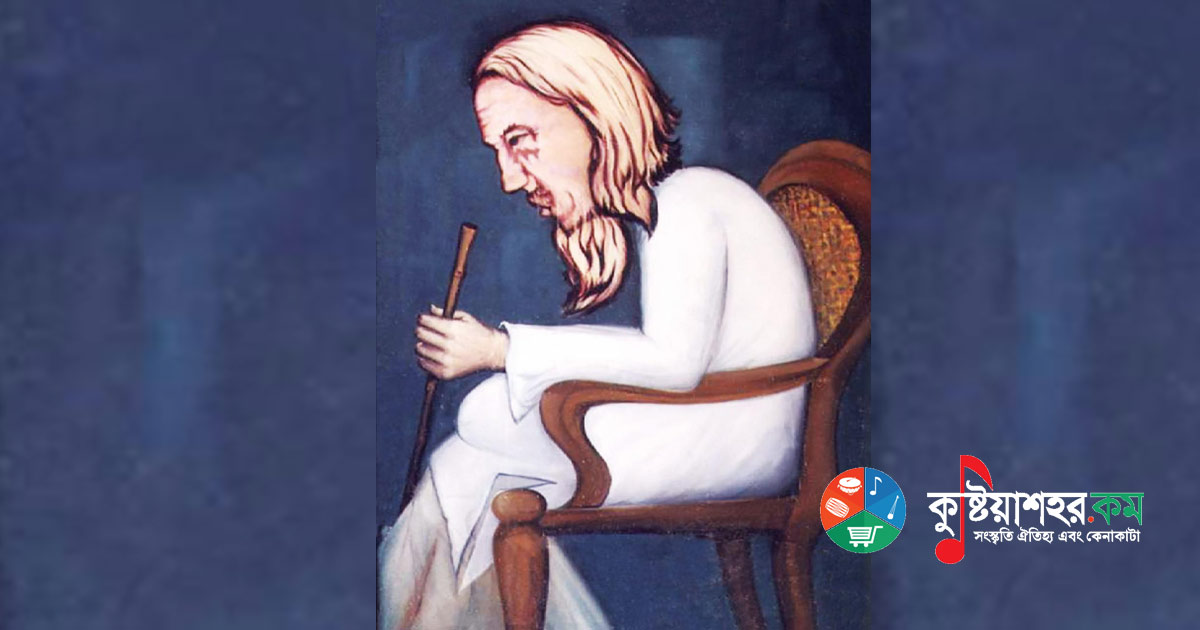
Around the middle of 1864 AD the hero of freedom, Kazi Miazan of Kumarkhali, was moved to the jail hospital. When he recovered somewhat in the hospital he would sometimes visit the others and inquire after their welfare.
Mohammad Jafar Thaneshwari wrote in his 'Tawarikh-i-Ajib': one day — or was it two days — before his death he had seen in a dream a throne descend from the upper world, take him up, and ascend again to the upper world.
The very next day Kazi Miazan passed away. He was buried in the cemetery of the Ambala jail itself.
These wholly-dedicated mujahids wanted a sky filled with free light, and free air. They wanted an independent country — where their lives would be simple and beautiful.
Today's free Pakistan is their dream, their devotion — as much as that of present-day Bangladesh.
Reference books and periodicals:-
- Nadia Gazetteer : J. P. Garrett, I.C.S.
- History of Pabna District : Radha Raman Saha.
- Nadia Kahini : Kumud Nath Malik.
- History of Jessore-Khulna : Satish Chandra Mitra.
- Sekaler Katha in Newspapers : Brajendranath Bandyopadhyay.
- Udasi Pathiker Moner Katha : Mir Mosharraf Hossain.
- Indian Musalmans (Hunter) : translated by Justice Abdul Maudud, Bangla Academy.
- Tawarikh-i-Ajib : Thaneshwari, Bangla Academy translation.
- Mir Mans : Munier Chowdhury, Bangla Academy.
- Probondho Bichitra : Syed Murtaza Ali, Bangla Academy.
- Mahe Nao, Pakistan Publications.
- Grambarta Prakashika : 1874.
- Pother Dishari : Akbar Uddin.
- Muslim Life in Modern Narrative Poetry : Mohammad Maniruzzaman, Dhaka University.
The essay was written by:- Poet Azizur Rahman.
Acknowledgements:- Md. Shamsur Rahman (the poet's second son), Md. Shafiqur Rahman Lal (the poet's grandson).
Collected by:- Md. Salekuddin Sheikh Suman.