বাংলা
 English
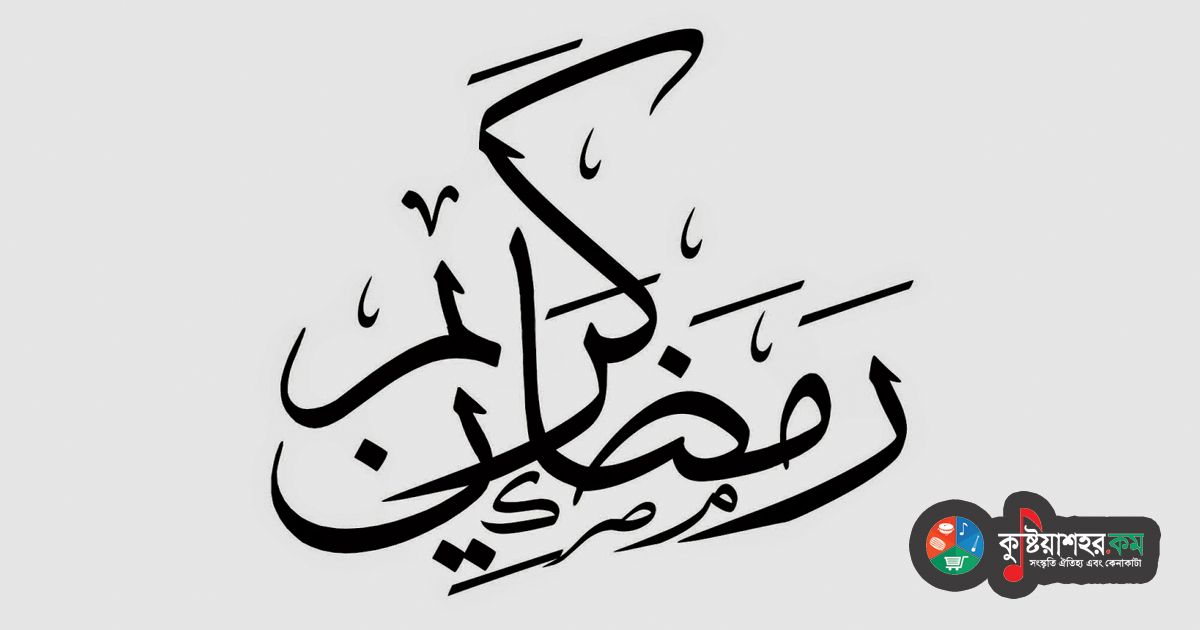
Welcome, O Mahe Ramadan. The holy month of Ramadan is the month of drawing near to Almighty Allah. In this month a person gets the opportunity to seek forgiveness from his sins, and the true servant of Allah makes use of this opportunity, becomes free from all past sins and impurities, and hastens towards building a beautiful future.
The Messenger of Allah (SAW) said: everything has its Zakat, and the Zakat of the body is keeping the fast.
The Prophet Hazrat Muhammad (SAW) said: keep the fast, so that you may remain healthy.
Of the 365 days of the lunar year, the days of Ramadan are the best. This month is a month of welfare. It is the month in which the Quran was revealed, the month of mercy, blessings, forgiveness (Maghfirat) and salvation (Najat). It is the month of training in Taqwa and restraint. It is the month of patience. This month frees life from every sin and impurity. It is the month of attaining nearness to Allah and His good pleasure. Allah Pak declares in the Holy Book: the month of Ramadan — in this month the Quran was sent down as a guide for mankind, a clear proof of the right path and a distinguisher of truth from falsehood. So whoever of you finds this month should observe Siyam, that is, the fast, in it. (Surah Al-Baqarah)
Ramadan comes from the Arabic root 'Ramz'. Two meanings of this root are found in Arabic lexicons and Arabic literature: one is burning or scorching, and the other is the first rain of the year in the land of the Arabs. The month was named Ramadan because when the name was first given, the heat was intense; for that reason this month was named Ramadan. This holy month is called Ramadan also because in this month Allah Pak, by His own mercy, burns and consumes all sins, so that a person may gain a new life.
About this Allah Pak announces in the Quranul Karim: O you who believe, fasting has been made obligatory upon you, as it was made obligatory upon those before you, so that you may attain Taqwa. It is the fasting of a few fixed days. If anyone of you is ill or on a journey, he should make up the same number on other days. And those who have the strength to fast (yet do not fast) should give Fidiyah — the Fidiyah of one fast is the feeding of one poor person (miskin). And whoever willingly and gladly does some additional good deed, it is better for him. But if you have understood the matter rightly, then keeping the fast is better for you. (Surah Al-Baqarah)
The consequence of not fasting without a valid excuse: It is narrated from Hazrat Abu Hurayrah (RA) that the Prophet (SAW) said: whoever deliberately breaks a single fast of Ramadan without a valid excuse, the fasting of an entire lifetime at another time will not be its equivalent.
Upon whom fasting is obligatory: Keeping the fast of Mahe Ramadan is obligatory upon all Muslims who are of age, in good health, and not travelling. The conditions for a fast to be valid are: 1. making the intention (niyyat); 2. women being free from menstruation, that is, Hayz and Nifas; and 3. staying away from the matters that break the fast.
Taking Sahri: The meal taken in the latter part of the night, before true dawn (Subhe Sadiq), with the intention of fasting, is called Sahri. Taking Sahri is Sunnah. The Prophet (SAW) said: take Sahri, for there is blessing in Sahri.
Iftar: Breaking the fast by taking food immediately after sunset, following a full day of fasting, is called Iftar. Breaking the fast with dates is Sunnah; if dates are not available, breaking the fast with water is Mustahab. Breaking the fast without delay after sunset is Sunnah.
Circumstances in which breaking the fast is permitted and Qaza must be made later:
- If illness removes the strength to fast, or there is fear that the illness will worsen or that recovery will be delayed, breaking the fast is permitted.
- If a pregnant woman or a nursing mother fasts, and there is fear of harm to her life or her child's life, or fear that she may fall ill, breaking the fast is permitted for her.
- A traveller has permission not to fast, or to break the fast.
Circumstances in which the fast is broken and both Qaza and Kaffarah become obligatory:
- Having sexual intercourse.
- Taking food or drink — whether any food item or any medicine.
- Swallowing a raindrop that falls into the mouth, done deliberately.
- Smoking deliberately.
- Swallowing a grain of wheat or anything of that size.
Circumstances in which the fast is broken and only Qaza becomes obligatory:
- Taking food or drink because of some physical excuse; likewise, after eating or drinking by mistake, deliberately consuming something again, believing the fast has already been broken.
- Using medicine inside the nose or the ear.
- Introducing medicine through the anus.
- Swallowing something that is not food — such as a date stone, cotton, paper, iron, pebbles, earth or pieces of these and the like.
- Water entering the throat while gargling.
- Putting a drop of oil or a drop of water into the ear.
- Eating or drinking something after true dawn has begun, believing the night had not ended, or having intercourse with one's wife.
- Removing something the size of a chickpea from between the teeth and eating it.
Circumstances in which the fast becomes Makruh:
- Tasting or chewing something without need.
- Backbiting and slandering.
- Quarrelling and fighting.
- Remaining in a state of impurity for the whole day.
- Brushing the teeth with toothpaste, Miswak paste or charcoal.
- Collecting saliva in the mouth and then swallowing it.
Immense importance has been attached to the practice and command of the Prophet (SAW) regarding the fast of Mahe Ramadan being obligatory. It is narrated from Hazrat Talha ibn Ubaydullah (RA): he said, one day a Bedouin came to the Prophet (SAW); the hair of his head was utterly dishevelled. He said: O Messenger of Allah (SAW), tell me how many prayers Allah has made obligatory upon me. He said: five prayers — but if you offer Nafl prayers, that is a separate matter; that is, their reward will be granted in a different way. The man said: tell me how many fasts Allah Pak has made obligatory upon me. The Prophet (SAW) said: the fasts of the entire month of Ramadan are obligatory — but if you keep Nafl fasts, that will be a separate matter. The man said again: tell me how much Zakat Allah has made obligatory upon me. Then the beloved Prophet (SAW) informed him of the laws and regulations of Islam, and he said: by that Great Being Who has honoured you with the true law! Whatever Almighty Allah Pak has made obligatory upon me, I will do neither more nor less than that. (Bukhari Sharif)
Hazrat Abu Hurayrah (RA) says: the Prophet (SAW) said, when the month of Ramadan comes, the gates of the heaven are opened. Another narration states that the gates of Paradise are opened and the gates of Hell are closed, the devils are chained and the gates of mercy are opened. (Bukhari and Muslim) The fast of Ramadan burns to ashes all of a person's sins and sinful tendencies, injustice and dishonest mentality, beastly desires and every impurity of the soul, and purifies the faster. Through the worship of this month the fasters attain Allah's pleasure, Allah's forgiveness, Allah's protection, Allah's love and Allah's bounty. May Allah grant us the ability to fulfil the complete rights of our fasting and to observe the fasts of the days of Ramadan.