বাংলা
 English
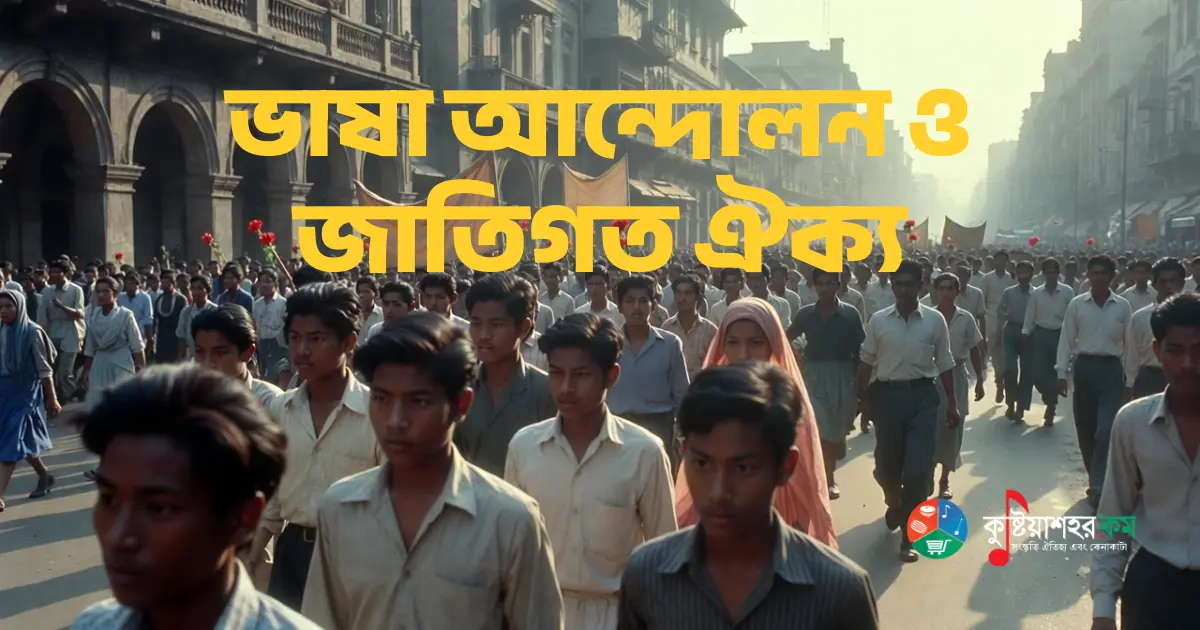
The history of Bangladesh is essentially a history of struggle. Colonial rule, Pakistani discrimination, autocracy, the restoration of democracy - at every stage the people have taken to the streets. But the astonishing reality is that in this long history the people of Bangladesh have never been able to reach a lasting and universal unity on the question of religion, education, society or politics. Rather, division has grown stronger again and again.
The only exception was the Language Movement of 1952, in which the Bengalis, irrespective of religion, class, political ideology and social position, united in a common consciousness.
The main research question of this essay is:
Why did the universal unity that became possible during the Language Movement never repeat itself in any other field in Bangladesh?
What Is Unity: A Theoretical Context
In the language of social science, unity means a condition in which people, despite having different identities and interests, rally together upon a common goal and a moral basis.
Unity generally depends on three conditions:
- Collective interest
- Moral legitimacy
- The opportunity of inclusive participation
If any one of these three is absent, unity becomes temporary, fragile or artificial (Bourdieu, 1977; Tilly, 2004).
Religion and Bangladesh: The Politics of Division Instead of Unity
Religion is deeply rooted in the lives of the people of Bangladesh. But religion has never been able to become the basis of universal unity here.
The Experience of the Pakistan Era
In 1947 the state of Pakistan was formed on the basis of religious identity. But within only a few years that idea of religious unity broke down. Because:
- Religion did not ensure equality
- Language and culture were disregarded
- Political power was concentrated in the hands of one side
As a result, religious identity, instead of becoming a symbol of justice for the people, became an instrument of power (Asad, 2003; Alavi, 1972).
The Limitations of Religion in Independent Bangladesh Too
Even after independence religion could never become the focal point of national unity, because:
- Religious interpretation is multidimensional and controversial
- Religion has been used politically
- Insecurity has been created among the minorities
"An identity that does not give the assurance of justice and equality cannot be the basis of long-term unity" (Ahmed, 1980).
Education and Society: The Structure of Class-Based Division
In Bangladesh the education system, instead of creating unity, has fragmented society.
Three streams of education, three kinds of society
- English medium
- Bengali medium
- Madrasa education
Although the students of these three streams live in the same state:
- The language of thought is different
- The values are different
- Even the imagination of the future is different
As a result, education, instead of being a bridge of national unity, has stood as a wall of class (Sen, 2006; Nurul Kabir, 2002).
The Results of Social Division
- The educated versus the uneducated
- The town versus the village
- The elite versus ordinary people
In society "we" has not been created; "they" has been created.
Politics: The People's Movement versus the Party's Unity
In the political history of Bangladesh there have been many mass movements - 1969, 1990, 2024. But none of them took the shape of lasting unity.
Why Political Unity Breaks Down
- Political unity lasts only until the goal is achieved
- After the attainment of power the division begins
- The leadership does not remain accountable to the people
"In Bangladesh it is the people who make the movement, but it is the parties that write history" (Guha, 1998).
This reality has turned politics, not into a place of the people's unity, but into a stage of the competition for power.
The Language Movement: Why It Is an Exception
The Language Movement is exceptional, because it was the demand of everyone's existence.
Language Was a Question of Existence
The Language Movement was not a demand for some principle or advantage. It was:
- The right to speak one's own word
- The recognition of one's own identity
- A struggle to protect cultural existence
This demand applied equally to everyone (Anisuzzaman, 1992; Badaruddin, 2005).
The Universality of Participation
Those who took part in the Language Movement:
- Students
- Workers
- Farmers
- Women
- People of the towns and villages
No one was left out, because language leaves no one out.
Leadership and Morality
The leadership of the Language Movement:
- Not for power
- Not for personal gain
- Morally acceptable
As a result the people united unconditionally.
"The Language Movement taught us - where the demand is just, unity is born of itself" (Rafiuddin Ahmed, 1980).
Comparative Analysis
| Field | Basis of unity | Actual character | Result |
| Religion | Belief and religious identity | Used politically, divided by differences of interpretation | Communalism and social division |
| Education | Acquiring knowledge and skills | English-medium, Bengali-medium and madrasa - class-based division | Social inequality and mutual distance |
| Politics | Power and party interests | The movement belongs to the people; control rests in the hands of political parties | Temporary unity, long-term division |
| Language Movement | Existence and cultural rights | Universal participation and moral leadership | Universal and lasting unity |
This comparison makes it clear - the unity of the Language Movement was structurally and morally strong.
Contemporary Bangladesh and the Lessons of the Language Movement
In today's Bangladesh the crisis of unity has become intense again. Social media, political polarisation, religious extremism - all combined, the division has grown even deeper.
The Language Movement teaches us:
- Unity cannot be imposed
- Unity is created on the question of justice
- Unity endures through moral leadership
"Where the demand is universal, unity is inevitable" (Anisuzzaman, 1992; Ahmed, 1980).
The history of Bangladesh proves that unity is no slogan - it is a moral project. The Language Movement is the only successful example of that project, in which people believed in something greater than themselves.
If today we want unity again, then we must ask -
"Is our demand truly everyone's?"
The answer of the Language Movement is relevant even today.
References
- Anisuzzaman, A. (1992). Bhasha Andolon o Bangali Jatishottar Bikash (The Language Movement and the Development of Bengali Nationhood). Bangla Academy, Dhaka.
- Badaruddin, U. (2005). Bhasha Andolon theke Shadhinota Songram (From the Language Movement to the Freedom Struggle). Jatiya Grantha Prakashan.
- Ahmed, R. (1980). The Bengal Muslims 1871-1906. Oxford University Press.
- Asad, T. (2003). Formations of the Secular. Stanford University Press.
- Alavi, H. (1972). The State in Post-Colonial Societies. London: Macmillan.
- Bourdieu, P. (1977). Reproduction in Education, Society and Culture. Sage Publications.
- Nurul Kabir, N. (2002). Rashtra, Samaj o Rajniti (State, Society and Politics). Sahitya Prakash.
- Sen, A. (2006). Identity and Violence. W.W. Norton & Company.
- Tilly, C. (2004). Social Movements, 1768-2004. Paradigm Publishers.
- Guha, R. (1998). Dominance without Hegemony. Harvard University Press.
- Rafiuddin Ahmed, R. (1980). Bengal Muslims: Nationalism and Identity. Dhaka University Press.