বাংলা
 English
Bangladesh — the identity of this riverine land is not confined to the history of an independent state alone. Buried deep in its soil lies the history of thousands of years of human settlement, urban civilisation, agriculture, trade, religious thought, art and cultural growth. Around innumerable rivers like the Padma, Meghna, Jamuna, Brahmaputra and Karatoya grew the life, the economy and the civilisation of the people of this region.
The land of today's Bangladesh was in ancient times part of various janapadas and political regions. Pundravardhana, Banga, Samatata, Harikela, Gauda and Varendra — many such historic janapadas played important roles in the political, economic and cultural history of Bengal.
From archaeological remains, ancient inscriptions, coins, architecture, literature and the accounts of foreign travellers we learn that, over many centuries, advanced human settlement, administrative systems, commercial contacts and the pursuit of knowledge developed in this land.
The ancient urban civilisation of Mahasthangarh, the archaeological remains of Wari-Bateshwar, the Somapura Mahavihara of Paharpur and the Buddhist establishments of Mainamati carry important testimony to that long history.
In this article we shall learn about the continuity of Bangladesh's ancient history, the identity of the ancient janapadas, the rise and fall of dynasties, and how this land gradually became a rich cultural region.
1. The Geography of Ancient Bengal and the Background of the Janapadas
To understand the history of ancient Bengal, one must first know its geographical characteristics.
Bengal was the vast delta region of the Ganges-Brahmaputra-Meghna river system. Innumerable rivers, fertile silt, wetlands, forests and contact with the sea shaped the way of life of the people of this region.
The rivers, on one hand, created fertile land for cultivation, and on the other opened up the transport of goods by waterway and opportunities for trade. As a result, settlements, markets, administrative centres and towns grew up in various riverside regions.
The geographical boundaries of ancient Bengal were not the same as the boundaries of present-day Bangladesh. The historic region of Bengal extended over present-day Bangladesh as well as West Bengal of India and some adjoining areas.
Mentions of various janapadas are found in ancient literature and historical documents. Among the notable ones:
- Pundravardhana: an important ancient janapada of northern Bengal, whose centre was Pundranagara or the present Mahasthangarh area.
- Banga: the identity of an ancient janapada and people associated with eastern and south-eastern Bengal.
- Samatata: a historic region of south-eastern Bengal, especially the present Comilla and adjoining areas.
- Harikela: a historic janapada associated with the eastern and south-eastern parts of ancient Bengal.
- Vikramapura: an ancient janapada centred on the present Munshiganj district, which later became an important political centre during the rule of the Chandras and the Palas.
- Srihatta: the ancient identity of the present Sylhet region.
- Gauda: an important political and cultural region in the history of northern and western Bengal.
- Varendra: a historic territory of northern Bengal, important too in the later Pala period.
The political boundaries of these janapadas changed at different times. But their combined history brings out the many-sided identity of ancient Bengal.
Gangaridai: Ancient Banga Mirrored in Foreign Records
The mention of Bengal in the accounts of ancient Greek and Roman writers is a special resource of ancient Bengal's history. In Greco-Latin documents composed between the fourth century BC and the second century AD we find a powerful people called the Gangaridai (Gangaridai), described as living in the Ganges delta region.
The accounts of Diodorus, Quintus Curtius Rufus, Strabo and Pliny describe the Gangaridai as possessing tremendous military strength. One account says that the Gangaridai king's army had about 6 thousand cavalry, 1 thousand horses and 700 war elephants. Many historians believe it was the fear of this vast army of war elephants that made the soldiers of Emperor Alexander unwilling to advance further into India.
In the first-century-AD seafaring guide Periplus of the Erythraean Sea and in Ptolemy's second-century geographical account appears the name of a trading port or market town on the banks of the Ganges — Gange. According to researchers, the name Gangaridai may derive from the Sanskrit word Gangahridaya, meaning 'a land that carries the Ganges in its heart'. Many researchers compare the Gangaridai directly with the ancient janapada of Banga. But research on the exact location and extent of this region is still continuing.
2. From Prehistoric Settlement to the Growth of Urban Civilisation
The roots of Bangladesh's history are not confined to written history alone. Evidence of prehistoric human settlement and of ancient ways of life has also been found in this region.
Archaeological exploration has discovered ancient stone tools, pottery, signs of settlement sites and other remains in various areas. From these discoveries one gets the idea that there was human habitation and a continuity of ways of life on the land of present-day Bangladesh from very ancient times.
Wari-Bateshwar: In Search of Ancient Trade and Urban Life
Wari-Bateshwar, located in the Belabo and Shibpur areas of Narsingdi district, is one of the most important archaeological sites of Bangladesh.
Among the artefacts found here are:
- Ancient coins, especially punch-marked coins.
- Stone beads and ornaments of semi-precious stones.
- Evidence of ancient settlement structures and brick architecture.
- Various kinds of pottery and articles of everyday use.
- Probable evidence of ancient trade and craftsmanship.
Archaeological research has found at Wari-Bateshwar remains of the Early Historic period, especially of the fourth and third centuries BC. But research on the dating of still older settlements and remains in this area is continuing.
From the coins, beads and craft materials found here one gets the idea that the region was an important centre of production and commercial contact in ancient times.
Some researchers compare Wari-Bateshwar with an important centre of the ancient Gangaridai region. Though the matter is still under research, the discovery has created the opportunity to think anew about the history of ancient urbanisation, economy and trade in Bangladesh.
3. Mahasthangarh: The History of Ancient Pundranagara
Mahasthangarh is one of the most important remains of Bangladesh's ancient urban civilisation. This archaeological site, located on the western bank of the Karatoya river in Shibganj upazila of Bogura district, is connected with ancient Pundranagara or Pundravardhana.
Mahasthangarh is considered one of the oldest urban archaeological sites of Bangladesh. Its history reaches back at least to the third century BC.
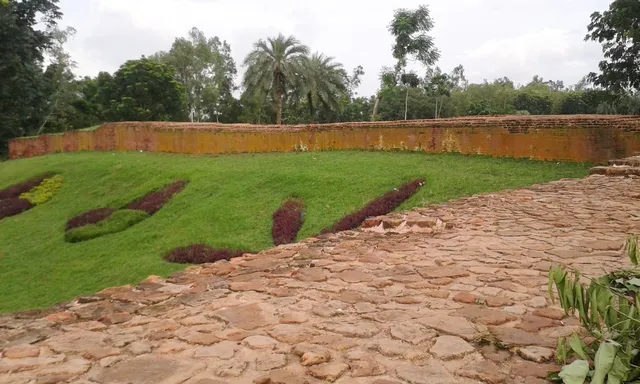
The ancient rampart wall of the fortified city of Mahasthangarh (photo: Masum-al-hasan / Wikimedia Commons, CC BY-SA 4.0)
In 1931 an ancient stone inscription in Prakrit language in the Brahmi script was discovered here. Known as the Mahasthan Brahmi inscription, this remain is connected with the Maurya period and is one of the most important written evidences of ancient Bengal's history.
The inscription gives indications of instructions for storing food and essential goods for the people in times of calamity or crisis, and for administrative assistance.
It is not merely proof of the existence of an ancient city; rather, it also gives an idea of the administration, economy and welfare systems of that time.
From the archaeological remains of Mahasthangarh we learn that the region was important under several periods of rule, including the Maurya, the Gupta and the Pala.
Even today the ruins of Mahasthangarh's fortified city, the foundations of ancient structures, the artefacts and the historic places around it carry the identity of ancient urban life in Bangladesh.
4. The Maurya Empire and Ancient Bengal's Political Contacts
The Maurya period is an important chapter in the history of ancient Bengal.
In the closing years of the fourth century BC the Maurya Empire was founded in the Indian subcontinent under the leadership of Chandragupta Maurya. Later, during the reign of Emperor Ashoka, the expansion of the empire and its administrative structure became even more organised.
The Mahasthan Brahmi inscription is one of the most important archaeological proofs of Maurya administrative influence in northern Bengal.
Historical research suggests that in this period the cultivation of agriculture, administration, trade and the system of communication developed in various parts of Bengal.
But it is not right to assume that all parts of ancient Bengal were under Maurya rule at the same time or to the same degree. There was variation from region to region in political control and local systems of governance.
5. The Gupta Empire and Bengal's Politico-cultural Growth
From the fourth century AD the influence of the Gupta Empire spread over vast areas of the Indian subcontinent.
In Samudragupta's Allahabad pillar inscription we find the mention of several political regions of the east, including Samatata. From this we get an idea of the political relations between the Gupta Empire and various regional rulers of Bengal.
In the Gupta period the use of administration, the land system, coinage, religious institutions and the Sanskrit language spread in various parts of Bengal.
In this period local administrative centres and janapadas developed in Bengal. From copperplate grants of land and various archaeological remains we learn of the society and economy of the time.
After the central rule of the Gupta Empire weakened, independent and regional powers rose in various parts of Bengal.
6. Shashanka: The Rise of the Independent Gauda Kingdom in Ancient Bengal's History
Shashanka is a notable name in the political history of Bengal.
At the beginning of the seventh century he founded a powerful kingdom in the Gauda region. He is considered one of the first important independent and organised rulers of ancient Bengal.
His capital was Karnasuvarna, associated with the present Murshidabad region of West Bengal in India.
During Shashanka's rule the political influence of Gauda spread over various regions of northern and eastern India. His relations with contemporary political conflicts and with other powers of northern India carry special importance in the history of ancient Bengal.
After Shashanka's death, political instability appeared in the Gauda kingdom. Conflicts of power increased among the various regional forces.
The background of the rise of the Pala dynasty in Bengal was created in the period following this political instability.
7. Post-Gupta Bengal: The Khadga and Deva Dynasties
After the fall of Gauda, several independent dynasties rose in the south-east of Bengal, that is, in the ancient Samatata region. The copperplate inscriptions and archaeological remains of the Mainamati-Lalmai region are the principal sources of the history of these dynasties.
The Khadga Dynasty
In the seventh century the rule of the Khadga dynasty was established in Samatata. From copperplate inscriptions we learn that among the kings of this dynasty were Khargadyama, Jatakhadga, Devakhadga, Rajabhata and Balabhata. In the account of the Chinese Buddhist monk, Rajabhata is described as a devoted follower of Buddhism and a patron of religion.
The distorted gold coin recovered from Rupban Mura of Mainamati is considered connected with this dynasty. Evidence of the Khadga rulers' connection with a centre named Devaparvata is found in the archaeological remains of the Lalmai-Mainamati region.
The Deva Dynasty
After the Khadgas, the Deva dynasty rose in Samatata in the eighth century. Their centre was Devaparvata, whose location researchers believe is connected with the present Lalmai-Mainamati region of Comilla.
From copperplate inscriptions we learn that the kings of this dynasty were Shantideva, Viradeva, Anandadeva and Bhavadeva. Archaeological research connects Anandadeva with Ananda Vihara and Bhavadeva with the building of Shalban Vihara — two vast Buddhist establishments of Mainamati.
It was in this very period that the Chinese Buddhist pilgrim Xuanzang, during his travels in India, gave in his account a picture of the flourishing of Buddhism and of many viharas in the Samatata region. The account of the foreign pilgrim is an important testimony to the prosperity of ancient Samatata.
8. The Pala Dynasty: A Golden Chapter of Education, Buddhism and Architecture
The Pala dynasty is an extremely important chapter in the history of ancient Bengal.
Around the middle of the eighth century, bringing an end to Bengal's political instability, Gopala founded the Pala dynasty.
During the reigns of his successors Dharmapala and Devapala the Pala Empire grew strong, and its political influence spread beyond Bengal too.
In the last phase of Pala rule Ramapala built his capital at Vikramapura — the present Munshiganj region then became an important political centre.
One of the most important characteristics of the Pala period was its patronage of Buddhism, education, art and architecture.
Somapura Mahavihara: A Centre of International Learning
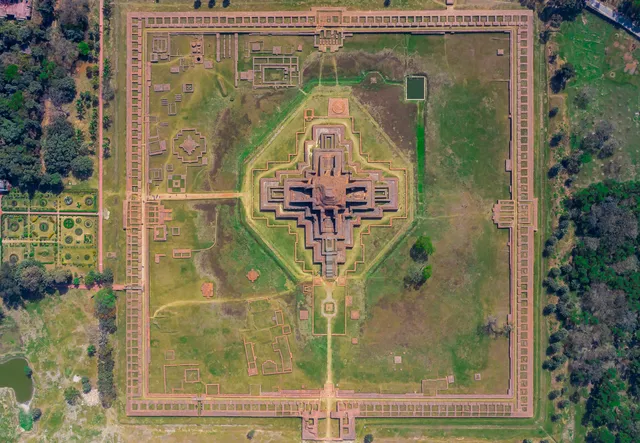
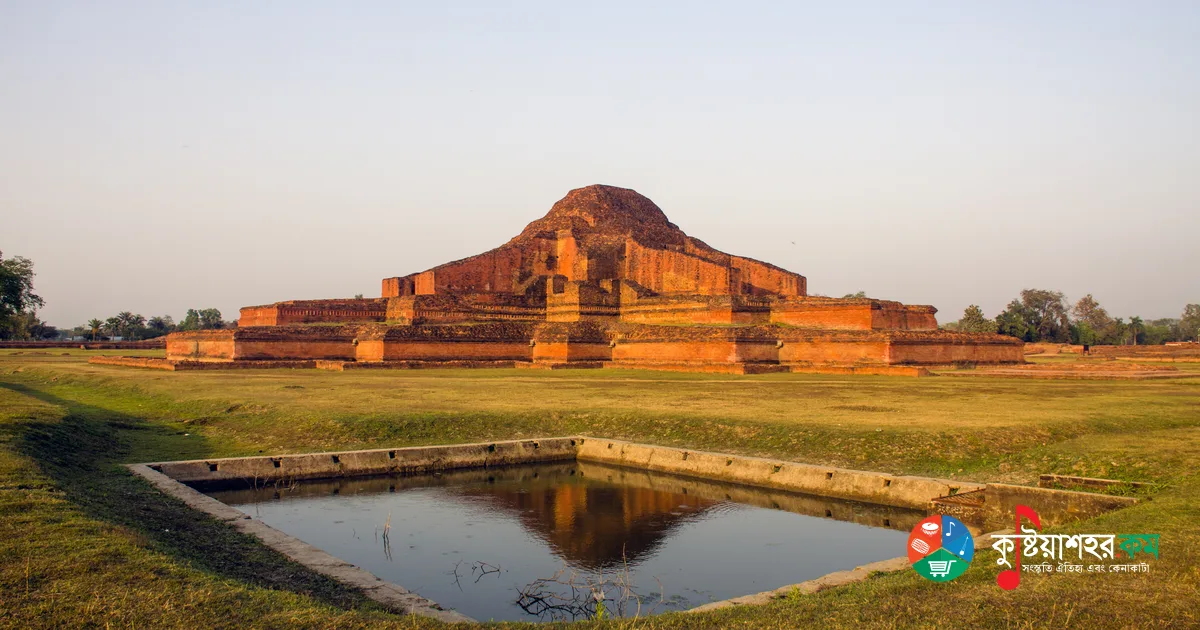
An aerial view of Somapura Mahavihara (photo: Md. Ahsanul Haque Nayem / Wikimedia Commons, CC BY-SA 4.0)
The Somapura Mahavihara at Paharpur in Badalgachhi upazila of Naogaon district is one of the finest remains of Pala-era architecture and scholarship.
Dharmapala is generally acknowledged as the founder of this great monastery.
In this vast Buddhist monastery there were 177 cells for monks on all sides, and at the centre a vast temple-like structure.
Its terracotta plaques, architectural style and planning express the excellence of ancient Bengal's art and building technology.
The Somapura Mahavihara was not merely a place of religious worship; it was an important centre of education, philosophy, culture and the pursuit of knowledge.
UNESCO notes that its architectural style also influenced Buddhist architecture in South and South-East Asia.
In 1985 the Somapura Mahavihara was included in the UNESCO World Heritage List.
The Charyapadas: Remains of the Oldest Bengali Literature
The Pala period is also of special importance in the history of the Bengali language. The Charyapadas, composed roughly between the eighth and the twelfth centuries, are considered the remains of the oldest literature of the Bengali language. In 1907 the scholar Haraprasad Shastri discovered this precious manuscript in the library of the royal court of Nepal.
This collection of 51 charyas gives a many-sided picture of the society, way of life, markets, rivers, trade and commerce, and Buddhist Sahajiya practice of the time. The Charyapadas prove that in Pala-period Bengal there was not only Sanskrit literature; literature in the vernacular language, too, grew, along with song and music.
Atish Dipankara: A World-famous Scholar
Another glorious name of Pala-period scholarship is Atish Dipankara Srijnana. It is commonly believed that he was born in the village of Vajrayogini in Vikramapura towards the end of the tenth century (around 982 AD). He became famous as the head of Vikramashila Mahavihara, and later in life he went to Tibet, where he played an important role in the spread of Buddhism and education. In Tibetan Buddhist tradition he is still remembered with respect.
Other Important Contributions of the Pala Period
During Pala rule several more important Buddhist centres of education and religion grew up in Bengal.
- Vikramashila Mahavihara.
- Jagaddala Mahavihara.
- Odantapuri Mahavihara.
- Buddhist sculpture and the art of terracotta.
- Manuscripts, philosophy and the pursuit of religious knowledge.
The influence of the Pala period was not confined to Bengal alone. It had contacts with various regions of the Indian subcontinent and with the wider Asian world of Buddhist learning, including Tibet.
9. Mainamati: Remains of the Buddhist Civilisation of South-Eastern Bengal
The Lalmai-Mainamati region of Comilla is another important archaeological centre of Bangladesh's ancient history.
Here are found the remains of innumerable Buddhist viharas, temples, stupas and other structures built between the sixth and the thirteenth centuries. That is, for about seven centuries there was continuous human settlement and the growth of civilisation in this region.
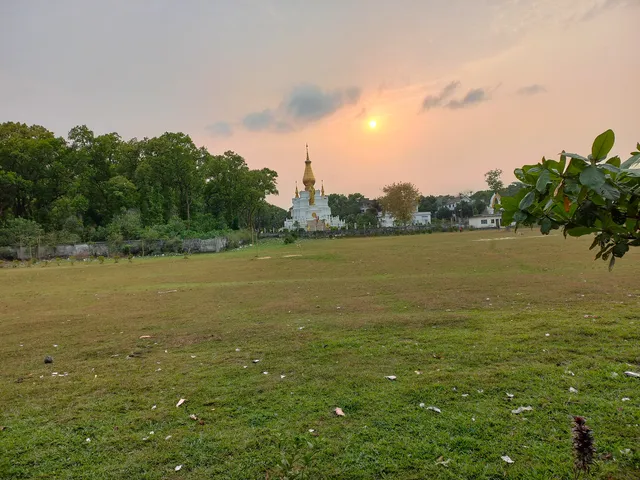
The Shalban Vihara of Mainamati (photo: CAPTAIN RAJU / Wikimedia Commons, CC BY-SA 4.0)
Among Mainamati's important archaeological structures are:
- Shalban Vihara.
- Kotila Mura.
- Charpatra Mura.
- Ananda Vihara.
- Bhoja Vihara.
- Itakhola Mura.
- Rupban Mura.
- Pakka Mura.
Shalban Vihara is especially noteworthy. It is a planned Buddhist monastery where the monks lived and the activities of religious education were carried on. From here eight copperplate inscriptions and about 400 gold and silver coins have been recovered — proof of the economic and administrative importance of the region. Ananda Vihara is the largest structure of Mainamati; Kotila Mura has three principal stupas enclosed by walls, and at Charpatra Mura the remains of a rare Hindu temple of the Chandra period have been found.
The Chandra, Harikela and Deva Dynasties in Mainamati's History
Mainamati's name is bound up with the legendary queen Mainamati — said to be the mother of Govindachandra, the last king of the Chandra dynasty. The founder of the Chandra dynasty (tenth-eleventh centuries), centred on ancient Vikramapura, was Srichandra's predecessor Sulikichandra; Srichandra and Govindachandra were the famous kings of this dynasty. From their copperplate inscriptions we learn detailed information about the administration, the land system and social life of the time.
Extensive evidence of the rule of the Harikela dynasty is also found in the Mainamati region — from hundreds of Harikela coins and from the copperplate of Ranavankamalla Harikaladeva of 1220, we find the mention of an important centre named Pattikera. Evidence of the rule of the later Deva dynasty in Samatata in the thirteenth century has also been found here — the copperplate of Dasharathadeva, son of Damodaradeva, was recovered from Pakka Mura.
From the archaeological remains of Mainamati we learn of the spread of Buddhism, architecture, art and the system of education in south-eastern Bengal.
This region proves that the cultural growth of ancient Bengal was not confined to the north alone; centres of rich knowledge and religious practice grew up in the eastern and south-eastern regions as well.
10. The Sena Dynasty: Political Change in Ancient Bengal
When political weakness appeared in the last phase of the Pala dynasty, new powers rose in various parts of Bengal.
In the twelfth century the Sena dynasty established itself as an important political power in Bengal.
Vijaya Sena, Ballala Sena and Lakshmana Sena were the notable rulers of this dynasty.
Ballala Sena's name is also remembered in the history of Bengal's social structure. According to tradition, he composed the Kulinikrama and laid down various social customs, whose influence was felt in Bengali society for many centuries.
During Sena rule the influence of the Brahmanical religious and social institutions increased. Land grants, religious rituals, literature and the practice of the Sanskrit language occupy an important place in the history of this period.
During Lakshmana Sena's rule Nadia was an important political and cultural centre. Jayadeva, the author of the famous Sanskrit poem Gita Govinda, is considered a poet connected with Lakshmana Sena's court.
At the beginning of the thirteenth century, as a result of the expedition of Ikhtiyar Uddin Muhammad Bakhtiyar Khalji (with the capture of Nadia around 1203-04), a new chapter began in the political history of Bengal. He gave importance to Gauda as the centre of the conquered territory.
But the end of Sena rule should not be seen as political change occurring at the same time in all parts of Bengal. The influence of the old systems of rule continued in various regions for some time more.
11. The Economy, Agriculture and Trade of Ancient Bengal
Agriculture and river-centred trade played an extremely important role in the growth of Bengal's ancient civilisation.
Fertile silt and river water created a favourable environment for cultivation.
Among the economic activities of the people of ancient Bengal were:
- Production of rice and other agricultural goods.
- Fishing.
- Textiles and weaving.
- Pottery and metalwork.
- Making of ornaments and beads.
- Transport of goods by waterway.
- Regional and long-distance trade.
The coins and beads of Wari-Bateshwar are important testimony to ancient commercial contacts. The hundreds of gold and silver coins recovered from the Mainamati region are proof of the growth of a coin economy in south-eastern Bengal.
Through Bengal's waterways, contact was established between the interior regions and the seaports and other janapadas. Various regions of Bengal also had relations with the wider commercial network of South and South-East Asia.
However, archaeological evidence about all trade routes or the specific destinations of goods is not equally available in every case.
12. The Religion, Philosophy and Cultural Diversity of Ancient Bengal
One of the characteristics of ancient Bengal's history is its religious and cultural diversity.
At different times Buddhism, Hinduism, Jainism and local folk beliefs were practised in this region.
During Pala rule Buddhism received special patronage. At the same time Hindu religious institutions, images of deities, temples and various rituals also developed.
Religious and cultural remains of different periods are found at archaeological sites like Mahasthangarh, Mainamati and Paharpur.
This cultural diversity enriched the society of ancient Bengal. Religious institutions were not merely places of worship; in many cases they also served as centres of education, art, literature and social contact.
In the later period there developed in Bengal Sufi practice, Islamic architecture and various folk and mystic currents. Their combined influence makes Bengal's long cultural history even more diverse.
13. Important Archaeological Sites of Bangladesh's Ancient History
The archaeological sites scattered across today's Bangladesh are important sources for knowing the history of ancient civilisation.
| Archaeological Site | District | Historical Importance |
|---|---|---|
| Mahasthangarh | Bogura | Ancient Pundranagara |
| Wari-Bateshwar | Narsingdi | Settlement and trade of the Early Historic period |
| Paharpur | Naogaon | Somapura Mahavihara |
| Shalban Vihara | Comilla | Buddhist monastery and education |
| Mainamati | Comilla | Buddhist archaeological remains |
| Basu Vihara | Bogura | Ancient Buddhist structure |
| The archaeological area of Jagaddala Mahavihara | Naogaon region | Connected with the historic centre of Buddhist learning of the Pala period |
These places are not merely tourist centres; they are important resources for research, education and historical inquiry into Bangladesh's past.
14. The Legacy of Ancient Civilisation in Today's Bangladesh
The history of ancient Bengal has played an important role in shaping the identity of today's Bangladesh.
Behind many elements of our language, literature, folk music, food culture, agriculture, architecture and social life lies a long historical evolution. From the Charyapadas to today's Bengali literature — the journey of this language is part of a continuity of a thousand years.
River-centred ways of life, an agriculture-based economy, weaving, pottery, folk festivals and various religious-cultural traditions are part of that continuity.
The Buddhist architecture of ancient Bengal, Hindu temples, the later Islamic architecture and the various remains of folk culture carry the identity of our many-sided heritage.
Preserving this heritage is not merely a matter of remembering the past; rather, it is also the duty of delivering our history and cultural identity to future generations.
15. What We Must Do to Preserve Ancient History
Many chapters of Bangladesh's ancient history still await research.
Through the preservation of archaeological sites, regular research, scientific excavation, proper maintenance of artefacts and the spread of history-based education, this resource must be protected for future generations.
In particular:
1. Illegal occupation of and damage to archaeological sites must be prevented.
2. Scientific conservation of ancient remains and artefacts must be ensured.
3. Local history must be collected and documented.
4. Cooperation in the research of universities, researchers and archaeologists must be increased.
5. Reliable historical information must be published in Bengali and English.
6. The young generation must be made interested in archaeology and the preservation of heritage.
Conclusion: A Land Shaped by a Thousand Years of History
The history of Bangladesh is not a detached chapter. It is part of a long continuity of the janapadas, urban civilisations, kingdoms, trade, religion, literature, art and ways of life of ancient Bengal.
The ancient city wall of Mahasthangarh, the coins and beads of Wari-Bateshwar, the Somapura Mahavihara of Paharpur and the Buddhist structures of Mainamati remind us — this land has a long and rich history.
To understand the identity of today's Bangladesh, one must know its past. Because history is not merely an account of kings and battles; history is the story of ordinary people's lives, their labour, beliefs, culture, pursuit of knowledge and the building of civilisation.
The history of Bengal is our roots, and knowing and preserving those roots is our collective responsibility.
Publisher: KushtiaShohor.com
Department: History | Ancient Bengal | Heritage and Culture
Subject: The ancient history and archaeological heritage of Bangladesh