বাংলা
 English
Some call him Fakir Lalon, some Lalon Sai, some Mahatma Lalon — he is known by many names. He is his own only comparison. He was a spiritual Baul sage, a humanist, a social reformer, a philosopher. He was the lyricist, composer and singer of countless extraordinary songs.
Lalon Shah is considered a pioneer of Baul song. The extraordinary depth of feeling in his simple words still tastes on the mind like a cool nectar. Lalon composed countless songs on atmattva (the doctrine of the self), dehattva (the doctrine of the body), the guru or murshid, love and devotion, sadhana, man and the supreme, Allah and the Prophet, Krishna and Gaur, and on many other themes. In the melody of these songs the mind finds another world — a world whose melodies were born in the seventeenth century, yet whose strains still carry the mind away today.
Birth: Lalon Shah was born in 1774 in Bharara village under Chapra union of Kumarkhali thana, Kushtia, in undivided Bengal. His creative work is considered the finest of all time in the Indian subcontinent. Lalon was a humanist being. Rising above the divisions of religion, caste, clan and race, he sang the triumph of humanity and composed his songs with a non-communal mind. Many writers of Bengali literature have been influenced by his creative art, and his Baul school of thought, nurtured within his work, remains a focal point of research even in the modern age. Twenty-five years before Mahatma Gandhi, he was the first in the Indian subcontinent to be given the title "Mahatma" — a fact unknown to many.
Biography: The Hitokari newspaper presents various information about Lalon — his pilgrimage, his being stricken with smallpox, and his companions leaving him and going away. In this space I shall attempt only a brief presentation of some facts about Lalon Fakir. By a turn of fate Lalon came to be brought up in Molom Shah's house, and as the adopted son of Molom Shah and his wife Motijan he received initiation into the Baul doctrine. Smallpox cost him one of his eyes. Afterwards Lalon began living with his disciples in Cheuria. There he came into contact with the philosopher-singer Siraj Saiji and was influenced by him.
Family life: Detailed information about Lalon's family life is scarce. His least corrupted source of information is his own countless songs. Although it is not possible to present extensive information, in several songs he styles himself "Lalon Fakir". Some days after his death, the editorial of the Hitokari newspaper published from Kushtia noted: "The materials for writing his biography are hard to come by. He himself would say nothing, and his disciples, whether forbidden by him or simply unknowing, could say nothing either."
Religious belief: There is much difference of opinion about Lalon's religious faith. Lalon placed humanity above all. Basanta Kumar Pal, the author of the first biography of Lalon, said: "Whether Saiji was a Hindu or a Muslim, I too am unable to say for certain." During his lifetime Lalon was not seen to observe any particular religious rites. The astonishing thing is that although Fakir Lalon had no formal education, through his sadhana he gained knowledge of the scriptures of both Hinduism and Islam. He kept good relations with people of all faiths. In truth Lalon was a humanist, and he believed in no distinctions among people. Some followers of Lalon hold that he followed a new religious doctrine called Ohedaniat. Within Ohedaniat exist Sufism, the Buddhism and the Sahajiya doctrine of Vaishnavism, along with many other religious doctrines. In the religious practice of the Bauls, the 'Sahajiya' or 'Sahaj-pantha' path must be considered with importance. The essence of 'Sahajiya sadhana' is 'ujan-sadhana' — practice along the upstream course. This path is not like the sadhana of orthodox religionists; their course runs the other way, upstream. They do not revolve in the whirlpool of luxury and sensual pleasure. Their path is the 'sahaj' truth of things as they are — the unceasing practice of moving from form to the formless.
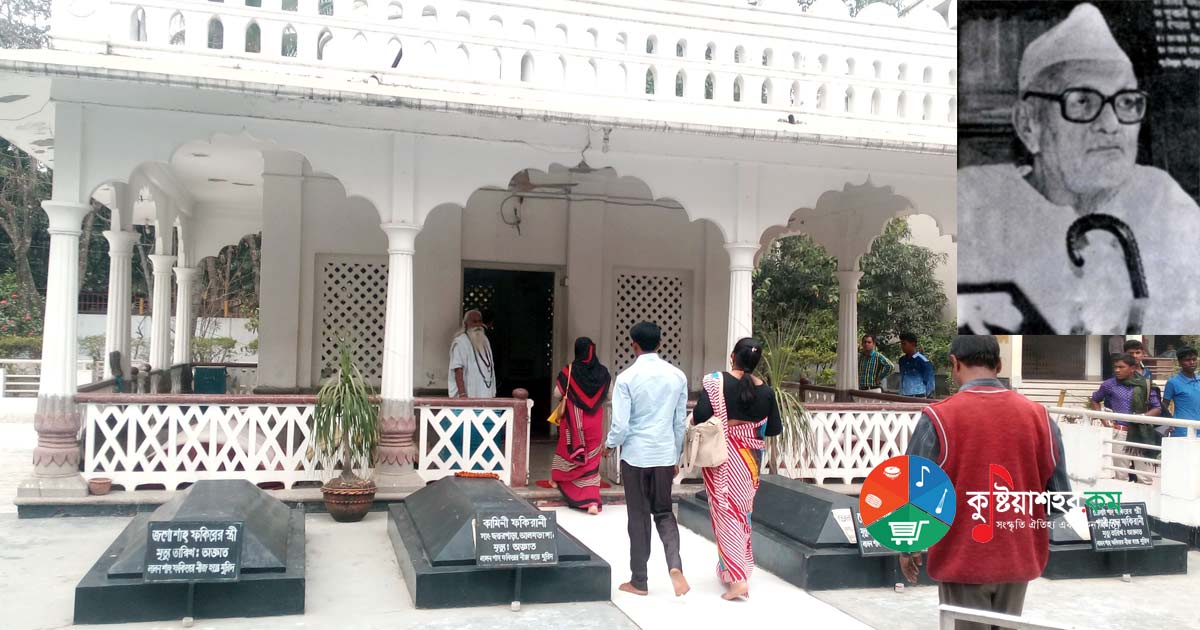
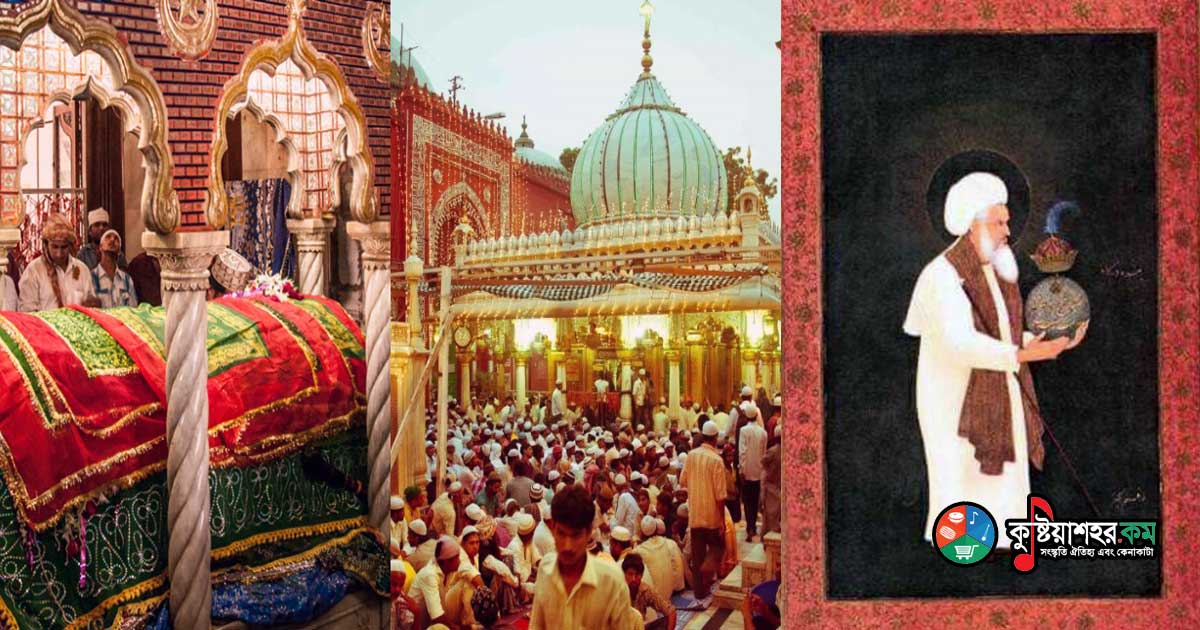
Lalon's Akhra: Lalon built an akhra at Cheuria in Kumarkhali upazila of Kushtia, which still exists. It was there that he gave his disciples moral and spiritual instruction. His disciples addressed him as "Shai". Every winter he organised a great utsab at the akhra, which continues to this day. At Lalon's akhra, commemorations are still held on his birth and Tirodhan Dibas, and at these events the akhra still fills with huge crowds of people. In the festivals of his own time, the disciples and the people of the community would gather for music and discussion.
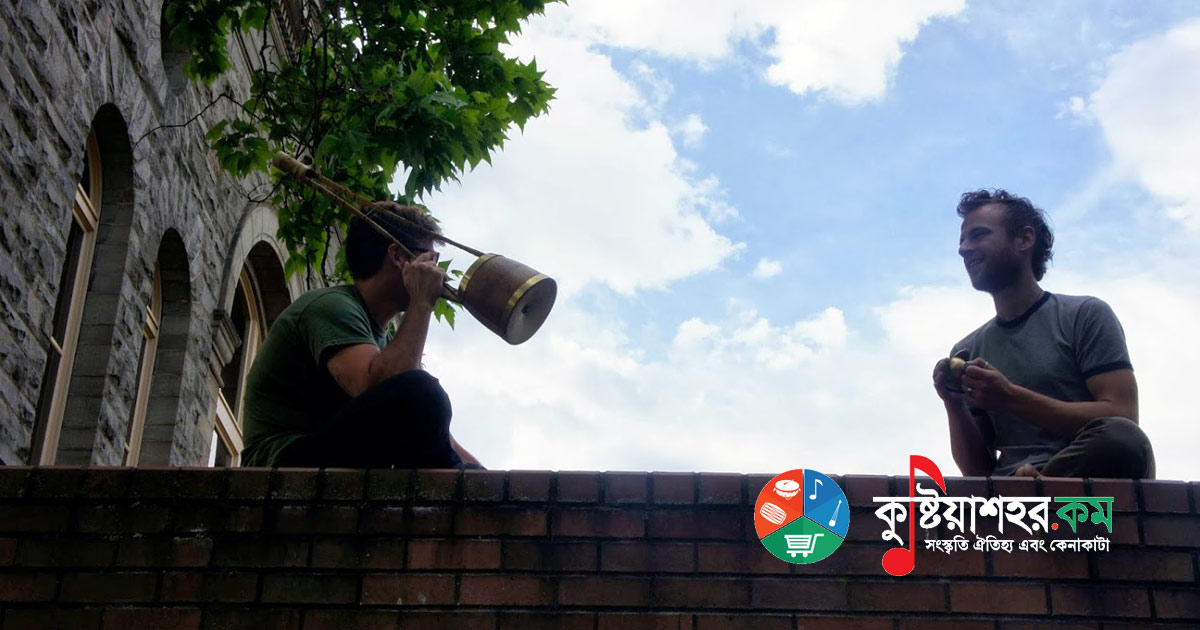
The Baul philosophy: The Bauls are a religious community, a folkway of a particular community. The community arose in Bengal in the seventeenth and eighteenth centuries and remains just as popular today. Lalon is considered one of the foremost pioneers of the Baul creed and Baul song. The religion of the Baul community is folkish. In Baul sadhana there is a mixture of all the streams — jnana, yoga and the vamachara alike. The Bauls pursue spiritual practice and seek the supreme soul. Overcoming the obstacles of life, they strive through struggle to be spotless before the supreme, and they spend their lives proclaiming the message of humanity. The thing that matters most to them is the soul. They believe that only by knowing the soul can one know the Supreme Soul, the Creator. Since the soul dwells in the body, the Bauls hold the body sacred. In everyday life the Bauls are seen to lead a simple, immersed life; playing the ektara and singing as they wander from village to village is their daily habit. Baul song is a special part of Bengali folk literature. In 2005 UNESCO declared Baul song one of the greatest treasures among the world's oral and intangible traditions.
Lalon and the doctrine of the body: It has been mentioned earlier that Lalon believed in humanism. It is man who sits on the highest seat. The belief is that within every person dwells the Man of the Heart, and the theme appears in many of his songs. God dwells within all human beings. The soul is what matters to them — the soul that forever comes and goes in the cage of the body and obeys no bonds. The devotees of Lalon hold that everything in the world abides within the body; one need only recognise it. If you can recognise the unacquainted one, everything is gained. Because the soul dwells in the body, all their doctrine centres on the body. All the devotees of Lalon are steeped in the ideology of the body, and their sadhana revolves around the practice of the body. In the view of the Buddhist tantriks and the Sahajiyas, all truth lies within us — not only within the inner being, but within our body as well. The truth that reigns in the vast flow of the universe reigns also within our body, within all its living currents. Within this body are the moon, sun, planets and stars, all mountains and hills, rivers and streams, the year, the months, days and moments. "Within this body is the temple of truth, the vehicle of all doctrine" (Shashibhushan Dasgupta). Hence it is said: "What is in the vessel is in the universe."
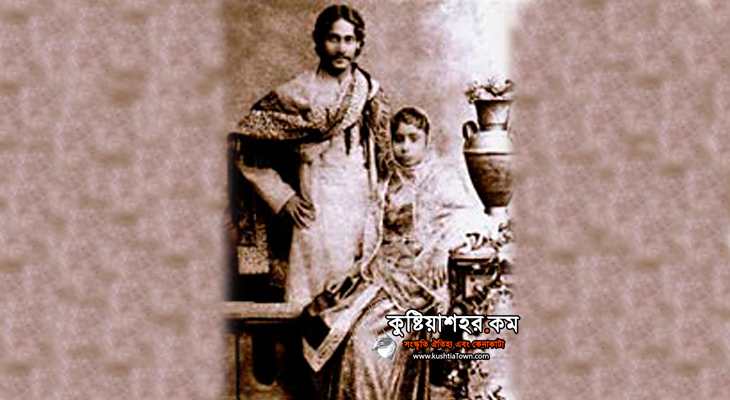
Influence on world literature: Lalon was a great philosopher, and his songs and philosophy have influenced many world-famous poets, writers and philosophers. Two years after Lalon's death, the world-poet Rabindranath went to his akhrabari and, influenced by Lalon's philosophy, composed 150 songs. Rabindranath played a special role in bringing Lalon before the world. The egalitarian poet Kazi Nazrul Islam was influenced by Lalon's humanist philosophy. The American poet Allen Ginsberg was influenced by Lalon's philosophy, and his works show an imitation of Lalon's style of writing; he even composed a poem titled "After Lalon". Research on Lalon's music and philosophy has been carried out, and continues, at home and abroad. In 1963 the Lalon Folk Literature Centre was founded at the akhrabari in Cheuria; later it was dissolved, and in 1978 the Lalon Academy was founded under the Shilpakala Academy.
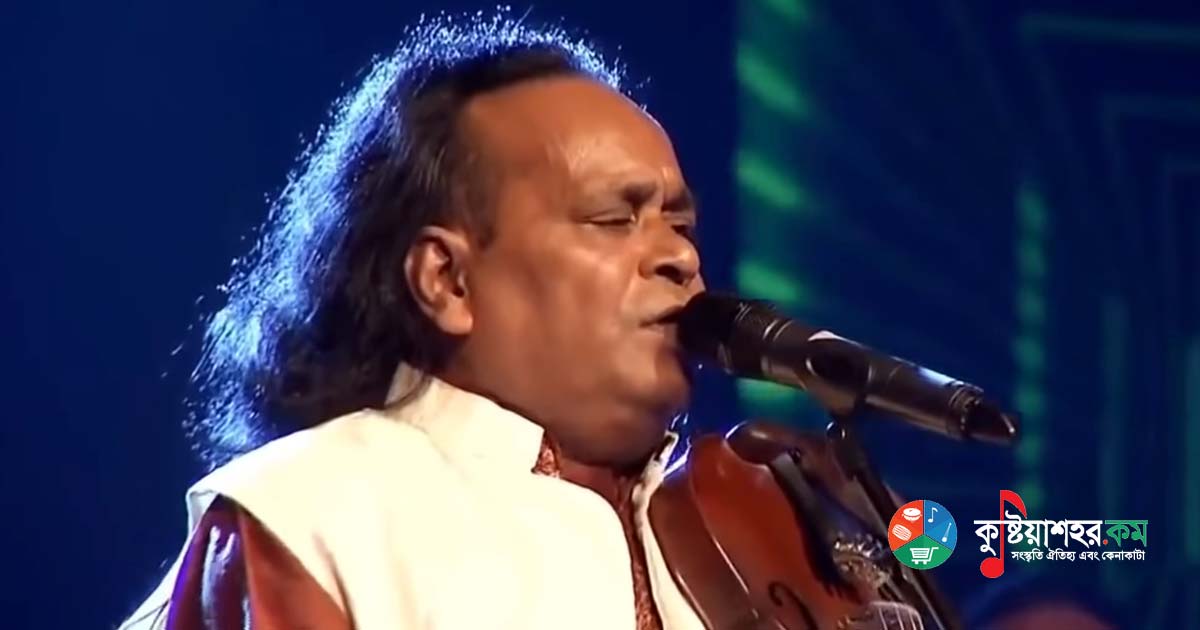
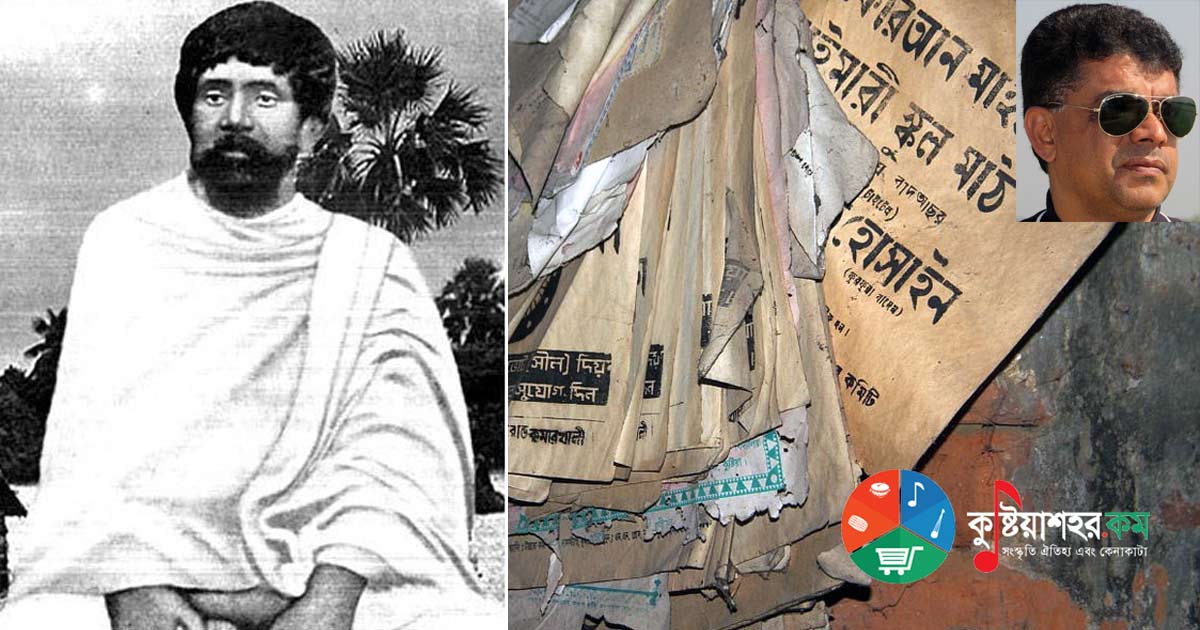
Lalon's songs: Lalon's songs are known as Lalon-giti or Lalon Sangit. Lalon composed his songs by mouth, tuned them and performed them, and thus grew his vast treasure of song. He is believed to have composed more than a thousand songs, though he never wrote them down himself. His disciples memorised the songs, and scribes later set them down — and in this process many of his songs are thought to have been lost. In his songs Lalon raised various questions against the many superstitions of contemporary society, against communalism, social division, inequality and the like. In many songs, too, he presented his various philosophies and the answers to his questions beneath the veil of metaphor.
Lalon Utsab: Various festivals were held during Lalon Shai's lifetime; in particular he held a festival in winter, where there would be assemblies and discussion in the manner of the asra, and songs. At present, on the day of his death, a remembrance utsab is held at the akhra in Cheuria. From the far corners of the country and abroad, countless people come here every year for the Lalon remembrance festival and on Dol Purnima, to recall the philosophy of this spiritual sage. Since 2010 a five-day festival has been held here; this event is known as the "Lalon Utsab".
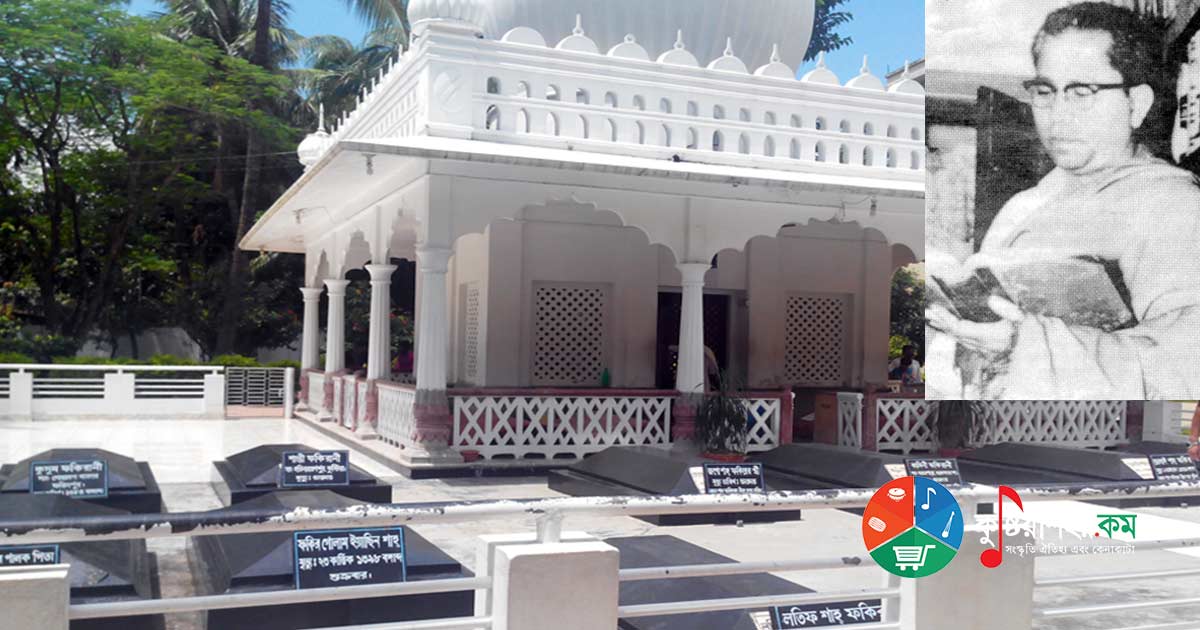
Death: On 17 October 1890, at the age of 116, Lalon passed away at his own akhra in Cheuria, Kumarkhali, Kushtia. From about a month before his death he had been suffering from a stomach ailment and trouble with the glands of his hands and feet. On the day of his death he made music until five in the morning, and at some point he said to his disciples, "I am going," and shortly afterwards he died. In accordance with his own advice, he was buried inside a room of his akhra at Cheuria.
Edited by:- Md. Arman Hossain
Senior Rover Mate
Alor Shondhane Mukto Rover Group, Naogaon