বাংলা
 English
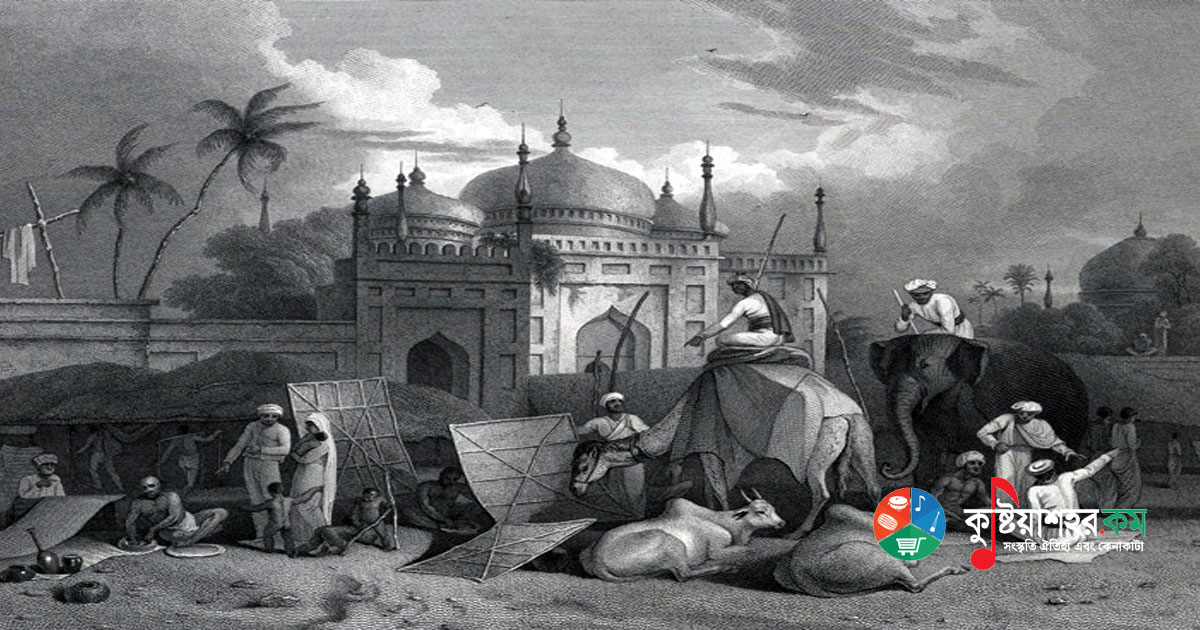
Kumarkhali in the Nadia of that era and in today's Kushtia district has at all times been known for a single, distinct identity of its own. From politics to the social order, from administrative arrangements to the cultural milieu, or from trade and commerce to the economic plane, in everything it bore a character distinguishing it from all other areas. Water transport was easy in Kumarkhali. Lying close to the bank of what was once Gauri, today's Gorai river, and again near the Padma's banks, it quickly established itself as an economic zone.
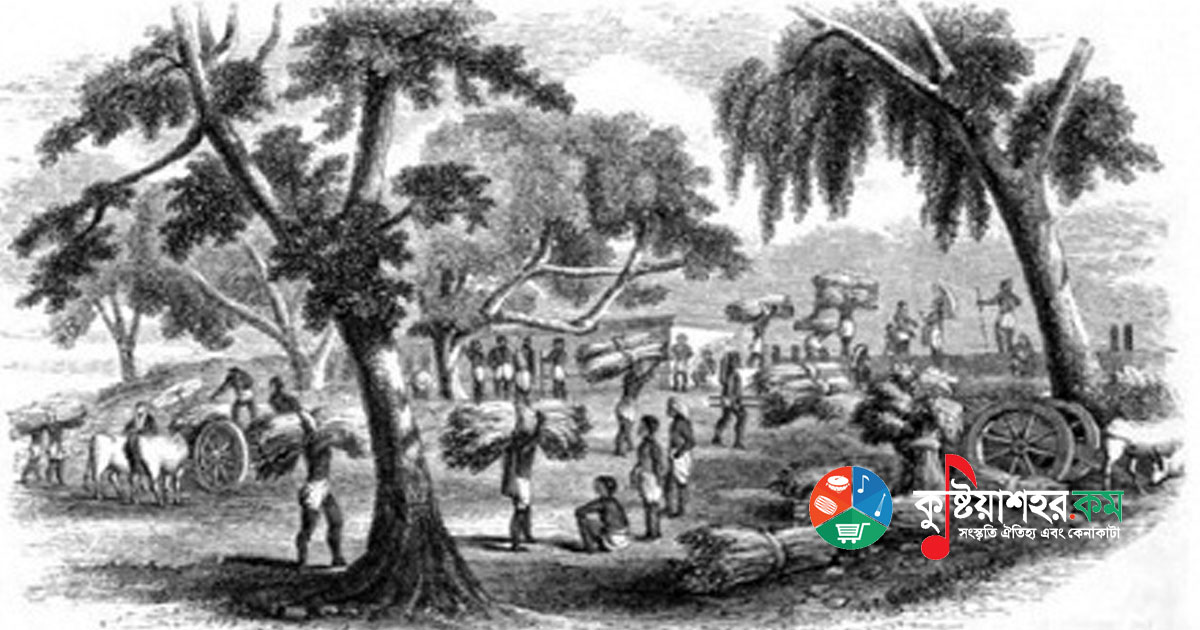
In 1857 Kumarkhali was established as the first subdivision. At that time Pansha and Baliakandi of the present Rajbari district, Khoksa of Kushtia, and the now-defunct Bhaluka thana of the Kumarkhali of those days were included in the Kumarkhali subdivision. A munsif court was set up here at that time, and the court's first munsif was Sri Ishan Chandra Datta, father of C. R. Datta, author of the significant works on India's economic history. When the Kushtia subdivision was established in 1861, the Kumarkhali subdivision lost its existence. Worth saying is that the establishment of a railway link between this place and Calcutta itself in 1860 further quickened the pace of overall business. Yet at all times, whatever aspect of Kushtia's literature-culture, administration, politics, trade or economy one speaks of, through the ages it was enveloped in Kumarkhali's influence. In his book 'Kushtiar Itihas' (The History of Kushtia), S. M. Shawkat Ali says that the growth of industry, literature and culture that took place in Kumarkhali from the second half of the nineteenth century happened in no other mofussil town of Bengal. Again, the history of Kumarkhali's silk and indigo cultivation is very old. From the earliest times a kind of yarn called patanga was used here to weave tassar cloth. There was a weekly cloth market here, quite a large and famous cloth market in this Bengal. At that cloth market, yarn, cloth, dyes and loom gear worth lakhs of taka were bought and sold. Around this trade settlements grew up here, and with the assembly of merchant-class people a social order, a backdrop of civilisation, took shape. As gatherings of Sahas, Kundus, merchant-class people and indigo cultivators began, other business-minded classes of people joined in.
On 6 July 1838 (21 Asharh of the year 1245), Mohini Mohan Chakrabarty, the most accomplished son of Kumarkhali in Kushtia, famed across India, a brave soldier of the Swadeshi movement and the born architect of the famous Mohini Mill, was born into a pious Brahmin family in Elangi Para. Krishnalal Chakrabarty, an employee of the Bengal Police Department of the time, was this proud child's father. Bhagabati Devi, daughter of Ramnand Bhowmik of Muragachha near Kumarkhali town, was Mohini Chakrabarty's revered mother. Grandfather Nabakishor Chakrabarty was likewise the trusted dewan of the Kumarkhali silk factory under the East India Company of that day. Both Mohini Mohan Chakrabarty's paternal and maternal lines were influenced by wealth, and in the current of the age were mindful of Eastern ideals yet devout and representative of Brahmin society. Of five brothers and one only sister, Mohini Mohan Chakrabarty was the eldest.
When he was a young man of 22 his father died, and when he was 27 his mother passed to the divine abode. Anxious, distressed and shattered, Mohini Mohan pressed forward, taking on the responsibility of supporting several widowed and destitute sufferers along with his own large family. No illness, grief or hardship could hold him back. On one side the burden of the family, on the other the duty to society - and within all this, the monumental devotion of his studies was shaping him. In his student life, Mohini Mohan Chakrabarty was never second anywhere. He took first place in the Junior and Senior scholarship examinations and proved his talent to the learned society. In the race of studies he passed the Entrance with very good results. Wherever his schooling took place, from 1 December 1852 to 30 June 1857 he studied for four and a half years at the Boaliah Government School in (probably) Burdwan district of India, in geometry, algebra, arithmetic, English language and literature and general knowledge, and achieved memorable results there. Evidence of this is found in a certificate of the school signed by its headmaster Hurro Govinda Sen, under memo 13/1858. The learning he acquired was highly regarded in that society. However, in his working life he wasted no time: with his acquired knowledge and competence he took a clerk's job at the Kushtia subdivision office on a monthly salary of 18 taka. After he joined, Mohini Mohan's efficiency, sense of justice and forbearance grew more and more manifest in the office. His acceptability and appreciation among the superiors kept growing. Impressed by Mohini Chakrabarty's work, among his superiors, the then Subdivisional Magistrate of Kushtia subdivision Sir Alexander Mackenzie and the all-in-all of Bengal, Lieutenant Governor Sir W. W. Hunter, at the time of their own transfers, as a reward for their admiration of him, first placed him at honourable and fitting posts in the Indian Museum and later in the Bengal Secretariat. From here the wheel of Mohini Babu's life began to turn. With the kindness, blessings and encouragement of these two great souls, he prepared for the examination for the post of Deputy Magistrate. Passing that examination, he became able to secure the judge's seat.
Magistrate Mohini Mohan Chakrabarty. Here too lie the events of his career's great rise and repeated fall. He was then Deputy Magistrate of Noakhali. Of two accused of embezzling government money, one was a serestadar and the other an employee. The burden of judging this fell on Mohini Babu. The Collector had already asked him again and again to punish the two accused. But the firm-minded and justice-loving judge Mohini Babu released the accused for lack of proper evidence. He thus earned the Collector's displeasure and wrath, but Mohini Mohan Chakrabarty was in no way weakened or demoted. For that he was deprived of his annual pay increment and of the chance to become the district's officiating Collector. As devoted to religion as he was, he was equally just and non-communal. Another incident left its mark on Mohini Mohan Chakrabarty's judicial life. Handling the case of some serious accused, he could not convict them for lack of proper testimony, because his conscience might have been stung, and ordered their acquittal in the interest of justice. When the matter became widely known and the Commissioner came unannounced to visit Mohini Babu's office, bent on making adverse remarks about his judgment, Mohini Babu, seated in court, boldly retorted: 'Do you think Mr... I have sold my conscience for money?' For such judicial character and sense of duty he was a popular judge.
Another incident. Our judge Babu was then posted at Bhawua subdivision (West Bengal, India). At that time his eldest son came there with a friend. Suddenly, taking his friend along, the boy hit upon a trick. Capitalising on his father's name and influence, they went fishing in one man's pond. Word reached Babu's ears from ear to ear. The dispenser of justice summoned the pond's owner on his own initiative and, facing his son and the son's friend, said: 'They have done a very wrong thing by taking fish from your pond. Lodge a complaint against them at the thana or the court. Arrange their just punishment for this offence.' For this honesty and amiability he was always dear to and admired by all. That he remains immortal in our memory through the ages may be put in a word of Shakespeare's. What he often used to say was: 'I am armed so strong in honesty... Flattery is the food of fools'.
Mohini Mohan Chakrabarty served for quite some time as District Magistrate and Collector in Bhagalpur (West Bengal, India).
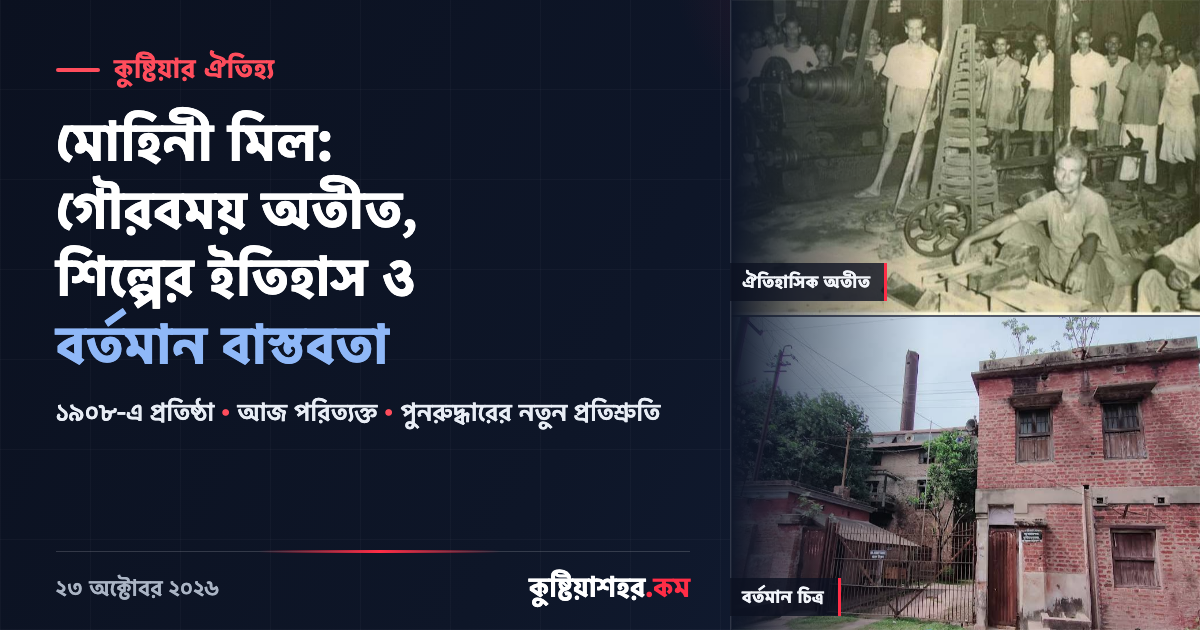
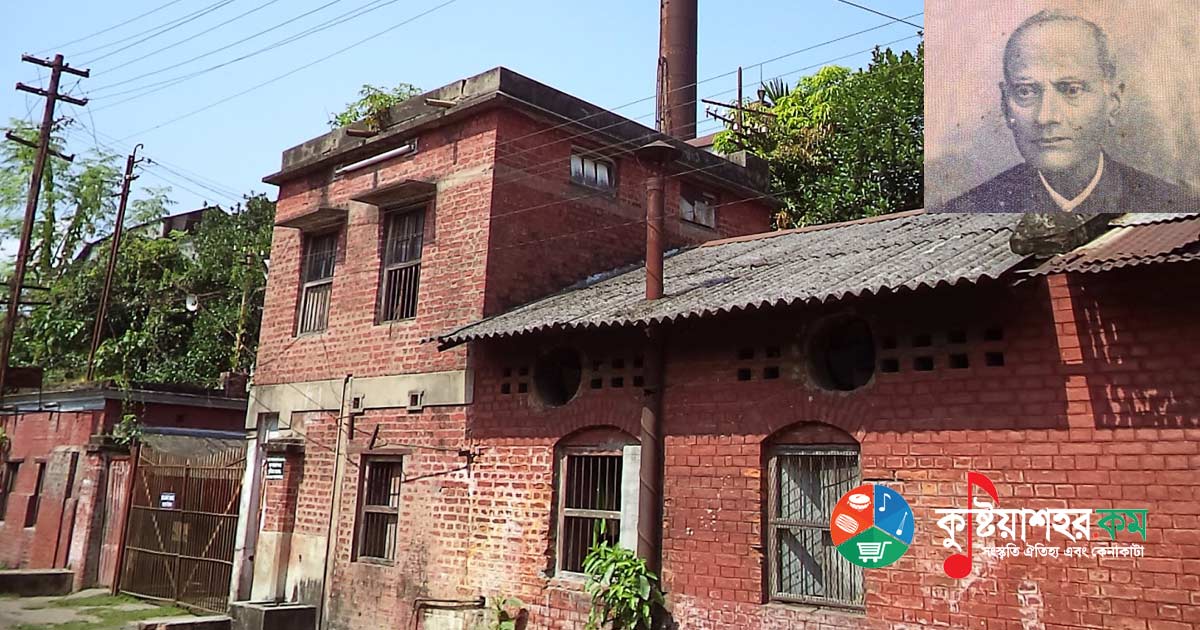
In childhood, from his parents Mohini Mohan Chakrabarty received the guidance of an ideal way of life. He retired from government service. The ideals of childhood; the full talent of adolescence; the working strength of youth. Day by day such a seed sprang up in his heart that his attachment to his motherland and his wish to do her good grew. As he passed his leisure taking rest in today's part of Kushtia town, he became absorbed in the endeavour of extending the roots of duty to mother, motherland and people. In his mind, the pull he felt day by day toward Swadeshi love, born of the need for the country's industrial growth, influenced him more and more. Goods swadeshi, however humble - and no foreign goods. 1907. Mohini Mohan Chakrabarty founded a company named 'Chakrabarty and Sons'. 1908. With just eight looms he began the journey of a textile mill under the name 'Mohini Mills Ltd.', a mill whose coarse sarees and dhotis came to be treasured in every home of Bengal as a sacred offering. Later, besides Kushtia, he built No. 2 Mohini Mills at Belgharia in Nadia district. It is true that the founding of this mill awakened an immense curiosity among the people of Bengal. There was then no textile mill in Bengal. For covering the shame of the people of all India one had then to rely on Lancashire. It was this man who fixed the price of India's textile goods. To run this textile mill, Mohini Babu sent his two sons to Bombay and had them gather experience. As the mill's production and marketing advanced day by day, the public at large began urging Mohini Babu to build the mill for the common people. Graciously responding to the people's request, he converted the mill into a limited company in 1908. Joining it, many Bengali sons began earning their bread there.
There was no instance of anyone in debt returning empty-handed from Mohini Babu. Because of his charity he was the friend and well-wisher of the distressed. He was then living at Ara. There he had a household servant named Mataram Kahar. When this servant was stricken with the incurable and contagious disease 'visuchika', Mohini Mohan Chakrabarty kept a specialist physician at home and had him treated. Despite much effort, engaging himself and his son, Mataram could not be saved. Before dying, Mataram took off the golden amulet he wore and placed it in Mohini Babu's hand. Mohini Babu was indeed much shaken by this death. Yet he went to Varanasi, the sacred religious place of the Hindus, had the Brahmins recite the Vedas, and handed the golden amulet over to the Brahmins, which was Mataram Kahar's last wish.
Reading and study were part of Mohini Babu's daily routine. Reading newspapers and books was his everyday work; he had the habit of reading late into the night. At home there was a library, quite well furnished and pleasing to behold. He was not addicted to any intoxicant. Let alone wine, he never touched a cigar, betel leaf or any tobacco product.
Mohini Mohan Chakrabarty was a man eager for learning. His deep generosity lay in studying and helping others to study. In 1871 Mohini Mohan Chakrabarty was Magistrate of Faridpur; he later also became District Magistrate there. At that time Jaladhar Sen, the historic figure of Kumarkhali and spiritual successor of Kangal Harinath Majumdar, lost his father. Jaladhar Sen, with his brother and widowed mother, was left helpless. His co-sharers, giving no help, even opposed them in subtle ways. But his elder paternal uncle was then a peshkar at the Goalanda subdivision court. He brought Jaladhar Sen's family to Goalanda and enrolled Jaladhar and his brother Haldhar Sen at the Goalanda Minor School. Jaladhar Sen was a student of that school there from 1871 to 1873. In the examinations of that period he secured the best result in the present greater Faridpur district and won the silver medal instituted by 'Raja Surya Kumar'.
The Faridpur District Magistrate came to know of the matter, and also learned that Jaladhar Sen was a son of his birthplace Kumarkhali, one who had brightened the area's name with a good result. Later he brought Jaladhar Sen to Faridpur and enrolled him in the district school. However, at that school Jaladhar studied only up to Class Eight (source: Babu Mallik, president, Rajbari Press Club).
Should workers only work and sweat? In 1930, for the entertainment of Mohini Mill's employees, Mohini Babu built at Millpara a theatre called 'Sandhya Samiti' and a library for their newspapers and books. At that time Mohini Mill's football team was good enough to contend with Calcutta teams.
Mohini Mohan Chakrabarty regularly followed religious observances. He ate only after performing religious rites; that meal was measured, however tempting the food. Even after retiring from service he enjoyed a pension for 27 years. In good health, at the age of 84 years and 4 months, on 4 November 1922 (20 Kartik of the Bengali year 1328) he departed for the divine abode through the natural course of age - a departure that, in the flow of time and the making of an era, was an unutterable saga of release and the silent exit of the Dispenser of Justice.
Acknowledgement: Babu Sunil Kumar Bagchi, Gajna, Madhukhali, Faridpur. Author: researcher, innovator (biological pesticide), an environmental personality and medal-winning essayist
Collection: from Banik Barta - Gautam Kumar Ray