বাংলা
 English
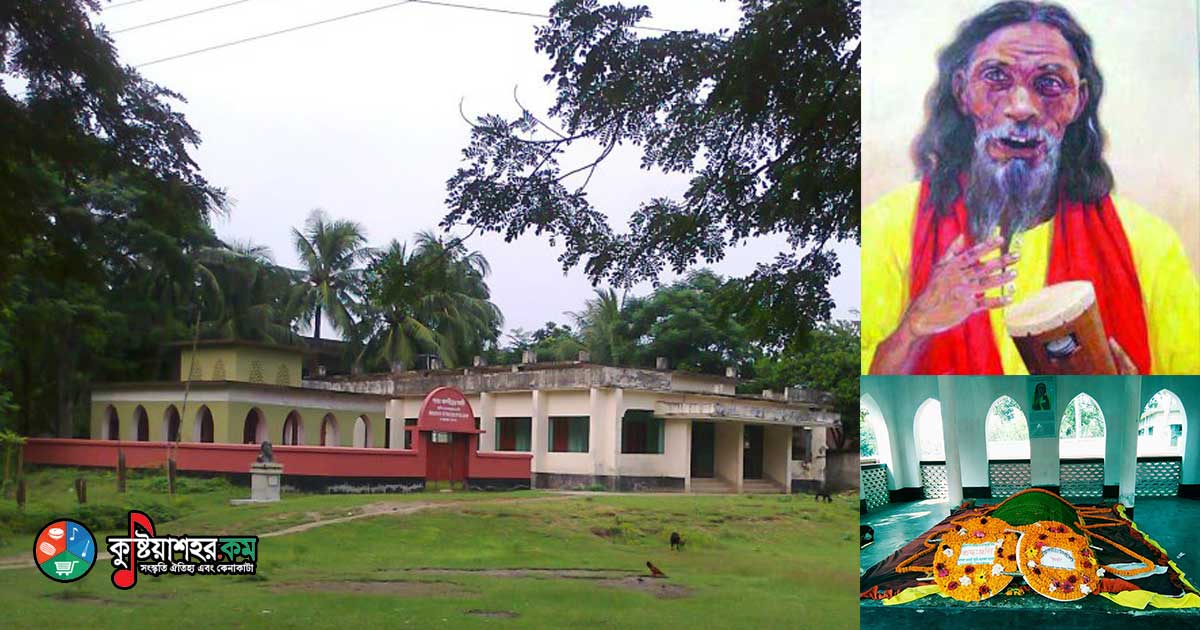
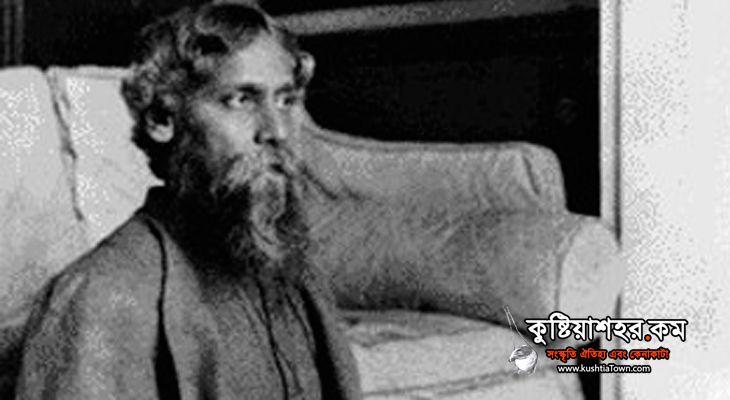
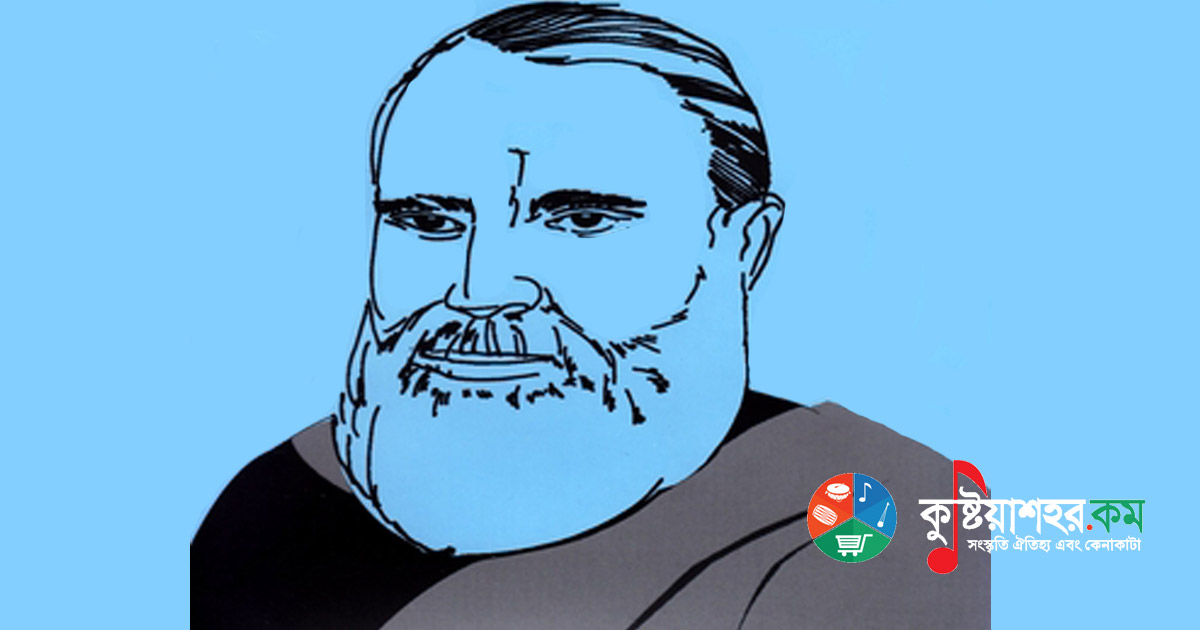
Pagla Kanai or Kanai Sheikh (Pagla Kanai) (born: 8 March 1809 – died: 12 July 1889) was a saint of spiritual thought and consciousness — the creator of countless Dehattattva, Jari, Baul, Marfati, Dhua and Murshidi songs.
Pagla Kanai was born in 1809 into a poor peasant family of Lebutala village, then of the Jhenaidah subdivision of Jessore district and now of Jhenaidah district. But he spent his life at his sister's house in Berbari. His father's name was Kuron Sheikh and his mother's Momena Bibi. Of two brothers and one sister, Kanai was the eldest. The brother's name was Ujjal Sheikh and the sister's Swarnanari. While he was studying at the pathshala his father Kuron Sheikh died. Having lost his father, Kanai became destitute. Pressed by the demands of life and seeing no way out, Momena Bibi took shelter at a relative's house in Vatpara village of Cheune in Kaliganj upazila of Jhenaidah district. Within a few days she too died there. Having lost his mother, Kanai took up herding cattle at Borosh Mandal's house in Balrampur of Harinakundu upazila of Jhenaidah district. His sister Swarnanari brought the two brothers from there to her own shelter, to Magura district, adjacent to her in-laws' home. As his sister's in-laws were well-off, Kanai's path to practising song became easier. Kanai grazed the herd of cattle at his sister's house and composed songs, setting them to tunes. From childhood Pagla Kanai was of a romping nature, of a madcap disposition and inspired by love of the spiritual. Because of this whimsical streak, out of affection people in his childhood added the epithet “Pagla” (mad) to his name. With his deeds that Pagla title became woven in an unbroken thread.
When the tune-giving was done he would sing it, letting his voice go, absorbed in himself. This restless, mad nature-poet did not feel at home anywhere for long. Giving up cattle-herding, he took up a job at the nilkuthi of the Berbari estate of the Chakrabarty zamindar family of Atharkhada in Magura district. That khalsi (clerk's) job on a salary of two taka did not last long. Drawn by the pull of song, he set out on the road again, throwing the job away.
While grazing the cattle he sang dhua and jari songs, and everyone present listened entranced to his music. Thus he had his beginning in dhua-jari. Although he had no formal musical education, the footsteps of the then aul-bauls, sadhus and fakirs of this place and, above all, the poet's soul's self-inquiry and self-searching about life and the world filled him with luminous spiritual knowledge. His songs express deep devotion to Islam and to Allah's beloved Prophet, Hazrat Muhammad (S). Although Pagla Kanai was illiterate, his memory and intellect were extremely sharp. With his ready wit he could compose one song after another on the spot. He wandered singing soulful songs at places such as Jessore, Kushtia, Pabna, Rajshahi and Bogura.
Of the songs Pagla Kanai composed to this day only about three hundred have been collected. Muhammad Mansur Uddin, Dr Mazharul Islam, Abu Talib, Amin Uddin Shah, Durgadas Lahiri, Upendranath Bhattacharya and other such luminaries have collected and researched Pagla Kanai's songs.
Although he studied for some days at the village maktab, because of his restless nature his schooling could not go very far. In this regard his natural expression can be found within one of his own composed songs.
I went to study at the maktab, saying I would learn to read
Nothing will come of mad Pagla, everyone teases so.Saying “mad” they thrash me tam-tam
everyone beats gurum-gudum
father is one poor peasant
and his boy is his ruin.He comes again to study, holding the kitab and Quran
Pagla Kanai says, brother, the lesson could not be learnt.
In the poetic talent of those times his place can be placed right after Lalon. Although he had no book-learning, enriched in spiritual consciousness with knowledge and carrying a wonderful store of creations, he roamed the paths and open fields of village Bengal with a dotara in hand. One song of his voice is still spoken from people's mouths.
Salutations, salutations, salutations at the feet of the land.
First I salute at God's dargah
then I salute the Prophet
who lies asleep in Medina
salutations to the ustad, and salutations to father and mother
lowly Pagla Kanai has come to the moon's assembly
O God, rescue me.
Pagla Kanai was a complete follower of the Islamic faith and observed the rules and regulations of Islam correctly. Through his various songs this expression has come forth clearly.
O Muslim believer, attend to this command
the time has slipped by while you sit at ease
rub on, rub on
the hour of Maghrib has come, pray at this time.
Nayan Fakir of Rasulpur village in Keshabpur of Jessore district is believed to be his ustad. The greatest footsteps of this nature-poet were in the various regions of Jhenaidah district. Later, roaming Faridpur, Kushtia, Jessore and various areas of Khulna, he spent a long time in Pabna and Sirajganj. An intimate friendship grew up between him and the famous philosopher-poet of Pabna, Fakir Alimuddin.
By binding songs at various assemblies of all these regions and performing them in various styles, Pagla Kanai would keep thousands of listeners hypnotised for hours on end. His voice was extremely powerful and melodious. Thirty to thirty-five thousand listeners could hear his songs without a microphone. A few lines of his popular spiritual songs:
The days are gone
hear, O Muslim believer
recite the Lord of the worlds
when the day is gone, what day will you get, O friend
chief among religions is Muhammad's faith.
The mystic lyricist Pagla Kanai, who wandered the paths of Bengal singing songs with a dotara in hand, passed away in 1889 (28 Asharh of Bengali year 1296).
At present the Pagla Kanai “Smriti Sangrakhshan Parishad” (Memory Preservation Council) in Jhenaidah works for the research and propagation of Pagla Kanai's creations. The Pagla Kanai Music Academy, amid many obstacles, keeps up the regular practice of Pagla Kanai's songs.