বাংলা
 English
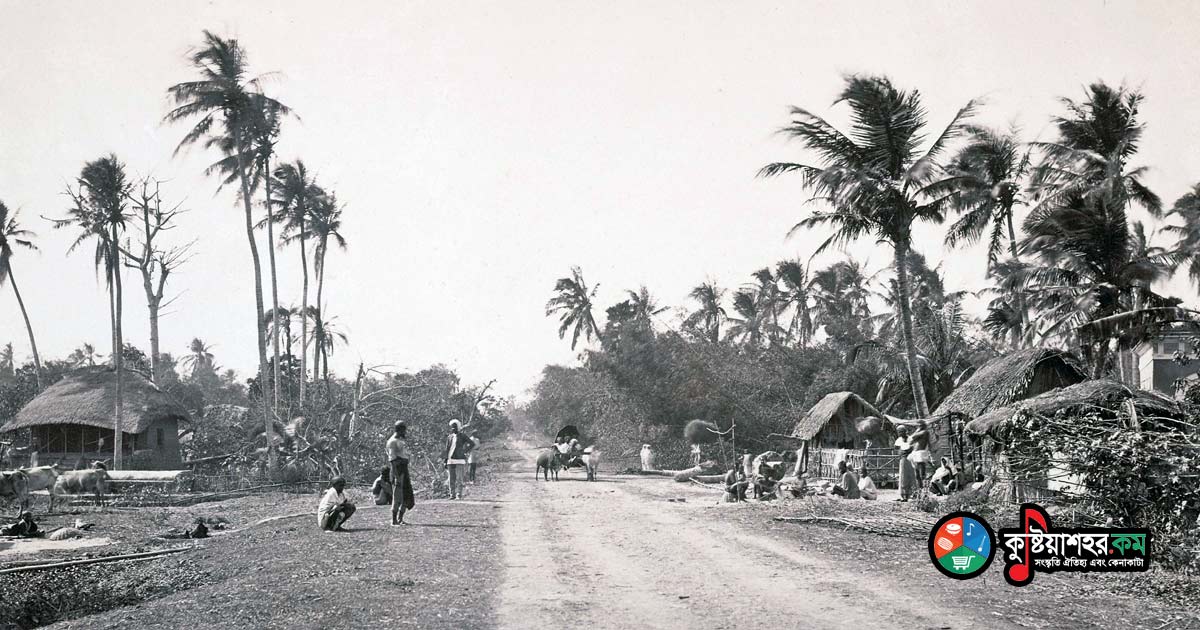
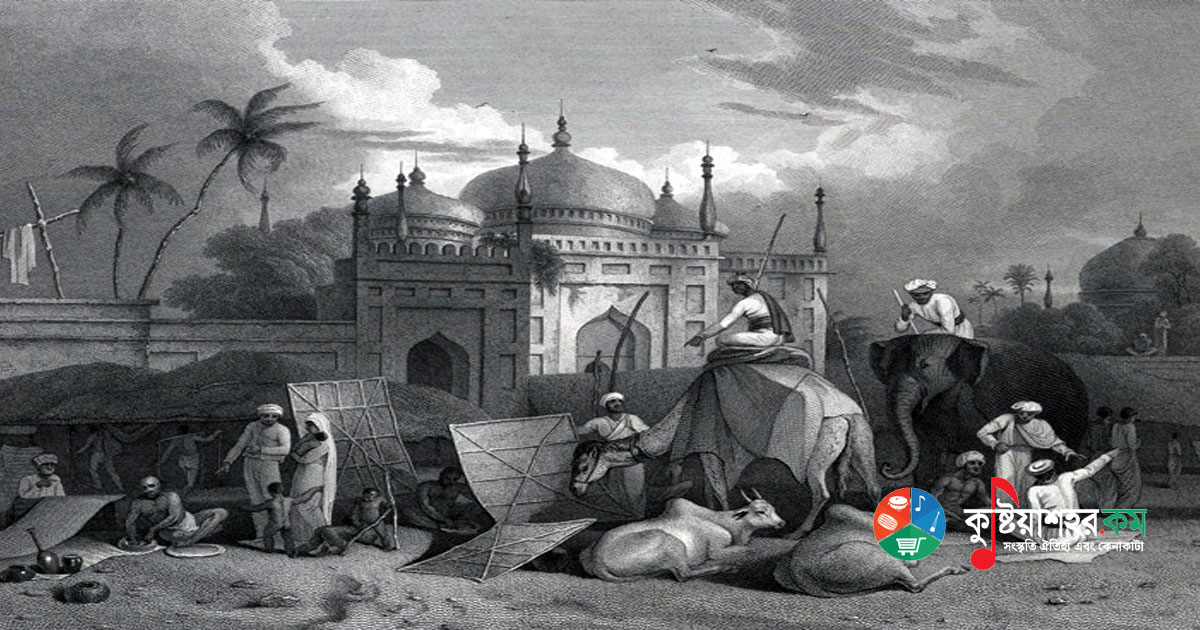
To search for the history of today's Kushtia, one must go to the steamer ghat of old days near the Padma, at the mouth of Talbaria of Mirpur thana, on the north-western bank of the Gorai river. The village on the river bank is named Puratan Kushtia (Old Kushtia). In 1760 Nawab Mir Qasim of Bengal, following his much earlier predecessor Nawab Murshid Quli Khan, abolished the chakla system and introduced the district system. In 1778, among Bengal's 28 districts, one was named Mohammadshahi. Our Kushtia belonged to that very district.
From then on, under that district system, a combined administration grew up in a blend of Anglo-Turkic traditions. The 28 districts, 26 thanas and 24 outposts that Bengal had in 1776 were later, in 1786, merged with Jessore district. Its thanas then were Kushtia, Dharampur, Nawpara, Bhadalia, Bhaluka, Khoksa and Kumarakhali. In the period 1828-58, the civil work of Kushtia thana, then under Pabna district, was done at the Pabna court, and the criminal work at the court of the Jessore Collectorate. The data available on the history of Kushtia is scant, in a very small compass; news of the history of the real Kushtia, that is, Puratan Kushtia, is scarce. Some say it existed in the time of the Nadia Raj or in the Akbari period, but that too is unproven. Kushtia (of the year 1859) - that is, the Kushtia of the time when it was under Nadia district. In the interest of the Indigo Revolt, the erosion of the Padma river and the expansion of English rule, Kushtia thana grew up on Majampur village on the south-eastern bank of the Gorai river. In 1860 the Junior Secretary (Chhoto Lat) of Bengal declared Kushtia a subdivision. Again, considering the natural features of that time, one sees that, emerging as a small canal beside today's Renwick, a branch of the Gorai, passing the north-eastern corner of the District School and beside the present D-type building, flowed on past the house to join the Chapaigachhi beel. However, in 1863, today's Kushtia subdivisional town grew up taking in about a dozen villages.
The nilkuthi of Shalghar Madhua village of the then Kushtia thana, and later of Khoksa thana of Jessore district and still later of Kumarakhali thana, was built by Thomas Kenny. With the indigo trade in view, that Bimla Bhavan which now stands beside the present Nurunnahar Hospital, reached from the Panchrasta crossing of the present Thanapara toward Choyrasta, became the centre of the subdivisional administration. Beside the Renwick company, along the Gorai river, the building stood close to the river bank and for a long time afterwards was the District Collector's Banglo. What we now see as today's Gorai river once flowed through the middle of Mangalbaria - the dead Gorai ran straight eastward from Purna Babu's ghat of Amalapara, and near a cremation ground a branch came out and flowed away southward as the Kaliganga, now known as the dead Kaliganga. And there, at the bend, on the north-western extremity, in 1862 the railway company's (then the Renwick company) factory was established. The area that grew up spanning the Becky building and the railway company's factory was Kushtia's Sahebpara, the subdivision's sadar office area. In 1865 came the Jagati railway, that is, the Kushtia railway station; and after the Gorai bridge was built in 1871, the line ran straight on to Goalando.
The English then called East Bengal the Gangetic lowlands. It is true that even now, from the land conditions we see around greater Kushtia, it may be inferred that the whole area was known as a land of beels and marshes. Like most districts of Bengal, the common people of this area too were illiterate, agriculture-dependent Muslims. Most bore the family names Bishwas, Pramanik and Mandal. Though there were jotedars among the business community, their number was negligible.
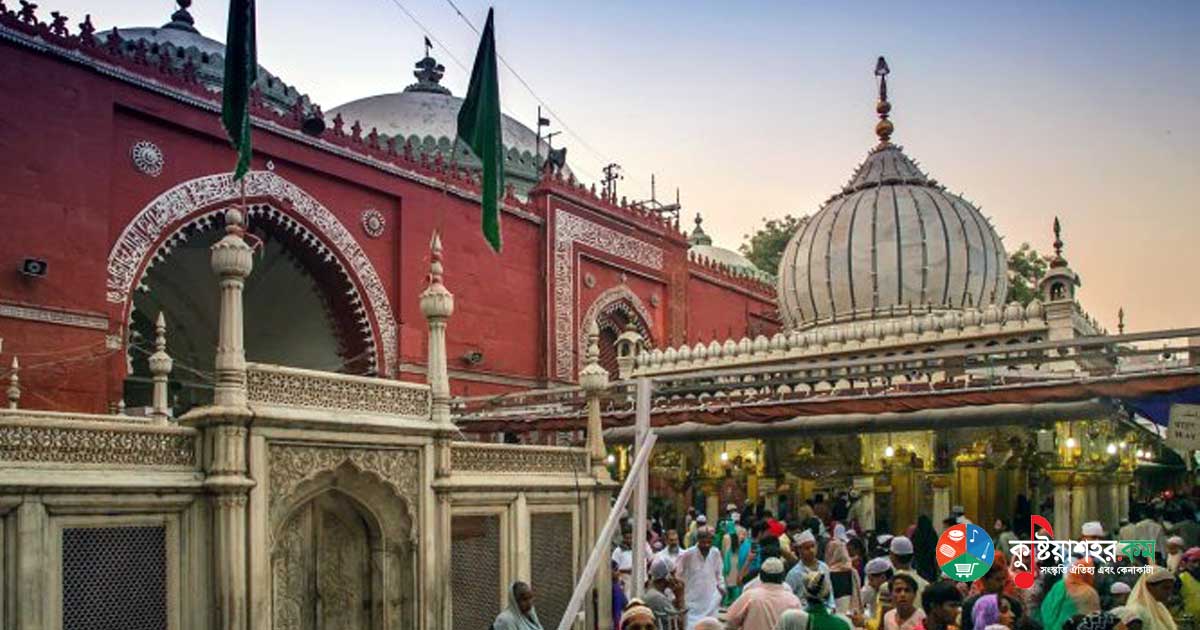
There were, one might say, no first-to-third-grade government employees. The social system that was built to run civil society was also to the Englishmen's liking. Its leaders or intermediaries were, for the most part, from the Hindu community. Kushtia's civil society then consisted of the minority Hindu community of doctors, lawyers and teachers, the so-called newly English-educated British sabhajan. In this period people of the lower-caste Hindu community were initiated into the Buddhist faith. Especially in the case of the Nath community, this was seen to be very effective. For, moving away from Brahmanism, people then came to be seen as forming yet other ethnic groups of the Austro-Mongoloid Alpine strain, and those were the indigenous folk; all the rest were known as the bhadra Bengali. This caste division has been a feature of the Indo-Pak peoples since old times, and its continuity still prevails among us. At this time the arrival of Sufi seekers took place in our region; they were able to spread the preaching of Islam considerably. That is why even today the people of this area of ours are engrossed in the grave-worship of dargah Sufi saints. Being a lowland, kushta or jute was cultivated here in abundance; the name Kushtia was derived from this kushta (according to others, from kushte or kushta). Even now the word kushte can be heard on the lips of our elders. Some other expressions such as hobini, jabini, korbini (will not be, will not go, will not do) have remained in the regional dialect.
Speaking of Kushtia, one cannot but write of Kumarakhali. Because in undivided India Kumarakhali's position was well known, and even now if we go to the Bara Bazar of Kolkata, we will find that most of its big cloth merchants are people of Kumarakhali. And they know Kumarakhali first, and Kushtia afterwards.
Though Kushtia was at one time under Rajshahi and Jessore, a market (ganj) of the British East India Company grew up here as early as the 18th century, which continues to this day. In 1870 there was a revolt at the Reshamkuthi over demands, and many people died; English soldiers too lost their lives, the proof of which is found in the inscriptions on many plaques in the Christian graveyard in front of Kumarakhali station.
Some say Kumarakhali's whereabouts are found in Rennell. In 1825-26, Bishop Heber, on his tour of East Bengal, came by river and spent some time at Kumarakhali. In 1871 the Kumarakhali subdivision became a thana and came under Nadia district. The MN High School, which grew up in 1857, is the claimant to that heritage. In 1858 the first 2 students passed the Entrance examination. It is known that the headmaster of that school at the time was Krishnadhan Mazumdar. Rameshchandra Datta (a civilian), a student of that school, had as his father Ishanchandra, who was then a Deputy Collector. Kushtia's present Kenny Road runs from Babar Ali Gate, passing behind the Court Station. This Mr Kenny's nilkuthi was at Shalghar Madhua in Kumarakhali. The fight with Mr Kenny took place at Parisundari, which is now Amalasadorpur. There is also the hearsay of one Moni Shah, a wealthy man of the present Amala, who was at that time also the owner of a Darjeeling tea estate. They lived here, and their business was in Darjeeling. At the time of the battle between the indigo planter sahib and Parisundari, the native zamindars, turning traitor, helped the English sahib. Thus it appears that in this Bengal Mir Jafar never died. Parisundari was then helped by a relative of Mir Mosharraf Hossen named Saontar Shah Golam Azam.
The Kushtia pourashava (municipality) was founded in 1869. The first municipal election was held in 1884. By the rules of the time, lawyers enjoyed considerable acceptance in society, for which the government lawyer Harishchandra Ray was nominated chairman. In the list of commissioners the name Sefatullah is found. The Chowdhury family of Majampur had an ancient tradition. Kawser Uddin Ahmed of this family was the panchayat-head president of the union council. Long known to the people for his long years of social service, he received an award from the then government. His son Fazlul Bari Chowdhury too was the long-serving president of Majampur union. At that time there was Chad Pramanik (a resident of Hatshaharipur), after whom the road from the Choyrasta crossing of Thanapara down to the riverside is named at present. He too did social work, along with community service, with renown. He was a lover of literature. In 1937 Harun Ar Rashid Harun Mia, president of the union board, also received the Khan Saheb title bestowed by the British. He was the grandfather of honorary magistrate Golam Rahman. In that same year the Khan Saheb title was received by Khondakar Shamsul Haq of Amalapara. He was president of the union board of Goshwami Durgapur and an honorary magistrate. Along with these, the maternal uncle of the present poura mayor Anwar Ali, the late Abdur Rahim, served the Kushtia pourashava, that is, the people of Kushtia, for many years. The present mayor, Mr Anwar Ali, is ever striving to adorn Kushtia.
From the survey map of 1855 and the principal documents of 1968-69 obtained from the zamindari, what is known is that in this region the greatest jotedari and zamindari was in the hands of the Hindu community. In revenge for which many a man came to be born. Bagha Jatin was one. As for culture, the foundation of this region's culture lay in the struggle against want, drought, flood, famine and pestilence; the strivers were fatalists, dependent on fate. Employees, businessmen and the middle class built up urban culture. That the ordinary people of the Kushtia of that time partook of it is borne out even today by the Porimal Natya Theatre (the G cinema hall), the present Kaya Cinema. Many artists of this place were famed and much talked of - in those days their footsteps reached as far as Kolkata.
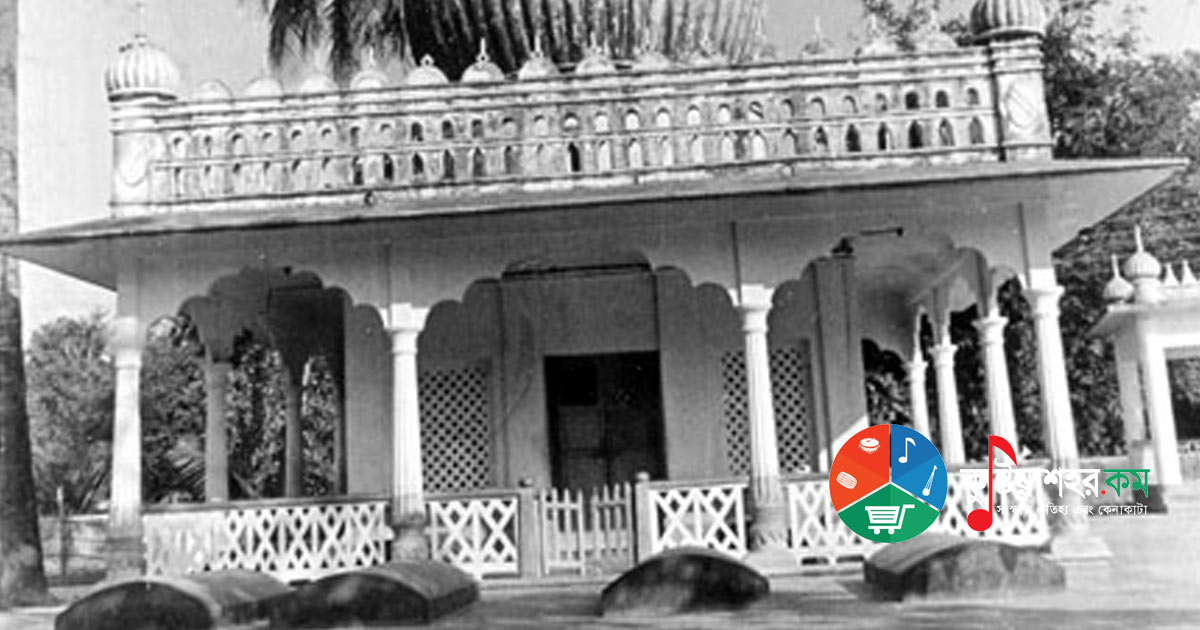
Among Kushtia's culture-minded people, the names that come up were the hakims and the like. Here they practised literature. In the park named after Gaurishankar Agarwala and Harishchandra, the hakims and munsifs played tennis there. The middle class had a store of literature, such as Dwarkanath Adhikari's Suranjan Kavya, Kangal Harinath's Eka Brahmandadeva, Bijay-Basanta, Rajakrishna, Mukhopadhyay's Rajbala, Mitra Bilap, Bangalir Itihas, Mir Mosharraf Hossen's Bishad Shindhu, Udashin Pathik's Mone Katha, Jaldhar Sen's Kangal Harinath, Probash Chitra, Akshaykumar Maitra's Sirajuddaula, Charandas's Mone Katha, Onek Katha, Jagadish Gupta's Laghu Guru, Basantakumar's Lalon Fakir, Mohatar Hossen's Nazrul Kabya Somikkhan. The people of this area were deeply God-fearing. Differences of religious belief were no bar to people's social relations. The Goshwami Durgapur Radharaman temple of 1674. In 1835 the Gopinath temple of Rani Bhabani at Khorsedpur. In 1900 in Kushtia town, built by the Raja of Naldanga, with its rathkhola - the Gopinath temple. The Brahmo Samaj house (Sarada Vidyalaya), now No. 4 Poura Primary School, of the Brahmo leader and lawyer Durgacharan Bishwas of Amalapara. The Jhaudia Shahi Mosque. As for the Kushtia Baro Jame Mosque, from an article by Mir Mosharraf Hossen printed in the Kohinoor paper of August 1868 it is known that, at the initiative of a Hindu munsif of the Kushtia munsifi court, a waqtia mosque was built here for the convenience of the employees' prayers; the site was the house of Makhanlal Ray Chowdhury, the zamindar of Baradi (Saha). In 1896, by way of exchange, it received the patronage of Ataul, the zamindar of Shekhpara. He built a Jame mosque here. The plot of the Hindu community's cremation ground at the mouth of the Gorai-Kaliganga is known to have belonged to the father of Mozammel Haque Keru Mia, former chairman of Chapra union, a jotedar of Choaya. It is conjectured that in 1850 AD there was a church of the Christian (Catholic) community, a thatched house at the western end of the present mission school - the present Church of Bangladesh, a diocese. The school adjoining it was inaugurated in 1898 by the wife of Renwick Saheb, the chairman of Kushtia and owner of Renwick.
The Christian graveyard of Majampur was inaugurated in 1866 by Cotton, Archbishop of Calcutta. Right in front of this graveyard stands today's District School. Established in 1963. In 1909-10 the Kushtia High School was established.
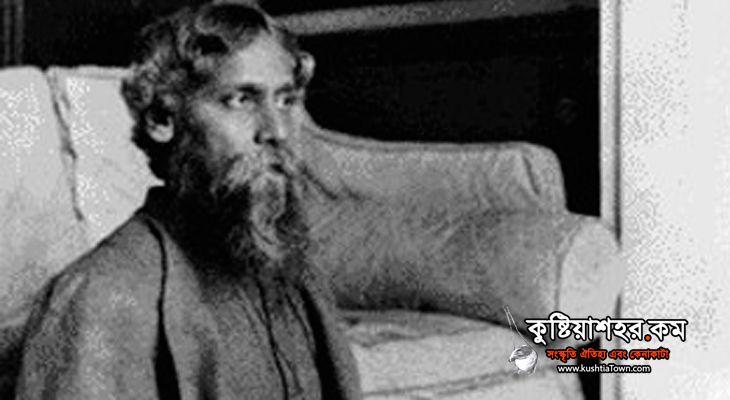
In the matter of industry, mills and factories, there was nothing in this region then. Yet the Thakur Babus of Shilaidaha set up a sugar mill in the time of Dwarkanath. This same Dwarkanath had in 1837 bought the whole kuthi from William, owner of the Kumarakhali silk kuthi. The Millpara area here, the Tagore Lodge, had its beginning under the name of Shilaidaha's 'Thegers & Company'. Their business was sugarcane crushing and baling jute, and along with bhushi (rice husk) there was a handloom factory. Going into business with his cousins, Rabindranath met with heavy losses. In the end he sold the business, for a merely nominal price, to Yajneshwar, an employee of his zamindari. Then it became the 'Yajneshwar Engineering Works'.
In 1906 there was a surki-crushing mill, and later in 1908 it grew up as a small handloom industry under the name 'Chakravarty & Sons'; it was this that later became 'Mohini Mills'. Its partners, as is known, were Mohinimohan Chakravarty (a retired deputy magistrate), Jagatkishore (maternal grandfather of Acharya Chowdhury Kanu Babu) and Rabindranath. In the days of the Renwick company there was the business of the Watson Company of Lakshanhati in Rajshahi. When that folded, their engineer, Renwick Saheb, bought the railway company's abandoned factory at Kushtia and built up the Benwick company. As for the mills and factories of old days, this was the commercial picture of this area.
In the field of industry, present-day Kushtia has yet another aspect. The soil here too has some virtues. As an example before this generation stands a dedicated industrialist whose name, if it were not written, history would laugh. He was born in Kushtia's Hatshaharipur precisely to build industry. Through much hardship, step by step, today the BSCIC industrial town - in almost the entire area he has been able to build an industrial town with the industries he created. The name of the industrial establishment he built is BRB Cables, whose founder is Alhaj Mozibur Rahman, who is at once the founder of many industrial establishments and is still striving to create something new. Once the economic buoyancy Kushtia had because of Mohini Mills suffered an ebb when the mill closed midway. Now it has again grown and increased severalfold - only because of the industries and factories he founded, and only because of his far-sightedness.
Besides, Khajanagar too must be mentioned. Owing to the single-crop and half-crop lands of Kushtia, enclosed by canals, beels and rivers, we have heard of extensive rice and jute cultivation here. But with the progress of mechanised agriculture, Kushtia has today turned into a paradise of rice. Because of this, the vast area of Khajanagar has turned into an industrial town of rice milling. Khajanagar's rice has ample repute at home and abroad. It has by now earned its renown.
It has been said again and again that the people here are of a quiet nature, tolerant and somewhat selfless and detached. This is not a hundred per cent true. There is proof, too, that when the need arises they can rise unstoppable. The movement of Kazi Miajan, the Wahhabi leader of Kumarakhali; Kangal Harinath's Grambarta Prakashika against the indigo planters, jotedars and zamindars; the taking up of staves by the scripture-less Baul community; Bagha Jatin's frontal fight in the anti-British movement; the role of Comrade Roushan Ali and Garis Ullah in the labour movement; joining the movement for self-rights and, finally, the Bengali taking part in the War of Liberation - through all this, the people of Kushtia did not hold back even from giving their lives fighting for today's independent, sovereign Bangladesh. As its burning example, the story of Kushtia in Bangladesh's War of Independence will be written in letters of gold - and it should be - and that is our expectation.
Sources:- Esho Mili Praner Bondhone, editors: Dr Saiful Alam, Professor Dr Kazi Safiqur Rahman, Bilu Kabir, Kajol Talukdar; publisher: Dr Mortuza Majid Bakul, Kushtia District School Golden Jubilee Celebration Committee 2011, November 2011, pages 36-38.