বাংলা
 English
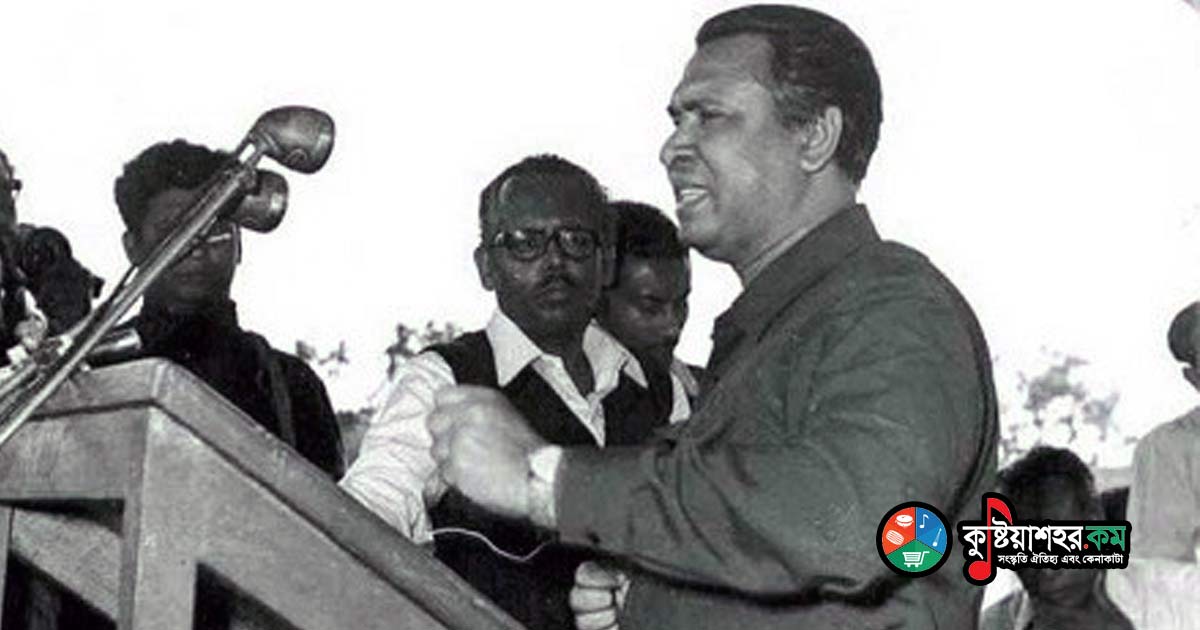
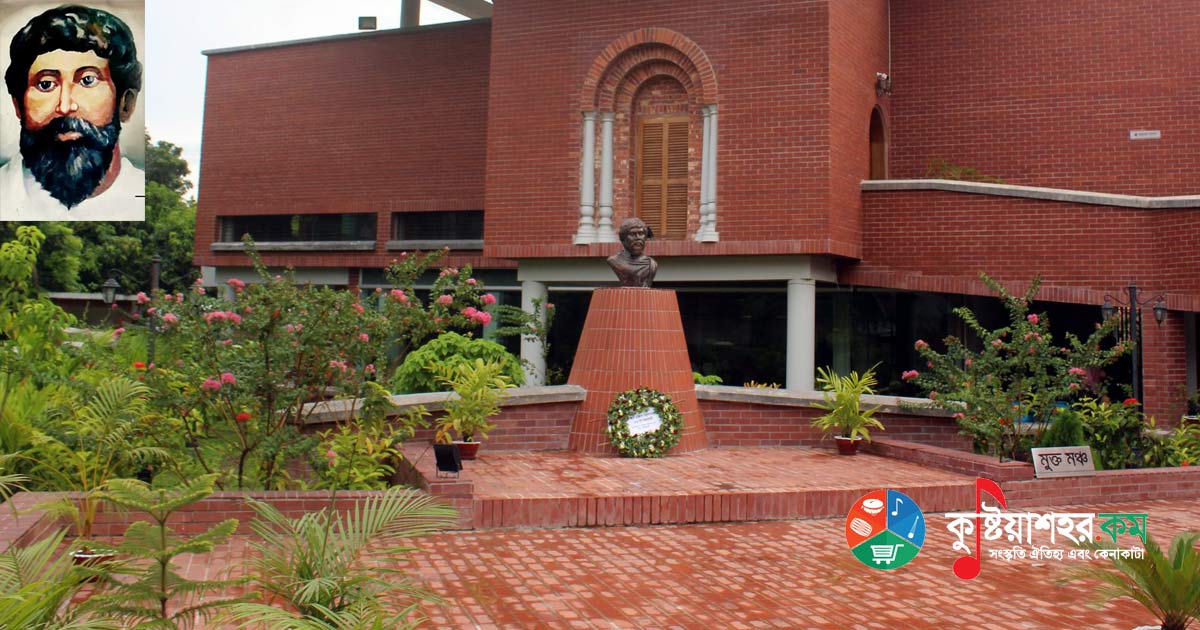
Tajuddin Ahmad (born 23 July 1925 – died 3 November 1975) was Bangladesh's first Prime Minister and one of the leaders of the struggle for independence. During Bangladesh's Liberation War in 1971 he successfully discharged the responsibility of Prime Minister of the Government of Bangladesh. He was known as an honest and talented politician.
Tajuddin Ahmad played an important role in forming Bangladesh's first wartime government, better known as the Mujibnagar Government. After independence he served as Bangladesh's Finance Minister until 1974. In 1975, after Bangabandhu Sheikh Mujibur Rahman was killed along with his family, he was arrested together with three other national leaders and held in Dhaka Central Jail. It was there, in Dhaka Central Jail, that he was killed by his assassins' bullets while in custody on 3 November 1975.
Tajuddin Ahmad was born on 23 July 1925 in the village of Dardaria, Kapasia, in Gazipur district. His father was Maulvi Md. Yasin Khan and his mother Meherunnesa Khan.
His wife Syeda Zohra Tajuddin was a member of the presidium of the Bangladesh Awami League. They have four children: the elder daughter Sharmin Ahmad Repe; the younger daughter, the eminent writer and columnist and current Member of Parliament for Gazipur-4, Simin Hossain Rimi; and the youngest daughter Mahjabin Ahmad Mimi. The family's youngest child, Tanjim Ahmed Sohel Taj, resigned while serving as Member of Parliament for Gazipur-4, and his seat was declared vacant on 7 July 2012.
The fourth of four brothers and six sisters, Tajuddin Ahmad began his studies learning Arabic from his father. During this period he was enrolled in class one at Bhuleshwar Government Primary School, two kilometres from home, and took first place in classes one and two. He was admitted to class four at Kapasia Minor English School, about five kilometres from home. He then studied at Kaliganj St. Nicholas Institution, Muslim Government High School, Dhaka, and St. Gregory's High School. Tajuddin Ahmad was a Hafiz of the holy Quran, a mastery he attained alongside his regular studies under his father's care. In the matriculation (1944) and intermediate examinations from Jagannath University (then Jagannath College) he placed twelfth and fourth respectively in the combined merit list of undivided Bengal (Dhaka Board). In 1950 he earned a B.A. (Honours) degree in economics from Dhaka University. In 1964, while imprisoned as a political prisoner, he sat for and passed the LL.B. degree examination.
After Abul Hashim became general secretary of the provincial Muslim League, Tajuddin Ahmad became directly involved in Muslim League politics in 1943. In 1944 he was elected a member of the council of the Bengal Muslim League.
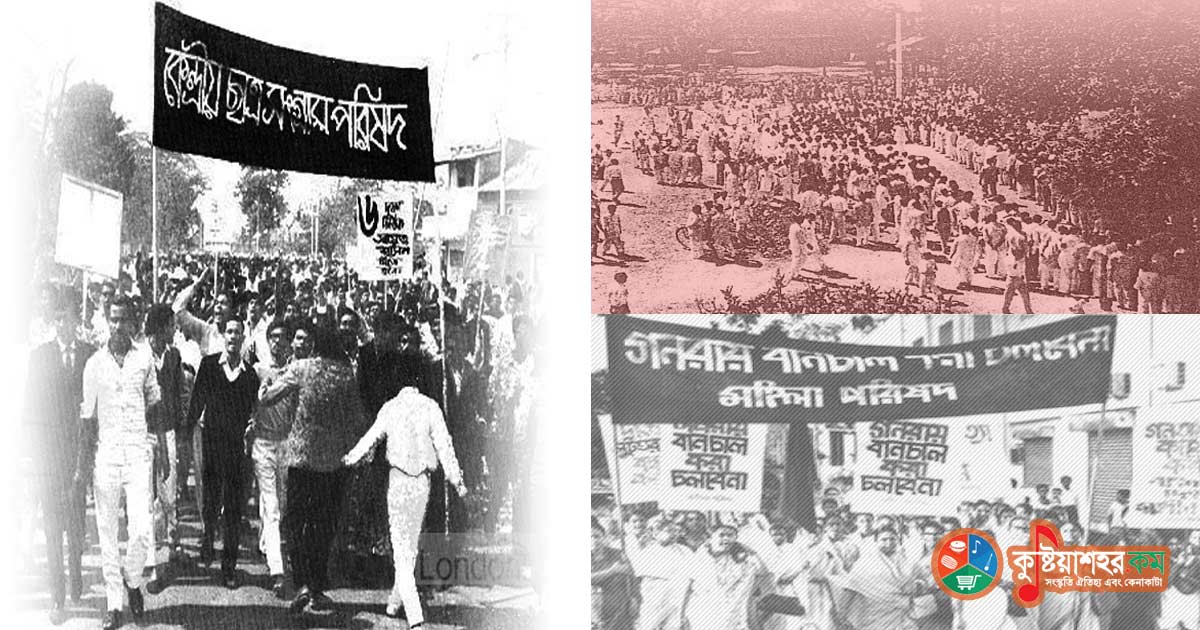
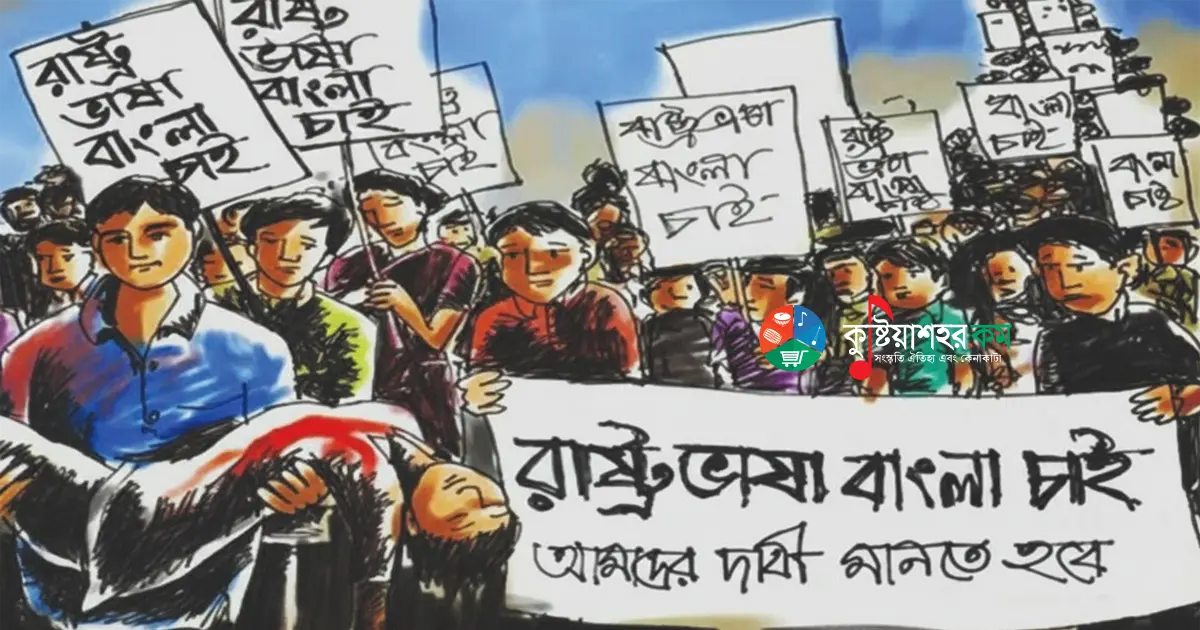
Tajuddin Ahmad was one of the founders of the East Pakistan Chhatra League (now Bangladesh Chhatra League), formed on 4 January 1948. On 11 and 13 March 1948, as an important member of the all-party Sangram Parishad, he carried out strike programmes and meetings. On 24 March he, along with the leaders of the Rashtrabhasha Sangram Parishad, held talks with Muhammad Ali Jinnah. He was one of the initiators of the Awami Muslim League founded on 23 June 1949, and was a member of the all-party Rashtrabhasha Sangram Parishad. From 1953 to 1957 he served as general secretary of the Dhaka District Awami Muslim League (in 1955 the Awami Muslim League was renamed the Awami League). In the 1954 elections, running as a United Front candidate, he defeated the general secretary of the Muslim League and was elected a member of the legislature. In 1964 he was elected organizing secretary of the provincial Awami League, and in 1966 general secretary of the Awami League. On 6 February 1966, at the all-party leaders' conference in Lahore where Sheikh Mujibur Rahman placed the Six-Point demand, Tajuddin took part in that conference alongside Sheikh Mujib, and Tajuddin was one of the members of the conference's subject committee. On 8 May that year he was arrested under the Defence of Pakistan Rules. In 1968, while in jail, he was re-elected general secretary of the Awami League; as an outcome of the mass uprising of '69 he was freed from prison. In 1970 he was elected general secretary of the Awami League for the third time, and was chosen secretary of the Awami League's parliamentary board formed for that year's general election. In the election held on 7 December he was elected a member of the National Assembly.
Even after winning the election by a huge margin, Yahya Khan, instead of transferring power to the Awami League, postponed the session of the National Assembly; at Sheikh Mujib's call, a non-cooperation movement began in what was then East Pakistan. On the night of 25 March 1971 the Pakistan army began its genocide. Bangabandhu was arrested and taken away to West Pakistan. Bangladesh's Liberation War began. In Tajuddin's words: 'The decision I took that day in the interest of the seven and a half crore Bengalis was this: to establish an independent government and begin working to conduct Bangladesh's struggle for independence.'
Guided by the policy of first self-defence, then preparation, and finally counter-attack, he began thinking of forming a government to carry this policy forward along an organizational path. So Tajuddin Ahmad went into hiding and set out towards the border to organize the war. In the meantime, on the evening of 30 March he reached the border of West Bengal via the Faridpur–Kushtia route. Taking Barrister Amir-ul Islam with him, he crossed the Meherpur border and set foot in India on 31 March. Toufik-e-Elahi Chowdhury, the subdivisional administrator of Meherpur, extended them all-out assistance in crossing the border. After the border was crossed, Golok Majumdar, Inspector General of the Indian Border Security Force, showed Tajuddin Ahmad and Barrister Amir-ul Islam due respect and arranged for their safe refuge. Having received the news from Golok Majumdar, K. F. Rustamji, Director General of the Indian Border Security Force, met them at their place of refuge and talked with Tajuddin Ahmad, becoming fully acquainted with the overall situation of East Bengal and the Bengalis' indomitable urge to win independence. At the border, Tajuddin found that, in support of the mutinous soldiers of the Bengal Regiment, the Indian army and the border guards could do nothing until they received instructions from the Government of India. When Tajuddin Ahmad sought the help of the BSF in forming a liberation army, the then BSF chief told him that training the liberation fighters and arming them was a matter of time. He added that, since the Government of India had issued no instructions on training by then, he could not give the Mukti Bahini training or arms. When K. F. Rustamji contacted the seniors in Delhi, he was told to bring Tajuddin Ahmad and Barrister Amir-ul Islam to Delhi. The purpose was a meeting between Indian Prime Minister Indira Gandhi and Tajuddin Ahmad. After reaching Delhi, the Government of India confirmed from various sources that Tajuddin Ahmad was the closest colleague of Bangabandhu Sheikh Mujibur Rahman. Before his meeting with Indian Prime Minister Indira Gandhi, Tajuddin Ahmad held several rounds of talks with senior officials of the Government of India, explaining to them the assistance and cooperation needed to conduct the Bengalis' struggle for liberation. At that time he realized that if he met them merely as a leader of the Awami League, nothing much could be expected beyond a little sympathy and compassion. Without the formation of a government and that government's firm support for the Liberation War, no country in the world would extend a helping hand to Bangladesh. Moreover, the day before the meeting with the Indian Prime Minister, a senior official asked Tajuddin Ahmad whether any government had been formed on behalf of independent Bangladesh. He then decided that at the meeting he would present himself as the representative of the Government of Bangladesh, because he believed that this could give effective shape to 'the resolution adopted in the Indian Parliament on 31 March to help the struggle of the people of East Bengal.' At the beginning of his meeting with Indira Gandhi, Tajuddin informed her that with the start of the Pakistani attack, Bangladesh had been declared independent and a government formed as early as 25/26 March. Sheikh Mujib was the President of that independent Bangladesh government, and all the senior colleagues who had joined the Mujib–Yahya talks were members of the council of ministers. Since, apart from Mujib's arrest, the whereabouts of the party's other senior leaders and activists were still unknown, Tajuddin, after consultation with the assembled party representatives, presented himself at the said meeting in Delhi as Prime Minister. At that meeting Tajuddin Ahmad requested Indira Gandhi to grant recognition to independent Bangladesh. Indira Gandhi assured him that formal recognition would be given at the appropriate time. Thus began the idea of a provisional government of Bangladesh. On 4 April Tajuddin held formal talks with Indira Gandhi in Delhi. On 10 April the Charter of Bangladesh's Independence was proclaimed at Mujibnagar in Meherpur district. On 11 April Tajuddin delivered a speech over the radio. On 17 April the swearing-in of the provisional government of the People's Republic of Bangladesh was formally held at Mujibnagar; Tajuddin Ahmad became Bangladesh's first Prime Minister. In Sheikh Mujibur Rahman's absence, Syed Nazrul Islam took charge as acting President. The provisional government operated from Calcutta until independence was achieved on 16 December, and Tajuddin Ahmad led it with determination and devotion.
After the provisional government of Bangladesh was formed on 17 April, Tajuddin Ahmad set out for India, taking Barrister Amirul Islam with him. But upon reaching the Indian border, he did not enter India without protocol. At the time he said that, as the Prime Minister of an independent country, he could not enter another country without protocol and invitation; to do so would be dishonourable for his country. Thereupon the Indian forces on the other side took him into India with a guard of honour.
On 22 December, Tajuddin Ahmad, Syed Nazrul Islam and the other leaders of the Government of Bangladesh returned to Dhaka. When Sheikh Mujibur Rahman returned after being freed from a Pakistani prison, Tajuddin Ahmad stepped down from the post of Prime Minister. He took charge as Minister of Finance and Planning. In the first national parliamentary election of 1973 he was elected Member of Parliament from the former Dhaka-20 constituency, the present Gazipur-4 (Kapasia). He presented Bangladesh's first national budget and drew up the first five-year plan.
In 1974, in the speech at the closing session of the Awami League's biennial council, he called upon the future leadership to remove the distance between the party, the government and the leaders and activists, and to build a close bond between the organization and the government.
Later, a distance grew between Tajuddin and Bangabandhu. Bangabandhu misunderstood his trusted political comrade of thirty long years. On 26 October 1974 Tajuddin resigned from the cabinet. On 15 August 1975 he was first placed under house arrest, and later, on 23 August, he was arrested.
After Bangabandhu Sheikh Mujibur Rahman was killed along with his family on 15 August 1975, Tajuddin Ahmad was placed under house arrest on the killers' orders. On 23 August, twenty men including Tajuddin Ahmad were arrested under martial law, and he was held in Dhaka Central Jail. On 3 November, inside the jail, Tajuddin Ahmad, Syed Nazrul Islam, Md. Mansur Ali and A. H. M. Qamaruzzaman were brutally killed, an atrocity infamous in Bangladesh's history as Jail Killing Day.