বাংলা
 English
In the national life of Bangladesh, 26 March and 16 December are two of the most significant days. One is the great Independence Day, the other the great Victory Day. Both are deeply tied to our Liberation War, sacrifice, courage and national identity. Yet many people confuse the meaning of these two days. Some believe Bangladesh won victory on 26 March, while others refer to 16 December as the day independence was declared. In reality, both days belong to the same historic event, but their meaning and importance are entirely different.
The simplest way to end this confusion is to remember one thing: 26 March is the declaration of independence, while 16 December is the final victory of the Liberation War fought to achieve that independence. In other words, on 26 March we declared independence, and on 16 December, through nine long months of a bloody war, we won it.
Why 26 March Is Independence Day
26 March 1971 is an unforgettable day in the history of Bangladesh, and it is observed as the country's Independence Day. The reason is that on the night of 25 March 1971, the Pakistani military launched a brutal military operation and genocide against unarmed Bengalis. In that operation — code-named ‘Operation Searchlight’ — attacks were carried out at Dhaka University, Rajarbagh Police Lines, the EPR headquarters (Pilkhana) and other places across the capital, targeting unarmed people, students, police officers and ordinary civilians.
In this terrifying situation, in the first hour of 26 March, Bangabandhu Sheikh Mujibur Rahman declared the independence of Bangladesh. His declaration called upon the people of the country to build resistance against the Pakistani occupation forces. The message of that declaration was broadcast to the world on 26 March from the Kalurghat radio station in Chittagong, where ‘Swadhin Bangla Betar Kendra’ (Free Bengal Radio Station) was then operating. A Japanese ship anchored in the Bay of Bengal managed to pick up the limited-range radio signal; Radio Australia re-broadcast it, and the BBC later carried the news as well. That is how the Bengali declaration of independence reached the world, and the people of the country threw themselves into the armed struggle for freedom.
One point deserves special attention: declaring independence means a nation is asserting its right and resolve to establish an independent state. But a war does not end the moment a declaration is made, nor does the enemy's military control disappear overnight.
26 March is therefore the symbol of the beginning of Bangladesh's independence and of the struggle for liberation. The day reminds us that the Bengali nation formally entered that struggle to break the chains of subjugation and to establish an independent, sovereign state.
Why 16 December Is Victory Day
16 December is Bangladesh's great Victory Day. On this day in 1971, the nine-month Liberation War reached its final conclusion: the Pakistani occupation forces surrendered to the joint forces of Bangladesh and India at the historic Race Course ground in Dhaka — today's Suhrawardy Udyan.
On the afternoon of 16 December 1971, Lieutenant General Amir Abdullah Khan Niazi, commander of Pakistan's Eastern Command, signed the instrument of surrender. On behalf of the joint forces, the surrender was accepted by Lieutenant General Jagjit Singh Aurora. After the signing of the surrender document, about 93,000 Pakistani soldiers and civilian personnel became prisoners of war — the largest military surrender in the world since the Second World War.
With this surrender, organised warfare by the Pakistani military in Bangladesh came to an end, and the final victory of the Liberation War was assured. The Bengali resistance against long years of exploitation, deprivation, persecution and genocide culminated in victory.
That is why 16 December is called Victory Day. On this day the desire for independence was not merely expressed — the final military victory that established that independence on the battlefield was achieved.
So What Is the Difference Between Independence and Victory?
Although the words “independence” and “victory” carry close meanings, in the light of history their significance is distinct.
Independence is the right to make one's own decisions about one's state, territory, people and political future. It relates to breaking free from another state's rule or control and emerging as a sovereign state through a declaration and the assertion of that right.
Victory, on the other hand, is the final success achieved in the struggle waged to realise that right and goal. For Bangladesh, the surrender of the Pakistani military after nine months of Liberation War was the historic moment of that victory.
Let us understand it with a simple example.
Suppose a nation declares that it will no longer live under any other country and will establish its own independent state. But the opponents of that independence are still trying to crush it by military force. In that case, even after the declaration, the struggle to establish independence must continue. When that struggle achieves its final success, it is called victory.
Exactly this happened in the history of Bangladesh.
- 26 March: independence was declared.
- 26 March to 16 December: the Liberation War was fought to establish that independence.
- 16 December: the Pakistani forces surrendered, and the final victory was won.
So although Independence Day and Victory Day complement each other, using one in place of the other is historically incorrect.
From 26 March to 16 December: A Timeline of the Nine-Month Liberation War
To understand the difference between the two days properly, we need to know the sequence of the major events of 1971.
1. 7 March 1971: Preparing for the Struggle for Freedom
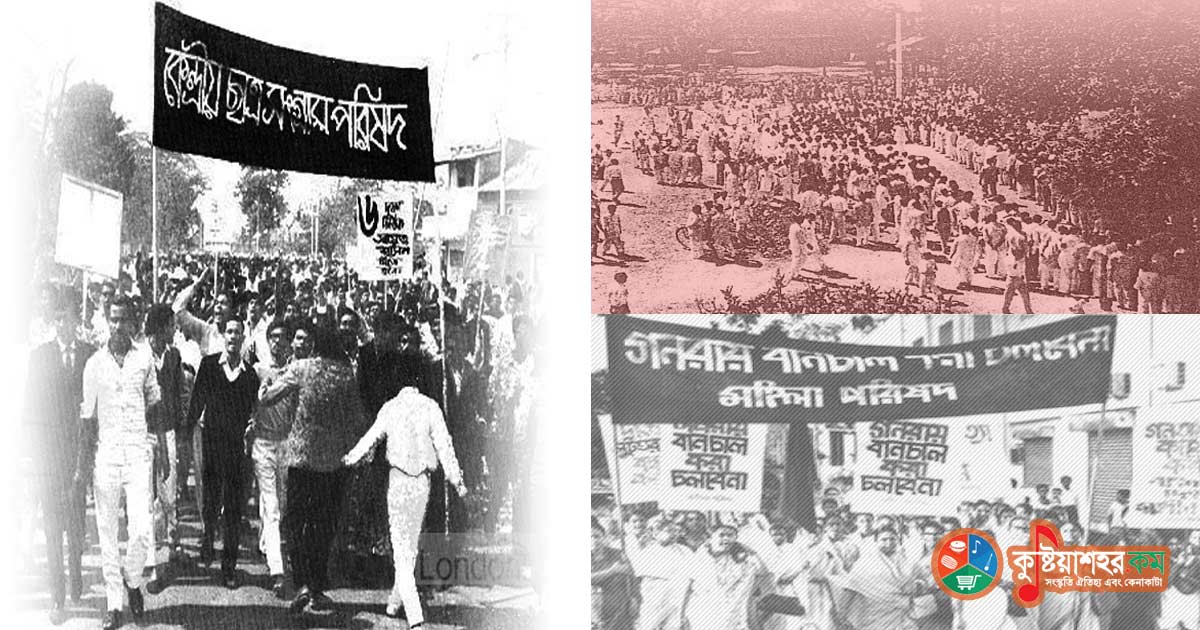
On 7 March 1971, Bangabandhu Sheikh Mujibur Rahman's historic speech at the Race Course ground in Dhaka prepared the Bengali nation for the struggle for independence. In the speech he called upon the people to prepare for resistance. The speech was one of the most important sources of inspiration and guidance for the freedom struggle. Its historic value has been recognised internationally: on 30 October 2017, UNESCO inscribed the speech in its ‘Memory of the World’ register — the first document from Bangladesh to enter that list. Still, 7 March was not Independence Day.
2. 25 March 1971: The Genocide Begins
On the night of 25 March, the Pakistani army launched ‘Operation Searchlight’. Military attacks on unarmed Bengalis began. That night is remembered in Bangladesh's history as the beginning of a horrific genocide.
3. 26 March 1971: The Declaration of Independence
After the genocide of 25 March, the independence of Bangladesh was declared in the first hour of 26 March. The armed struggle to establish independence began. It is in memory of this historic event that 26 March is observed as the great Independence Day.
4. 10 April 1971: The Proclamation of Independence
On 10 April, Bangladesh's elected representatives adopted the Proclamation of Independence. It declared Bangladesh a sovereign People's Republic and set the declaration's effect from 26 March 1971.
5. 17 April 1971: The Mujibnagar Government Takes Oath
Bangladesh's provisional government took its oath in the mango grove at Baidyanathtala, in present-day Meherpur district; the place was named Mujibnagar. This government played a crucial role in conducting the Liberation War, winning international support and building the administrative structure of an independent state.
6. March to December 1971: The Liberation War
Across the country, freedom fighters fought the Pakistani forces. As early as April, the freedom forces were organised into 11 sectors, and the war was conducted through sector-based organisation and training. People from every level of society took part in the war — ordinary citizens, students, farmers, workers, women, political activists, and military and civilian resistance fighters. At the height of the war, about ten million people were forced to take refuge in neighbouring India. According to the Bangladesh government's estimate, around three million people were martyred in this war; various international researchers put the figure between 300,000 and three million — no number diminishes the horror of that genocide.
7. 3 and 6 December 1971: The Final Phase of the War
On 3 December, when Pakistan launched air strikes on the western front, India openly joined the war, and the joint command of the freedom fighters and Indian forces moved into full operation. On 6 December, India formally recognised Bangladesh as a sovereign state. After that, only time remained — under the pressure of the freedom fighters and the joint forces, Pakistani resistance kept collapsing.
8. 16 December 1971: The Final Victory
Finally, on 16 December, the Pakistani forces surrendered to the joint forces in Dhaka. Bangladesh achieved the ultimate victory of the Liberation War. That is why this day is observed as the great Victory Day.
An Easy Way to Remember 26 March and 16 December
To remember the difference between the two days, you do not need to memorise complicated history. Just remember the answers to two questions.
Question: When did Bangladesh declare independence?
Answer: 26 March 1971. That is why 26 March is Independence Day.
Question: When did Bangladesh win the final victory of the Liberation War?
Answer: 16 December 1971. That is why 16 December is Victory Day.
Even more simply, remember:
- Independence = the declaration.
- Victory = the surrender and the final success.
Or keep one sentence in mind:
26 March is the declaration of becoming independent; 16 December is winning the war for independence.
If this one sentence stays with you, you will never confuse the two days again.
The Meaning of Observing Independence Day and Victory Day
Independence Day reminds us that the dream of an independent state was not a sudden event. Behind it lay a long political struggle, the movement to establish the rights of the language, protests against economic and cultural discrimination, and the people's aspiration for self-determination.
Victory Day, on the other hand, reminds us how great a price the nation had to pay to realise that dream. Through the sacrifice of countless martyrs, the valour of the freedom fighters, the support of ordinary people and the immense courage of the persecuted, Bangladesh achieved its final victory.
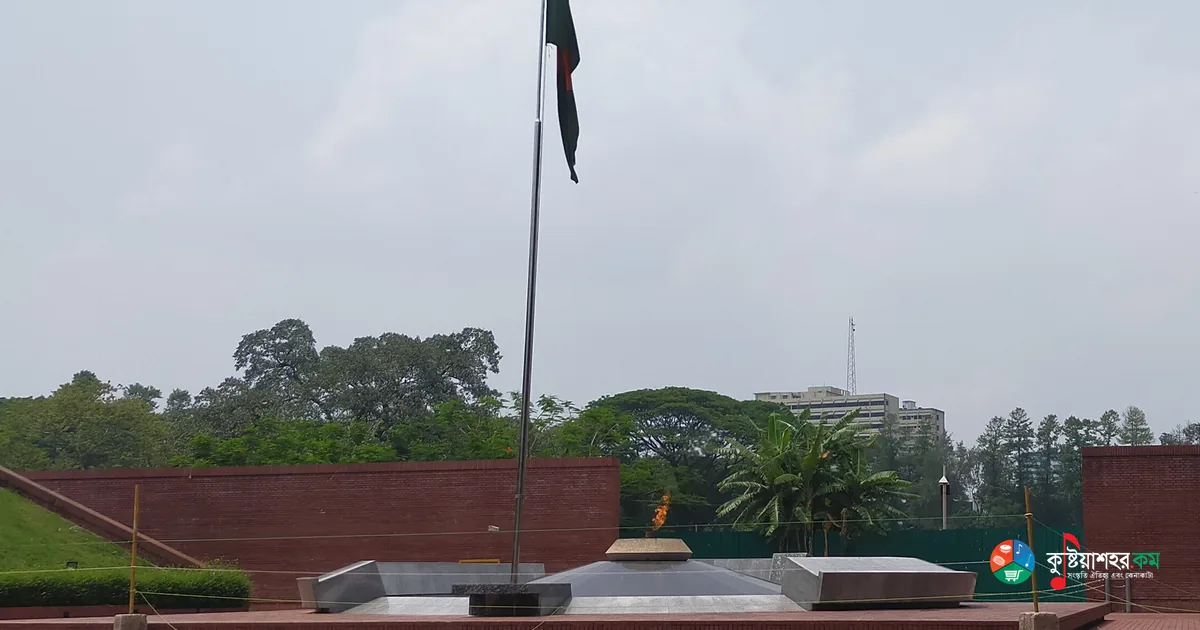
26 March recalls the aspiration for independence and its declaration. 16 December recalls the story of victory that realised that aspiration. One day is the memorial of the beginning of a struggle; the other is the memorial of that struggle's final success. Both days are national holidays with full state honours: the day begins at dawn with a 31-gun salute, and tributes are paid at flags and memorials.
The purpose of observing these two days is not mere formality; it is to present the true history of the Liberation War to the new generation, to convey the value of independence, and to awaken a sense of responsibility toward the country.
Conclusion: 26 March Is Independence, 16 December Is Victory
Bangladesh's Independence Day and Victory Day carry two distinct historic meanings. On 26 March 1971 independence was declared, and the armed struggle to establish it began. On 16 December 1971, with the surrender of the Pakistani forces, the nine-month Liberation War achieved its final victory.
That is why it is wrong to call 26 March Victory Day, or 16 December Independence Day. Both days are inseparable parts of our national history — but their identities are different.
Remember: on 26 March we declared independence, and on 16 December we won the struggle for it.
Knowing this difference is not just a matter of general knowledge; it is the responsibility of rightly knowing one's own country's history, sacrifices and the struggle of nation-building. Every member of the new generation should learn this history and pass it on accurately to the generation that follows.
May the spirit of the great Independence Day and the great Victory Day remain forever awake in our national life.