বাংলা
 English
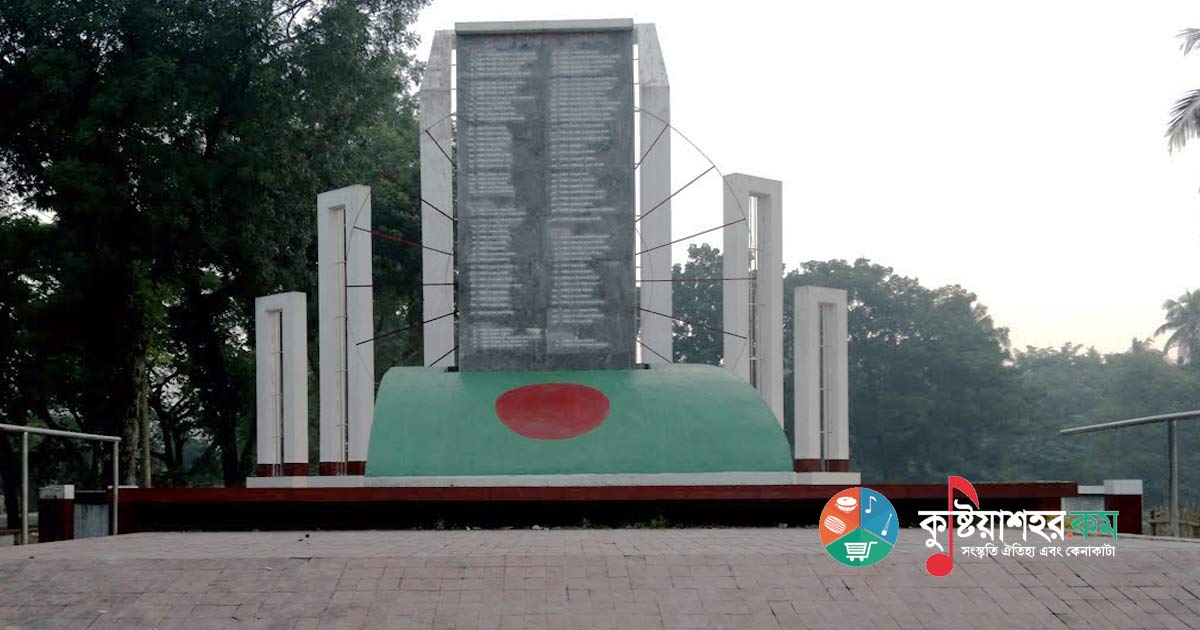
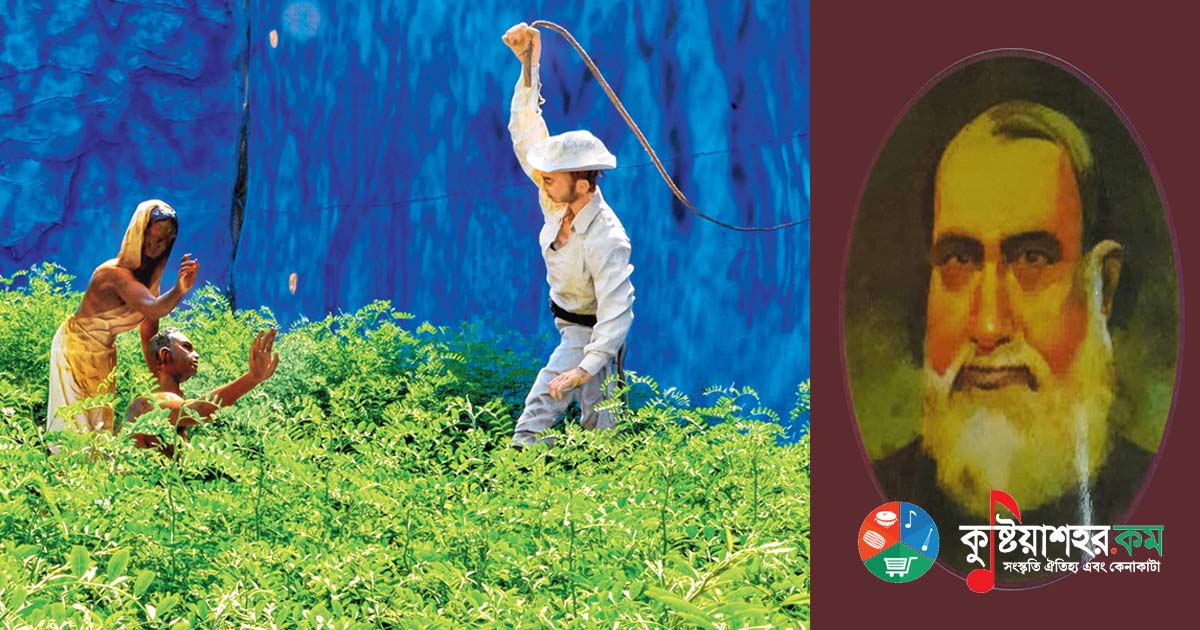
In the latter part of the nineteenth century, Kushtia's son Mir Mosharraf Hossain wrote his immortal work 'Bishad Sindhu'. But could he have imagined that, almost a century later, another Bishad Sindhu was about to be written in his own birthplace? On the dark night of 25 March 1971, the savage Pakistani beasts struck Lalon's land of Kushtia, beginning destruction and massacre. But the followers of Kushtia's Bagha Jatin resisted them and snatched away independence. The victory saga of Kushtia's brave freedom fighters has been narrated by Mostafizur Rahman Manju, Kushtia correspondent of Ittefaq.
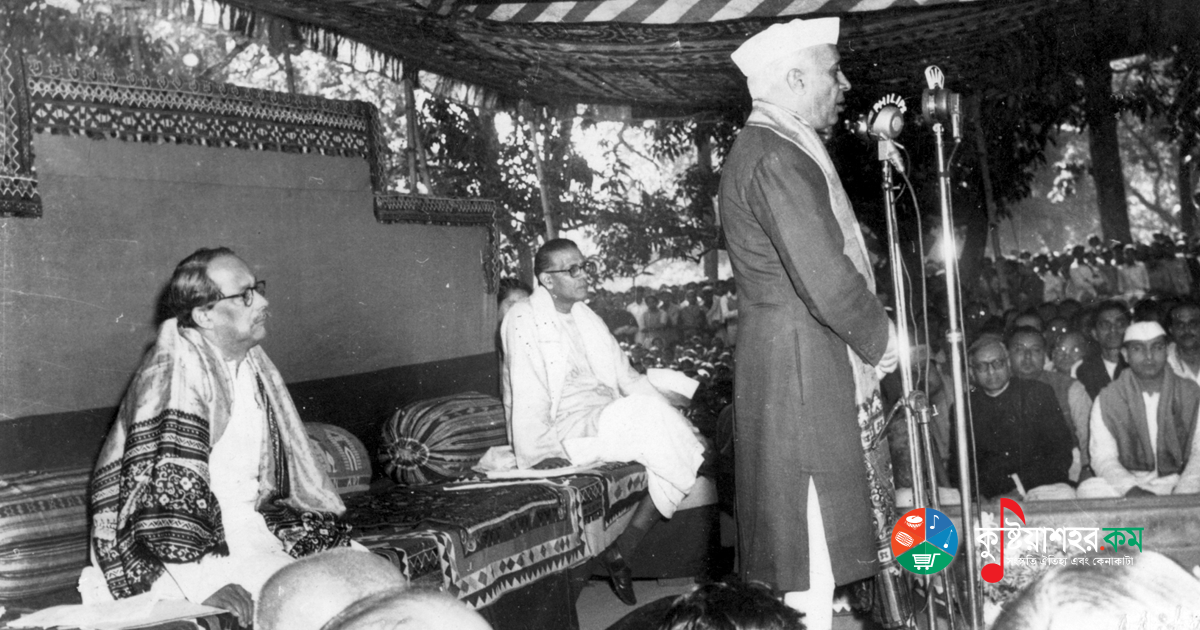
11 December 1971 is Kushtia Liberation Day. On this day, completely defeating the Pakistani troops in the face of the resistance of the freedom fighters, the allied forces and hundreds of thousands of freedom-loving people, they were driven out of Kushtia. For the people of Kushtia this day is glorious and especially memorable. On this very day, in the invaded-free Kushtia, in the presence of freedom fighters, allied forces, political leaders and a huge crowd, the national flag was formally hoisted in the Kushtia Collectorate grounds, and on behalf of independent Bangladesh the DC and SP were entrusted with administrative responsibility. The national flag was hoisted by Abdur Rauf Chowdhury, the political figure who led the Liberation War in greater Kushtia, a brave freedom fighter and chairman of the Zonal Council of the south-western region. After entrusting responsibility to the DC and SP, he delivered a speech at the Collectorate grounds addressed to the political leaders, government officials and employees and the public, and called upon everyone to build an independent Bangladesh and establish good governance. Alongside Abdur Rauf Chowdhury, those who played special roles in organizing the freedom fighters in Kushtia include Golam Kibria, Mirza Ziaul Bari Noman, Advocate Shamsul Alam Dudu, Abdul Hamid Rayhan, Advocate Abdul Jalil, Advocate Aktaruzzaman Masum, Abdul Momin, Mohan Mia, Advocate Shamsul Huda, Nasim Uddin, Shamsul Hadi, Khondker Sajedur Rahman Bablu, Minhazur Rahman Alo and others.
How are the freedom fighters? :- Many of those who, risking their lives in the fight for the motherland, were able to snatch the red sun of independence are no longer alive today. Most of those still living have arrived at the twilight of their lives. When they threw themselves into the war, renouncing attachment to life, the freedom fighters had no desire to gain anything. Their only aim was how to free the country. Although the country's independence was achieved through nine long months of bloody war, through the dishonour of mothers and sisters and at the cost of a sea of blood, are the freedom fighters who made the ultimate sacrifice for it well on the soil of the independent country? No, most of them are not well today. Victorious in the war to win the country, they are today defeated in the battle of life. Their lives are passing in extreme hardship and poverty. Ground down by the blows of poverty, many of Kushtia's freedom fighters are today forced to beg, some work as community traffic workers, and still others, unable to find any work, pass their days starving or half-starved. Many needy freedom fighters voice their grievance, saying: we never indulged in luxury, nor did we ever expect anything in return. But as citizens of an independent country, the freedom fighters demand the guaranteed right to live independently, including food, clothing, medical treatment and housing. They demand that the needy and poor freedom fighters be identified and rehabilitated. Khered Ali (58), a needy freedom fighter of Chhatian village in Mirpur upazila of Kushtia, though worn out by the burden of age, works as a community traffic worker at the Zia Road bus stand out of the urge to protect his own life and family. The meagre earnings there somehow keep his household going. In the same area, freedom fighter Saheb Ali (60) lives in a hovel on railway land. He has no income at all. His wife is a cancer patient. They pass their days with or without food. Out of the urge to stay alive, freedom fighter Saheb Ali sometimes leaves the area for fear of social shame and even begs. Another needy freedom fighter is Manikhar (60). He is quite ill physically. He can hardly move about. The condition of his household is also pitiable. This brave freedom fighter and his family live in hunger and half-hunger. On 30 November last, a Dhaka-based organization called 'Jege Achho' gave financial assistance of 15,000 taka each to those three needy freedom fighters of Mirpur in Kushtia, a total of 45,000 taka.
The three heroines of Kumarkhali :- Three heroines are still alive in Kumarkhali of Kushtia. Nobody takes care of the heroines Duljan, Elejan and Masuda of Dayarampur and Hashimpur villages on the banks of the Padma river in Kumarkhali upazila. During the war, with the help of the Razakars, the Pakistani soldiers had detained these three and committed bestial atrocities on them. On 26 March 1992 the three heroines gave testimony at a people's court in Dhaka for the trial of war criminals. Later, pro-independence and anti-social elements ostracized them. The ailing Elejan says that after her elder daughter's marriage her husband divorced her, branding her unchaste. Since then the daughter has been with her mother. The days of this utterly destitute heroine are passing amid extreme uncertainty. The heroine Masuda is at present very ill. Her husband Mofel Uddin, a small trader, is struggling hard to meet the cost of his wife Masuda's treatment. The heroine Duljan is bent with age. During the war she was seriously injured by the Pakistani soldiers' atrocities in the detention camp and by blows of a rifle butt. Since then she has remained physically and mentally ill. Behind these three heroines lies a great unheralded contribution to the Liberation War. Yet even after 42 years of independence they remain neglected to this day, and nobody inquires after them.
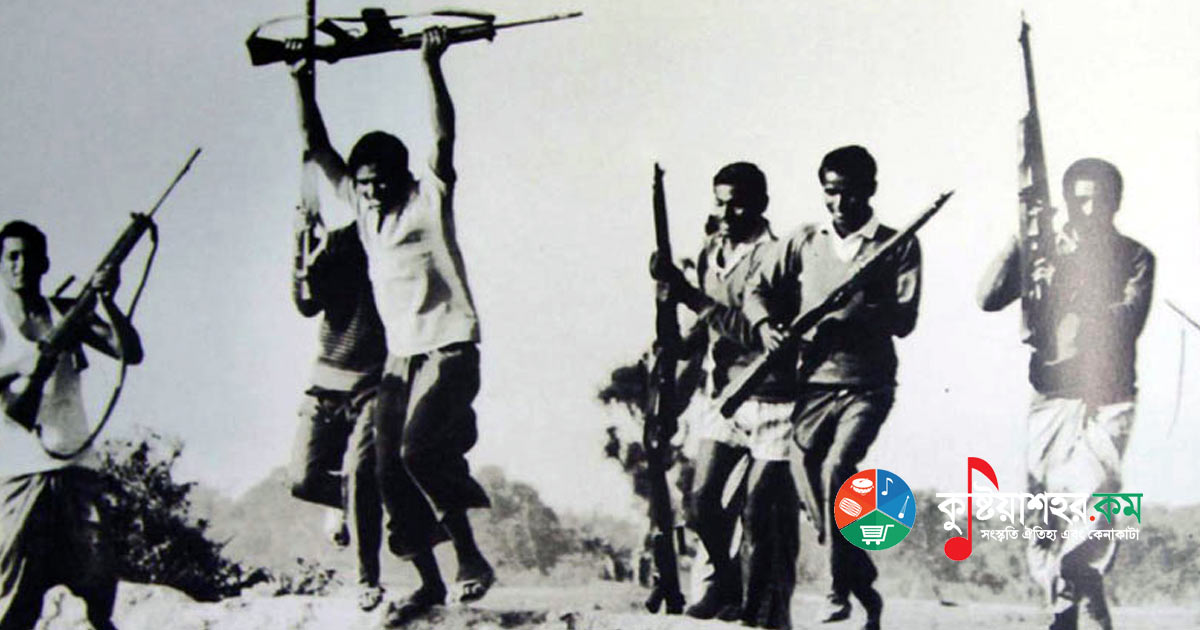
Genocide :- On the night of 25 March 1971, 216 armed soldiers of the 27 Baluch Regiment under the leadership of Major Shoaib came and took up positions in Kushtia and occupied the police lines, the district school, the telegraph office, the thana and the wireless office. The next day the Pakistani soldiers imposed a curfew in the town and began parading. From 27 March, after first killing a man named Rahman by shooting, the Pakistani soldiers began wholesale massacres. Houses in the town were set on fire. Piles of corpses piled up on the banks of the Gorai river near the town. The headquarters of the Fourth Wing of greater Kushtia was in Chuadanga, and with the direction of Wing Commander Major Abu Osman Chowdhury and the help of the EPR, freedom fighters and freedom-loving people tried to build resistance against the Pakistani soldiers. At first the freedom fighters could not resist the Pakistani soldiers, but later the allied forces, the EPR and the freedom fighters built resistance together and began counter-attacks. In Bongshitola of Kushtia Sadar upazila there was a four-hour battle between the freedom forces and the Pakistani soldiers, in which 157 Pakistani soldiers were killed. 8 brave freedom fighters were martyred. They were: Tajul Islam, Didar Ali, Yakub Ali, Shahid Dil, Abdur Razzak, Sarowar Hossain Suruj, Mezbah Rahman and Mirajuddin. At the time, the story of this battle was broadcast by the BBC and Swadhin Bangla Betar Kendra. Later, with the help of the Razakars, the Pakistani soldiers carried out widespread massacres and barbarities in the Bongshitola, Karimpur and Brittipara areas. After the killings, people's corpses were buried in the earth at Brittipara of Sadar upazila. Later this killing ground was discovered at Brittipara, and at the beginning of the current year 2012 a beautiful memorial was built beside the killing ground at the initiative of the District Freedom Fighters Command Unit and the Kushtia Sadar Upazila Council.
Those martyred in direct battle with the Pakistani forces in Kushtia are: of Kushtia Sadar upazila, Lance Naik Ijol Uddin Ahmed, Sepoy Abu Taleb (Bir Uttam), Sepoy Nowshed Ali, Sepoy Liakat Ali, Naik Md. Idris Ali Mondal, Sepoy Sheikh Alfa Uddin, Sepoy Nowab Ali, Sepoy Abu Jafar, Sepoy Abdul Malek Hawladar, Yunus Ali Mridha, Tajul Islam, Khorshead Alam Dil, Golam Mostofa, Kismat Ali, Tozammel Haque, Chand Ali Molla, Chitra Bahadur Thapa, Nabadeep Chandra Sharma, Shahidul Haque, Afsar Ali, Abdul Malek, Abdul Kuddus, Abdul Mannan and Sheikh Jamal Uddin. In Kumarkhali upazila were martyred Lance Naik Abdur Rashid, Sepoy Abdul Latif, Sepoy Monirul Islam, Abdul Kader, Abul Kashem, Abdul Aziz, Saban Ali, Shamsuzzoha, Tosaddaq Hossain, Lutfar Rahman, Shahjahan Pramanik, Ansar Ali, Abu Bakkor Siddik, Khondker Abdur Razzak, Abdul Mannan, Fakir Sardar, Abdul Mannan and Nripen Kumar Mitra. In Daulatpur upazila were martyred Sorhar Hossain, Naik Subedar Azizul Haque Chowdhury, Naik Sheikh Afil Uddin, Sepoy Liakat Hossain, Sepoy Shamsuddin, Sepoy Anowarul Islam, Sepoy Amzad Hossain, Sepoy Kubbat Ali, LD Abdus Salam, Sepoy Habibur Rahman, Lance Naik Mokbul Hossain, Sepoy Ilias Hossain, Sepoy Abdul Mannan, Recruit Mojibar Rahman, Sepoy Jamal Mia, Sepoy Wahidul Islam, Mohiuddin, Nazrul Islam, Rezaul Karim, Rokonuzzaman, Abdul Wares Ali, Abdul Aziz, Abul Kalam Hossain and Md. Ansar Ali. In Mirpur upazila were martyred Subedar Nazir Ahmed, Sepoy Rowshan Ali, Sepoy Omar Ali, Ashraf Ali Khan, Gopal Sheikh, Madhu Mondal, Sadek Ali, Amirul Islam, Sonaullah Mondal, Riazatullah, Jasim Uddin, Khondker Abdur Rashid, Abdur Rahim Uddin, Abul Sheikh and Imdadul Haque. Besides, in Khoksa upazila Abdus Salam and Abu Hasanat Arju, and in Bheramara upazila Nazrul Islam, Giasuddin, Havildar (retd.) Hanif Ali, Sepoy Fazlul Haque and Md. Sekendar Ali Sardar were martyred in direct battle.
Reaction of the leading freedom fighters :- Veteran freedom fighter Abdur Rauf, who led the Liberation War in greater Kushtia, told Ittefaq that although the Liberation War could be organized and victory achieved under political leadership, afterwards the political arena was badly polluted by the corruption of self-interested political leaders, the lack of good governance, the looting of state resources, extreme politicization in every sphere and the attachment and vindictiveness of clinging to state power. Although four decades of independence have passed, national development has not reached the desired goal. Good governance and true economic emancipation in the country have still not been achieved. Because of political-administrative corruption, the looting of state resources and the lack of good governance, none of the dreams of the Liberation War — establishing an exploitation-free country and society or protecting the people's fundamental rights — could be realized. The improvement of the fortunes of a handful of people, leaving out the transformation of the fortunes and development of all the people of the country, cannot be claimed to be real economic development. It is to be noted that Abdur Rauf Chowdhury's house, located in Thanapara of Kushtia town, was used as the headquarters of the War of Liberation for organizing the freedom fighters of greater Kushtia and conducting all war-related activities. On the other hand, freedom fighter Advocate Abdul Jalil, who hoisted the flag of independence at Kushtia Islamia College on 3 March 1971, district freedom fighters commander Nasim Ahmed and former commander Khondker Sajedur Rahman Bablu say that since governance, society and administrative systems befitting an independent country have not been built, the spirit of independence has still not been realized. Although the country is independent, the economic emancipation of the people of the country has not yet come. As a result, the improvement of the fortunes of all the people, along with granting the freedom fighters full state dignity and rehabilitating them, has still not been possible.