বাংলা
 English

Kushtia is an important land in the south-western region of our beloved motherland, Bangladesh, brimming with a mother's affection. Rich in exquisite treasures of literature and culture, Kushtia is known as the cultural capital of Bangladesh, and at the same time it is an outstanding district known for its daily newspapers. Again, by establishing the first temporary capital of independent Bangladesh in Kushtia during the Liberation War, history was written in the creation of Bangladesh.
Today it is from this glorious district that many popular daily newspapers see the light of day every morning at the touch of the sun's rays at dawn. Just as Kushtia is the backdrop of the thought and ideals of great minds and talented people, so too, in keeping with the demand of the daily newspapers, its citizens enjoy greater freedom of expression and greater opportunity for literary practice.
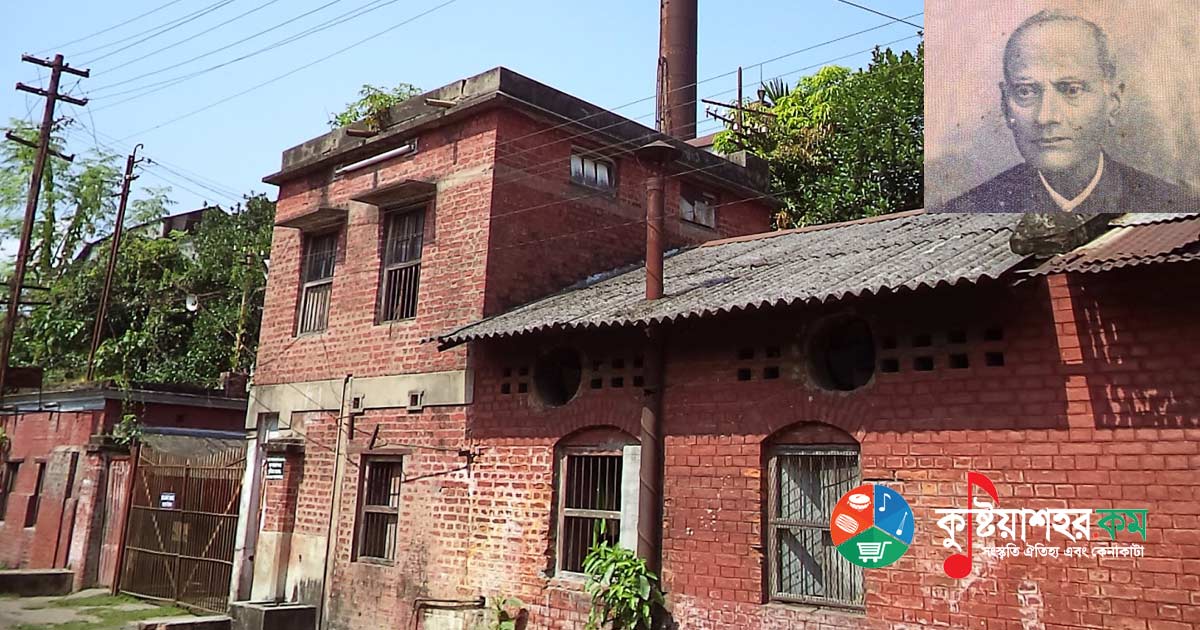
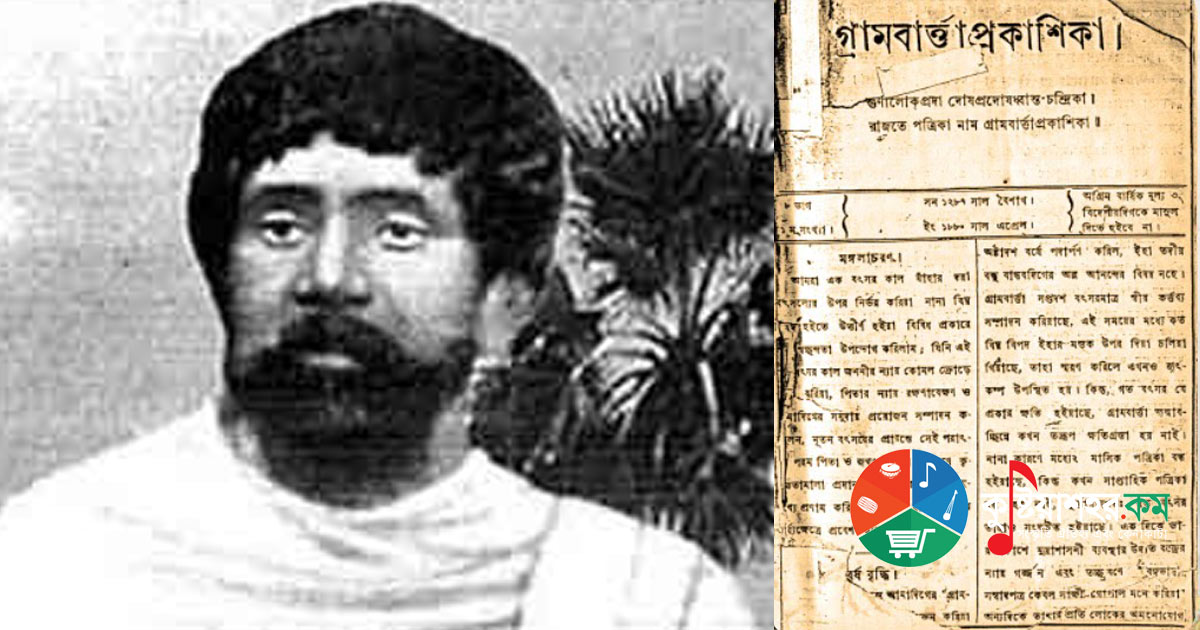
The abode of countless gifted people has made Kushtia famous: it is intertwined with the memories of the world poet Rabindranath Tagore, the pilgrimage land of the Baul emperor and mystic Lalon, Mir Mosharraf Hossain the author of Bishad Sindhu, and Kangal Harinath Majumdar, the father of Bangladesh's first newspaper and a legendary figure of rural journalism. To write about newspapers, one must begin by praising Kangal Harinath Majumdar, a pioneer of journalism against oppression and tyranny, and his newspaper 'Gram Barta Prokashika' (Rural News).
Kangal Harinath Majumdar's ideals in newspapers and journalism have now become a chapter of history. This great figure of the journalistic world was born in Kumarkhali of Kushtia (then Nadia under Pabna district) on 22 July 1833. Discussing his philosophy of life and journalistic practice brings forth the honesty, ideals, competence and devotion of a truly fearless journalist. From his youth he stood beside helpless people in the service of humanity.
At that time, to bring to light the tyranny of the British rulers and the sorrow and want inflicted on the common people of his village, he began writing essays in the poet Ishwar Chandra's newspaper 'Sambad Prabhakar'. At the poet's suggestion, Kangal Harinath Majumdar's essays were proofread and published. Then on his own initiative he brought out 'Gram Barta Prokashika' with the ideal of serving the village. It was printed at Girish Chandra Bidyaratna's press in Kolkata and published from Kumarkhali in Kushtia.
It regularly carried essays on literature, philosophy and science, along with accounts of the various misdeeds and oppression of the indigo planters and the zamindars of the Jorasanko Tagore family. This four-anna monthly magazine cost five annas. In the end it was converted into a weekly costing one paisa. The continued threats of the British magistrates and native zamindars could not keep him from this work. To ease the publication of the paper, in 1873 he set up a printing press in Kushtia named the M.N. Press.
On one side a shortage of funds, on the other the government's strict press policy and various oppositions: after nearly 22 years of publication in several phases as a monthly, a fortnightly and a weekly, 'Gram Barta Prokashika' closed down. In that nineteenth century this paper always stood by the oppressed common people of rural Bengal. That is why even today, on the pages of history and in the world of journalism, there is Kangal Harinath Majumdar, a timeless journalist and the pride of Kushtia, and his newspaper 'Gram Barta Prokashika'.
After much time has passed, now shining in its own light, many journalists of Kushtia today discharge the duties of editor and publisher. That so many dailies come out every day in this district's newspaper world has taken on the shape of a new chapter, and at the same time the worth of journalism in Kushtia has grown. Now political leaders and activists have entered this profession, as have businessmen and influential people.
They too, with their money, time and skill, are making praiseworthy contributions to sustain this practice and to inspire poets, writers and talented journalists. It is everyone's wish that those who began the journey carrying the dream and promise of each daily of Kushtia may reach their destination. Many believe that the ideals and works of Kushtia's Kangal Harinath Majumdar, the father of Bangladesh's newspapers and a pioneer of mofussil journalism, are also an inspiration for many in this district to enter the profession of journalism.
Amid the crowd of this district's many dailies, the names, fame and familiarity of true pen soldiers have emerged in meeting the readers' demands. Under the editorship of many journalists, at the pens of a host of new and veteran journalists, the dailies are about to bring out much that is hidden and unknown. Though today, under the pressure of power, at the initiative of businessmen, and under the patronage of political parties, many-sided dailies are being published. It must also be admitted that because there are many dailies, the worth of news workers has grown. Along with that, democracy, literary-cultural practice and the pursuit of knowledge have increased.
Many people feel restless if they do not get the paper in the morning. We have many expectations of a daily newspaper. And how much of the reader's wishes can a newspaper fulfil! But the question and the answer remain: how favourable an environment do we have in our media to give real shape to the ideals for which many have chosen the noble profession of journalism? The popularity of the daily newspapers and their editors can now be judged, alongside academic qualifications and training, by the glow of ideals and the talent of the pen. How popular they will be in regular publication and with readers, the readers themselves can judge. For to every editor his own daily is dear, yet the best can be determined through the pen, merit and work.
With the times, alongside men, daily newspapers edited by women exist in this district too. There is also one English daily, and that too is edited by a woman. However, if one searches the history of how the daily newspaper came to Kushtia, it is seen that when the first daily was published in Kushtia, daily newspapers had not yet been born in many districts of Bangladesh. The first daily of this district, that is of greater Kushtia, is the Daily Bangladesh Barta.
Edited by Abdur Rashid Chowdhury, this daily began its journey on 20 May 1987. This daily, the first in Kushtia's history, has published regularly from the very start, printing the regular writings of the poets and writers of this region and covering the problems and potential of the people of this area. The editor of this paper says this newspaper has no plan of extorting money by dishonest means or by intimidating anyone. This paper exists to move forward upholding the justice, principles and ideals of journalism and to kindle inspiration for literary practice. And those whose writings are printed are sent prizes and paper at our own responsibility.
Journalism is a profession that is not like other jobs. Those who come to work in it regard this work as a matter of meditation, knowledge and devotion. For various surrounding realities they cannot give effect to principles and ideals in time. They cannot build the daily of their dreams, aspirations or expectations with the sweetness of their hearts. The daily papers are governed by the rule of power, so many news workers of most papers cannot write a single word beyond it.
For many of our dailies, in regular publication, the various slogans and messages of hope have today remained only that daily's dream. In a district where so many dailies come out each morning carrying their own light of merit, the scope for literary practice and the expression of opinion grows all the more. So many dailies - this too is a great gain for the people of Kushtia. How many dailies are published regularly from Kushtia is known to the readers. Yet from the first-published 'Daily Bangladesh Barta', many poets, writers and journalists are established today through writing in this paper. From childhood I too began writing in this newspaper. Now many dailies come out in Kushtia every day.
According to the dates of their declaration, these are:-
| Newspaper name | Date of declaration |
|---|---|
| Daily Bangladesh Barta | 20/05/1987 |
| Daily Deshbhumi | 09/12/1991 |
| Daily Andoloner Bazar | 30/04/1992 |
| Daily Shikol | 22/07/1992 |
| Daily Bajrapat | 05/05/1998 |
| Daily Ajker Alo | 29/06/1999 |
| Daily Deshtathya | 27/06/2002 |
| Daily Hawa | 28/12/2005 |
| Daily Matir Dak | 26/07/2006 |
| Daily Ajker Shutrapat | 17/04/2007 |
| Daily Arshinagar | 29/08/2007 |
| Daily Shomoyer Kagaj | 24/09/2007 |
| Daily Joyjatra | 12/12/2007 |
| Daily Diner Khobor | 02/02/2010 |
| Daily Kushtia | 19/12/2011 |
| Daily Swarnajug | 07/01/2007 |
| Daily Kushtiar Kagaj | 26/12/2011 |
| Daily Matir Prithibi | 03/04/2011 |
| Daily Shutrapat | 03/01/2012 |
| Daily Kushtia Protidin | 02/02/2012 |
| Daily Satya Khobor | 06/02/2012 |
| Daily Hisna Bani | 06/02/2012 |
| Daily Sagar Khali | 07/02/2012 |
| Daily Authentic (English) | 01/03/2012 |
| Daily Jonomotamot | 01/03/2012 |
| Daily Kushtia Barta | 29/04/2012 |
| Daily Desher Bani | 05/11/2012 |
| Daily Muktamanch | 12/11/2012 |
| Daily Lalon Kantho | 13/11/2012 |
| Daily Protigya | 13/11/2012 |
| Daily Kushtia Darpon | -- |
| Daily Shomoyer Digonto | -- |
| Daily International | 19/07/2017 |
It is not that every one of these has won readership; rather, most of the dailies reach their recipients, create a stir and earn a good name, as readers themselves tell.
Readers still look for a daily that will speak only of them every day. Such papers are rare in our market! If they are absent, why are they absent? Have we ever thought about it? A daily must be allowed to run in its own way, so that it does not become the mouthpiece of any person's or group's self-interest. Grassroots readers are aware nowadays too.
From a newspaper's news and views they can tell whether a daily is biased, and if it is, they also know which particular class, group, political party or person it is wagging the tail for. Many newspapers have been seen, under the urgency of reality, to deviate at times from principles and ideals. If today every daily can build the mentality, as it walks its own path, of taking what is good on the basis of everyone's opinion and rejecting what is bad, then alone is its triumph. The expectation for the days ahead is that the dailies of Kushtia district will fulfil all conditions successfully, keep their eyes on the readers' wants and needs, and reach their destination keeping justice, principles and ideals in front.