বাংলা
 English
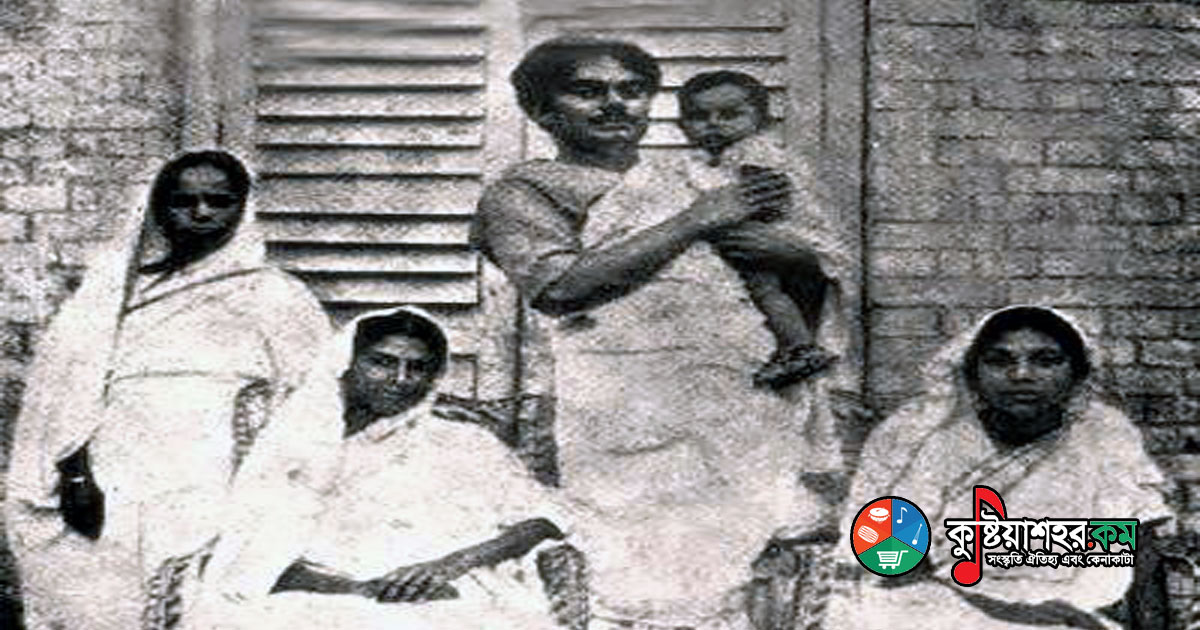
Poor Nazrul is still bright
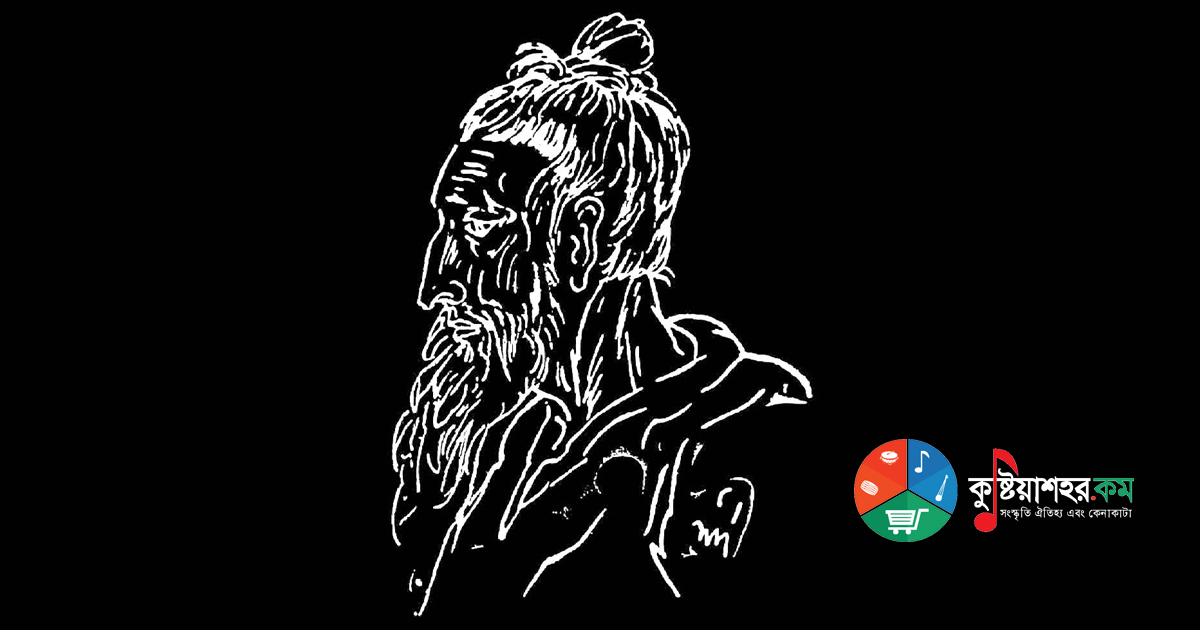
Rising from a poor family means growing up through much hardship. To meet the demands of hunger and of the family, one has to leap into working life at an immature age. Our national poet Nazrul Islam was brought up in a poor family, in the direst hardship.
His father Fakir Ahmad had two wives and many children and grandchildren; as a result, keeping the household became a mighty burden for him. The pangs of want and deprivation were always present there. So the boy poet, at merely eleven or twelve years of age, had to work hard from morning to evening to earn his bread. He had to work in a bakery and spend his nights in some cramped corner of that very shop; he had to enrol in a Leto troupe. Though joining the Leto troupe played a far-reaching role in his poetic life, history bears witness that this life of poverty for our rebel poet never came to an end.
Yet walking the path lit by his brilliant light never stopped. As his age grew, the measure of his poverty grew. In mature years destitution seemed to cling to him like glue. Despite all obstacles and misfortunes, the poet began to leave his signature of talent everywhere. In a very short time he was able to win considerable popularity. Busyness in the poet's life increased greatly. For a time his income from writing became quite good. But compared to the unaccountable Nazrul's needs, it was utterly negligible. So want and deprivation in the household did not leave him. While he was living in Hooghly, his financial condition became utterly pitiable and he found himself racked by debt. Later, on the proposal of a man named Hemanta Kumar, he moved with his whole family to Krishnanagar. Even after coming here his financial distress did not ease. His condition gradually became such that the days would no longer go on; on some days he was on the verge of fasting. His admirers in Kolkata had to stage a Bichitra variety show, collect subscriptions and come to his aid. In a letter the poet wrote from Krishnanagar to Moinuddin, it is said:
"Will let you know how far I have got with the Variety entertainment. The sooner it happens, the better for me. Because my situation is becoming ever more pitiable. Can you manage it within a week or so?"
Against this backdrop of sorrow the poem 'Daridro' (Poverty) was composed. If one reads the poet's countless letters written to various publishers, friends or well-wishers, one will see that in most of them he pleaded anxiously with them for money.
However, because of his financial straits it became impossible for Nazrul to stay on in Krishnanagar. He moved with his family to Kolkata once again. While in Krishnanagar he had incurred considerable debt. He needed quite a sum of money all at once. His devotees and admirers arranged a 'Nazrul Jayanti' to raise the money.
At this time his son Bulbul contracted smallpox and died. The plot of land where he was buried had been bought and kept. The plan was that in the future the grave would be plastered over. But Nazrul's financial distress never eased, so the grave was never plastered either. For lack of money, many of his plans thus never took shape in reality.
Later he had two more children. As a result the household's need for money kept growing steadily and he fell into deep embarrassment. So when the music merchants held out the moneybag before him, it was not possible for him to refuse them. During this period he wrote songs regularly, purely for money, for Megaphone, His Master's Voice and the Senola record companies. Money became the ruin of him. It may be said that he sold himself to money. And during this period, for some days he humbled himself for money. But money did not visit the poet's fate for long.
During this period, out of the need for money, he also became involved with films and the stage. He even played the role of Narad in the film 'Dhrubo'. In this way he acted, wrote screenplays, worked in film and on the stage, and composed and directed music. Later, with the same commercial mindset, in 1934 he opened a record shop in Kolkata called 'Kalgit'. But he was not a businessman by temperament. Because of his uncommercial disposition the shop did not last long; it was sold at auction and he became entangled in debt again. During this time he received money from many people. But he was not the man to demand his dues aloud.
In 1940 his wife was stricken with paralysis, and the deepest sorrow closed in on the poet's family life. He strove with all his might to cure the disease. For money he pledged his car (note: in sheer infatuation he had even sold the rights to his books and pledged the royalties of his songs to buy a car), his land, the rights to his books, and the royalties of his recorded songs. Disappointed with Ayurvedic, allopathic and homoeopathic treatment, he came to regard para-physical, para-divine and spiritual practices as the better course. But nothing worked. His wife's condition rather grew more serious day by day.
At this time his financial crisis appeared in its most extreme form. Burdened by various debts he was completely cornered. The Eastern Union Bank even went so far as to file a suit against him for repayment of debts. The court then ordered repayment of the loan in monthly instalments. Along with the bank loan, he had also borrowed from the Kabuliwala moneylenders. From before, the Kabuliwalas and other creditors would swoop down on the poet's house at the end of the month to collect their money. Now the bank's monthly instalments were added to that. He could not always pay the instalments. As interest the amount grew, and the next month's demand came for an even larger sum. Under pressure from every side he became utterly desperate. In this difficult time he sold the first edition of his poetry book 'Natun Chand' (The New Moon) for only two hundred and fifty rupees. These events provoked the utmost reaction in the poet's mind.
Under this unceasing pressure of debt, the complications of the household, illness and grief, sorrow and pain, blow and neglect, he gradually lost his mental balance and fell into derangement. Before he was definitively stricken with mental illness on 10 August 1942, the signs of illness had already become manifest in him. While speaking or writing he would lapse into a trance. At times he would speak incoherently.
And even in that ailing state, the poet had to canvass for a government job. The poet was in great need of money. But because he was ill, in the end he was not considered eligible for the job. Even in this state he did work at 'Nabajug', it is true, but his rightful dues were not paid; rather, he was cheated.
Even after falling ill he lived for almost three decades, but like a dead man; and his creative genius fell silent forever. That means, from then on until his death he had to remain cut off from literary work.
However, an organisation formed for Nazrul's recovery, named the 'Nazrul Chikitsa Committee' (Nazrul Treatment Committee), sent the ailing poet to Britain and Vienna for treatment. The specialist doctors expressed the opinion that he was certainly suffering from a neuron-related problem called Pick's Disease. In this disease the frontal and lateral lobes of the sufferer's brain shrink away. They further said that recovery of the poet from his present condition was impossible. The poet was then only 43-44 years old - middle age. Despite abundant treatment there was no significant improvement in Nazrul's health.
In 1976 Nazrul's health too began to decline. The last days of his life were spent at PG Hospital in Dhaka. On 29 August 1976 he passed away. In one of his songs Nazrul had written, "Bury me beside the mosque, brother / so that from the grave I may hear the muezzin's call to prayer"; - considering this wish of the poet, the decision was taken to bury him beside the central mosque of Dhaka University, and his grave was laid out accordingly.
He was born with indomitable life-force. All his life he was driven and driven round by the irrepressible craving of his soul, by tremendous emotion, by powerful exuberance. He frowned upon poverty, tried to bear want and deprivation with a smile, and pressing forward disregarding hundreds of obstacles and misfortunes. The barriers and prohibitions of society, the punitive rule of the foreign government, the cruel torture of imprisonment - none of these could daunt him.
On 25 May 1899 (11 Jaishtha 1306 of the Bengali era), Kazi Nazrul Islam was born in Churulia village in the Asansol subdivision of Burdwan district in West Bengal, India. In a letter given to Kazi Motahar Hossen he had written:-
"The day I depart, perhaps grand assemblies will be held; how much praise, how many poems will come forth in my name - patriot, self-sacrificing, heroic rebel - adjective after adjective. Speaker after speaker will smash the table with slaps. On the day of offering homage to this ugliness, may you not come - if you can, sit silently and remember something of my unwritten life."
The present reality too seems to be exactly that. Now a great deal of money is spent every year on various events and discussions in the poet's name. But how many of us have taken the real lesson from his life. In that time too, the talented were objects of neglect; now it is even more severe. Let us take lessons from the life of our beloved poet and play a helpful role in building a beautiful society.