বাংলা
 English

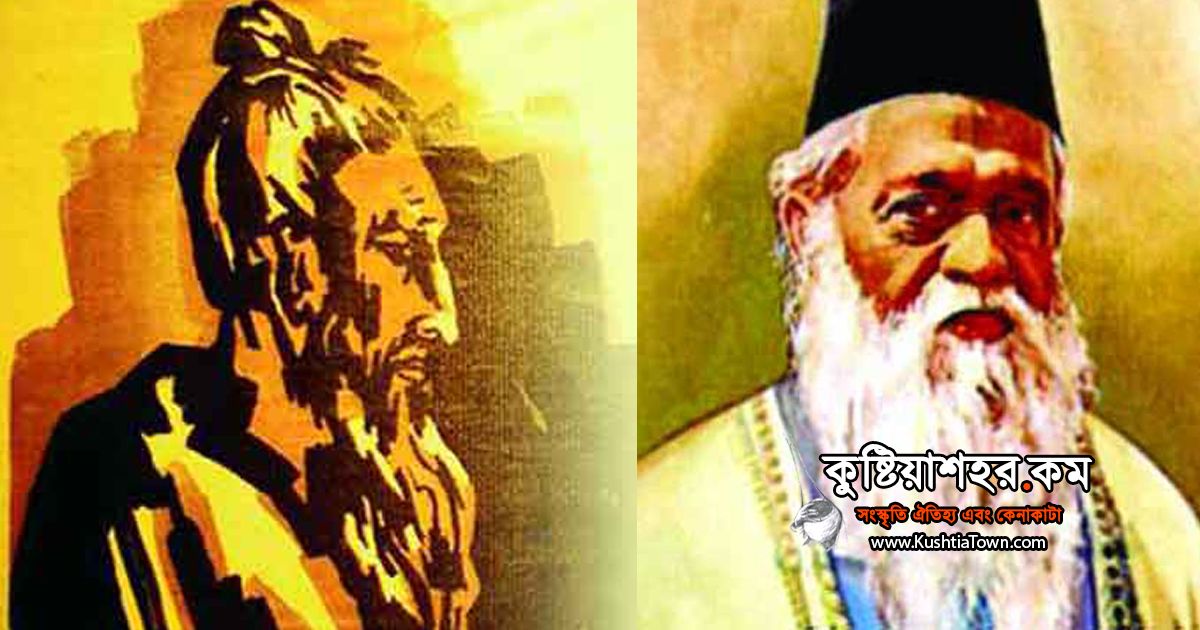
Lalon, the wonder-man who appeared on the face of the earth, was gifted with many-sided talent. He is also known as Fakir Lalon, Lalon Sai, Lalon Shah and Mahatma Lalon. He is called a mystic sage and the Baul emperor Fakir as well. At once he was a spiritual Baul sadhak, a humanist, a social reformer and a philosopher. Lalon had no children.
Unable to receive formal education because of financial hardship, he was nonetheless self-taught. It is known that in his youth he set out on pilgrimages to earn spiritual merit, and it was then that the transformation of his youth and his entry into a life of sadhana took place. When he fell ill with smallpox during the pilgrimage, his companions abandoned him. Later, after regaining his life through the kindness and shelter of a Muslim, he became the sage Fakir.
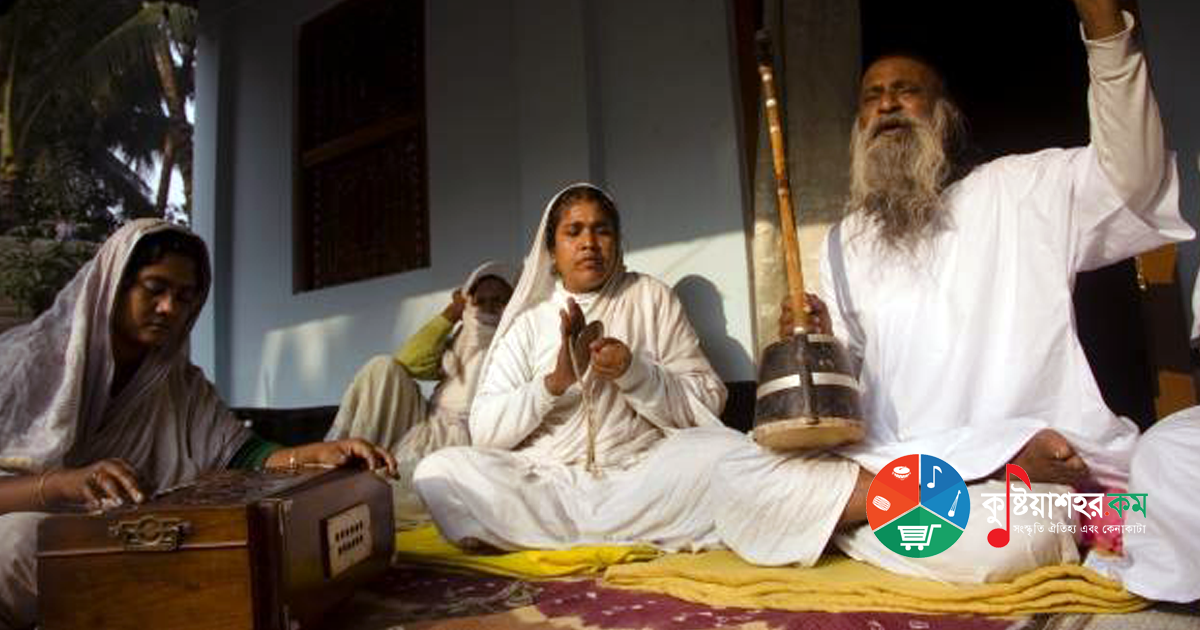
Lalon composed his song verses orally. When a new song rose in his mind he would call his disciples and say, 'A shoal of fish fry has arrived.' Lalon would sing, and Fakir Manik and Moniruddin Shah would write the songs down. Even in Lalon's lifetime his songs won immense popularity. In his disciples' belief, the number of his songs exceeds ten thousand; in truth, so vast a number of songs cannot be found.
It is heard that after the death of some of Lalon's disciples their song notebooks were buried in their graves. Besides, many devotees took song notebooks away and never returned them. The sweet teachings of Lalon's songs - his thought, philosophy and realisation - are indispensable today for making people more humane and for building an enlightened world. Lalon Sai saw people of every class and religion of society as one until death.
In his lifetime, Lalon Saiji would spend the night of the Dol Purnima of Falgun with his disciples on the open field by the Kaliganga river at Cheuria, discussing matters of truth and singing and making music all night. The mystic sage and Baul emperor, bathed in the unobstructed moonlight of Dol Purnima, would hold discourses and sing through the night. Even after his death, his disciples and devotees hold a colourful Lalon Utsab on this field, in his memory, on the occasion of Dol Purnima.
It was on the stream of this Kaliganga, flowing from the unseen land to Cheuria in Kushtia, that the Baul Fakir Lalon Sai drifted in. He preached the immortal message of the truth of life and built an inseparable akhra of human love. Though the Kaliganga has shrunk with the changes of time, that Lalon lineage carried in by its current has blossomed.
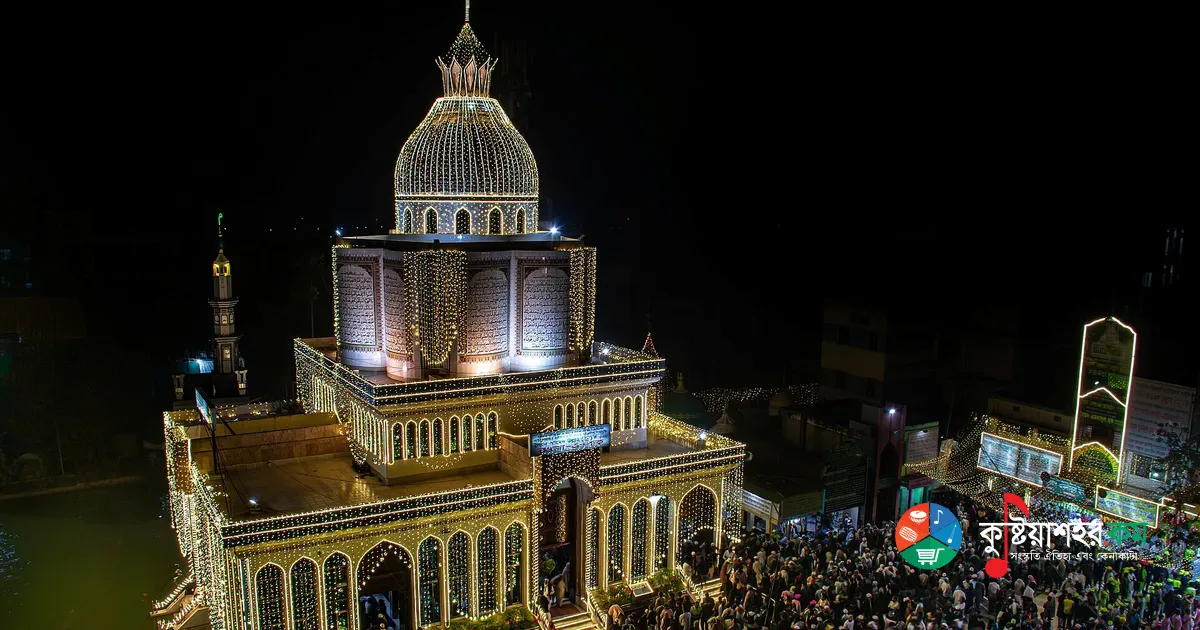
On 17 October 1890 Lalon Sai passed away at Cheuria village of Chapra union in Kumarkhali upazila of Kushtia. On sixteen bighas of land donated by his devotee Molom Shah, the Lalon Akhra was established in 1823. At first a large thatched house was built there for Lalon to live in and practise sadhana.
The Bengali's age-old and eternal longing is to be steeped in Saiji's melody. The whole of Bengal's people everywhere share that soul-stirring effort to bathe in the ocean of Lalon's melody and purify themselves. That Lalon Sai always spoke of the liberation of man and humanity, in the intimate bond of teachings and melody, stands clearly revealed in every layer of his songs. Through realising the truths and philosophy of Lalon's teachings, today's people and society can become more humane and more peaceful.